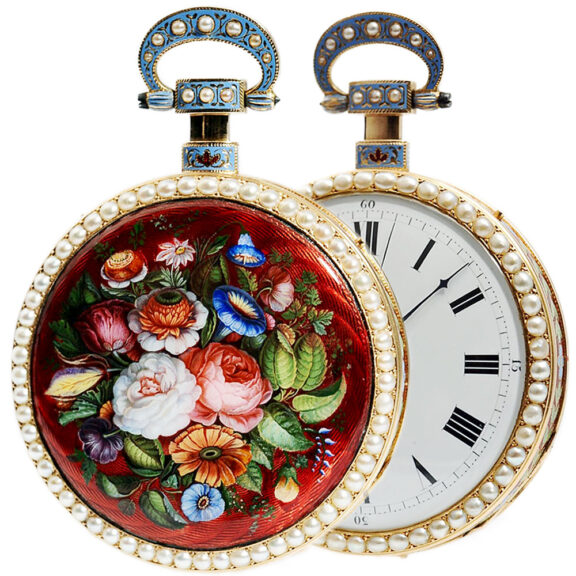
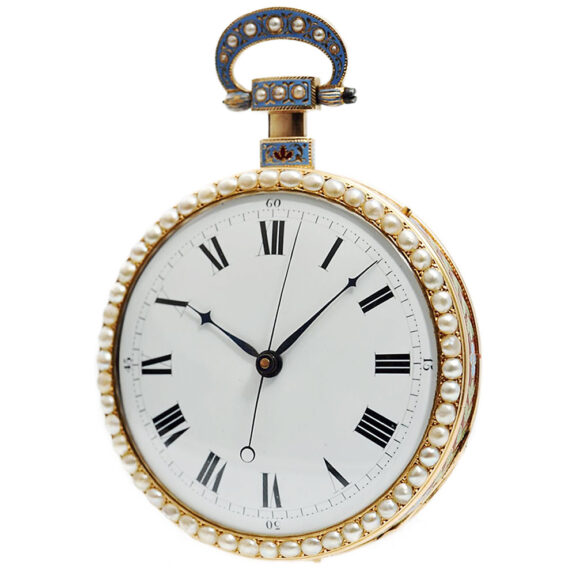
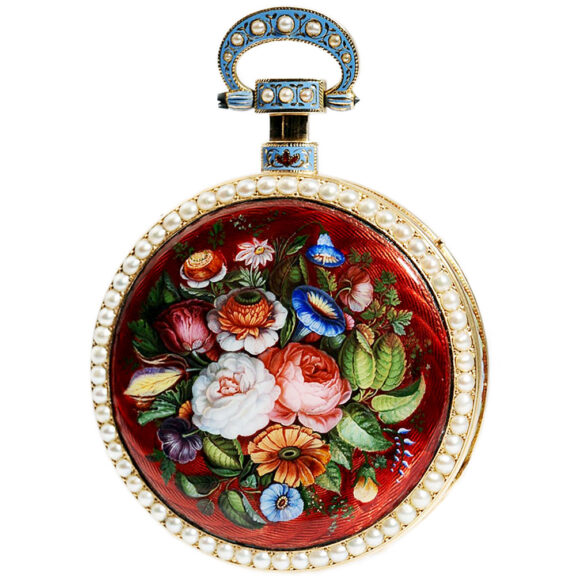
Swiss muscial watch made for the Chinese market Circa 1820
- Kenmerk
- AD8188
- Diameter
- 57 mm
- Estimate
- € 100.000 - 180.000
- Price sold
- € 136.400
Gold, enamel and pearl set musical watch attributed to Piguet & Meylan
–
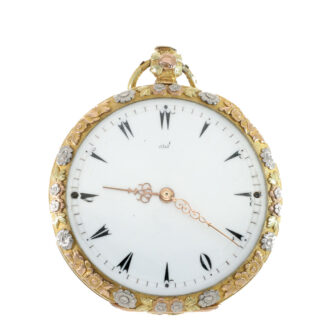
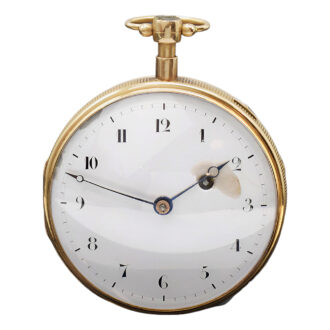
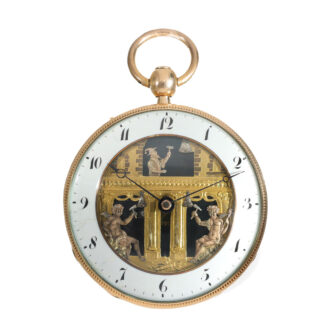
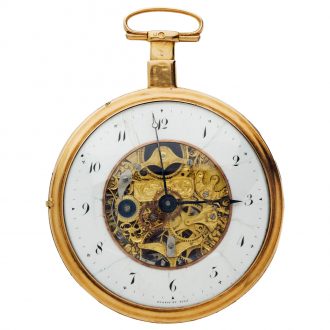
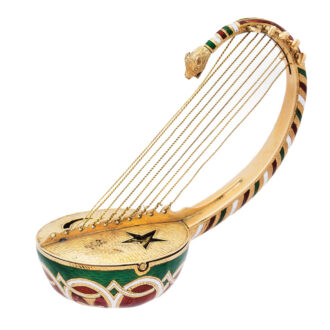
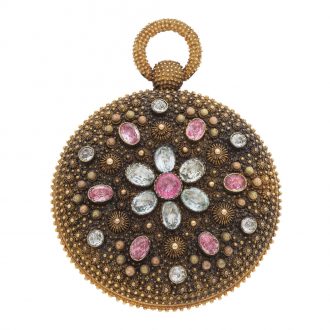
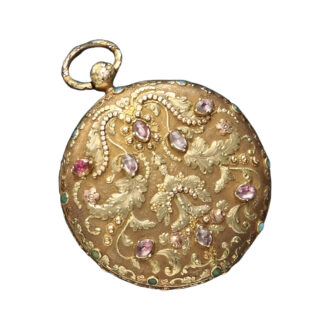
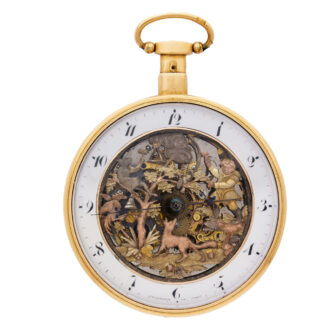
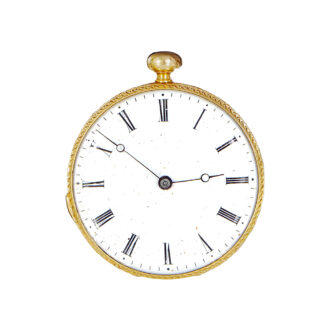
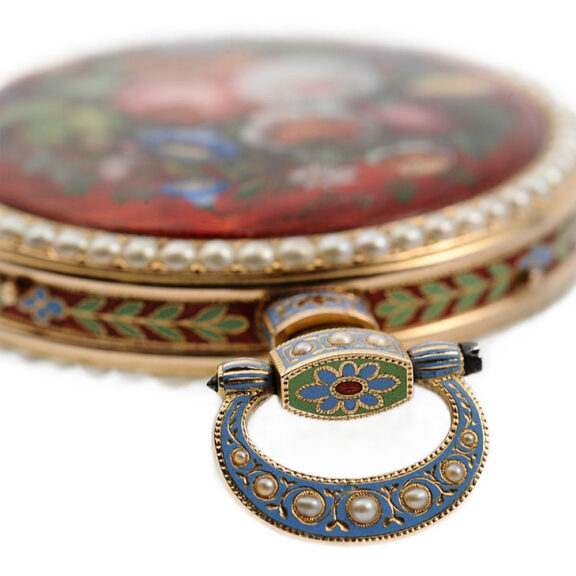
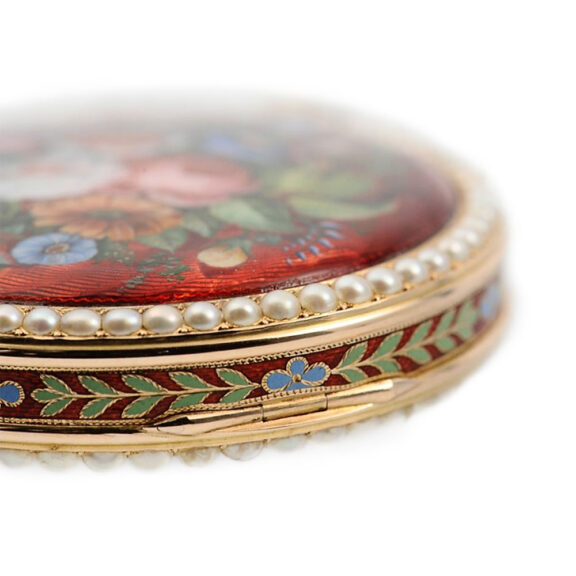
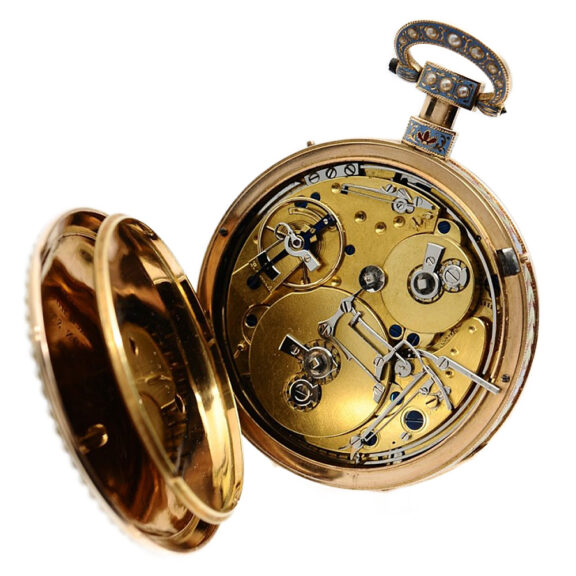
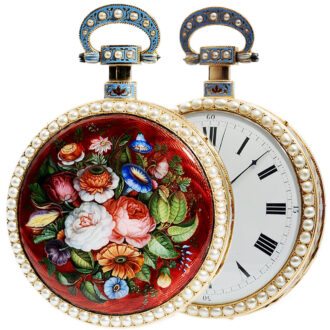
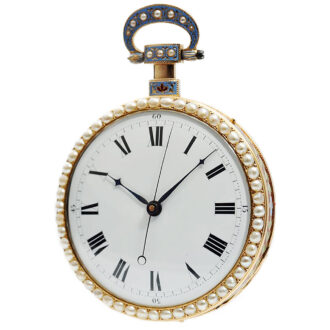
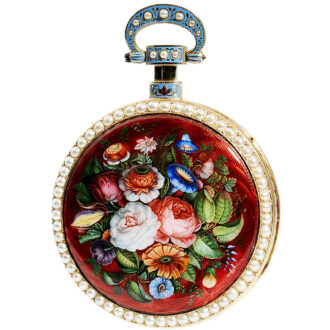
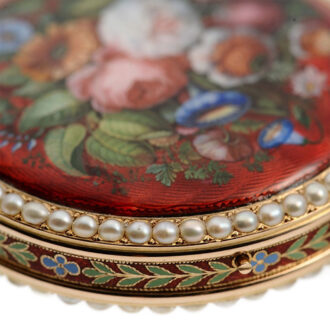
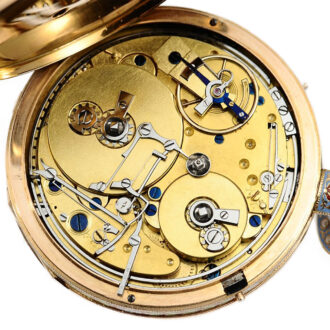
An exquisite Swiss 18 Carat rose gold, enamel and half pearl set open faced quarter repeating centre seconds gentleman’s pocket watch with a musical movement that activates on the hour made for the Chinese market, circa 1820.
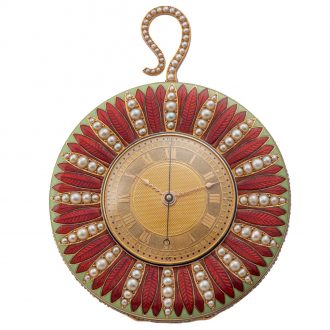
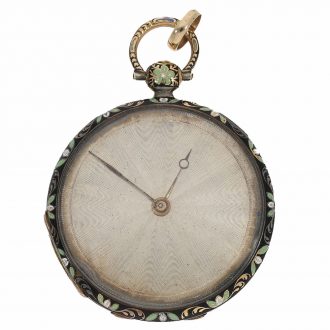
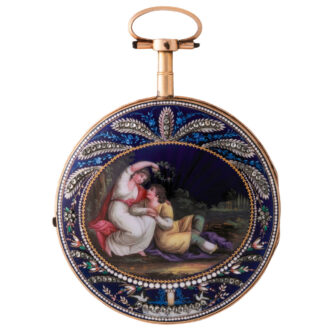
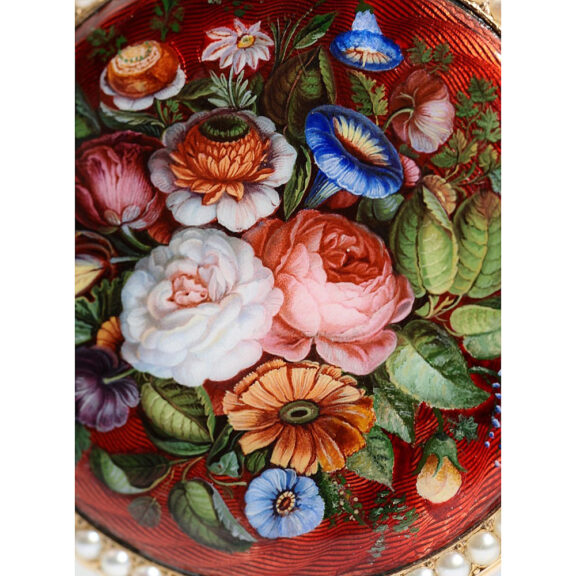
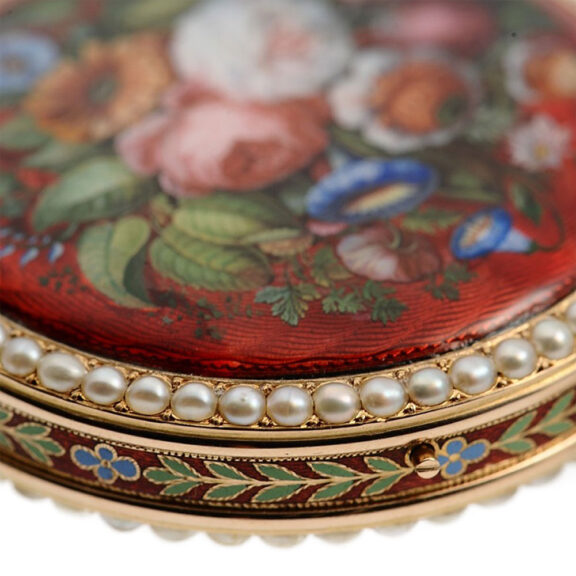
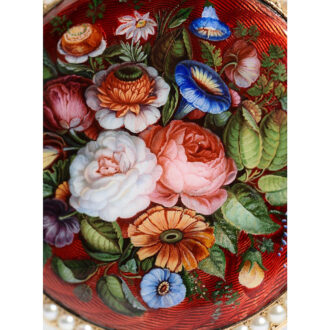
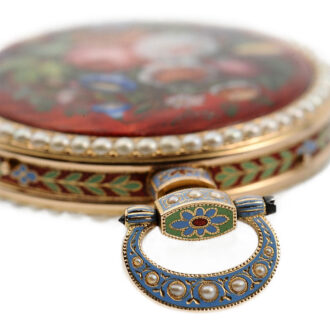
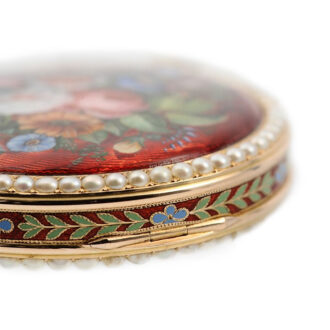
The case back with a polychrome enamel medallion, attributed to Frères Oltramare, depicting a composition of summer flowers against engine-turned translucent red enamel, a slide for music/silence, the band with champlevé enamel, light blue flowers and light green tendrils against translucent red enamel on an engine-turned ground, the pendant and bow also with champlevé enamel, light blue, the bezels and pendant studded with half pearls. Gold dome with blue enamelled lettering.
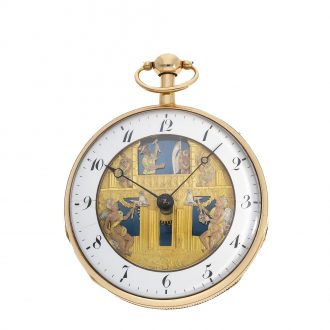
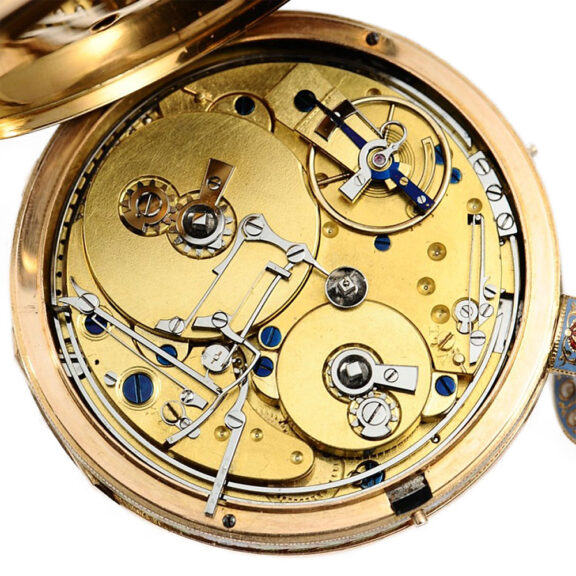
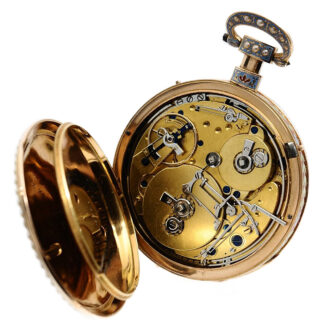
White enamel dial with radial Roman hours, outer minute divisions with Arabic quarter hours, centre seconds and blued lozenge hands. Frosted gilt bridge movement, key wind, two hammers, two gongs, two going barrels, ruby cylinder escapement, three arm gold ring balance, blued balance spring with bimetallic compensation curb on the index, shock protection parachute, musical movement with a pinned disc, tuned vibrating blades and a mirror-polished, bevelled lever for the musical movement.
–
Diameter: 57 mm
–
Weight: 138 g
–
Signed: No name
–
J.D. Piguet and S. Meylan, Genève, Switzerland. Piguet was an expert craftsman who produced his watches in partnership with Henry Capt and Philippe Samuel Meylan and later with his sons too. Philippe Samuel Meylan came to Geneva at age 20 to work for Audemars Frères. He opened his workshop near Le Brassus in 1811 but returned to Geneva later. He met Piguet and formed a partnership with him. They worked in Geneva under the name Piguet & Meylan from 1811 to 1828. The company was well known for producing early China watches and became famous for its pocket watches with special functions. They created automatons with man and animal shapes and intricate musical mechanisms, as well as skeleton watches.
–
Frères Oltramare worked in Geneva between circa 1810 and 1826.
Share this page: