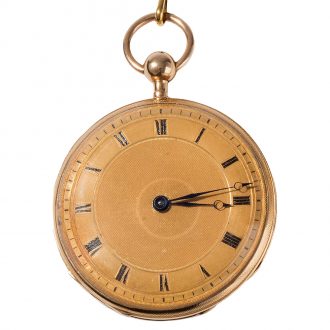
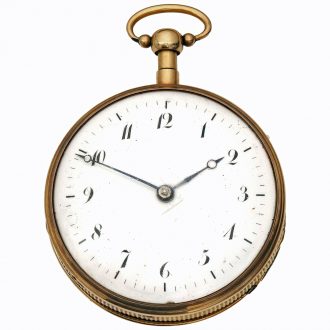
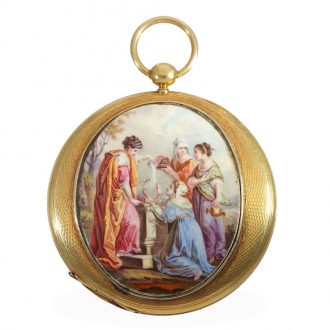
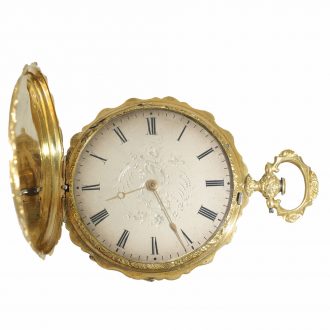
Swiss extremely rare gold, enamel pocket watch Circa 1830
- Kenmerk
- AD2064
- Diameter
- 56 mm
- Estimate
- € 40.000 - 80.000
- Price sold
- € 21.250
Open faced watch for the Chinese market by Bovet
–
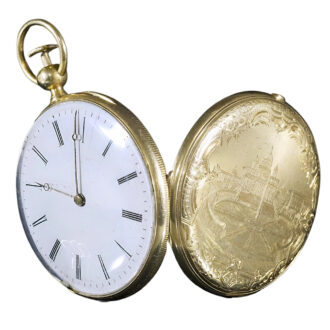
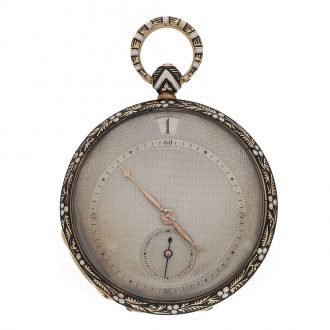
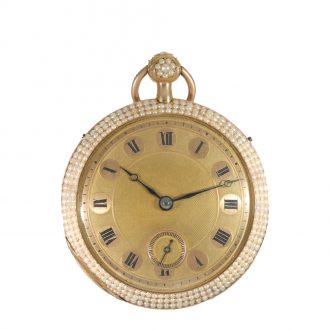
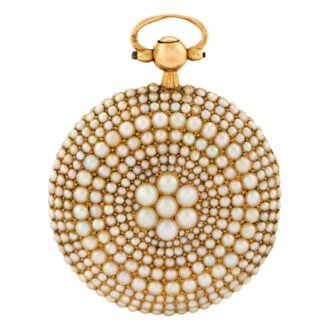
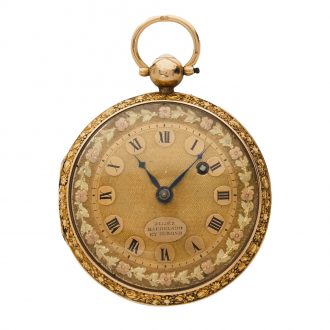
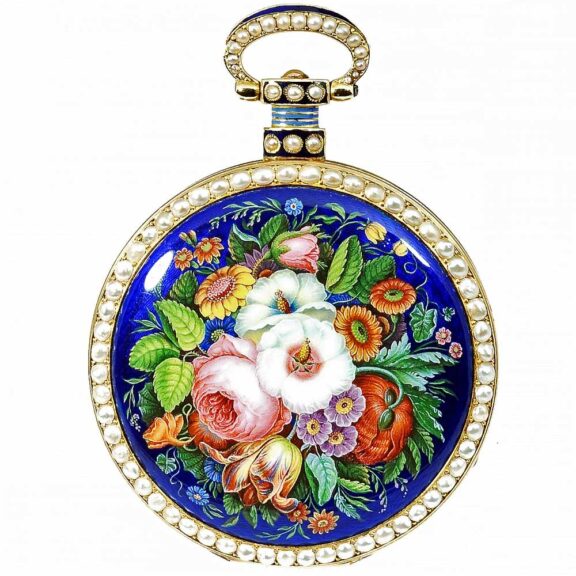
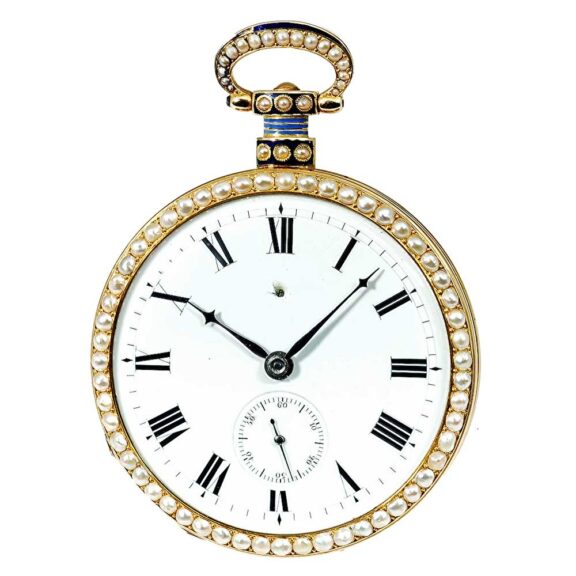
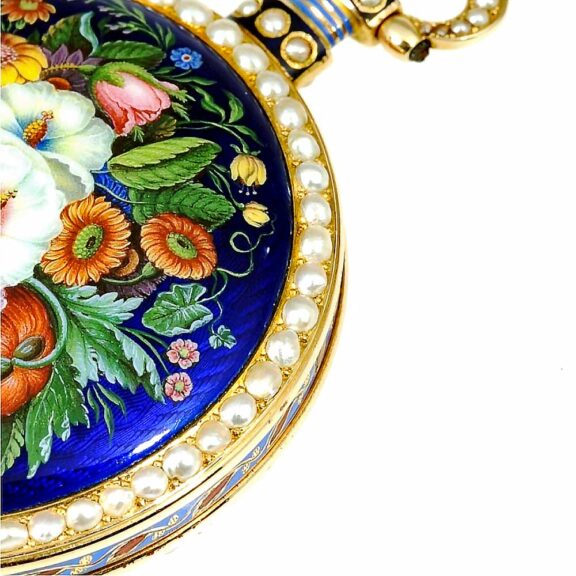
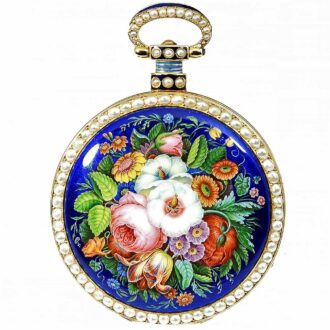
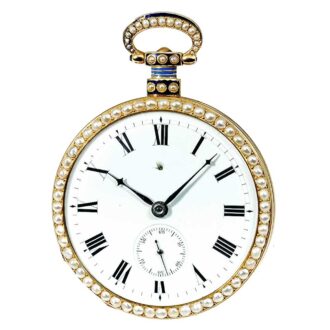
A Swiss impressive and extremely rare gold enamel pocket watch with centre seconds, studded with half pearls for the Chinese market, “Bouquet of Summer Flowers”, circa 1830.
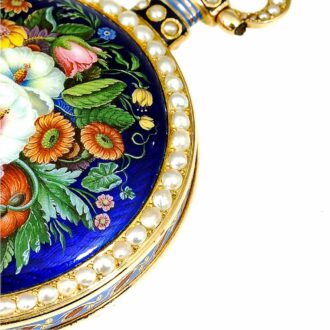
The exquisitely painted enamel medallion on the back is of supreme quality and shows a beautiful flower arrangement with roses, hibiscus, asters, poppy flowers and violets on an engine-turned and translucent cobalt blue enamelled ground. The case band, the pendant and the bow are decorated with Champlevé enamelling in a pattern of opaque light and dark blue panels.The bezels on both sides as well as the pendant and the bow are studded with half pearls, a timepiece of exceptional quality and intensity of colour.
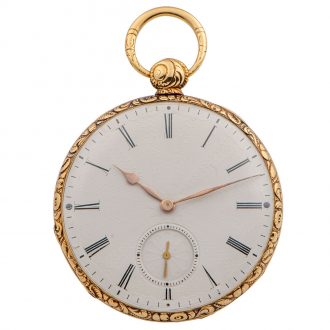
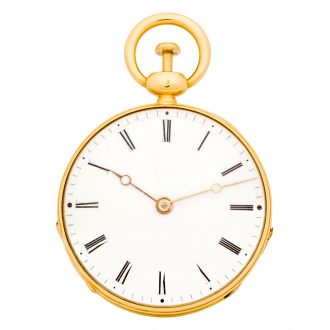
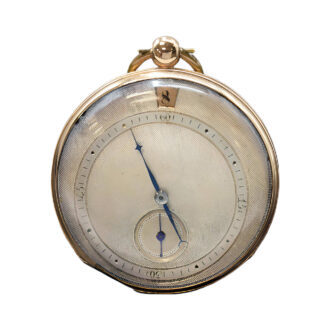
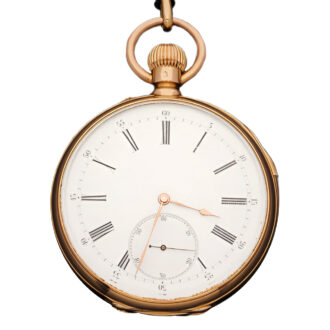
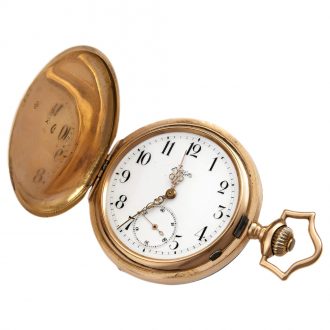
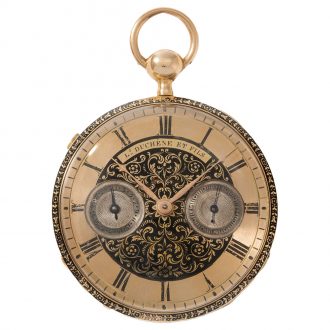
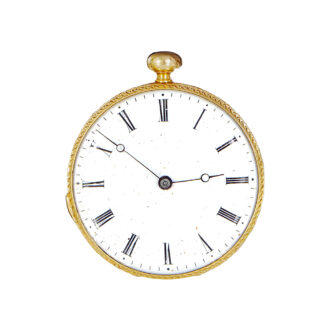
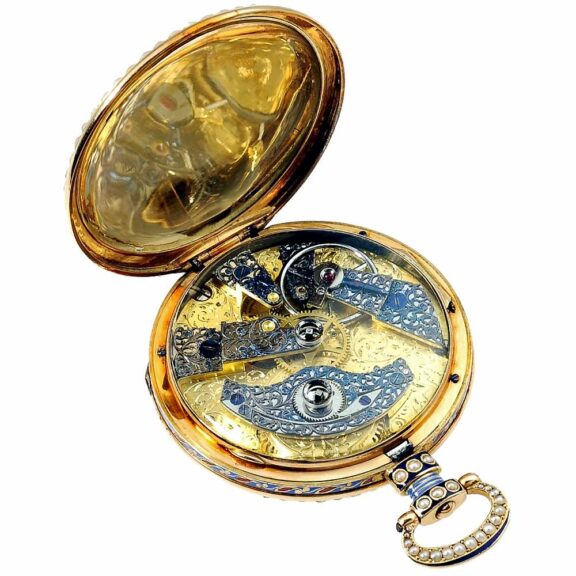
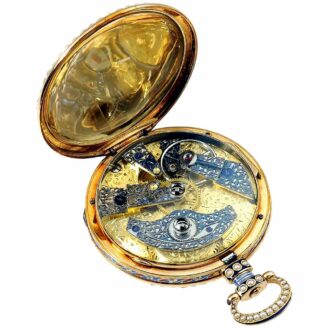
The 18 carat gold case is polychrome enamelled with half pearls and a glazed movement. The dial is white enamel with Roman numerals, a subsidiary dial for the seconds and steel hands. It has a mirror-polished steel bridge movement with applied blued ornaments on a florally engraved gold plate, a cylinder escapement and a steel ring balance.
–
Diameter: 56 mm
–
Weight: 107 g
–
Signed: Bovet, Fleurier
–
Amongst the European makers of pocket watches who produced watches for the Chinese market, Ilbery in London and Bovet and Vaucher in Fleurier were the most renowned companies. They had branches in China and exported the movements and the wonderful enamel work for the timepieces from Switzerland to China. The lavishly ornamented cases always had very distinctive decorations; the motifs were usually taken from nature and have lost nothing of their appeal 200 years later – they are still highly sought-after collector’s pieces.
Master Swiss watchmaker Edouard Bovet was one of the many who concentrated on the Chinese market. He arrived in Canton in 1830 carrying five top-quality watches, all of which he sold immediately, to mandarins who paid him in gold bars. Delighted, he wrote to his brother in Switzerland, enthusing about the market potential and asking him to send more watches, but only of the very best quality, since this was where the demand lay and there was no difficulty about payment. The 17th century Ching Dynasty Emperor K’ang-Hsi was a great admirer of the European sciences, especially that of horology, and he established several imperial workshops in which Chinese craftsmen made clocks and watches under the direction of imported European watchmakers, amongst whom were several masters. At K’ang-Hsi’s invitation, the Zougeese master watchmaker François-Louis Stadlin became director of the imperial workshops, and the Emperor’s favourite.
Signed: Bovet, Fleurier
Share this page: