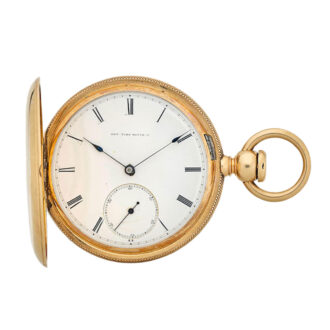
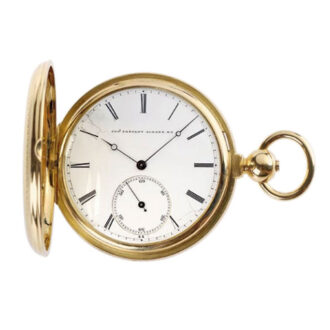
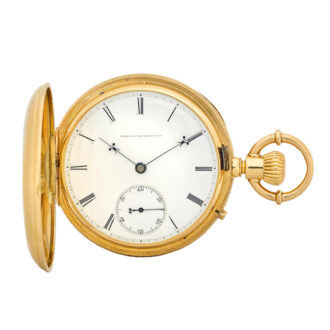
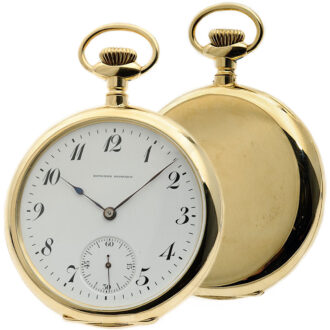
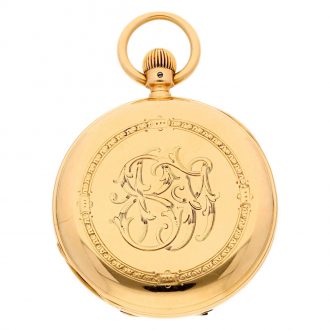
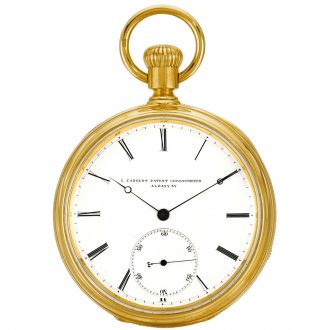
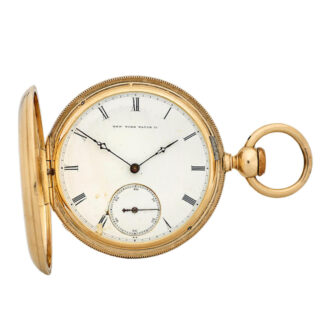
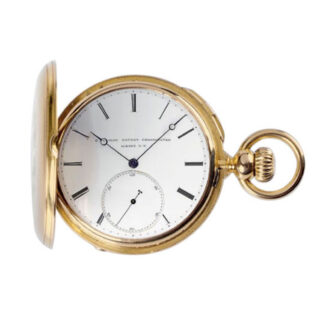
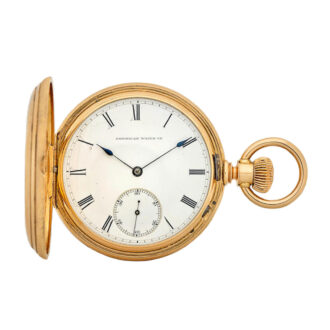
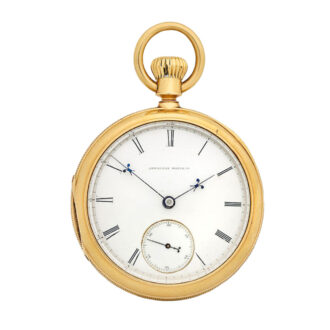
Rare American 18 Carat gold hunting cased chronometer Circa 1870
- Kenmerk
- TA2049
- Diameter
- 55 mm
- Estimate
- € 15.000 - 30.000
- Price sold
- € 25.900
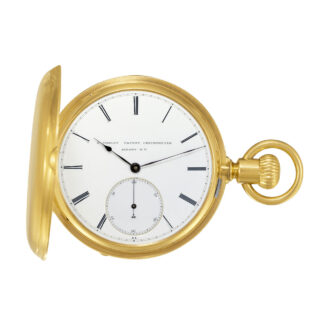
Gold chronometer with Fasoldt’s patented double wheel escapement
–
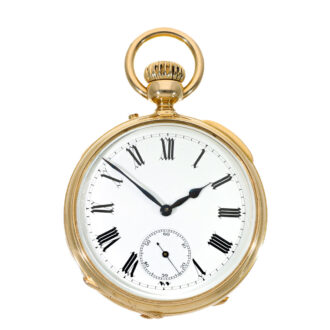
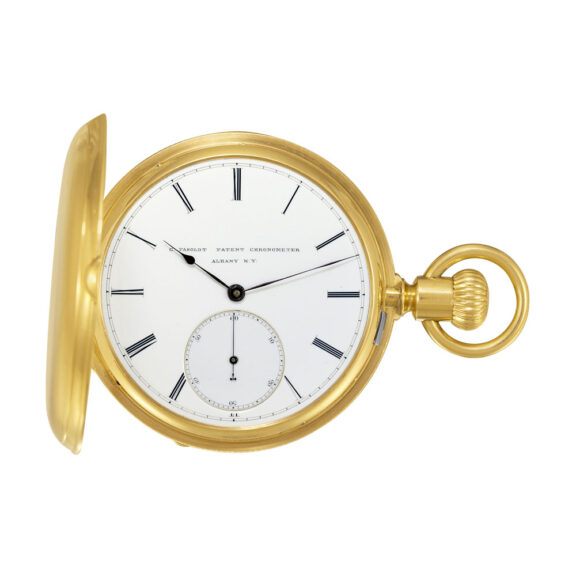
A very fine and extremely rare American, 18 Carat gold, hunting cased, keyless pocket chronometer with Fasoldt’s patented double wheel escapement, circa 1870. The case is made by Humbert, (master mark), engine turned covers with polished borders, spring loaded front cover and engine turned band. Hinged gold rimmed glazed cuvette. White enamel dial, narrow radial Roman numerals, outer minute track, subsidiary seconds. Blued steel spade hands.
–
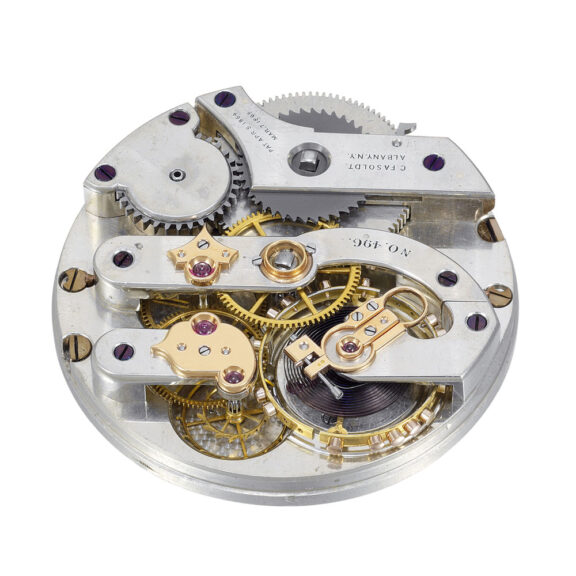
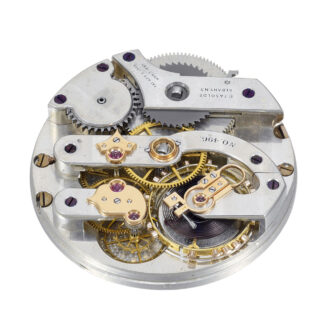
A nickel silver movement, parallel bridge calibre, Geneva striping decoration, 15 jewels, Wolf’s tooth winding, Fasoldt patented unidirectional double gold wheel lever chronometer escapement with locking on the large wheel and impulse from the smaller one, large single roller, cut bimetallic compensation balance, gilded in typical Fasoldt manner, large blued steel Breguet balance spring controlled by Fasoldt patented gold micrometric torsion regulator, patented stem winding mechanism formerly with detachable key for hand setting, locking slide for the winding crown on the band. Dial and movement signed. The movement also engraved Pat. Apr 5, 1864 & March 7, 1865. Case punched E.H.
–
Diameter: 55 mm
–
Signed: Charles Fasoldt Albany
–
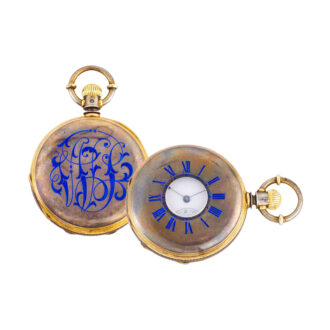
The case is rusty and lacks elements
–
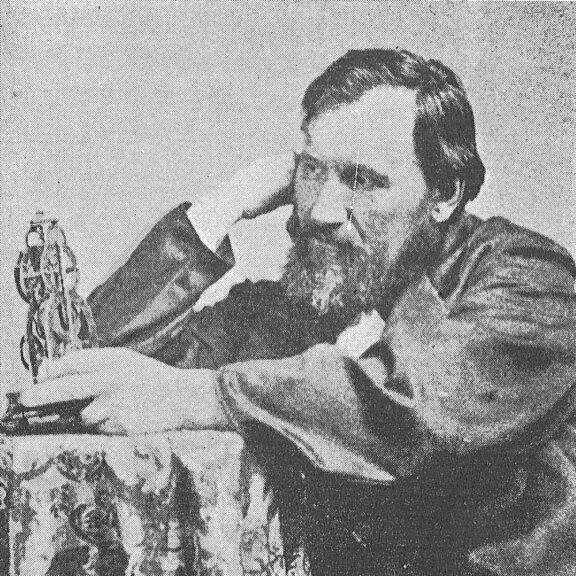
Charles Fasoldt (1818-1898) This colourful individual was born in Germany in 1818. After receiving a death sentence for taking part in the 1848 Revolution, he escaped from prison and sailed to the United States. He began making watches in Rome, New York, then moved to Albany, where he established an impressive enterprise for the making of clocks, micrometric gratings, microscopes and, of course, his famous watches. He sold them for between $150 and $300 each, which was expensive at the time. They were made according to his very individual design. Almost all of them employed his patented chronometer lever escapement.
–
The escapement in the present watch (patented on Feb 1, 1859) is remarkably reliable. It requires no oil and has a very strong draw on both locking pallets. Fasoldt performed an interesting and picturesque experiment demonstrating the reliability of his escapement, he tied his watch, along with other makers’ watches, to the driving rod of the Empire Express locomotive.
–
After having made the entire trip from Albany to New York and back, his watch registered only a few minutes’ difference. The other makers’ watches stopped within the first few minutes of the trip. The other unusual feature of this watch is the winding and hand setting. The winding is done in the usual way, by turning the crown clockwise (the crown cannot be turned anti clockwise). For the hand setting, the entire crown is released via a slide on the band and a winding square at the end of the stem is then used to manually set the hands from the back of the movement. This is a variation of the Breguet key system but without ratchet. The detachable crown in the present watch has at some time been permanently fixed and the locking slide removed.
Signed: Charles Fasoldt Albany
Share this page: