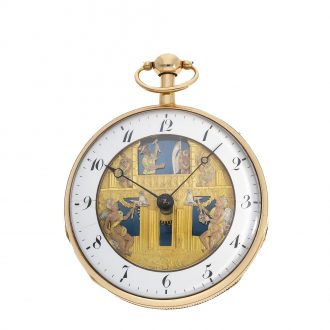
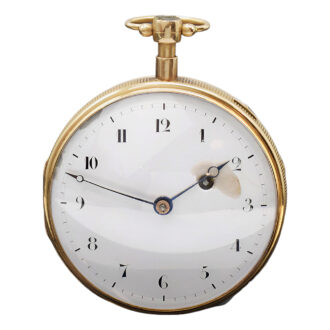
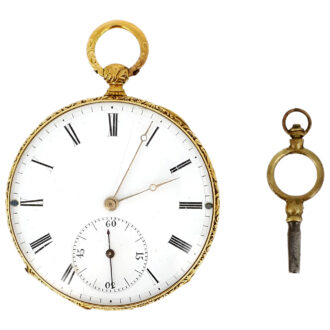
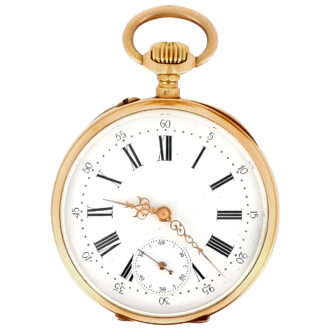
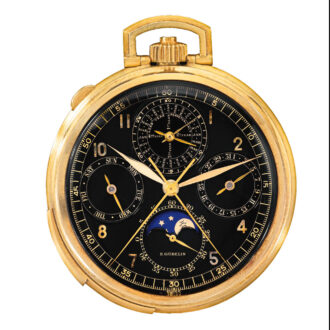
Swiss 18K gold quarter repeating automaton watch Circa 1820
- Kenmerk
- FF0024
- Diameter
- 55 mm
- Estimate
- € 10.000 - 17.500
- Price sold
- -
Gold watch with automaton
–
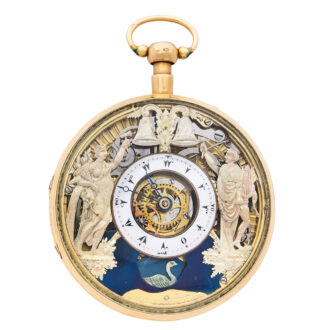
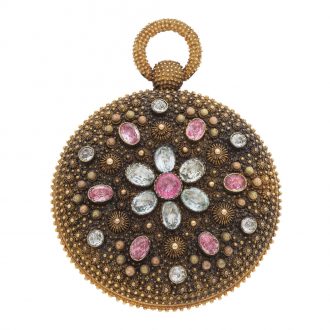
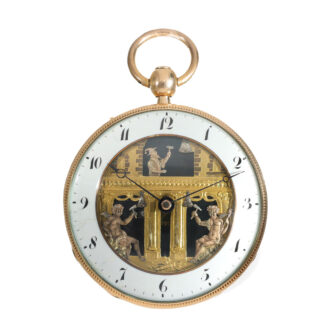
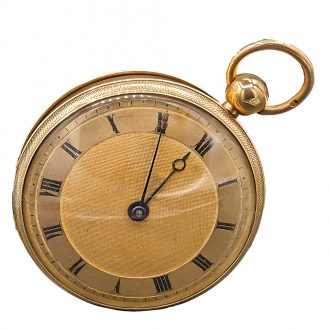
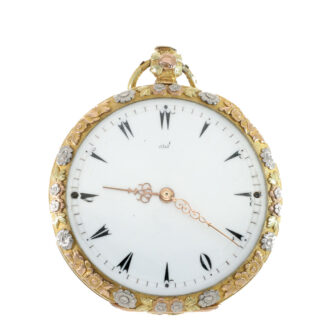
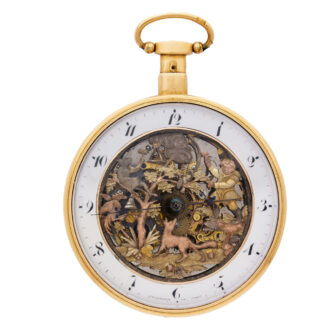
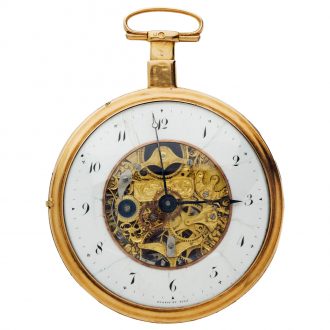
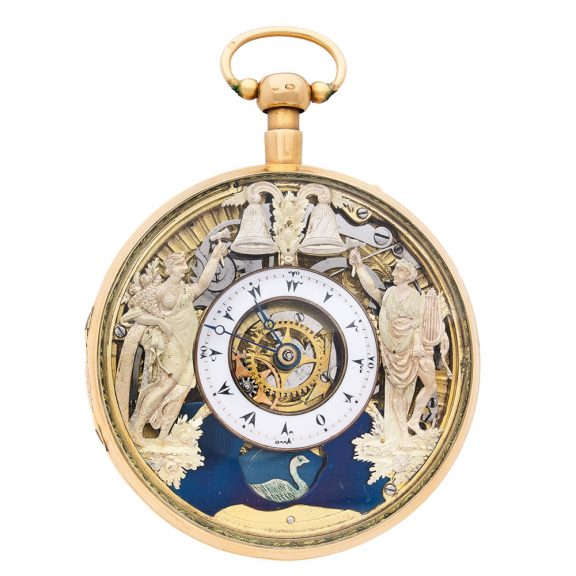
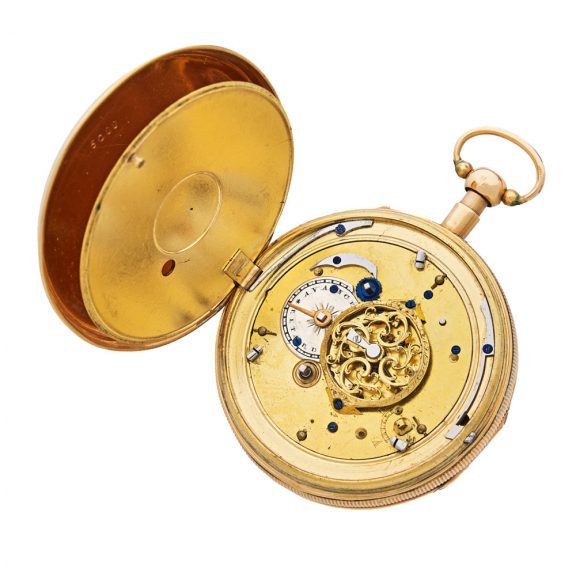
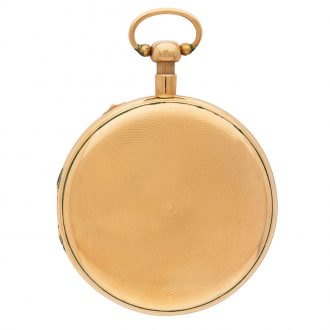
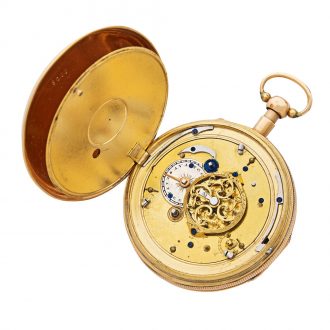
A Swiss multi coloured gold open faced watch with automaton called The Swan with Jacquemarts quarter repeater strike and an additional automaton representing a swan, made for the Ottoman market, circa 1820. Full plate gilt movement with key-wound, cylinder escapement, engraved and pierced cock with adjustment disc for advance/delay, fusee and chain, striking on two gongs, triggering of the striking by pushing the pendant.
–
Annular dial in white enamel in the centre with Turkish numerals, stylized hands and visible cogs in the centre, engraved automaton scene in multi colour gold applied on a blued steel plate, two characters in classical costume strike the hours and quarters called Jaquemarts, in an opening under the dial a swan swims in unison with the mechanism of the striking mechanism activated by the pendant.
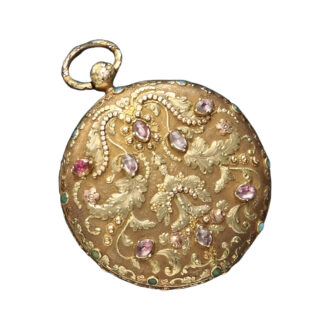
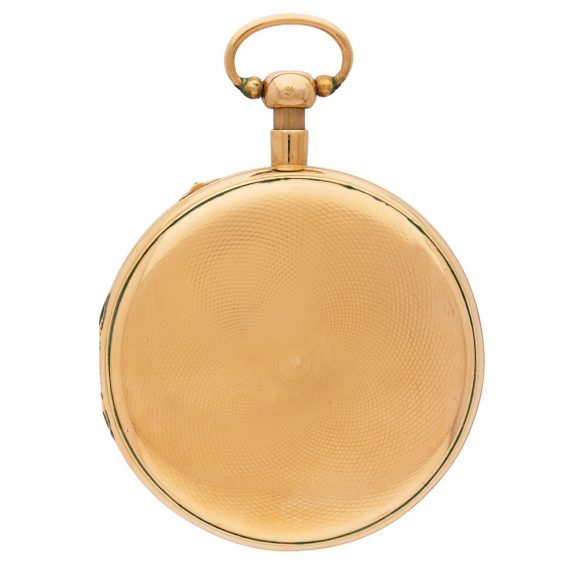
18 Carat round case, the gilded metal bowl with an opening for the winding square, the middle with a brake for the striking mechanism, fluted middle, case maker’s mark marked inside, the back engine turned triggering of the strike by pushing the pendant.
–
Diameter: 55 mm
–
Weight: 134.2 g
–
Signed: No name
–
In the Ottoman Empire, the swan is a symbol rich in meaning, inspired both by the majestic nature of this bird and by the cultural and spiritual values specific to the Islamic and Ottoman world. The swan, often represented in Ottoman art and poetry, embodies concepts of beauty, purity, love, and grace, while referring to mystical dimensions.
Symbol of beauty and grace
The swan is admired for its elegant appearance and graceful bearing. In the Ottoman Empire, beauty and elegance are highly valued values, and the swan, because of its whiteness and noble posture, is associated with these qualities. Ottoman poets and artists often use the swan as a metaphor for ideal beauty, including feminine beauty, the purity of love, or the elegance of the mind.
Emblem of Purity and Spirituality
The swan, with its white plumage and serene nature, also symbolizes purity and inner tranquility, values that resonate with Islamic spirituality. In Sufism, a mystical branch of Islam, the swan can be seen as a metaphor for the soul in search of perfection and union with the divine. Its natural elegance and immaculate whiteness are attributes associated with spiritual purification, a central concept in Sufi thought.
The Elegance and Refinement of the Court of the Sultans of the Ottoman Empire
In Ottoman art, the swan can also reflect the refinement of the imperial court and its gardens. Ottoman palaces, such as the Topkapi Palace, were surrounded by sumptuous gardens populated with exotic birds, and swans were sometimes present in decorative ponds. In this sense, the swan is also a symbol of the luxury and elegance associated with the Ottoman court, reinforcing the image of splendor and wealth of the Empire.
Symbol of transformation and rebirth
In some mystical traditions, the swan is linked to transformation and rebirth, themes present in Sufism. The swan, able to pass from water to air with grace, symbolizes the passage of the soul through different states and the search for spiritual elevation. This symbol of transformation reflects the idea of purification and inner rebirth, which is found in the practices of meditation and contemplation in Islam.
The Influence of the Culture of the Persian Empire
Since the Ottoman Empire was influenced by the culture of the Persian Empire, the swan also inherited the symbolism associated with it in Persia, particularly in poetry. In Persian poetry, the swan is often a symbol of nobility of soul and grandeur. These elements were integrated into Ottoman culture, where the swan became a literary and artistic motif evoking both royal qualities and nobility of spirit.
In the Ottoman Empire, the swan is much more than an elegant bird. It embodies spiritual and aesthetic values such as purity, fidelity, beauty, and the quest for spiritual elevation. As an artistic motif, it is used to symbolize the elegance of the imperial court, while in Ottoman poetry and mysticism, it becomes an emblem of love and devotion, both human and divine. This rich array of meanings makes the swan an important and timeless cultural symbol in the Ottoman world.
Automaton Watches for the Ottoman Market
Automaton watches for the Ottoman market are masterpieces of watchmaking from the
18th and 19th centuries, designed to amaze with their intricate animations and exotic designs.
These watches, manufactured primarily by Swiss and French watchmakers, captivated the Ottoman elite by incorporating.
Share this page: