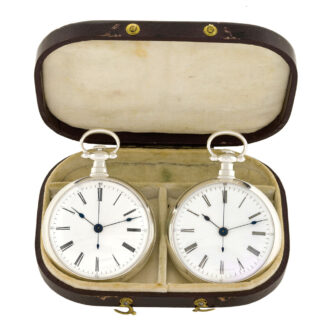
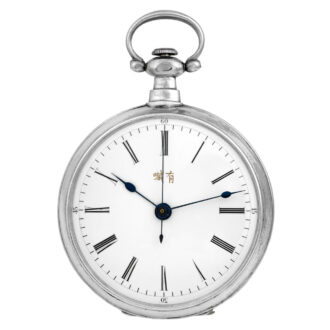
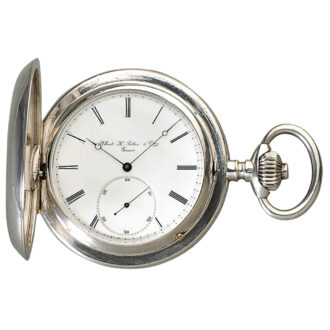
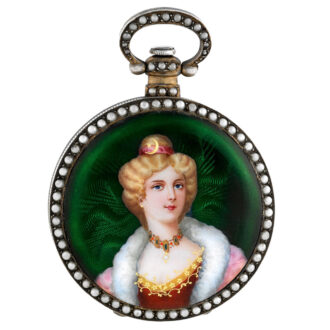
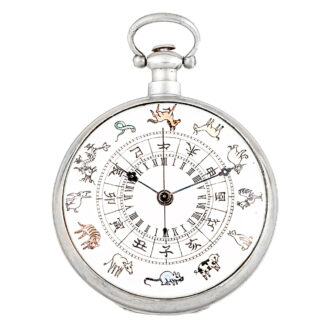
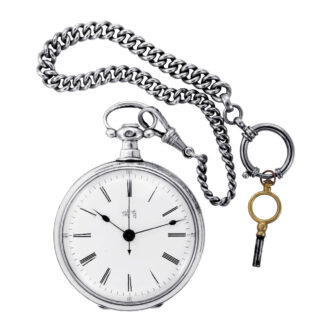
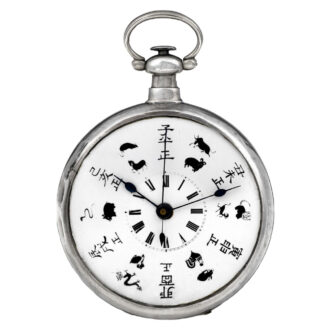
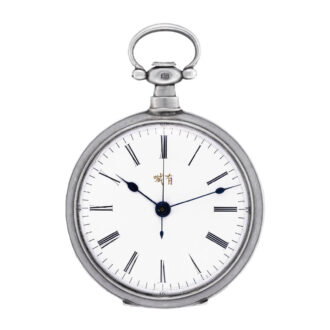
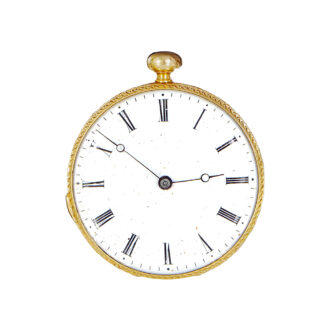
Swiss rare pair of pocket watches for the Chinese market Circa 1875
- Kenmerk
- FA0232
- Diameter
- 55 mm
- Estimate
- € 5.000 - 10.000
- Price sold
- € 10.800
Set silver pocket watches by Juvet
–
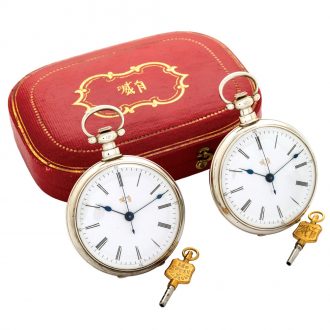
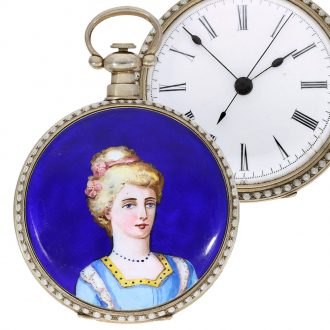
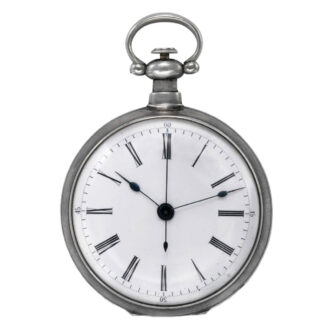
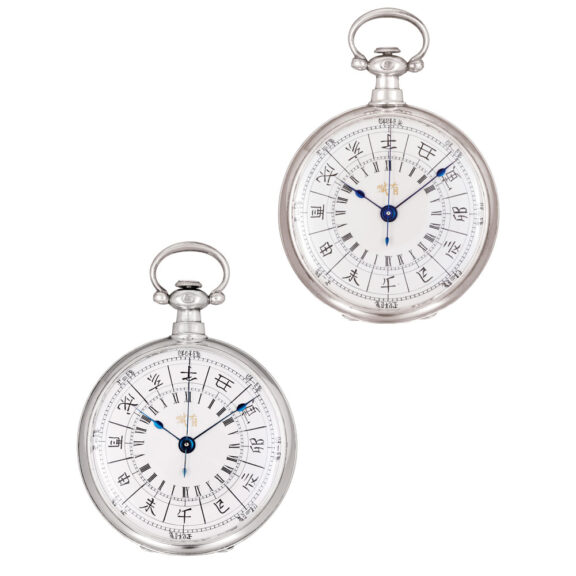
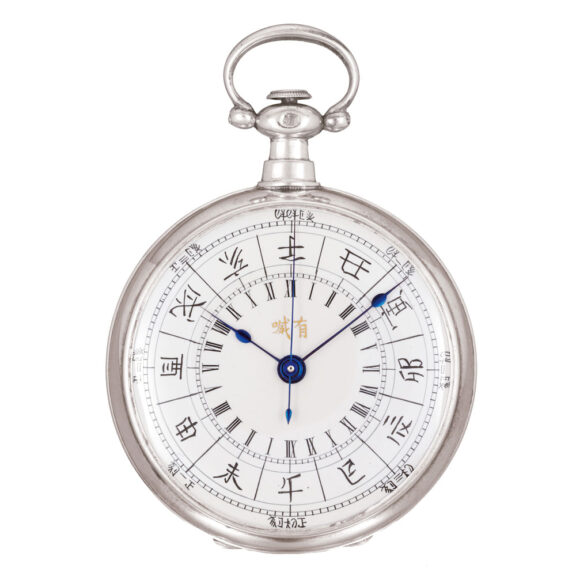
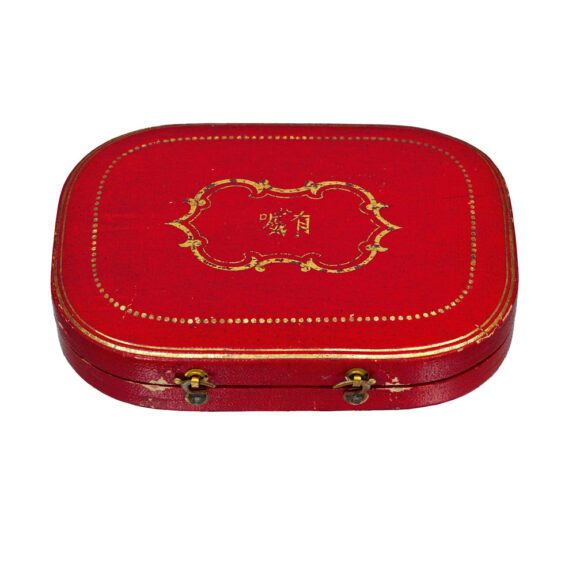
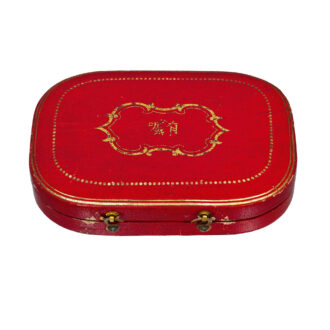
A fine pair of silver pocket watches with centre seconds and original morocco fitted case, keys and spare crystals, made for the Chinese market, circa 1875. Gilded and entirely foliate engraved, “Chinese” calibre, 16 jewels, free-standing barrel, counterpoised lateral lever escapement, bimetallic compensation balance, white metal flat balance spring, index regulator. Polished case with spring-loaded and glazed cuvette.
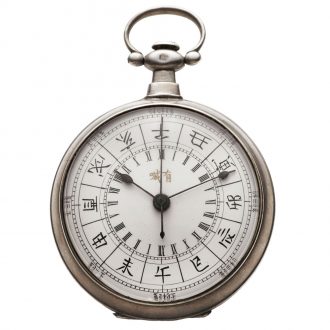
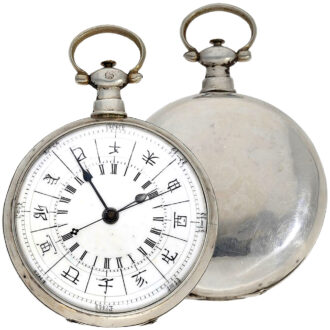
White enamel, radial Roman numerals, outer Chinese numerals and minute track. Blued steel ovoid hands.
–
Diameter: 55 mm
–
Signed: Juvet à Shanghai
–
Edouard & Léo Juvet à Fleurier
The Juvet family was one of the important Swiss horological families which produced pieces for the Chinese market. Edouard Juvet (1820-1883) opened his workshop in Buttes in 1842 and moved to Fleurier in 1844. In 1856 Edouard started making watches for the Chinese market; his sons Ami-Louis and Léo eventually went to China to work in the family firm. After Ami-Louis had died there, Léo (1848-1891) travelled to China to take his place. Only the Bovets rivalled the Juvets in Shanghai – however, the two families always maintained friendly relations. The Juvets flourished with branches in Beijing and Tianjin, so in 1872 Léo wrote: “Our watches sell like salt”. Edouard Juvet registered a trademark in Chinese characters in 1873 to be used on the company’s products. In November 1875, he granted his son Léo power of attorney; after Edouard’s death in February 1883, Léo succeeded him as head of the firm.
The pocket watches by Juvet, with their finely handcrafted and unique artistic style, were welcomed by the royal family members of the Qing Dynasty. Juvet has since become the emperor’s watch brand. Owning a Juvet pocket watch is a symbol of nobility.
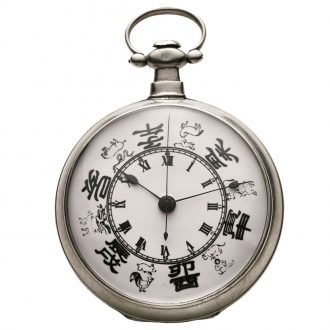
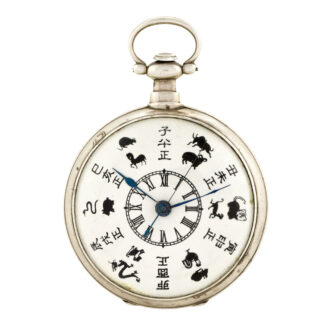
This watch features double indications: outermost, the twelve traditional Chinese hours; innermost, the 24-hour Roman indication. In such watches, the movement is designed to ensure that the hour hand makes two revolutions per day. Although most of the watches and snuffboxes destined for the Chinese market were made in pairs, most were separated. It is rare to find a pair still together.
Signed: Juvet, Fleurier
Share this page: