Swiss watch with musical movement and six automatons Circa 1820
- Kenmerk
- AD9803
- Diameter
- 58 mm
- Estimate
- € 130.000 - 250.000
- Price sold
- € 188.250
Gold and enamel pocket watch à quatre couleurs attributed to Piguet & Meylan
–
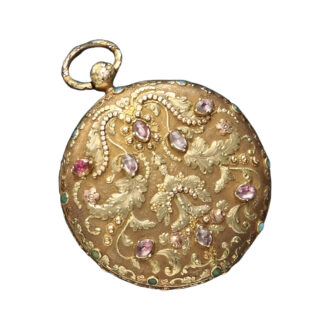
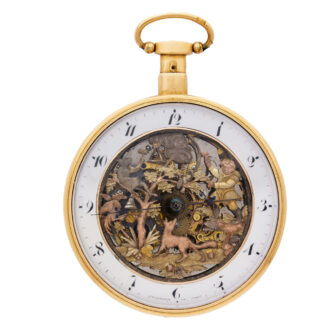
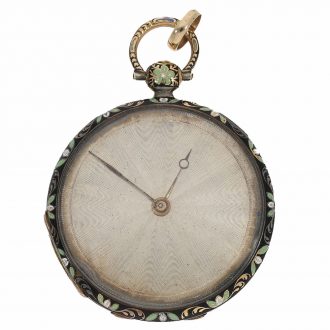
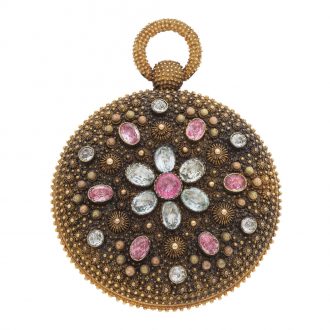
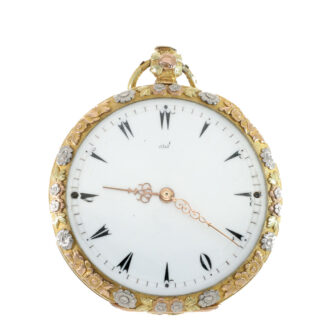
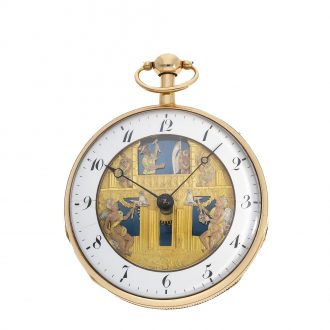
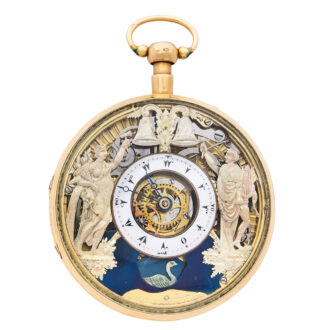
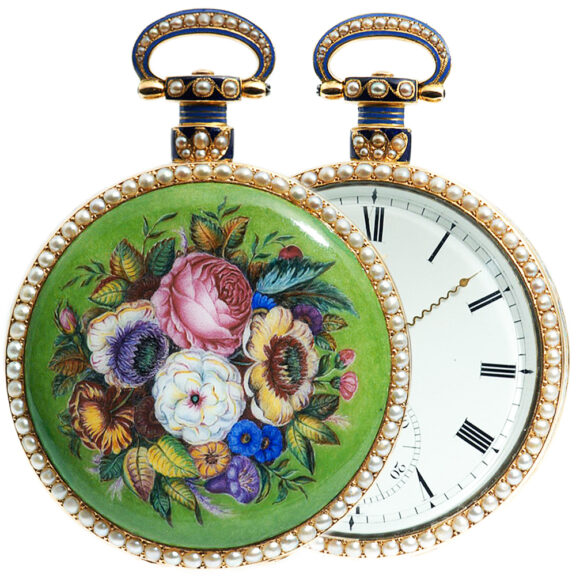
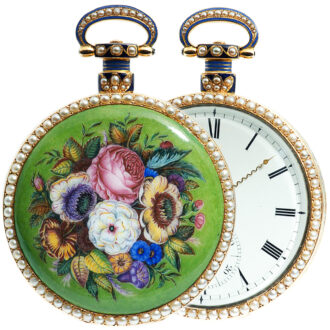
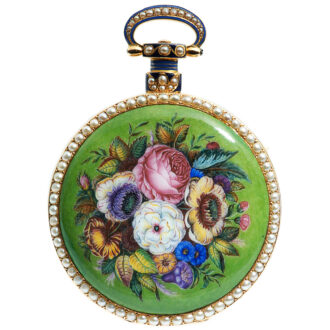
A heavy and very fine Swiss 18 Carat rose gold and enamel open faced musical gentleman’s pocket watch set with half pearls with six automatons à quatre couleurs made for the Chinese market, circa 1820.
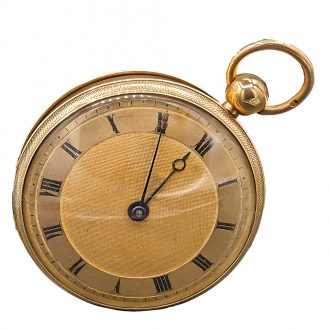
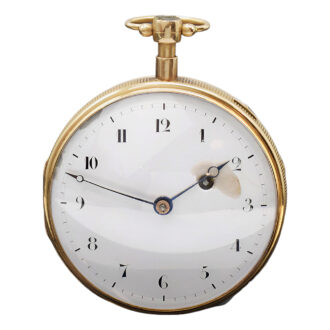
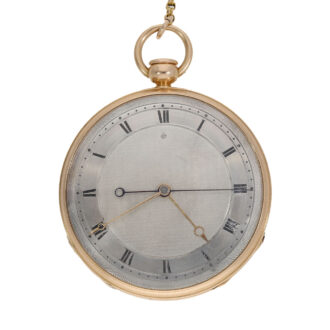
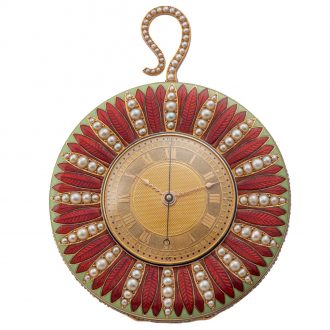
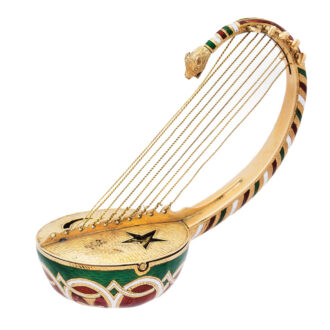
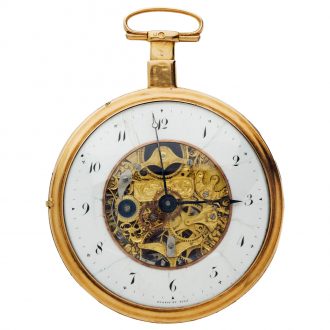
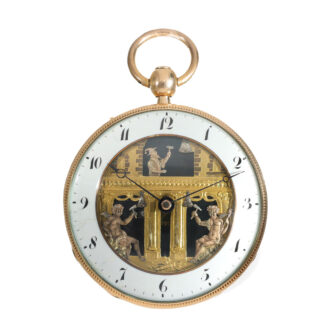
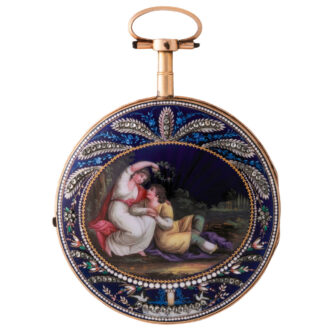
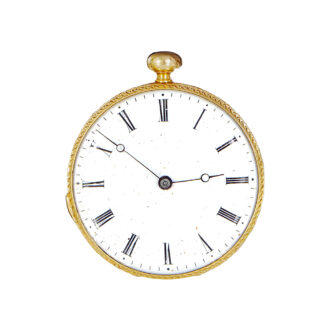
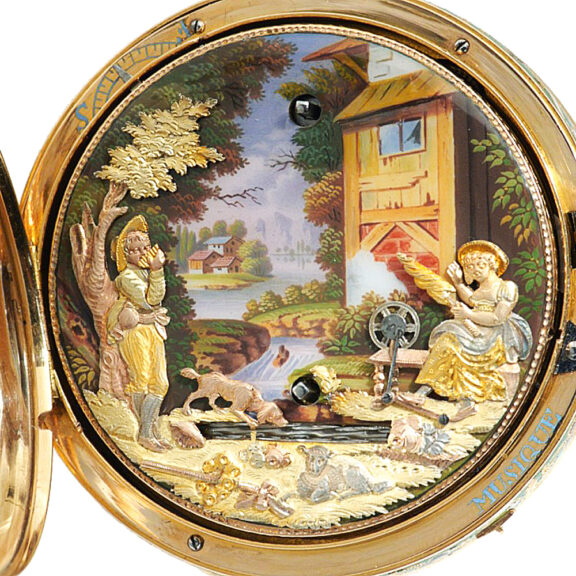
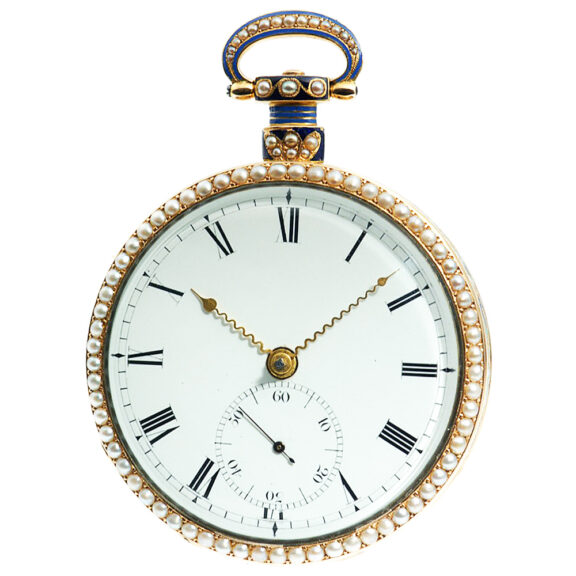
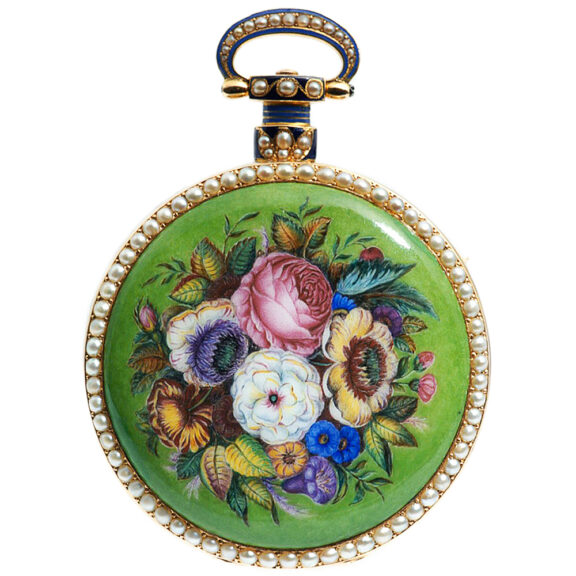
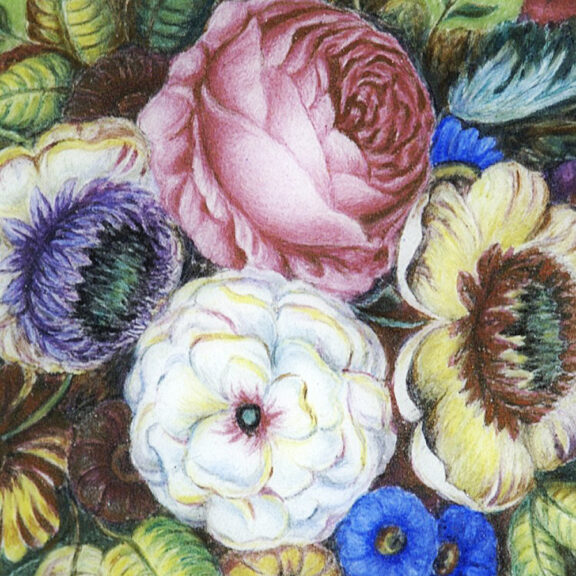
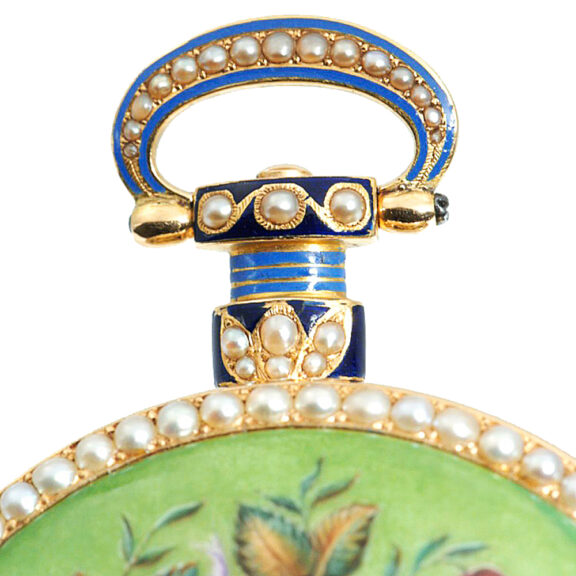
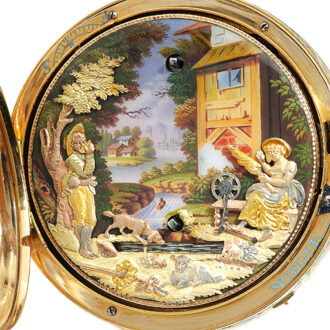
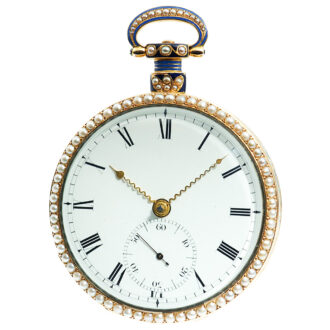
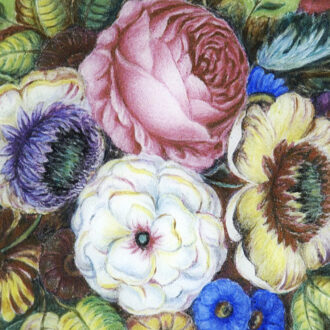
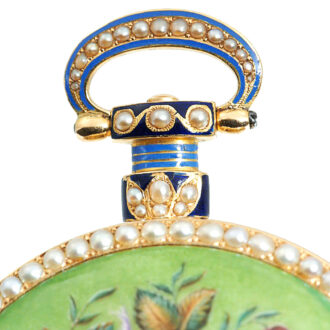
The case back with a fine delicate polychrome enamel bouquet of summer flowers against an apple green background, the band decorated to match with translucent blue and red flowers and opaque white and gold tendrils against an opaque apple green background, both bezels, the pendant and bow are half pearl set, a slider for music on and off. The cuvette with a very fine glazed polychrome enamel painting with five mounted automatons in four coloured gold: a garden next to a water mill with a shepherd boy playing the panpipes at a stream with flowing water and a drinking dog, a spinning shepherdess drives the moving wheel with her foot, in front of a mill and farm buildings on a river against an alpine background. White enamel dial with radial Roman numerals, outer minutes track, subsidiary dial for the seconds and gold decorative hands. A gilt frosted highly complex bridge movement, key wind, two going barrels, cylinder escapement, three arm gold ring balance and a musical movement with tuned vibrating blades playing on the hour.
–
Diameter: 58 mm
–
Weight: 188 g
–
Signed: No name
–
J.D. Piguet et S. Meylan. Piguet was an expert craftsman who produced his watches in partnership with Henry Capt and Philippe Samuel Meylan and later also with his sons. Philippe Samuel Meylan came to Geneva at the age of 20 to work for Louis Audemars & Cie. He opened his own workshop near Le Brassus in 1811, but returned to Geneva later. He met Piguet and formed a partnership with him, they worked in Geneva under the name Piguet & Meylan from 1811 to 1828. The company was well known for the production of early China watches and became famous for its pocket watches with special functions, they created automatons with man and animal shapes and intricate musical mechanisms as well as skeleton watches.
–
Watches for the Chinese Market. Imperial China was at its height in the 18th century. Not only the wealthy imperial couple but prosperous merchants and civil servants too were affluent enough to afford high priced luxury goods. They often bought watches, either to extend their own collections or to pay tribute to the emperor by presenting him with valuable gifts. Europe recognized the burgeoning financial power in Chinese society and in addition to exporting the high value Swiss timepieces, the companies began to open their own branches in China. To ensure that contemporary tastes were met and the cultural demands of the time satisfied, the preferences of the “new” clientele were carefully investigated. The lavishly decorated watch cases always stood out for their distinctive ornamentation. Shapes, colours and motifs were taken from nature; quality and design were second to none. Flower arrangements were immensely popular because they offered a myriad of possibilities for shape and colour. They came with or without pigeons, on light or dark grounds that might be opaque or translucent – besides landscapes and traditional Chinese figures, flowers were by far the most popular motif.
Share this page: