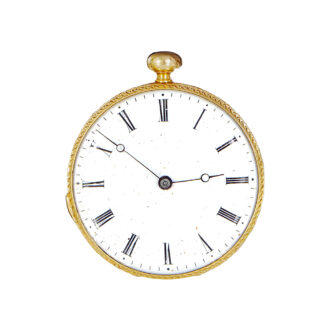
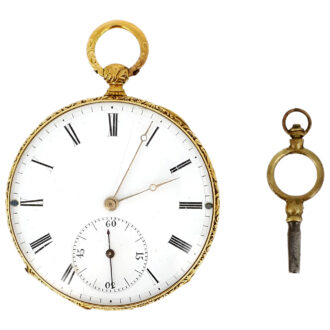
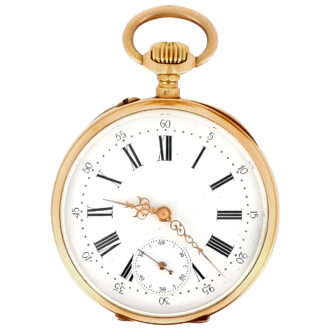
Thin Swiss repeating watch with duplex escapement Circa 1848
- Kenmerk
- AD9344
- Diameter
- 43 mm
- Estimate
- € 4.500 - 8.500
- Price sold
- -
Gold full hunter cased pocket watch by Mercier & Reynaud
–
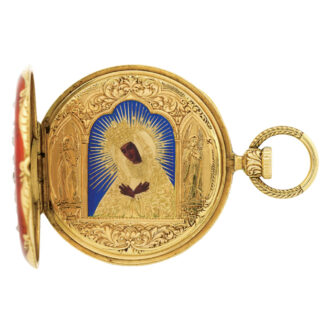
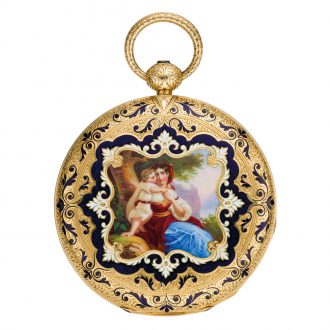
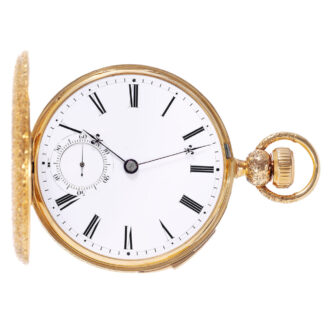
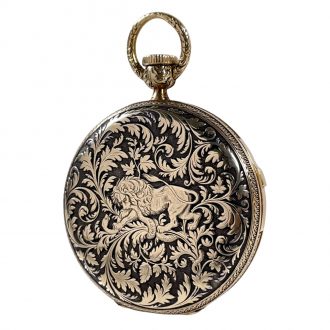
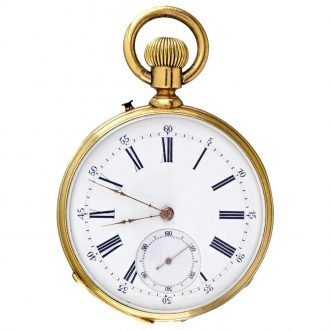
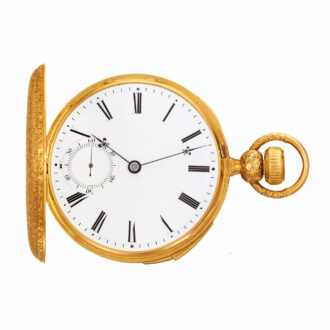
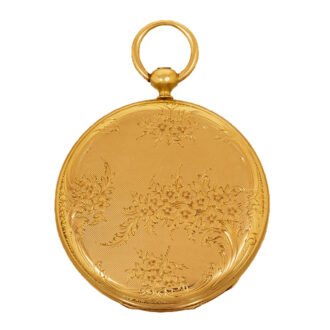
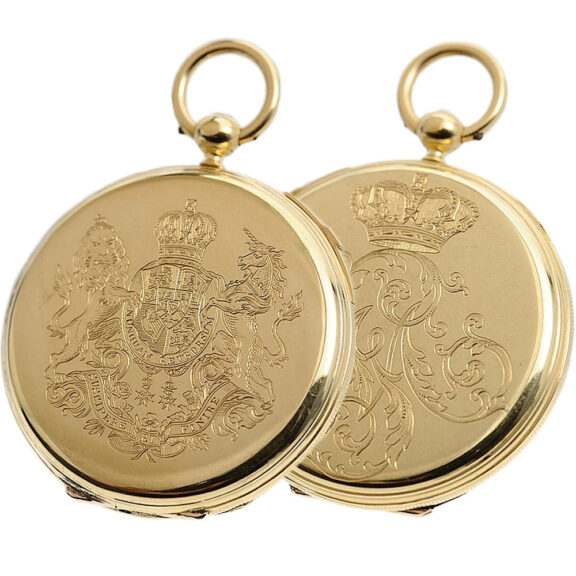
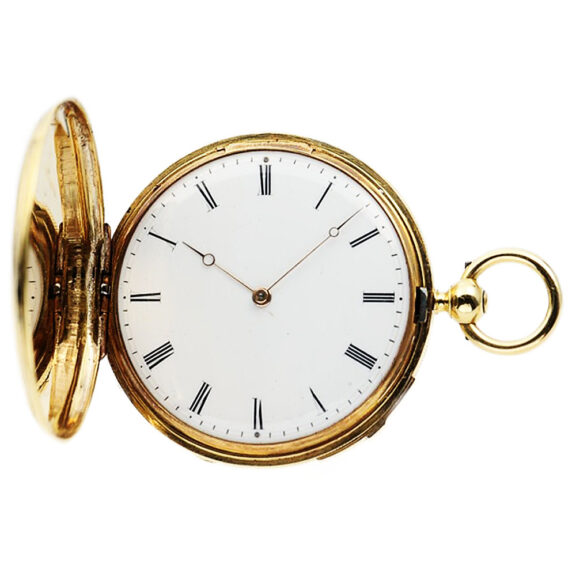
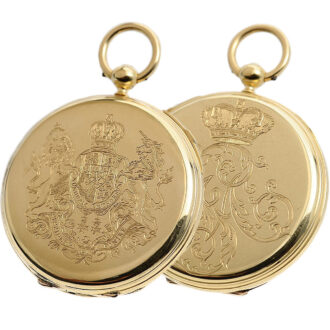
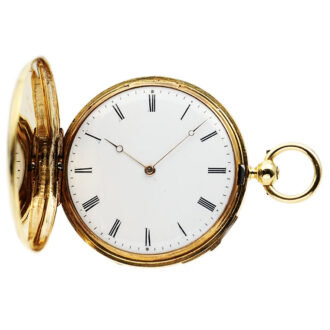
An exquisite, thin full hunter cased quarter repeating Swiss pocket watch with duplex escapement of unique German Royal provenance with velvet and silk lined box, circa 1848.
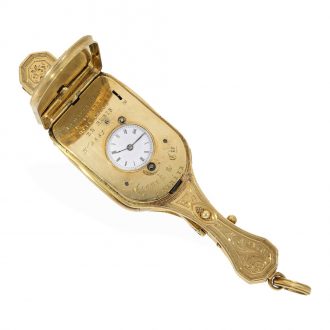
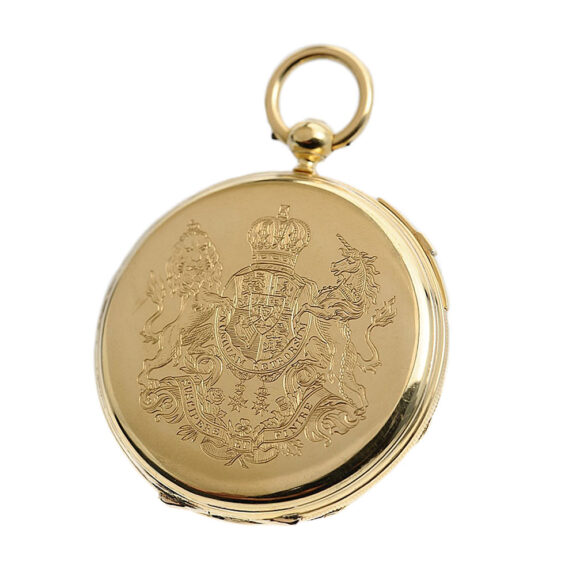
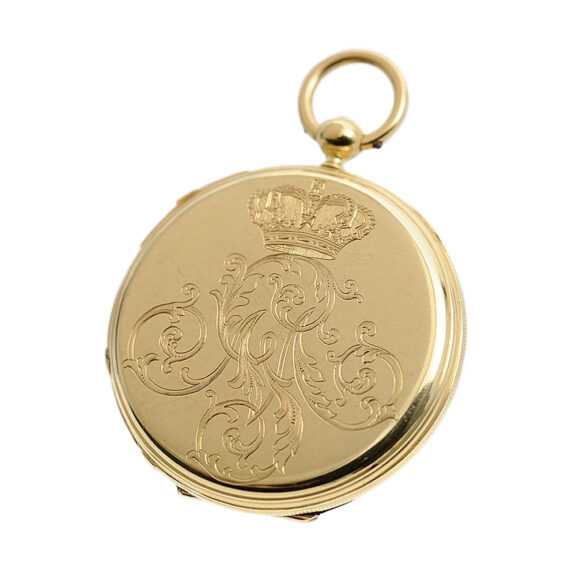
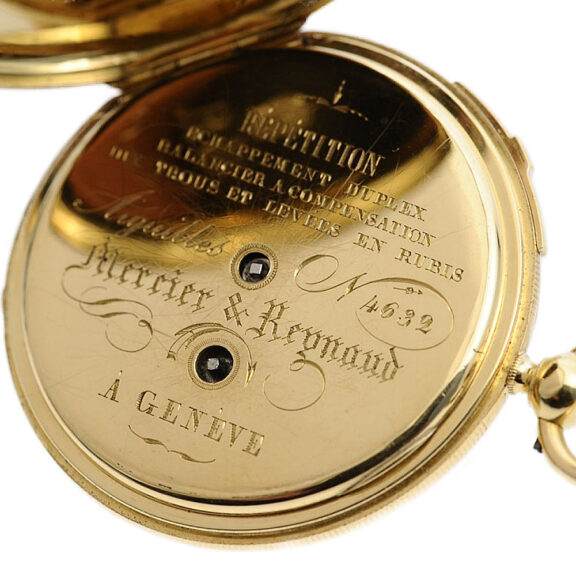
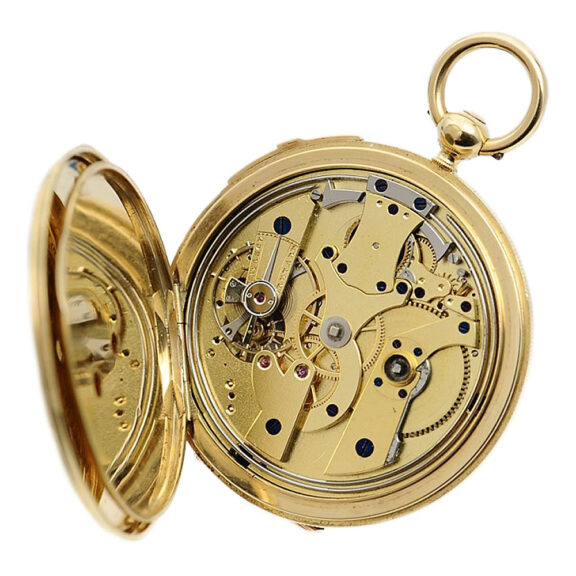
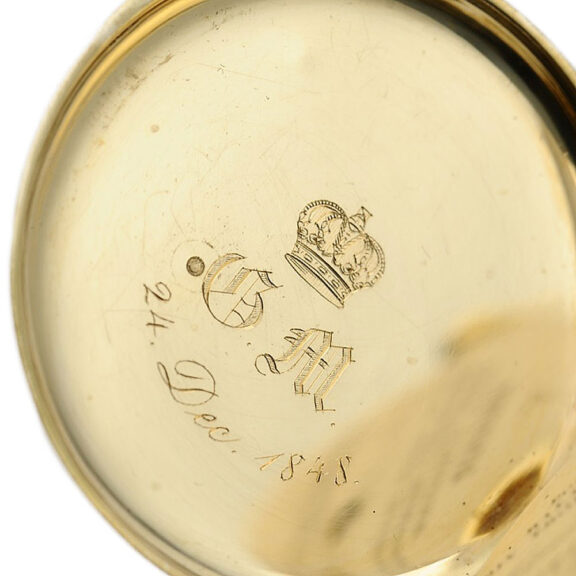
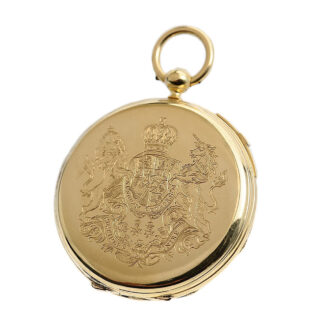
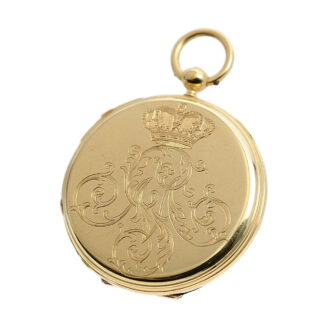
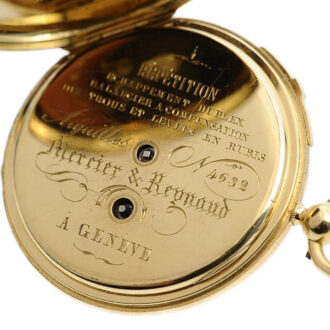
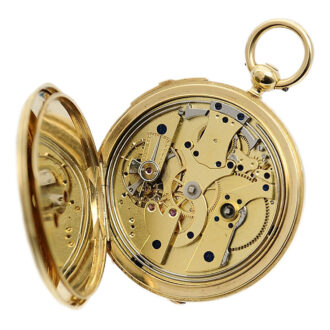
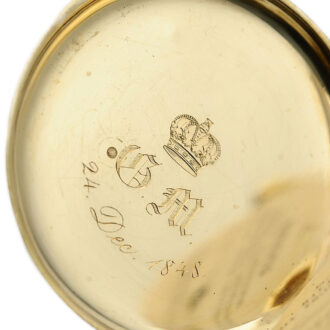
18 Carat gold, polished case with reeded band, the front cover engraved with the Royal crest of Ernest Augustus, King of Hanover, the backside engraved with crowned MS monogram, inner lid engraved with date 24. Dec. 1848 and crown over GM, numbered and signed gold cuvette and slide for repeating mechanism. Enamel dial with radial Roman numerals and gold Breguet hands. Bridge movement, key wind, frosted, gilt, two hammers and two gongs, steel escape wheel and gold screw compensation balance.
–
Diameter: 43 mm
–
Weight: 60 g
–
Signed: Mercier & Reynaud à Genève
–
Mercier & Reynaud
Mercier & Reynaud was a movement manufacturer and dealer in Geneva and London around 1850. The company was a medal winner at the 1851 World’s Fair and is known for selling watches to the English royal family. Business partners were Sigismond Mercier and Paul Alexandre Reynaud. In Geneva, the company was based in 1844 at Rue du Rhône and Place de la Fusterie 72. In London at 15 Duke Street, Piccadilly. In 1851, the company is mentioned at 175 Place du Rhône, opposite the entrance to the Hotel de l’Ecu in Geneva. Mercier & Reynaud used works by Louis Audemars in Le Brassus. Music boxes were also sold, the mechanics of which were most likely obtained from Ducommun-Girod.
–
Mercier, Geneva: winner of a Prize Medal at the 1851 Great Exhibition and known to have sold watches to the English Royal Family.
–
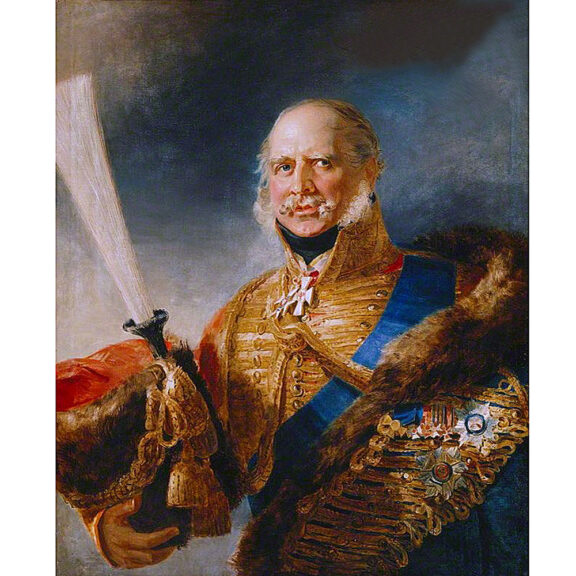
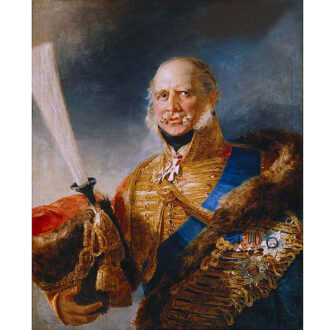
Ernest Augustus I (1771-1851)
Ernest Augustus, I was King of Hanover from 20 June 1837 until his death. Ernest Augustus was born at Buckingham House, now part of Buckingham Palace, on 5 June 1771. He was the fifth son and eighth child of George III, who eleven years before his birth had inherited the thrones of two kingdoms, Great Britain and Ireland, and also that of the Electorate of Hanover, still part of the Holy Roman Empire. As a fifth son, initially, Ernest seemed unlikely to become a monarch, but Salic Law, which barred women from the succession, applied to the succession in Hanover and none of his older brothers had any legitimate sons. Therefore, when in 1837 his niece, Victoria, became Queen of Britain and Ireland, ending the personal union between the British Isles and Hanover that had existed since 1714, Ernest became King of Hanover, which had been raised to a kingdom after the end of the Holy Roman Empire. In 1799, he was created Duke of Cumberland and Teviotdale. Although his marriage in 1815 to the twice widowed Frederica of Mecklenburg-Strelitz met with the disapproval of his mother, Queen Charlotte, it proved a happy one. The King died on 18 November 1851 after an illness of about a month.
Signed: Mercier & Reynaud à Genève
Share this page: