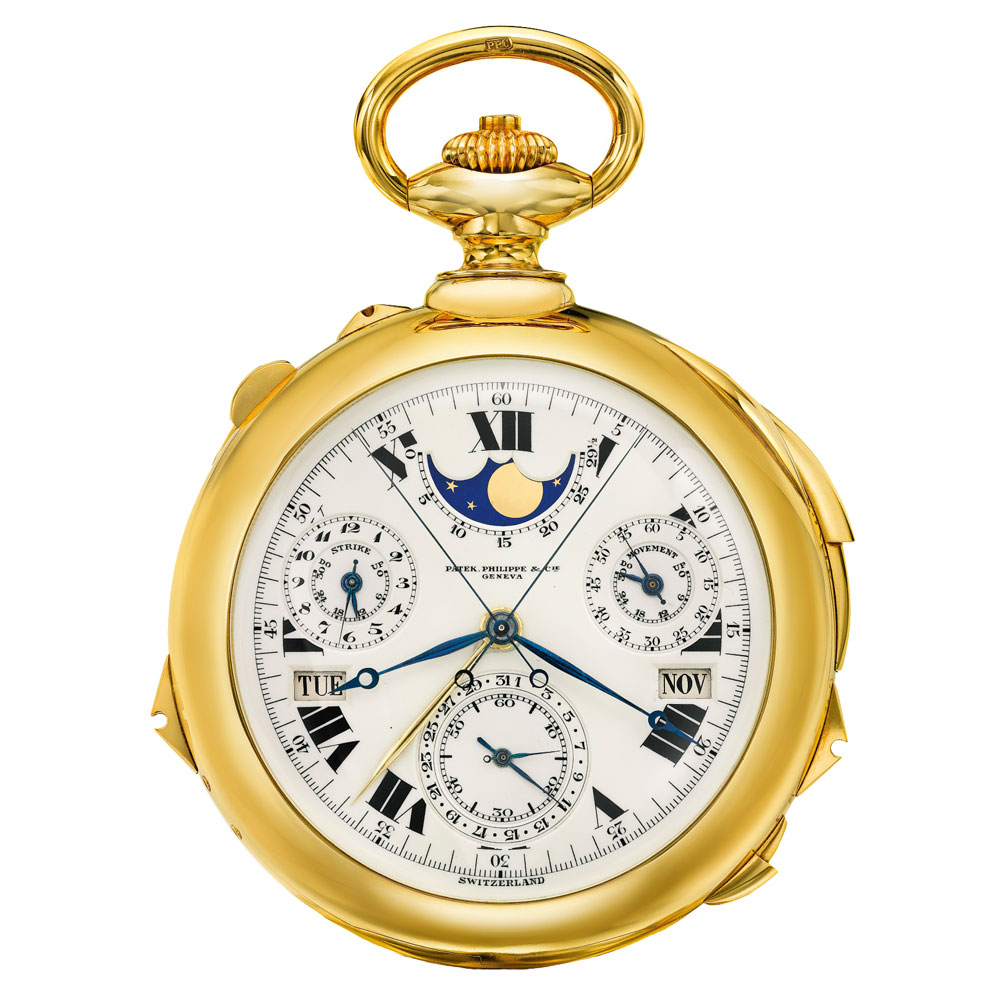
Illustration: the Patek Philippe Henry Graves Jr. Supercomplication, from our watch archive. Its November 2014 sale is historical context and falls outside the ten-year period below.
A pocket watch can be a portable observatory, a miniature concert hall or the defining work of a single craftsperson. At the highest levels of the auction market, collectors have paid millions for all three.
Among the most striking recent results is the Audemars Piguet Grosse Pièce, which sold for US$7,736,000 in December 2025. Yet the last decade’s exceptional sales extend beyond the familiar Swiss manufactures to George Daniels, Roger W. Smith, Derek Pratt and specialist nineteenth-century makers. Sotheby’s confirms the Grosse Pièce result.
This article examines a selection of the most expensive publicly documented pocket watch sales within 9 November 2016 to 9 November 2026. It separates individual watches from a major four-watch set and explains what makes these records useful to collectors.
Exceptional pocket watch auction results, 2016–2026
The individual sales below are listed by date, newest first. Figures retain their original sale currencies: pounds, Swiss francs and US dollars are not interchangeable units. The selection is not an exhaustive worldwide ranking and does not include undisclosed private transactions.
These are the published sale results, rather than amounts identified here as hammer prices or the seller’s proceeds. Auction results commonly include the buyer’s premium; they should not be treated as a complete invoice including every possible tax or charge. Small US-dollar figures are approximate sale-time equivalents from the auction house or original cataloguer, rounded to the nearest US$0.01 million. Select a USD figure to see its source. No inflation adjustment has been applied. Where a source gives a two-day sale, the table retains that date range.
Audemars Piguet Grosse Pièce: US$7,736,000
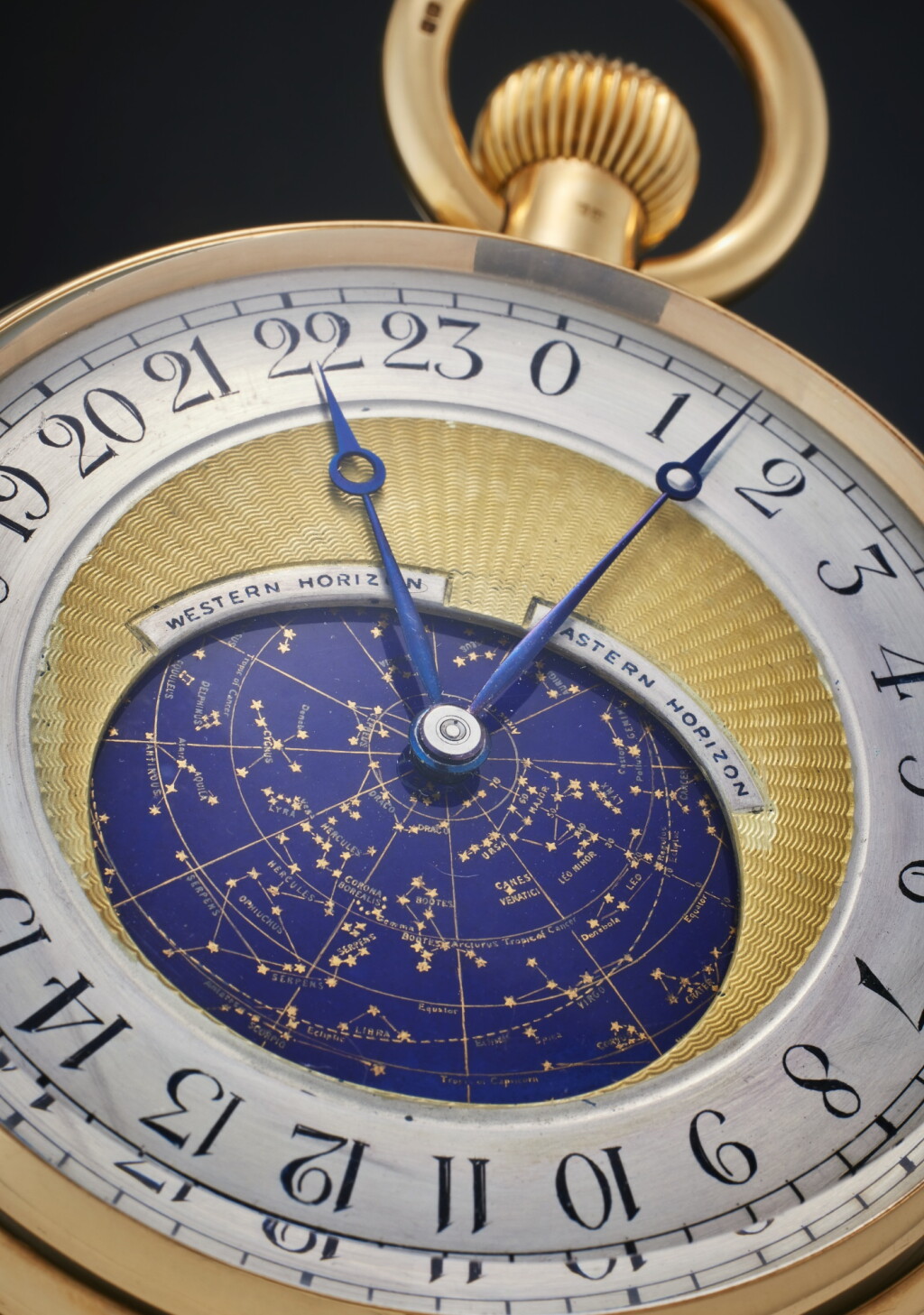
Sold at Sotheby’s New York on 8 December 2025, this extraordinary commission was begun in 1914 and delivered in 1921 for London retailer S. Smith & Son. Its two dials bring together striking, calendar and astronomical functions, including a tourbillon and a chart of the sky over London. Sale date and result; original catalogue record.
The surviving documentation matters alongside the mechanism. A catalogue linking the watch to its original commission, production records and later ownership gives researchers something far richer than an impressive list of complications. For anyone studying historic prices, this is a reminder to retain the story attached to the object.
Louis Richard pocket chronometer: CHF 3,968,000
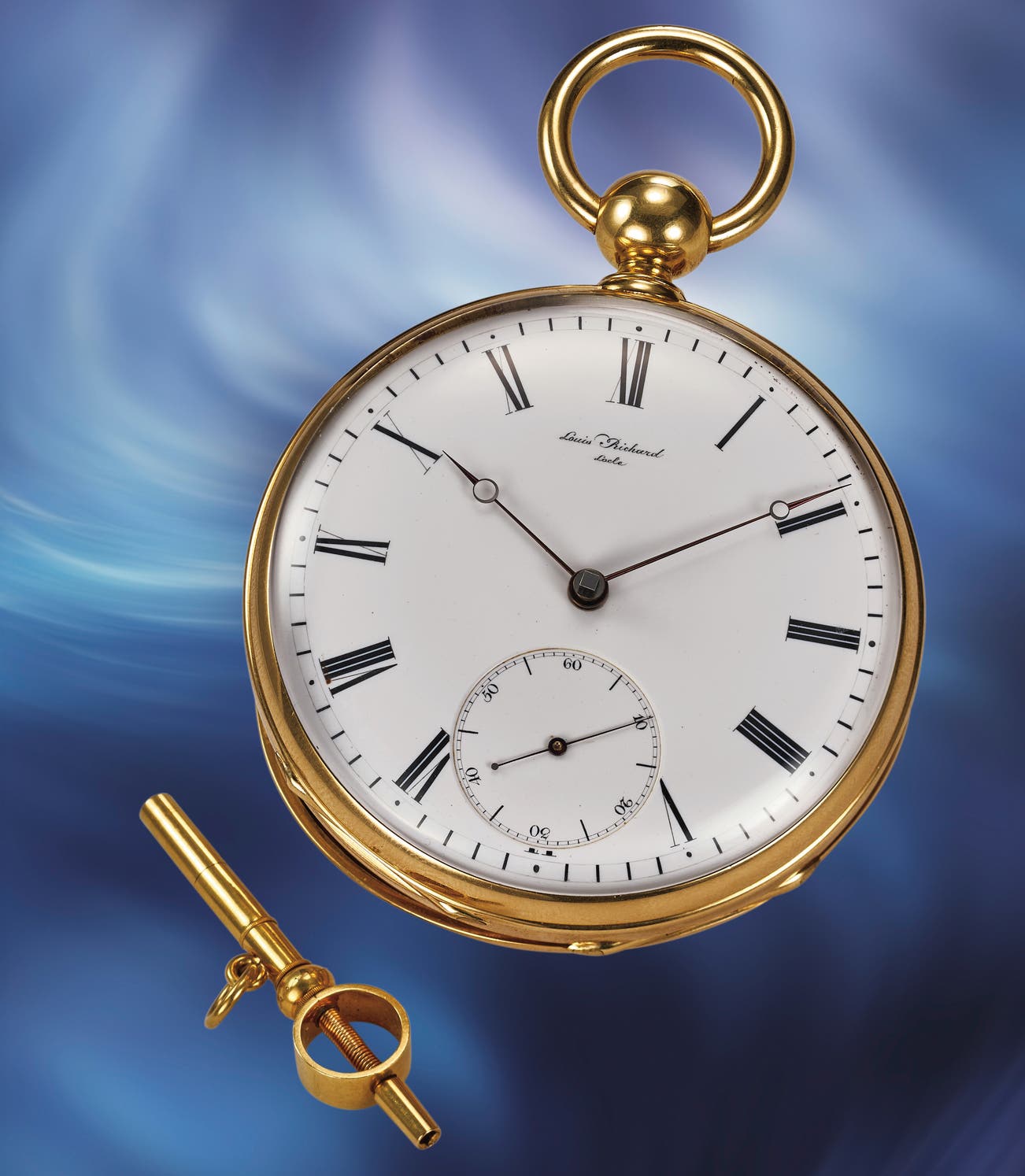
At Phillips’ Geneva sale on 9–10 May 2026, a Louis Richard pocket chronometer with a triple-detent, constant-force, one-minute tourbillon achieved CHF 3,968,000. Phillips described it as the only known example of its kind and reported a record for a pocket chronometer. Phillips’ result release.
Its inclusion broadens the picture beyond famous modern brand names. A specialised solution to a watchmaking problem can be central to an object’s significance, even when the maker is unfamiliar to a general audience.
Roger W. Smith Pocket Watch No. 2: US$4,900,000
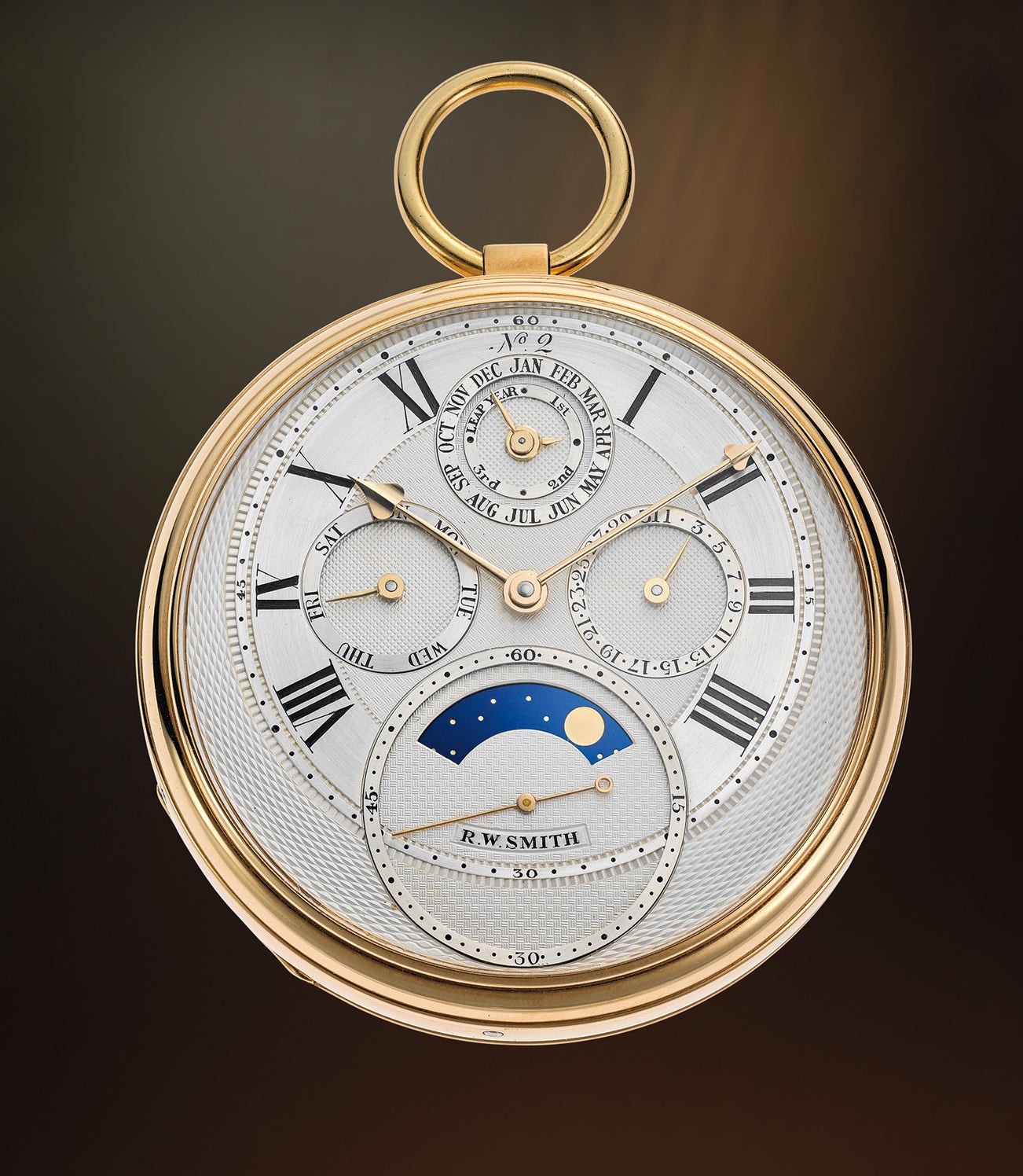
Phillips sold Roger Smith’s Pocket Watch No. 2 for US$4,900,000 in New York in June 2023. Dated 1998 in the catalogue, the yellow-gold watch combines a tourbillon and spring-detent escapement with a perpetual calendar and moon-phase display. Phillips’ lot record.
This was also the watch through which Smith demonstrated his abilities to George Daniels and secured the opportunity to work with him. Its importance therefore reaches beyond the functions on the dial: it documents a formative moment in a major independent watchmaker’s career. Phillips’ account of the watch and sale.
George Daniels Space Traveller I and II: £3,615,000 and £3,196,250
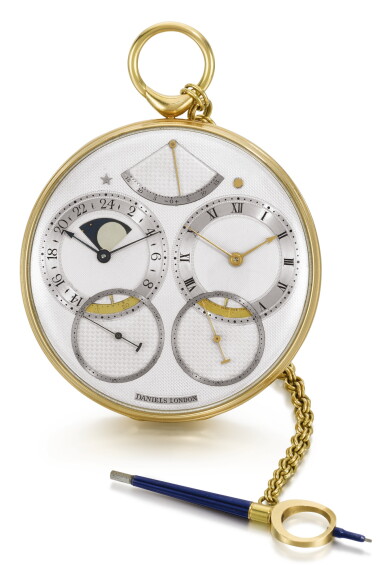
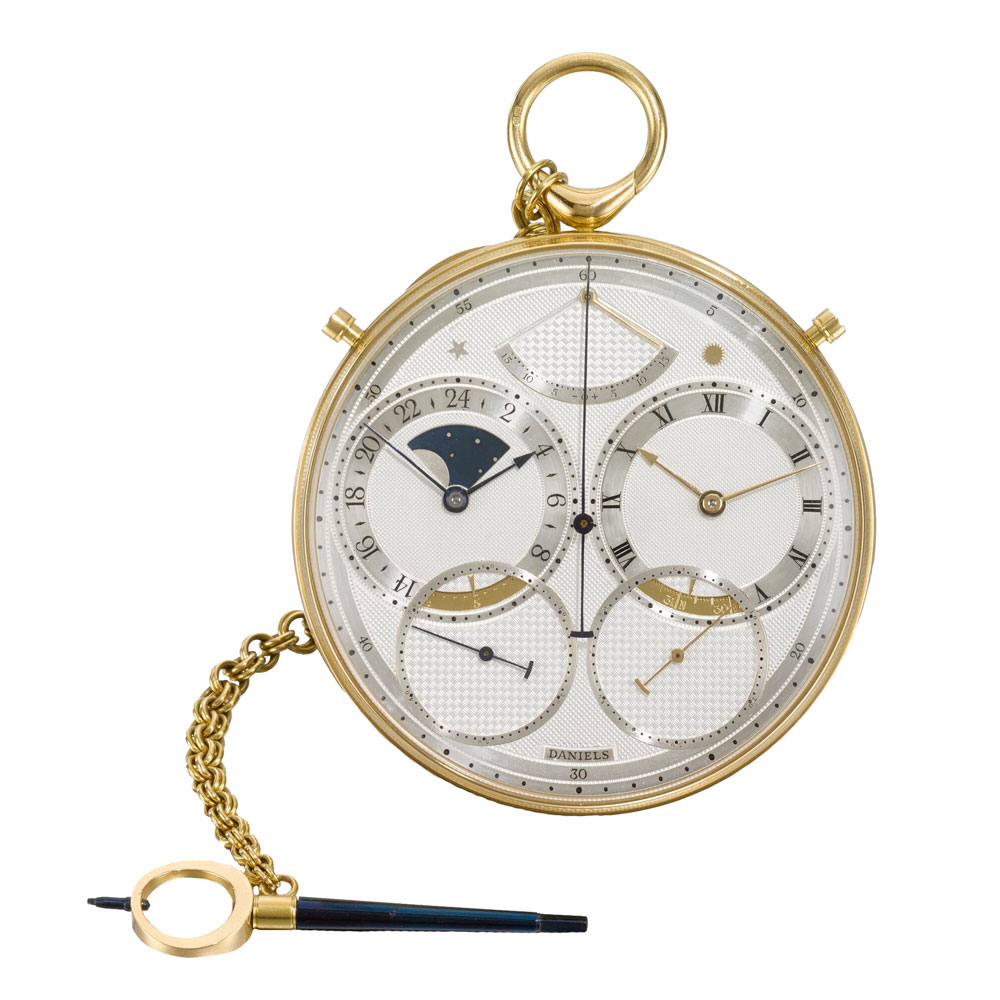
These are two different watches. Space Traveller I sold at Sotheby’s London on 2 July 2019 for £3,615,000. Space Traveller II achieved £3,196,250 on 19 September 2017, also at Sotheby’s London. Alexander Barter, who researched and wrote both auction catalogues, records the results and distinguishes the watches. Read his first-hand account.
Both display mean solar and sidereal time, bringing astronomical timekeeping into a pocket-sized mechanism. The second adds a chronograph and was retained by Daniels himself. Comparing the pair shows why a shared name is not enough to establish that two auction entries concern the same object. Space Traveller I catalogue; Space Traveller II catalogue.
Derek Pratt for Urban Jürgensen, The Oval: CHF 3,690,000
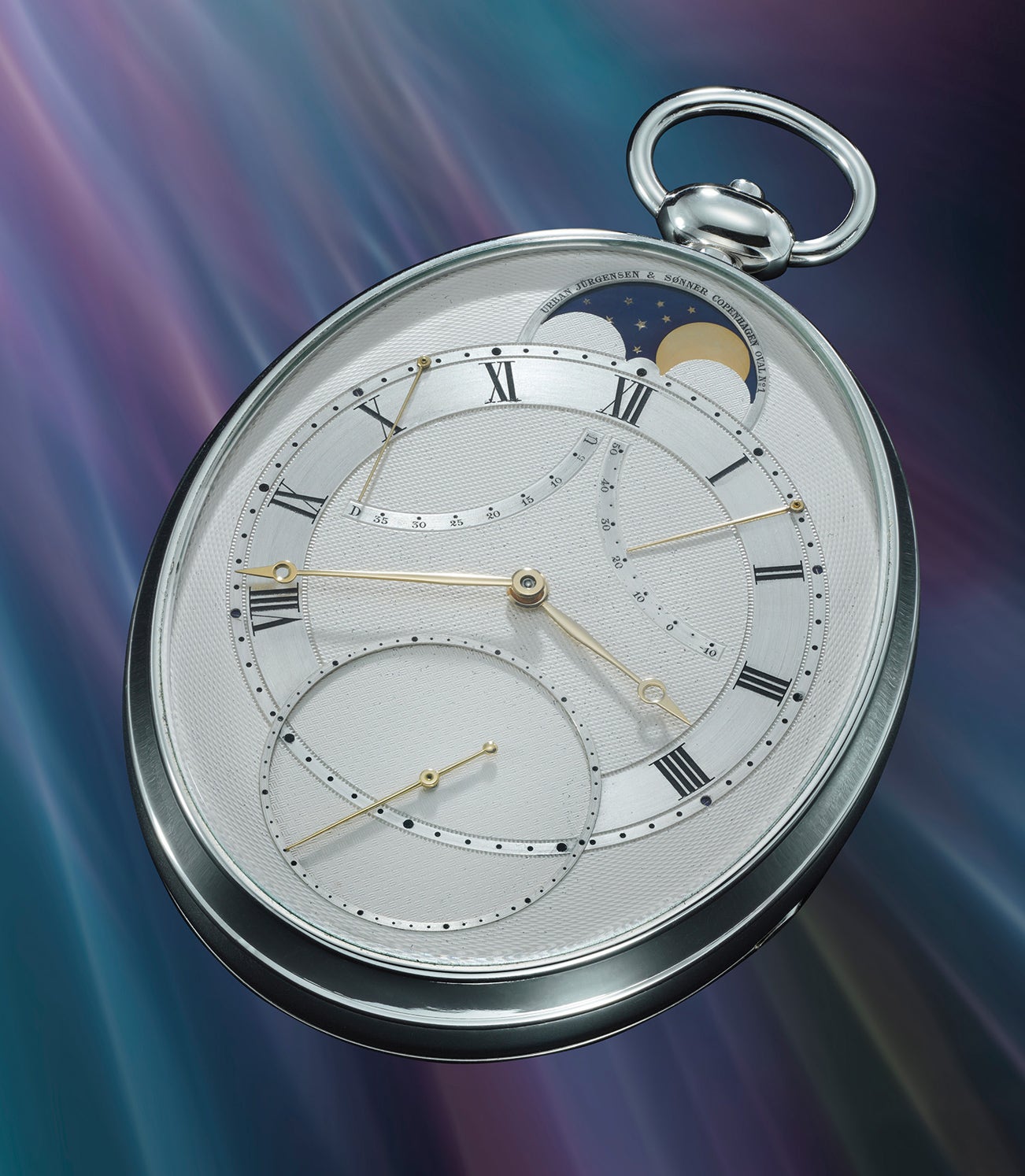
The Oval sold at Phillips Geneva on 8 November 2024 for CHF 3,690,000. The platinum watch combines a detent-escapement tourbillon with a remontoir, power-reserve display, thermometer and moon phase. Its oval outline also makes it immediately recognisable among the predominantly round watches in this selection. Phillips’ catalogue and result; dated sale summary.
It offers a different way to think about exceptional watchmaking. Shape, construction and the execution of an ambitious mechanism can be as compelling a research subject as the total number of complications.
Louis Audemars & Co., La Royale: CHF 2,516,000
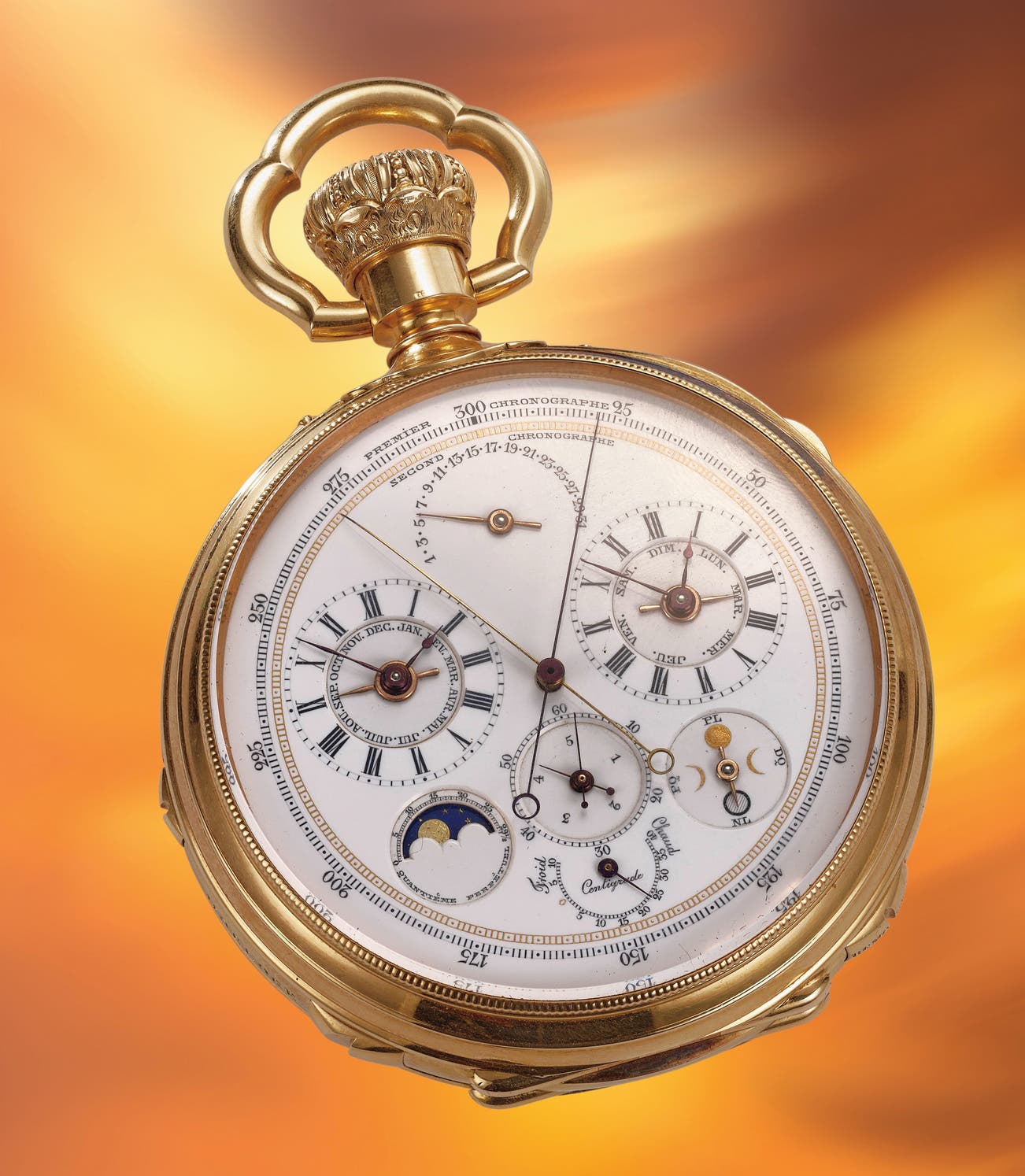
The La Royale supercomplication, catalogued as Louis Audemars & Co. No. 12112, achieved CHF 2,516,000 at the same Phillips Geneva sale on 9–10 May 2026. It appears alongside the Louis Richard result in the auction house’s published report. Phillips’ result table, lot 137.
The maker’s full name should remain attached to the record. Louis Audemars & Co. and Audemars Piguet are different catalogue attributions; reducing both to “Audemars” would remove a meaningful distinction from a research database.
Philippe Dufour Grande & Petite Sonnerie No. 1: CHF 2,329,000
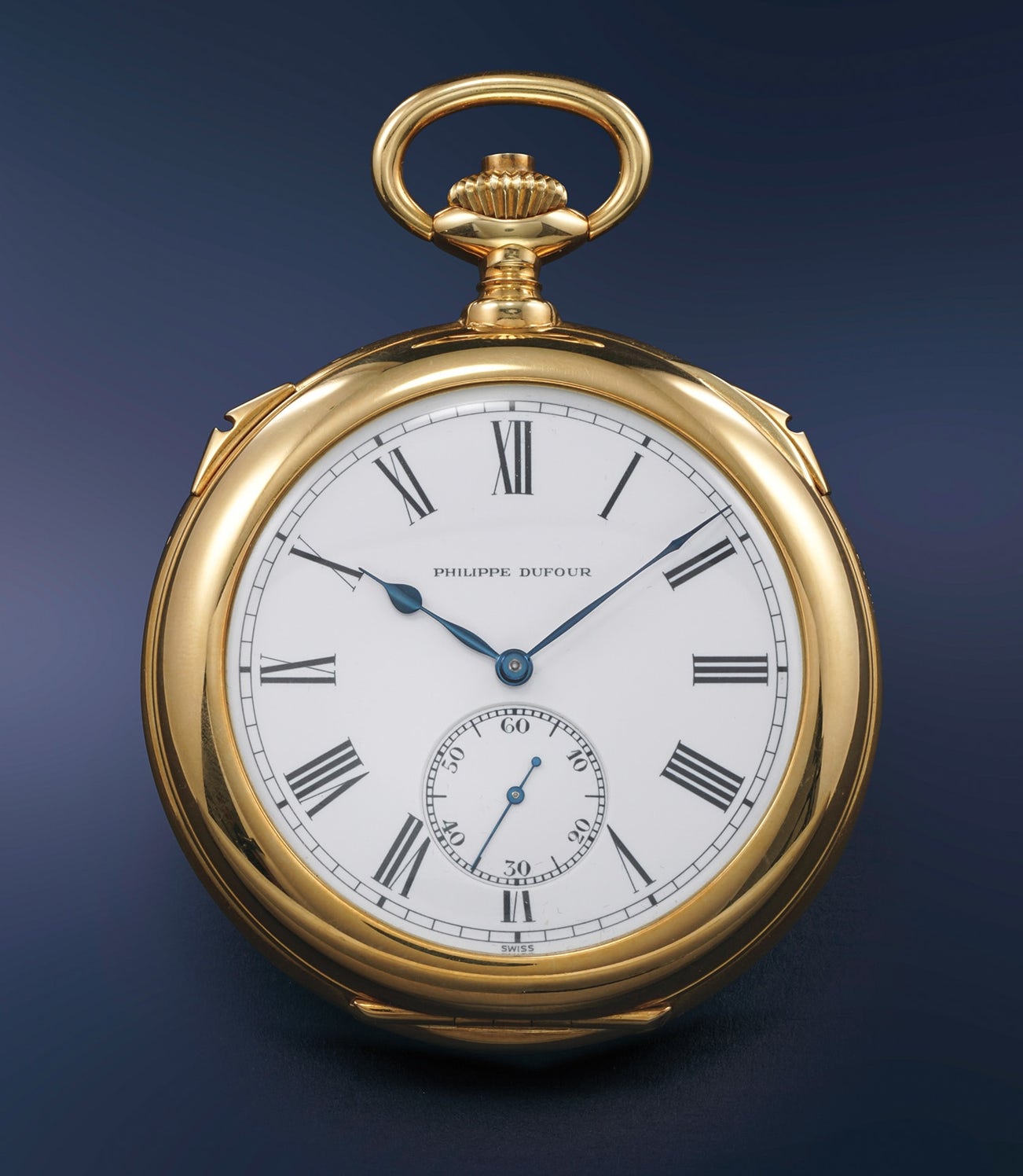
At Phillips Geneva in November 2021, Philippe Dufour’s 1989 yellow-gold Grande & Petite Sonnerie No. 1 sold for CHF 2,329,000. The watch combines automatic striking functions with minute repeating, placing the sound of time at the centre of its mechanical identity. Phillips’ lot record; sale result release.
A complication count alone would give only a partial account of its importance. Understanding a striking watch also means examining the construction and execution of its mechanism, together with its place in the maker’s work.
George Daniels Grand Complication: CHF 2,420,000
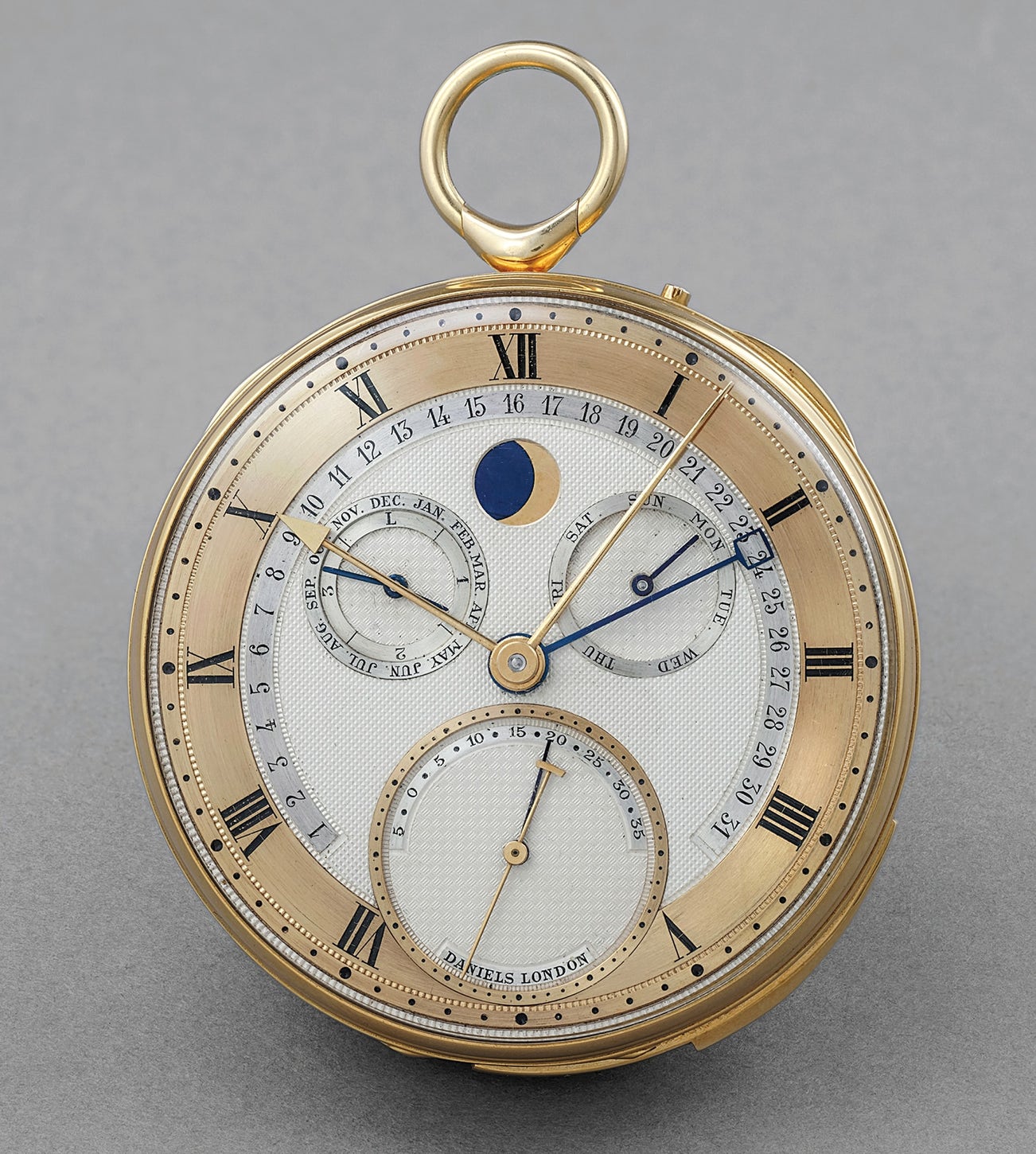
Another major Daniels result came at Phillips’ Geneva sale on 11–12 May 2019, when the Grand Complication achieved CHF 2,420,000. Dated 1987, the watch brings together a minute repeater, perpetual calendar, equation of time and a one-minute tourbillon with a co-axial escapement, among other indications. Catalogue and published result; dated sale summary.
Seen alongside the two Space Travellers, it illustrates the range within one maker’s output. A price record becomes more informative when it identifies the particular watch and its mechanism, rather than treating every example bearing the same signature as interchangeable.
A separate category: the US$11.9 million Patek Philippe Star Calibre 2000 set
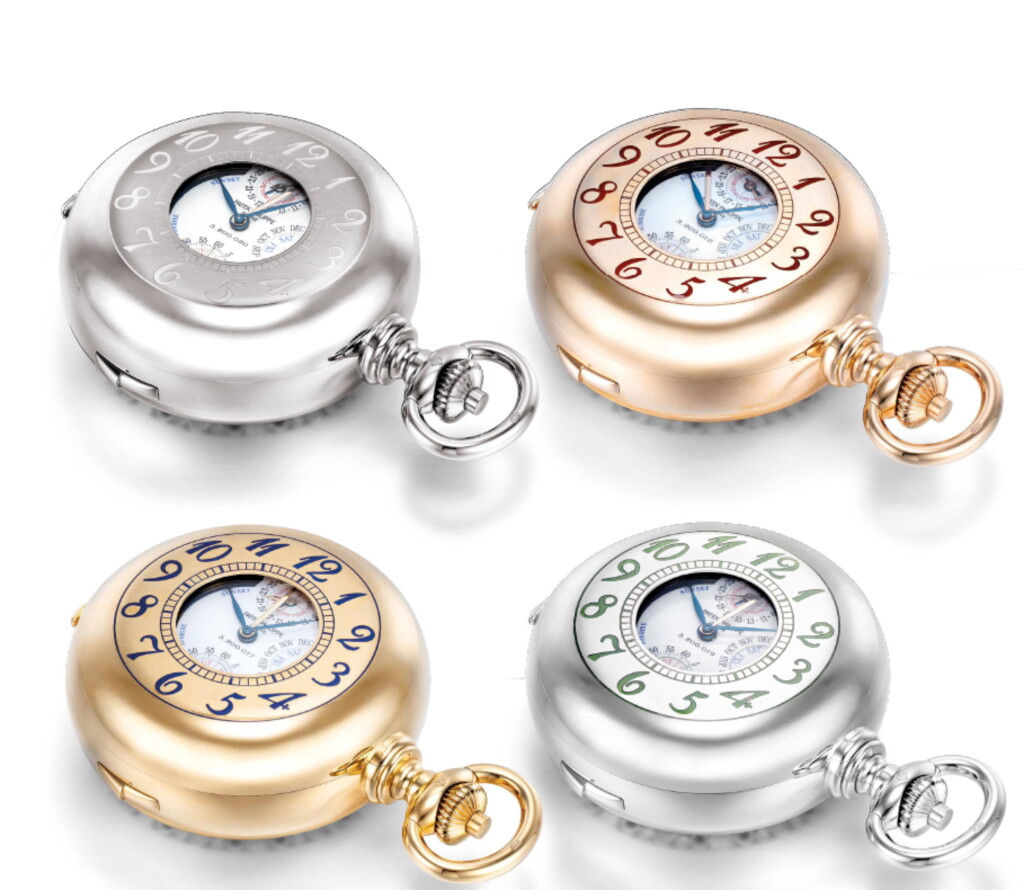
On 5 December 2025, Sotheby’s offered a complete set of four Patek Philippe Star Calibre 2000 watches in Abu Dhabi. The auction house subsequently reported a result of US$11.9 million. The set comprised yellow-gold, pink-gold, white-gold and platinum examples; each watch has 21 complications, including Westminster chiming and astronomical displays. Original set catalogue; published result.
That figure is for four watches sold together in one lot. It is not an individual pocket watch price, and dividing it by four would not establish what any one example would have achieved separately. Complete-set presentation is part of the transaction being recorded.
Why the Henry Graves Supercomplication is outside this list
The Patek Philippe Henry Graves Jr. Supercomplication is essential context for any discussion of expensive pocket watches. Sotheby’s reported its approximately US$24 million result in November 2014. That sale predates this article’s ten-year window, so it is not presented as a sale from 2016–2026. Sotheby’s original sale update.
What these sales tell us about pocket watch values
These exceptional objects give collectors several useful lines of enquiry: technical achievement, a maker’s individual contribution, surviving documentation, condition and provenance. They also show why the market cannot be understood from brand name, age or case material alone.
For a watch in your own collection, begin with identification and genuinely comparable examples. Record the maker or attribution, approximate date, case, movement, complications and any documented alterations. Then compare sale records while retaining the auction date, currency and price basis. A celebrated multimillion-dollar result is context, rather than a valuation of an ordinary watch.
A pocket watch database with historical market data helps connect those details. Our pocket watch archive provides a starting point for exploring documented examples, price indications and recorded sale prices where available. Use the antique pocket watch identification guide to structure the object research before making price comparisons.
Frequently asked questions
What is one of the highest individual pocket watch results of the last ten years?
The Audemars Piguet Grosse Pièce No. 16869 sold for US$7,736,000 at Sotheby’s New York on 8 December 2025. It is an individual-watch result; the US$11.9 million Patek Philippe Star Calibre 2000 transaction discussed above concerns a set of four. Audemars Piguet result; Patek Philippe set result.
Are the watches themselves all less than ten years old?
No. The time window refers to the auction date, not the watch’s manufacturing date. The selection includes antique pieces and much later examples of traditional pocket watchmaking.
Does an auction result include the buyer’s premium?
Often it does. Always retain the auction house’s result label and the conditions applicable to that sale. The hammer price, a premium-inclusive result and the seller’s net proceeds describe different amounts.