German chronometer with 56h power reserve Circa 1900
- Kenmerk
- DB0353
- Diameter
- -
- Estimate
- € 3.500 - 7.000
- Price sold
- € 4.900
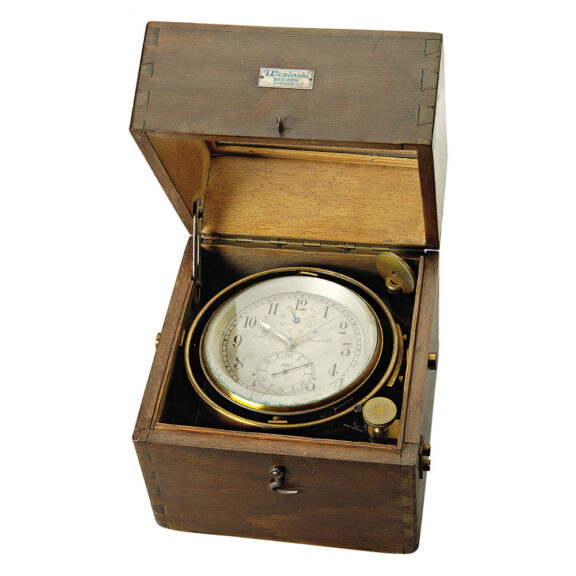
Deck chronometer by Fridolin Stübner
–
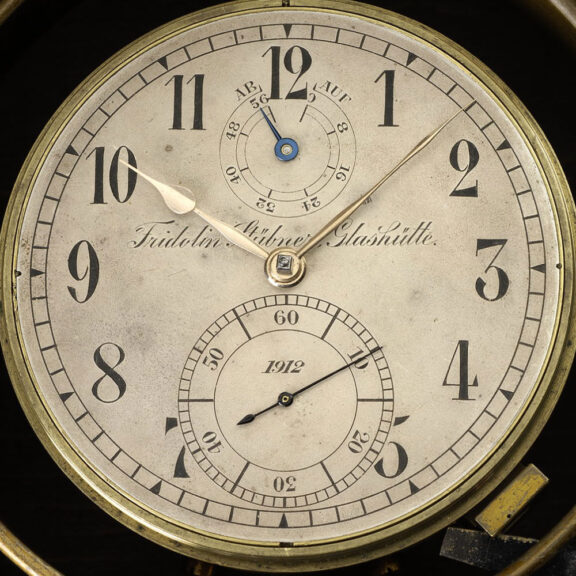
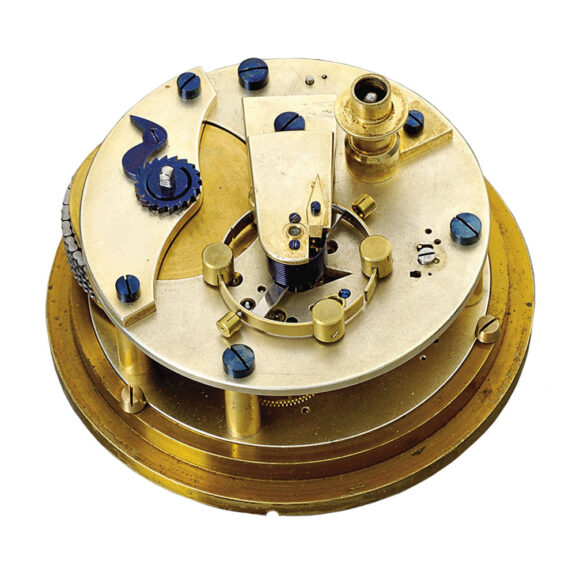
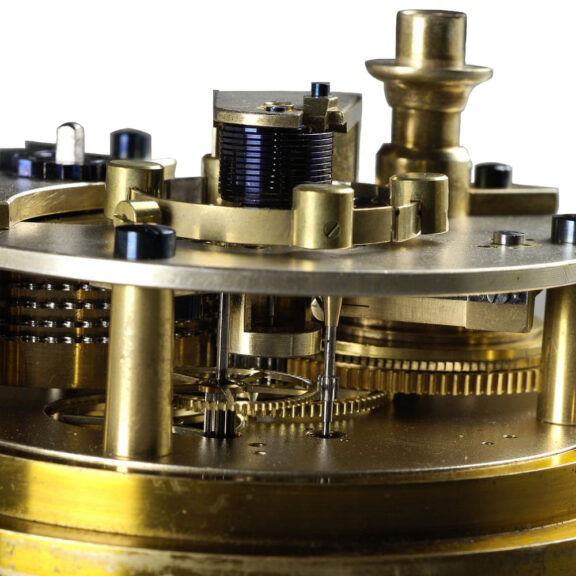
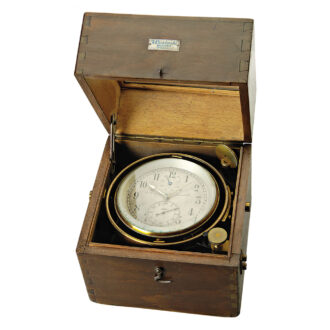
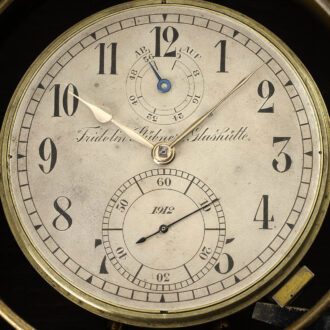
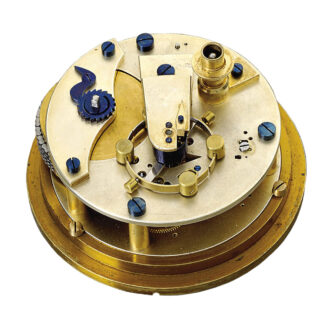
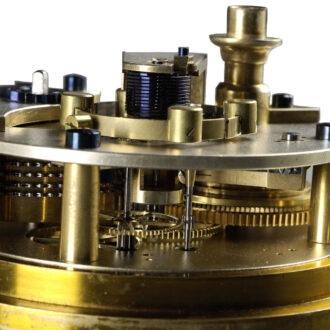
A Glashütte deck chronometer with 56-hour power reserve in a mahogany box, circa 1900. Gilded brass movement, spring detent escapement according to Thomas Earnshaw, bimetallic chronometer balance with two screws and four weights. Silvered dial with Arabic hours, an outer minute track, subsidiary seconds at 6 o’clock and a power reserve indicator at 12. Dial signed, movement numbered.
–
Dimensions: 183 x 185 x 183 mm
–
Signed: Fridolin Stübner Glashütte
–
Some elements are lacking.
–
This piece is the only known deck chronometer made by Fridolin Stübner!
–
Fridolin Stübner was born on February 1st, 1857. He started his working life at the age of 10 to support his mother and his younger brothers after the death of his father. At the age of 12 he worked for a gemstone setter named Gollmann and at 15 he began a four-year apprenticeship with the stone setter G. Kretzschmar. Stübner also worked for the Richter company in Chemnitz (which produced drafting instruments), for tools manufacturers Boley in Esslingen, and, after his military service, for the Württembergische Metallwarenfabrik in Geislingen. He then returned to Glashütte and worked for the movement maker Friedrich Weichold, where he specialized in the production of large pocket watches. In 1886 he began working for Dürrstein & Co and remained there until 1889. By then Stübner already had a reputation as a great watchmaker. Without a doubt, Fridolin Stübner was the most important chronometer maker of his time in Glashütte. Reinhard Meis states that ‘Emil Lange chose well when he employed chronometer maker and engineer Fridolin Stübner, who, among other things, ran a chronometer workshop in Glashütte together with his brother Paul and who had created and regulated a number of instruments’. According to Meis, Stübner introduced a kind of ‘in-house standardization’ and devised new industry standard dimensions for marine chronometers that were taken over by the entire German chronometer production industry.
Signed: Fridolin Stübner Glashütte
Share this page: