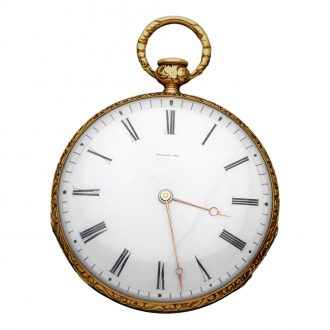
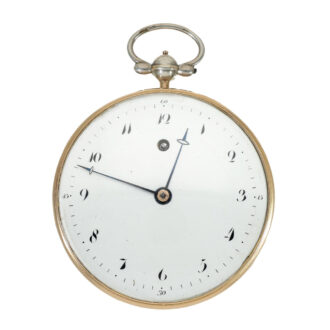
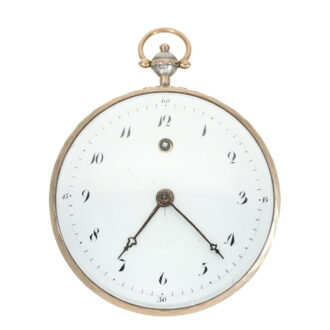
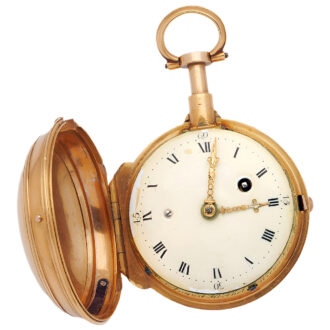
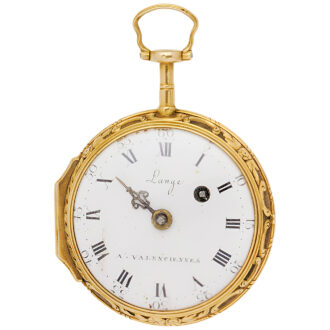
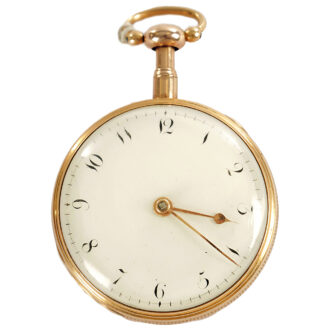
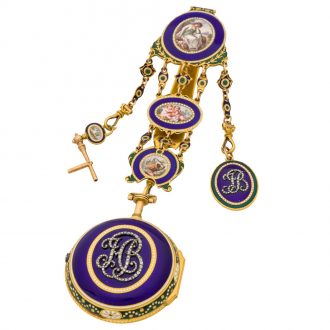
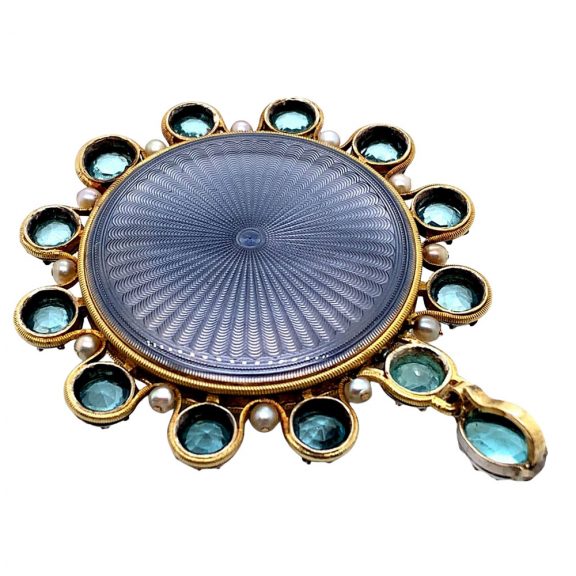
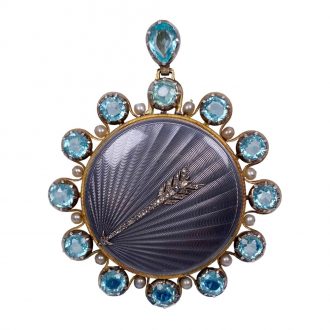
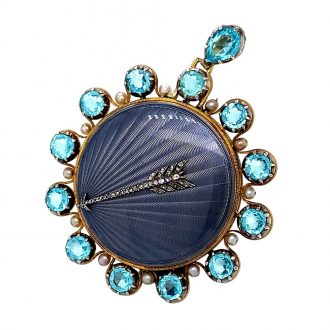
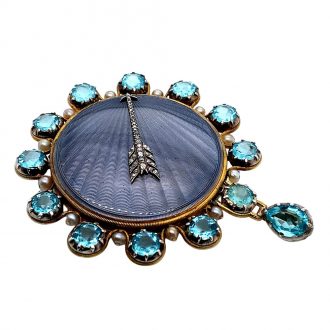
Important French gold montre à tact virgule watch Circa 1800
- Kenmerk
- DB0558
- Diameter
- 53 mm
- Estimate
- € 40.000 - 80.000
- Price sold
- € 48.800
Gold montre à tact watch with chain by Bazile-Charles Le Roy
–
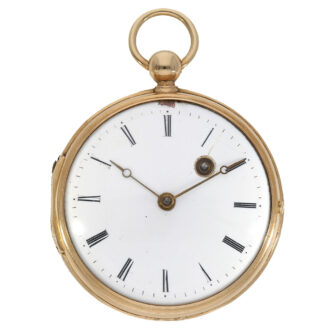
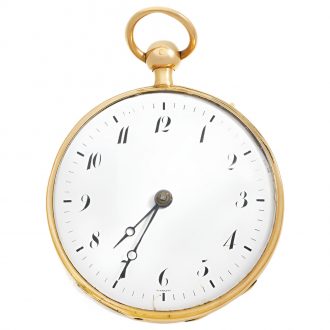
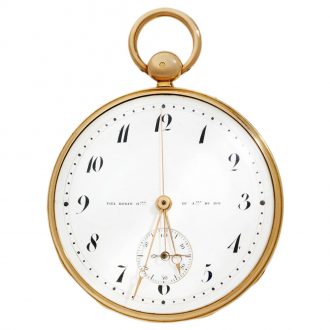
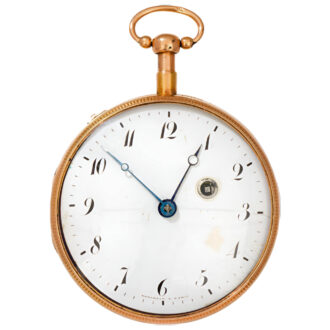
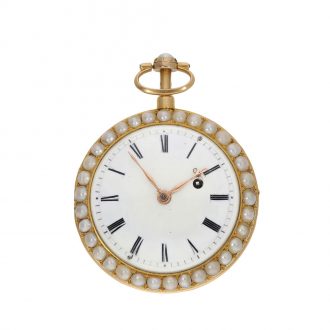
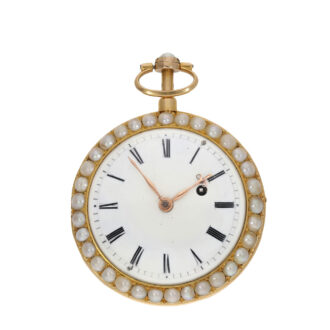
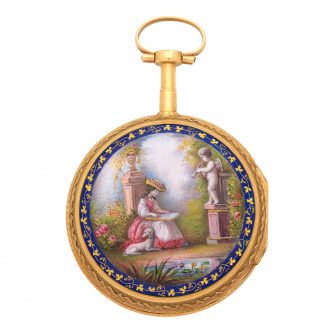
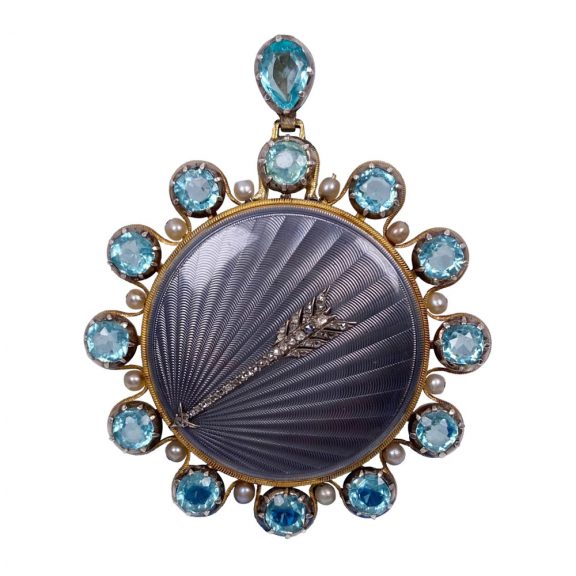
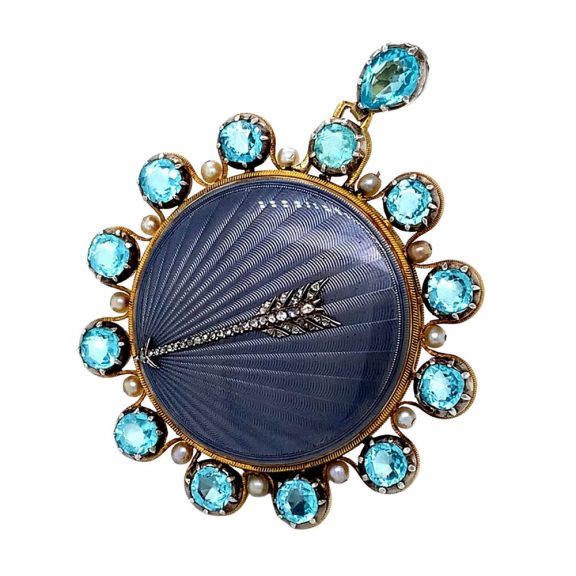
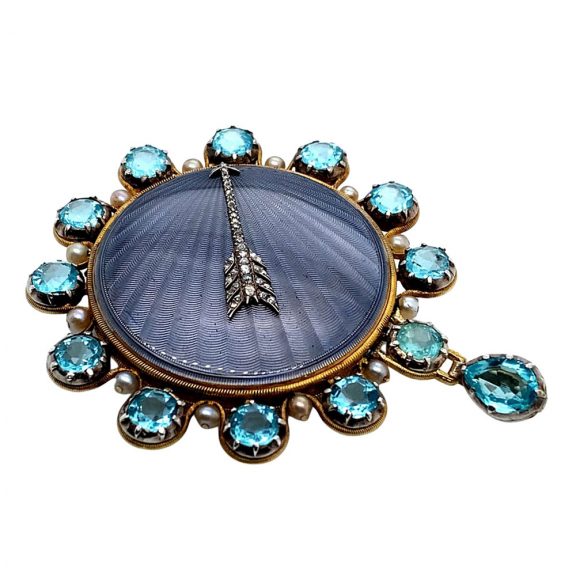
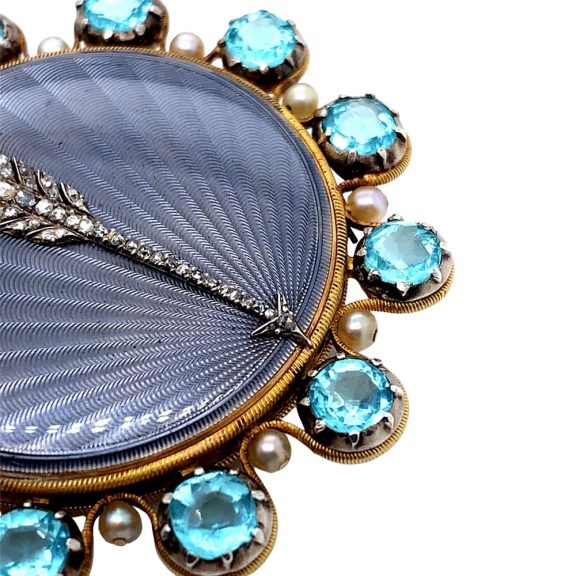
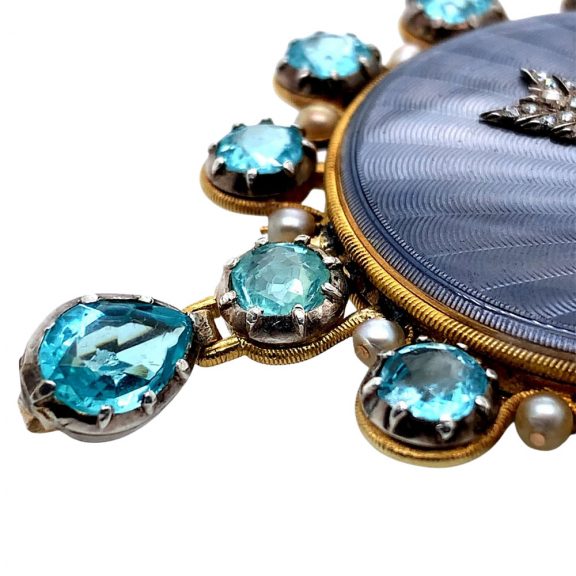
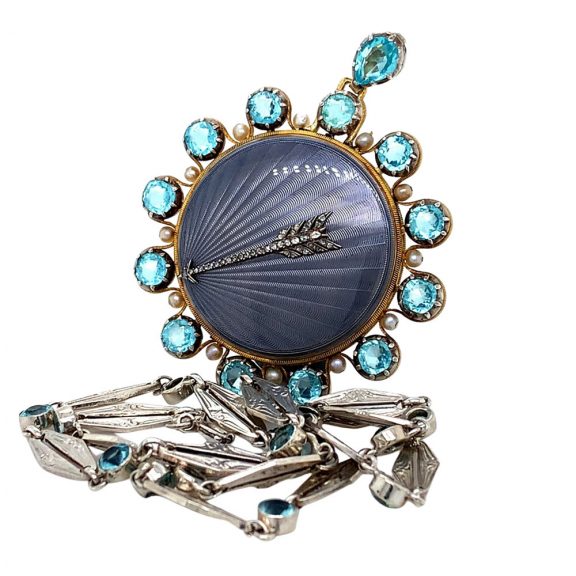
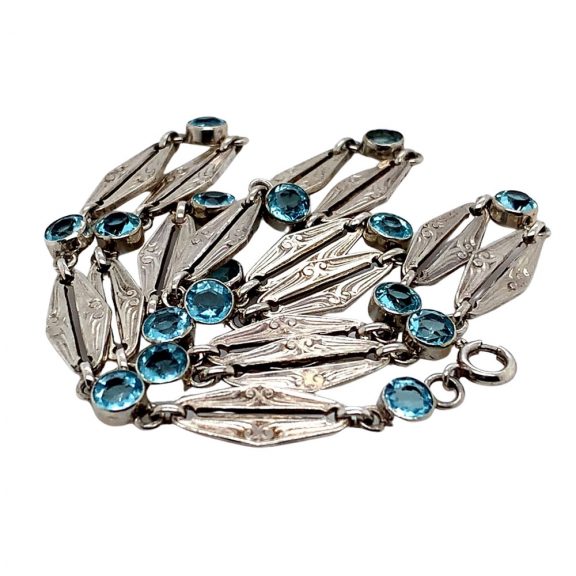
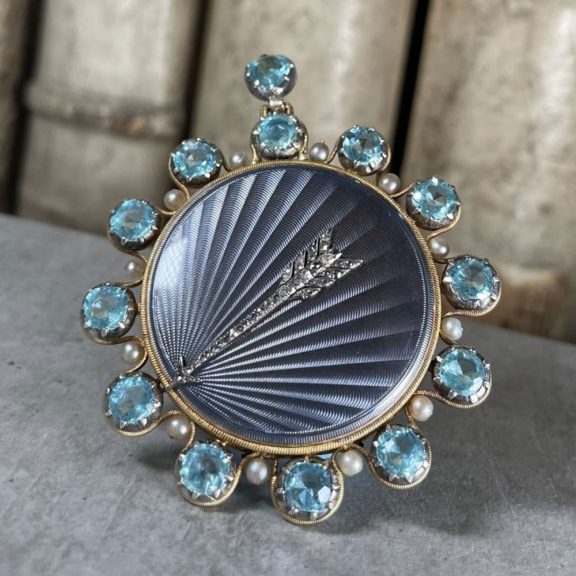
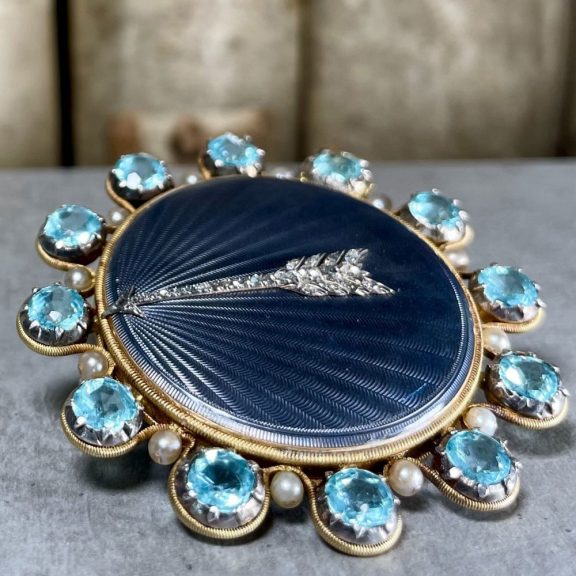
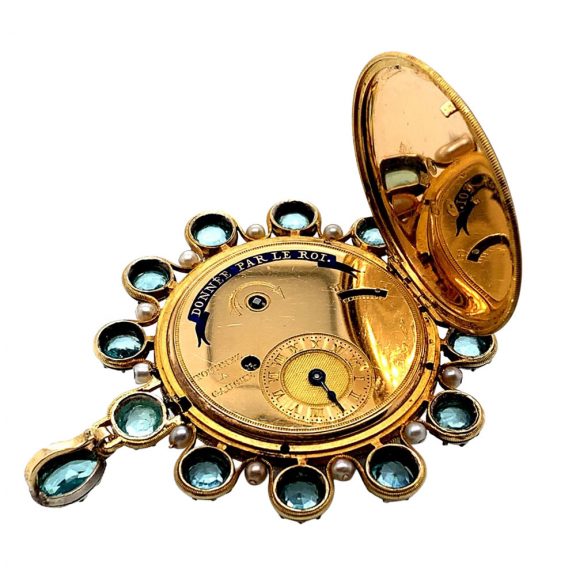
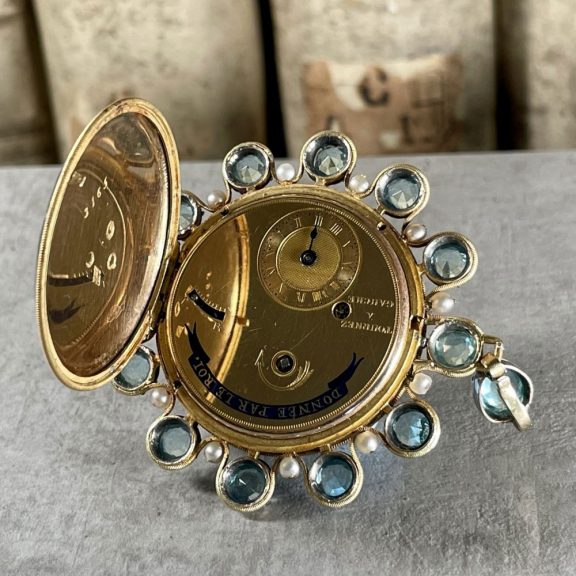
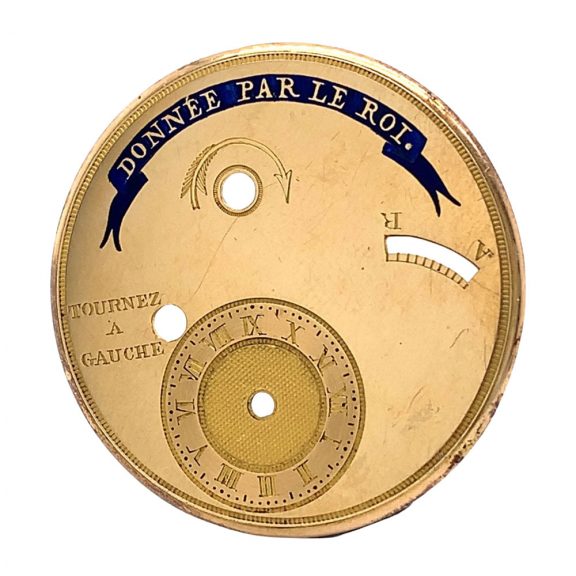
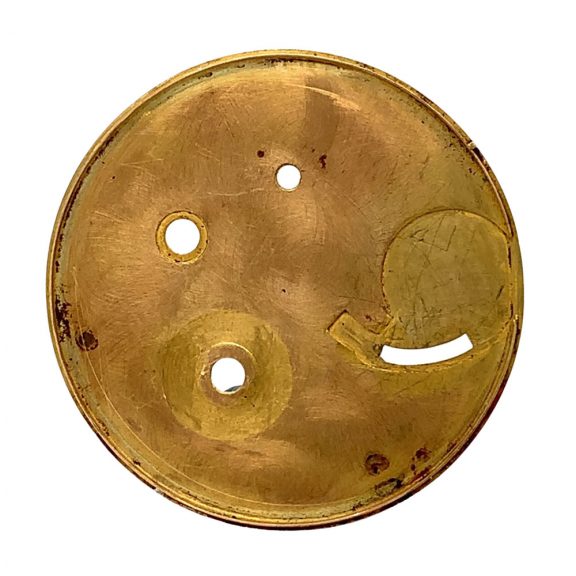
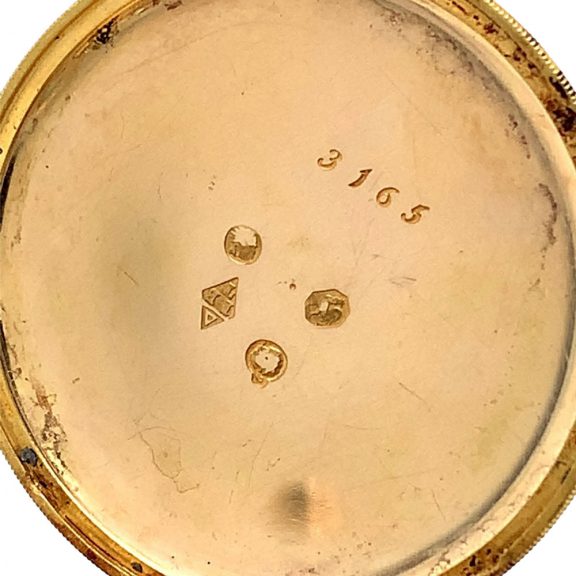
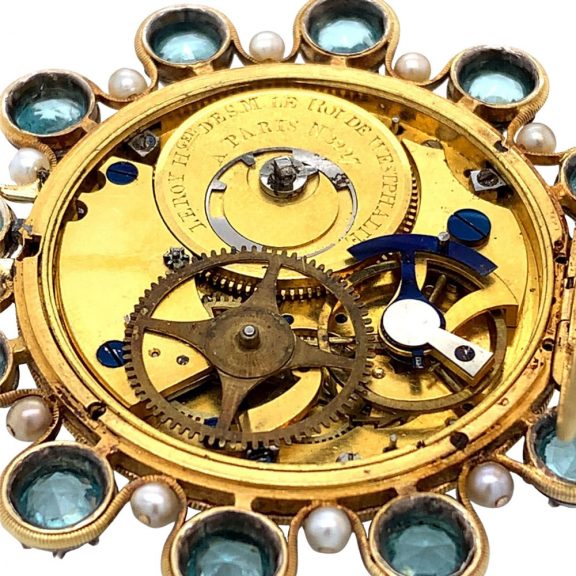
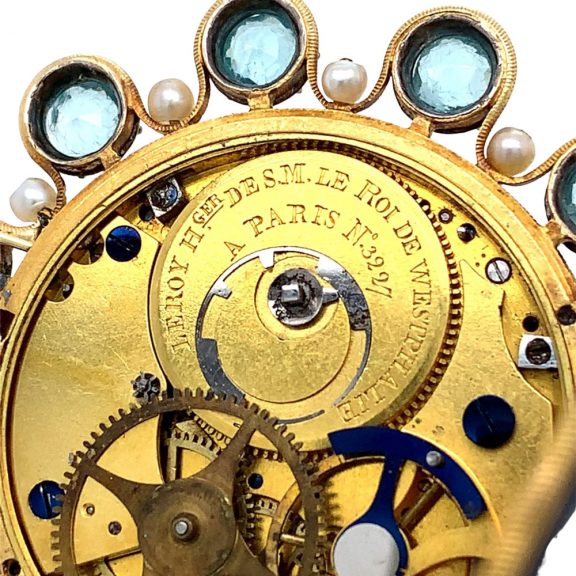
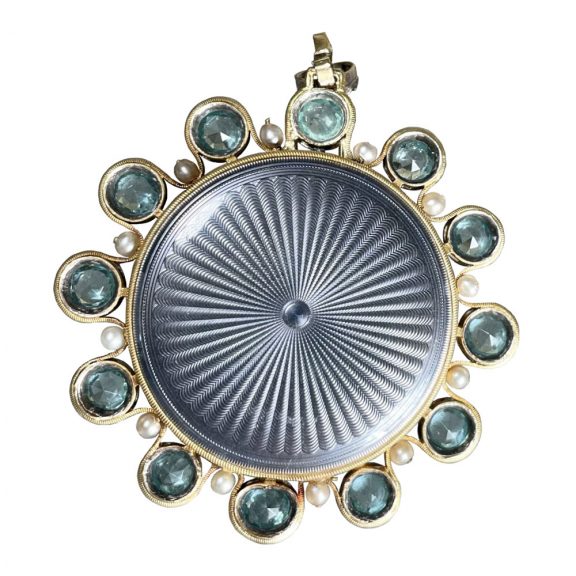
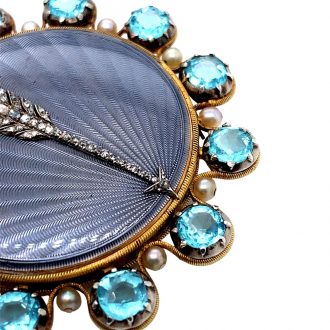
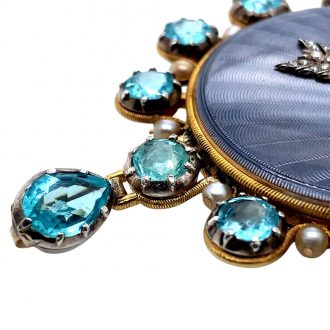
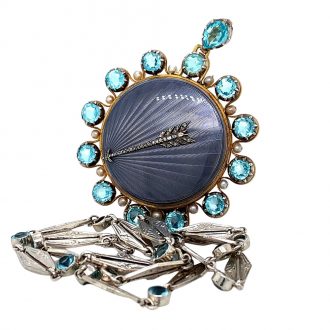
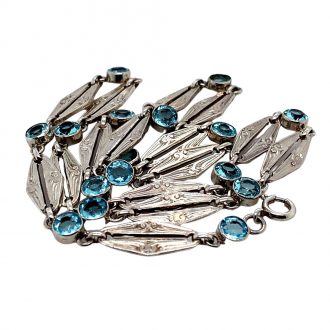
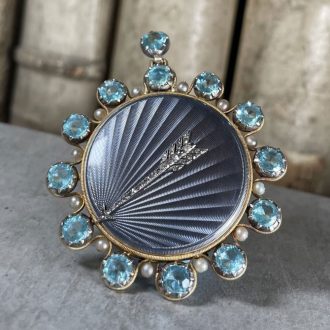
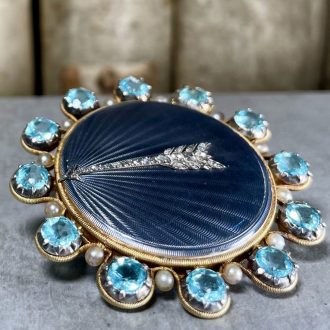
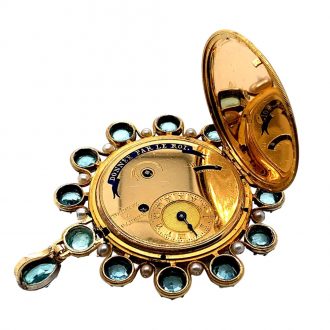
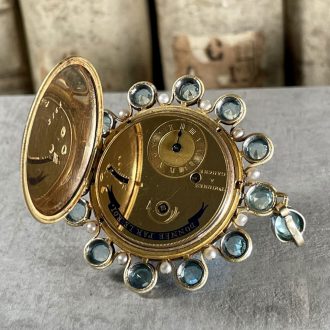
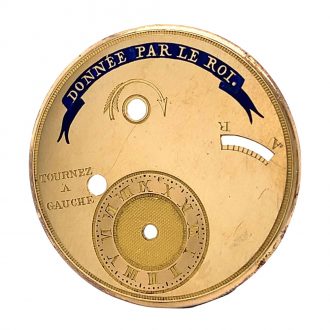
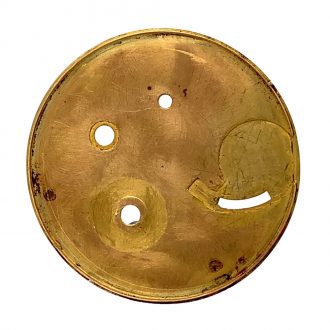
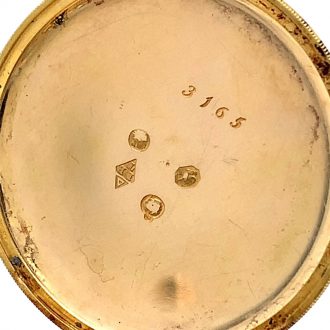
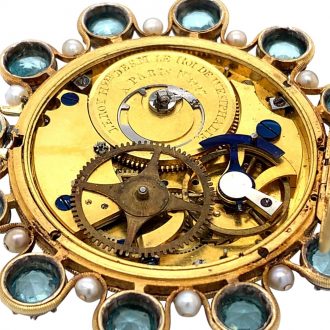
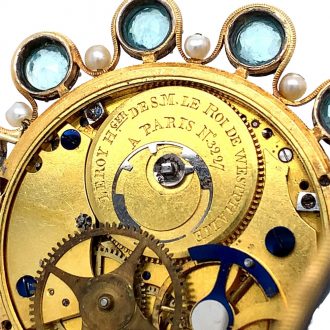
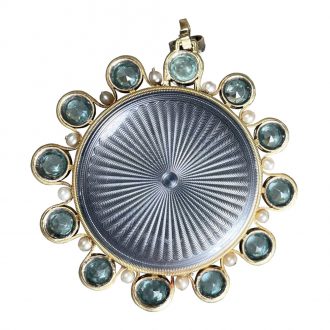
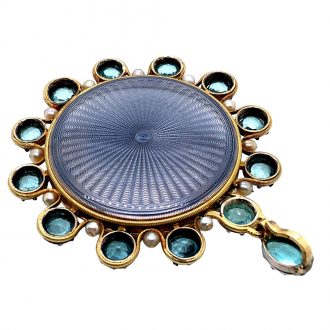
An important French 20 Carat gold, enamel, aquamarine- and pearl set Montre Médaillon à Tact with a later silver and aquamarine watch chain, circa 1800. This timepiece was gifted by the King of Westphalia, Jérôme Bonaparte, to the House of Löwenstein-Wertheim-Freudenberg. Movement with Lépine caliber, key wind, a going barrel, virgule escapement and three arm brass balance. The concealed gold plate on the front with a black enamelled engraving Donnée par le Roi (presented by the king) and small eccentric engine turned time indication with radial Roman hours, an outer minute track and one hand. The forme collier case with translucent powder blue enamel over a radial engine turned ground on both sides, the revolving front lid with an applied arrow pointer studded with diamonds indicating the hours, the band with aquamarine touch studs and pearls, maker’s mark PBT for Pierre-Benjamin Tavernier, three French punch marks for 20 Carat gold.
Movement signed and numbered, case numbered.
–
Diameter: 53 mm
–
Weight: 60 g
–
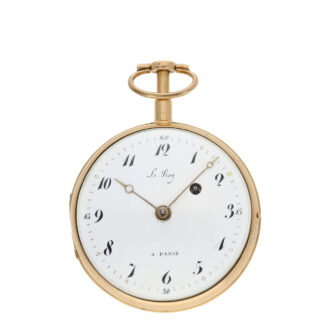
Signed: Le Roy Hger De S.M. Le Roi de Westphalie à Paris
–
The present watch was passed on through several generations in the family in a direct line to the present owner.
–
Montre médaillon à tact. Breguet was the first maker to come up with the design for this kind of watch. He sold the first one early in 1799 to Madame Betancourt, the wife of his best friend. He continued producing the watches in different variations, some with quite large touch pieces (like this watch) and some with small ones.
The price for these watches that Breguet created for the wealthiest of his customers was between 10,000 and 15,000 francs. This was a truly enormous sum of money in the early 19th century, nevertheless the watches were highly sought after at the time. One of the reasons for their popularity was that at the time it was considered quite unseemly to read the time in public. These expensive pieces made it possible to tell the time without taking the watch out of one’s pocket.
Breguet remained almost the only one to create this kind of watch, only Bazile-Charles Le Roy (1765-1839) (Horloger de S.A.I. et R. Madame à Paris) and very few others followed in his footsteps. Le Roy created a number of timepieces of this type. The most elaborate one for the Prince of Hesse, which had 17K diamond buttons for reading the time in the dark and is now owned by the Patek Philippe Museum in Geneva. The watch was made around 1810. It bears the number 3191 and is decorated with an engine-turned pattern and enamel. This comparable watch, No. 3165, bears the engraved and enamelled dedication ‘Donné par le Roi’ (presented by the king), referring to Jérôme Bonaparte (1784-1860), Napoleon Bonaparte’s youngest brother and sovereign of Westphalia from 1807 to 1813.
According to the current owner, the watch was presented to Ernestine Luise Countess von Pückler-Limburg (1784-1824), wife of Count and later Prince Georg Wilhelm Ludwig zu Löwenstein-Wertheim-Freudenberg (1775-1855), around 1807. From the mid-1790s onwards, Georg was entrusted with diplomatic missions by his house in Paris. These primarily dealt with compensation issues connected to the mediatisation of his father’s territories. In August 1806 he tried to offer Napoleon the lands of his house as fief to avoid the mediatisation. In 1807 he entered the service of Jérôme Bonaparte, King of Westphalia, in a position of honorary senior equerry and orderly officer. Due to the loss of the territories on the left bank of the Rhine, the House of Löwenstein-Wertheim-Virneburg changed its name to Löwenstein-Wertheim-Freudenberg in 1812/1813. In 1816, with the death of his father, Prince Georg took over leadership of his house.
–
Bazile-Charles Le Roy (1765-1839) was an ingenious watchmaker who created high quality pocket watches and naval chronometers. He was among the first in France to ever use the lever escapement in his watches. He created some watches in the style of Lépine early in his career, but soon drew his inspiration from Breguet and his bridge calibres. In 1805, Bazile-Charles was appointed ‘Maker to Madame Mère de l’Empereur’. In a close relationship with Napoleon and his family, Le Roy produced clocks and watches of supreme quality, among them were traditional clocks as well as decimal clocks, montres à tact or timepieces with sonnerie.
At the time when the French Revolution ended, the house Le Roy was known as one of the leading makers of pendulum and travel clocks in Paris. The majority of the clocks was produced for the officers of Napoleon’s campaigns. Bazile-Charles was soon appointed ‘Maker to the imperial court’ of Napoleon I, who had just been crowned in the cathedral of Notre-Dame in Paris, also, of course ‘Maker to Madame Mère de l’Empereur’ (Maria Letizia Bonaparte, Napoleon’s mother), ‘Maker to the King of Westphalia’ (Jérôme Bonaparte, Napoleon’s brother) and even ‘Maker to Princess Pauline’ (Napoleon’s sister).
The Walters Art Museum in Baltimore owns a ‘Montre Médaillon à Tact’ decorated with red enamel and studded with diamonds and pearls. It was made between 1805 and 1809 for Napoleon’s mother Maria Letizia Bonaparte (1750-1836), who had lost her sight. The watch was made by Bazile-Charles Le Roy and is signed ‘Le Roy Hgr. De S.A. Ile Et Rle. Madame à Paris 2691’. Case numbered 2896.
–
Montre à tact. A type of watch made after 1795 by Abraham Louis Breguet to give time by touch. In the late eighteenth century it was considered impolite to consult one’s watch in company, a question of etiquette which the à tact watch helped to solve (the French tact, meaning touch, has given the English tact and tactful). Knobs representing the hours are positioned around the case with a large hand that could be turned until it met resistance. Its position in relation to the knobs gave the time. This kind of tactile watch is now mainly used by the blind and visually impaired.
Signed: Le Roy Hger De S.M. Le Roi de Westphalie à Paris
Share this page: