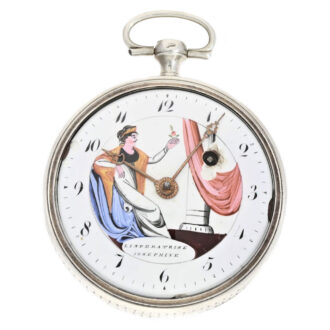
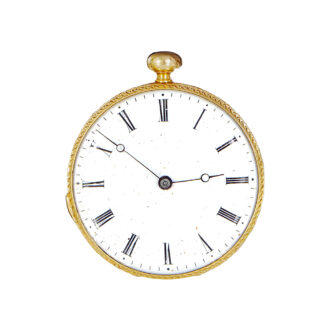
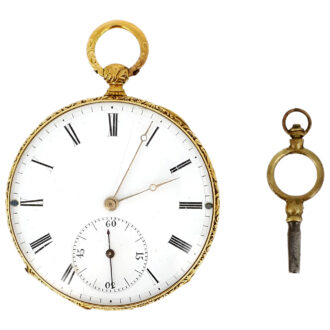
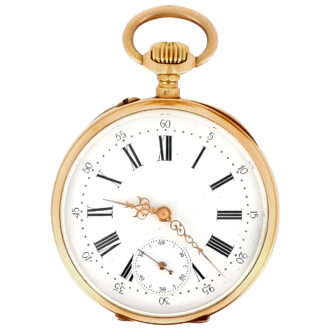
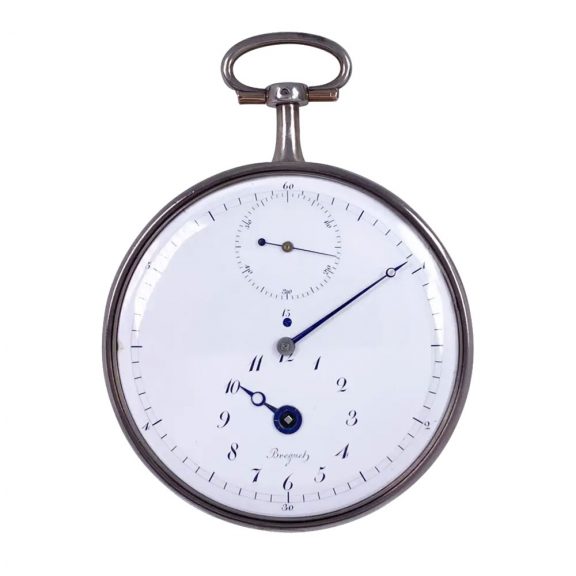
Important French silver Garde Temps pocket chronometer Circa 1791
- Kenmerk
- DB0729
- Diameter
- 61 mm
- Estimate
- € 125.000 - 250.000
- Price sold
- € 196.300
Humboldt’s chronometer
–
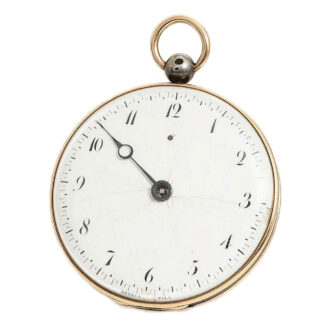
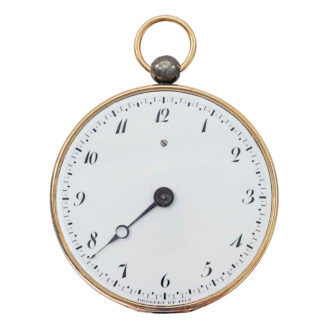
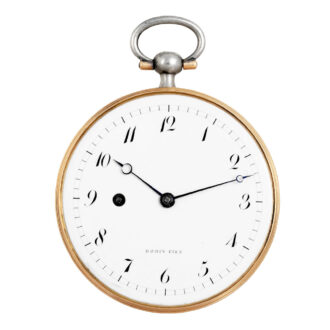
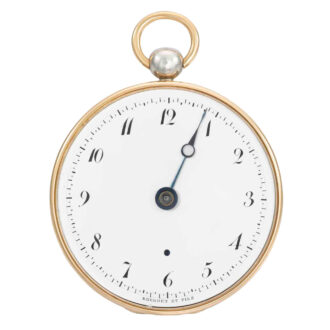
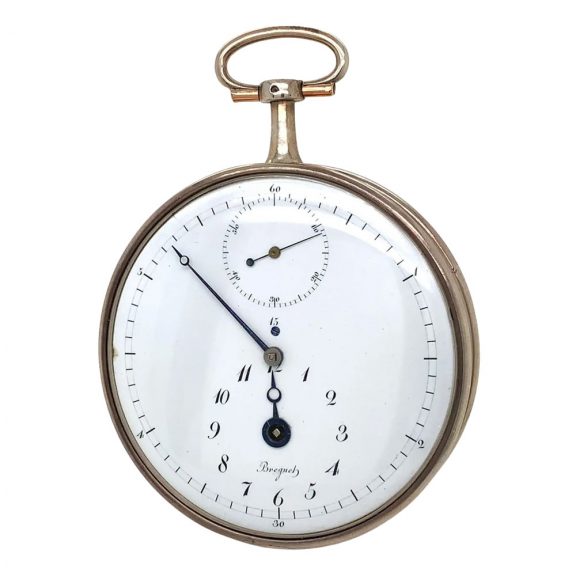
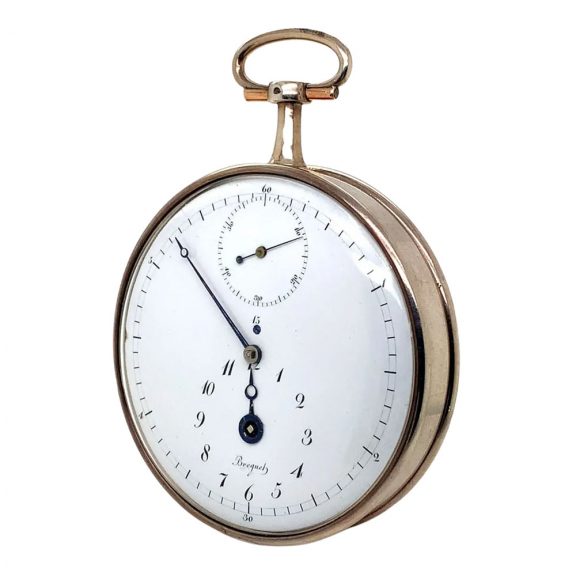
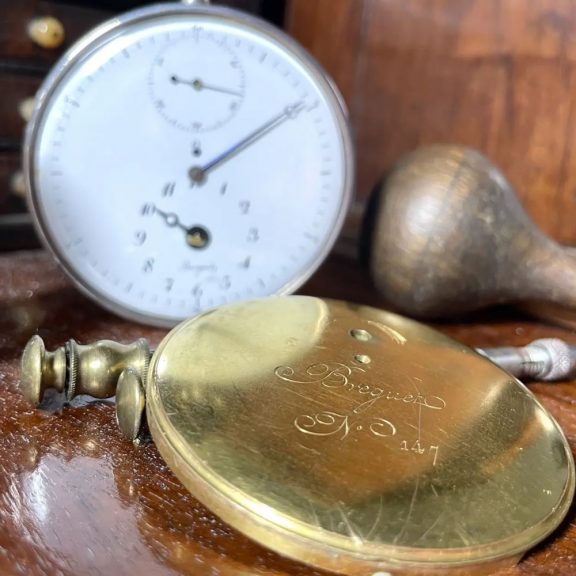
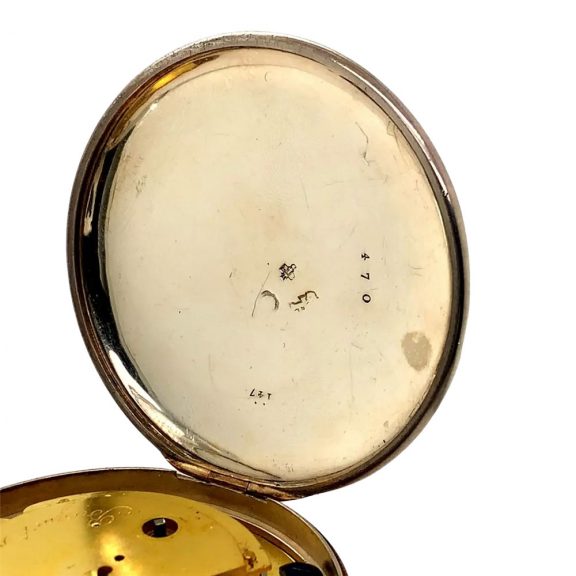
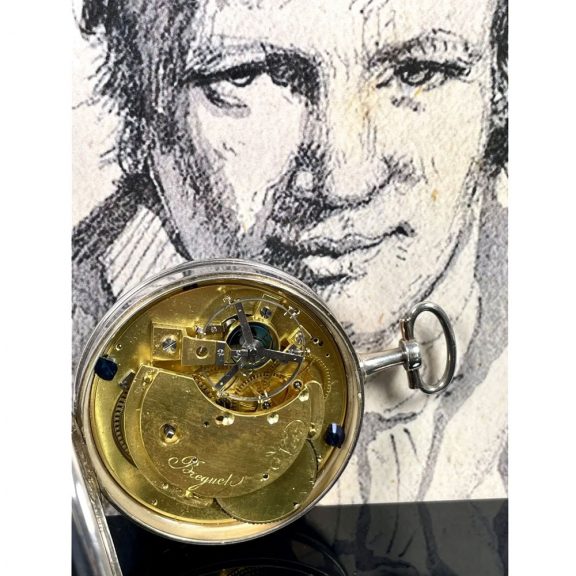
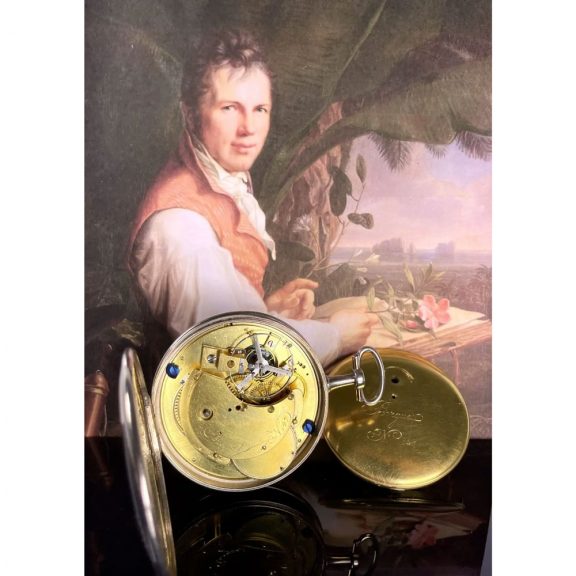
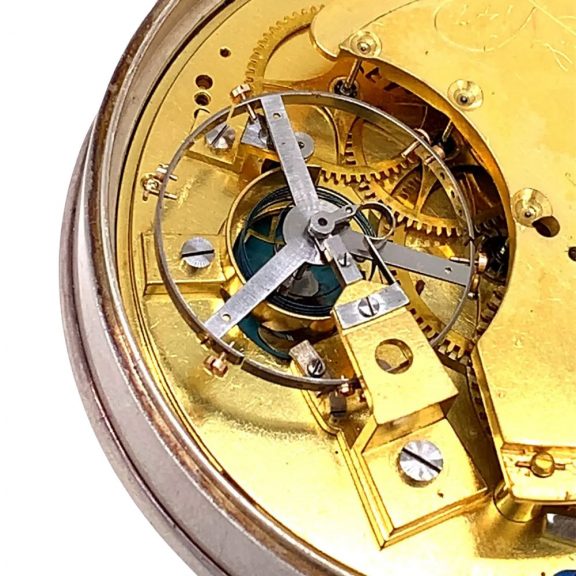
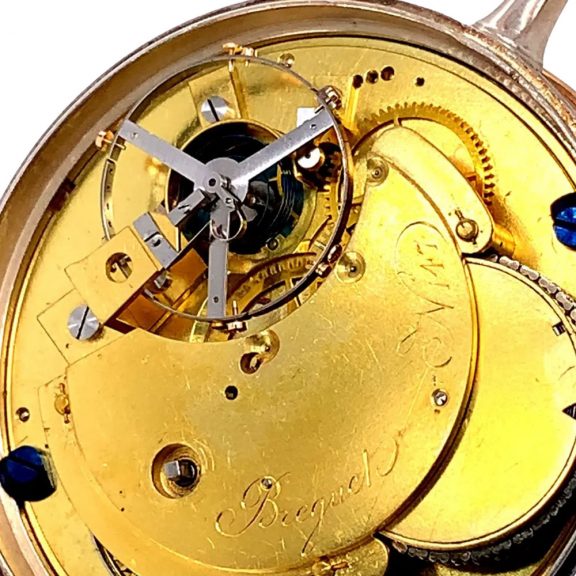
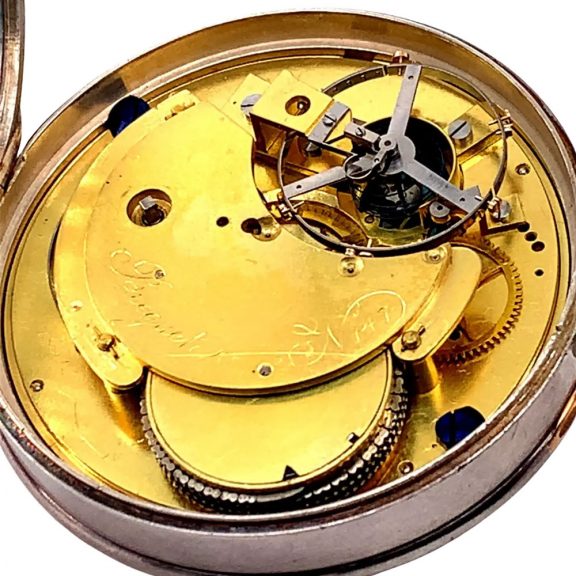
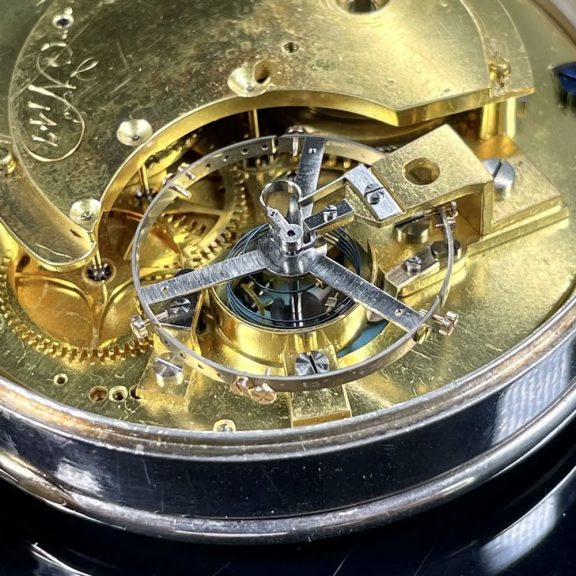
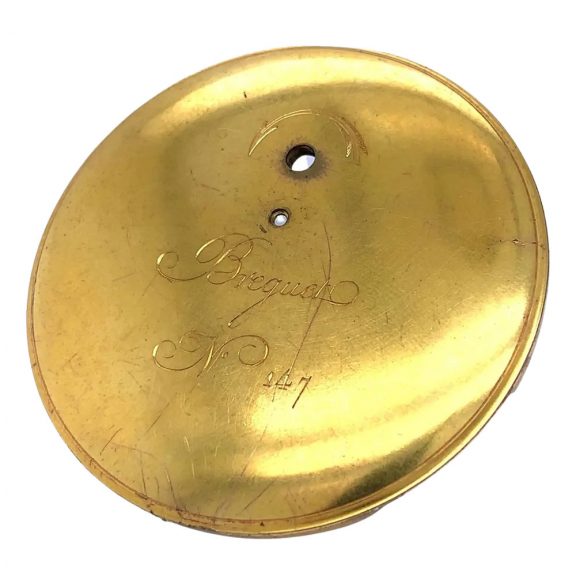
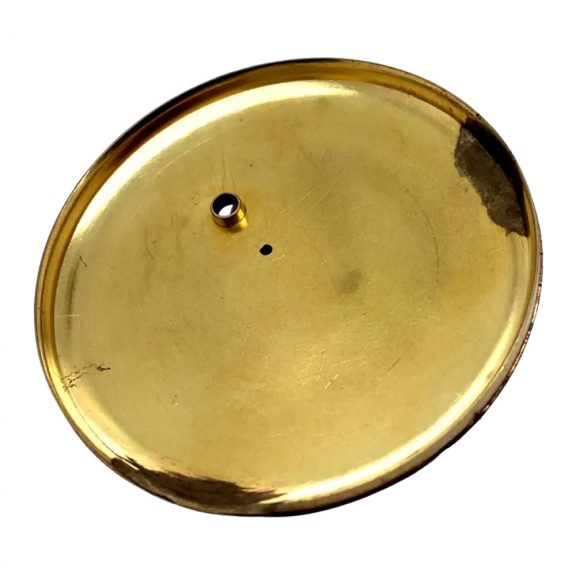
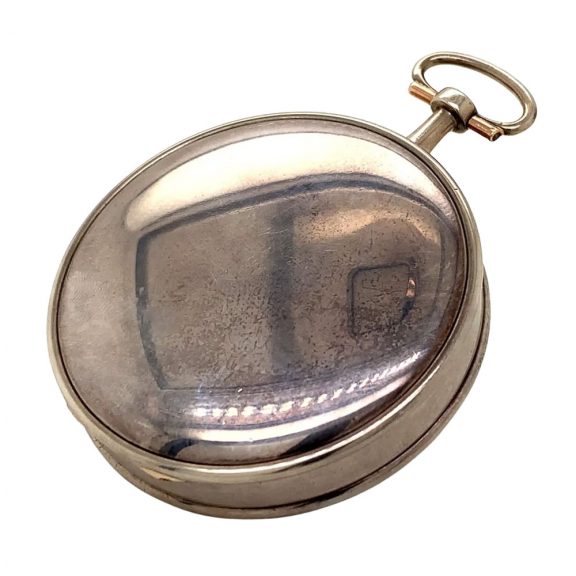
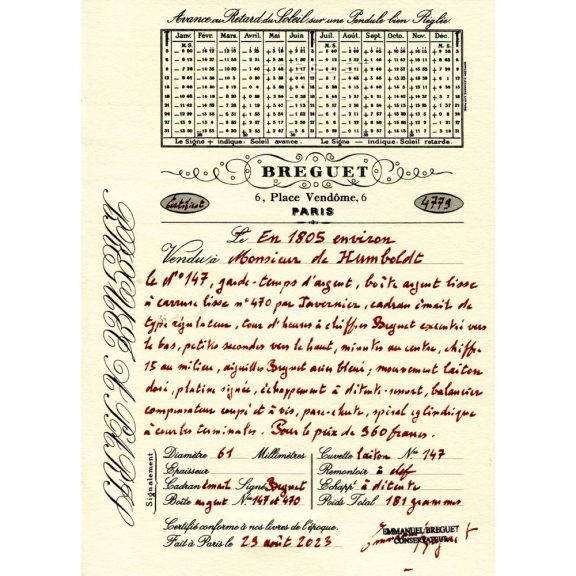
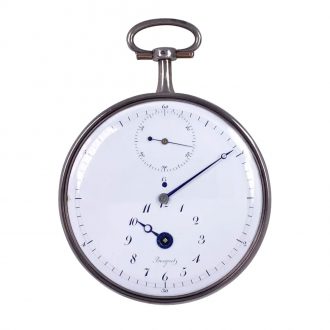
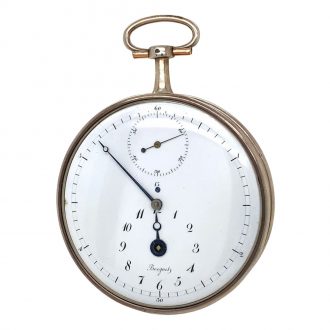
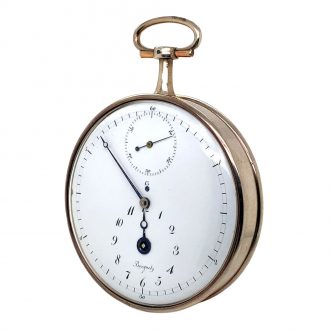
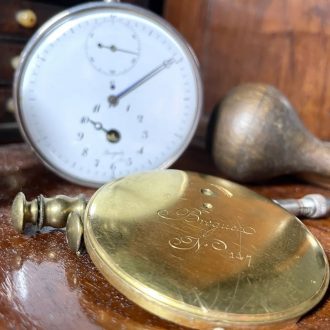
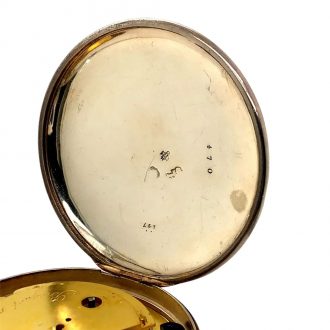
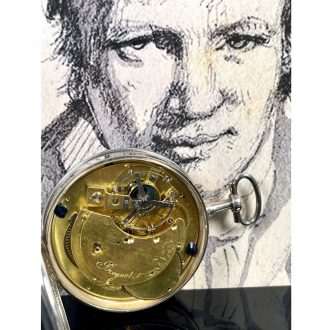
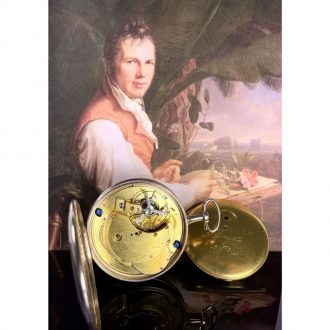
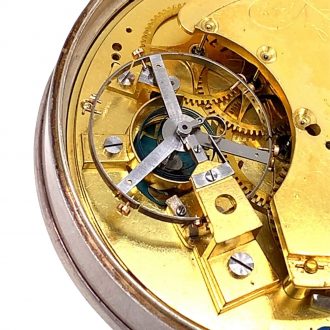
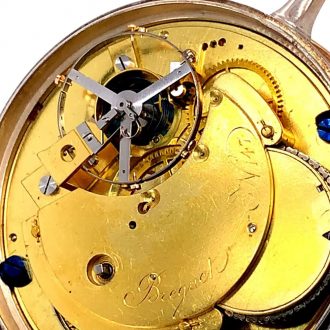
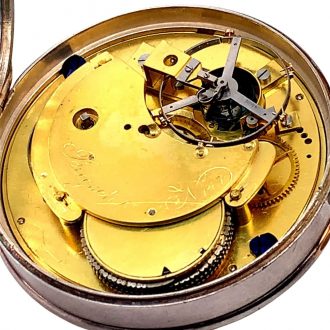
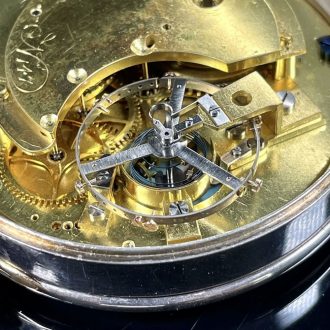
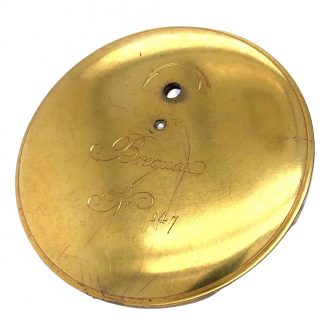
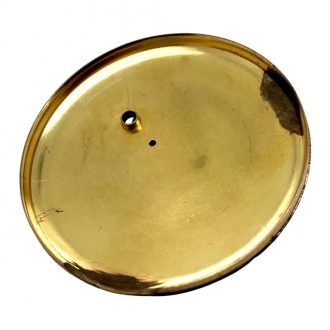
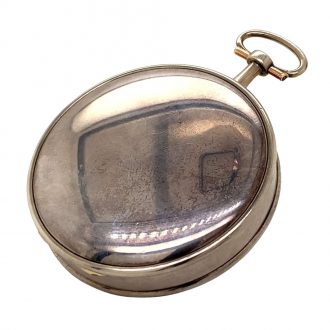
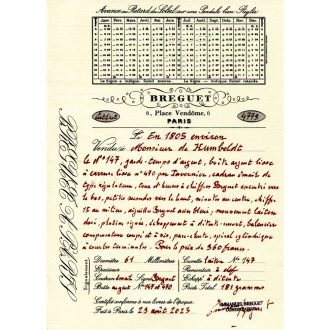
An important French silver open faced pocket chronometer made in the best Garde Temps factory version, circa 1791-1805. Sold in 1805 to the well known scientist Baron Alexander von Humboldt for 960 francs with Breguet certificate No. 4779. Brass gold plated ¾ plate movement, chain and fusee with inverted fusee, a spring detent chronometer escapement according to John Arnold, three arm bimetallic compensation balance with gold screws, free swinging blued cylindrical balance spring with end curves on both sides and parachute shock protection. White enamel regulator dial made by Borel, a decentralized hour chapter ring with Breguet hours at 6 o’clock, subsidiary seconds at 12, an outer minute track, a central hand for the minutes and blued Breguet hands. The case is collier shaped and made by Tavernier. Dial numbered and signed Breguet 15, case numbered twice (147 and Tavernier 470), movement signed Breguet No. 147, case and movement with matching numbers.
–
Diameter: 61 mm
–
Weight: 81 g
–
Signed: Breguet
–
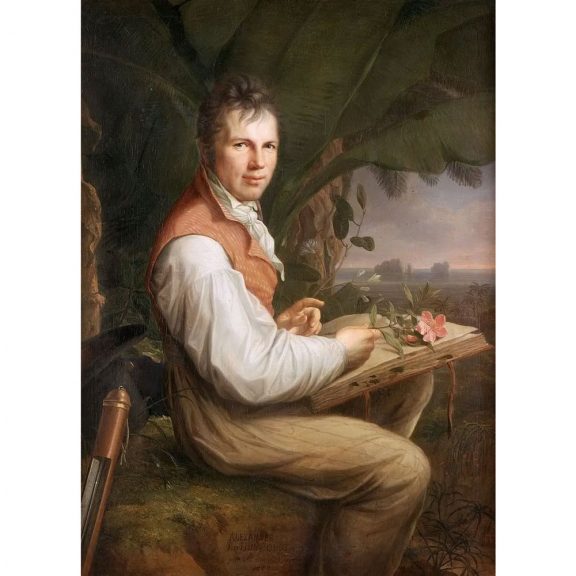
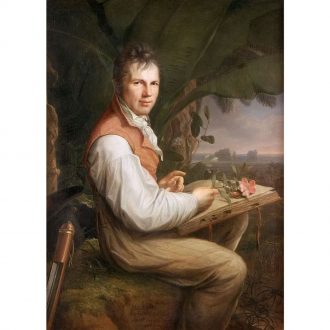
Alexander von Humboldt, born in 1769 and died 1859, was an outstanding German natural scientist and polymath of the 19th century. His groundbreaking expeditions and research brought him worldwide recognition. His trip to Latin America (1799-1804) is well known, where he researched the flora, fauna and geology. In 1829 he also made a significant expedition to Russia. Humboldt was a pioneer of natural geography and emphasized the need for a holistic understanding of nature. His extensive work ‘Kosmos’ combined knowledge about nature and the universe. His findings revolutionized natural sciences and cartography. Humboldt’s legacy extends beyond the founding of modern environmental research and geography. He inspired subsequent generations of scientists through his interdisciplinary approach and his passion for nature. Alexander von Humboldt remains one of the outstanding figures in world scientific history.
–
Humboldt’s chronometer.
The other bank was barely visible in the haze. The Volga was well over a kilometer wide here and local boatmen had assured him that in this region the river was of average width for this time of year. Now they wanted to look for a suitable place to measure the width precisely using a measuring chain between two trees on the local bank and a sextant. They were already in Kazan, almost 800 km from Moscow, the pace of this expedition was truly astonishing. Humboldt picked up his diary. First, enter some values, his two clocks always ran a little apart. He had already noted earlier: “Chron. are left behind by driving.” Once again he struggled with the far too small second hand on his Breguet chronometer. At 60, his eyes were no longer as good as they were back in South America. His beloved Earnshaw was actually easier to read.
Observations, measurements and experiments, if necessary on himself, these were the foundations of Alexander von Humboldt’s science. The systematic recording of everything he saw on his legendary travels became the basis of his research, which earned him the reputation of ‘the greatest naturalist of his time’. Only on the basis of proven facts was he able to recognize connections, which led him to the realization early on: ‘Everything is interaction’. And for precise measurements you need good instruments. On this point there were no compromises for Humboldt. With great passion, he was always looking for the most modern and precise measuring instruments of his time. Inclinatorium, declinatorium, eudiometer, hydrometer, hyetometer, electrometer, cyanometer, hygrometer, barometer and thermometer were on board when the frigate Pizarro left La Coruña for America in June 1799. But of course also telescopes, sextants, quadrants, a pocket chronometer by Johann Heinrich Seyffert from Dresden and a chronometer called a longitude clock by Louis Berthoud in Paris (No. 27), which was listed as by far the most expensive device and whose whereabouts are unfortunately unknown.
Humboldt was a master navigator and there are many passages in his diaries in which he writes about his chronometers, which were essential for calculating positions: “The helmsmen relied more on the log than on the rate of a chronometer, they smiled at the assertion that Land would soon come into sight and we believed that we still had two or three days to sail. It was therefore a great satisfaction for me when on the thirteenth, around 6 o’clock in the morning, I heard that a very high land could be seen from the masts…”. Accurate timekeeping has been the big topic of the past decades and the determination of longitude for navigation at sea has been the subject of important national institutions, the London Board of Longitude and the Paris Bureau des Longitudes are still familiar to anyone who knows a little about it development of watchmaking in this era.
But determining the geographical position on his land expeditions was of course just as important for Humboldt. The manufacturers of his chronometers were accordingly prominent, in addition to the aforementioned Berthoud, Seyffert, Earnshaw and Breguet, he also owned a pocket chronometer from Kessels in (then Danish) Altona, which was given to him by the Danish King Frederik VI (and which can now be admired in the German Museum of Technology in Berlin). In a letter Humboldt wrote: “… I know how excellent the Kessel pocket chronometers are. My only request is that the seconds division be a bit large because of my aging eyes. I find the seconds hand of the Bregue pocket chronometers unbearably small and the chronometer by Louis Berthoud, which I used on the American trip, with an enamel (not metal) dial and large second hand, was very pleasant to me.” In earlier years and with a still keen eye, he was convinced of the quality of Breguet’s movements. The Breguet archive shows a whole series of watches that were sold to Monsieur de Humboldt:
– No. 144 from 1806, which only had a different owner and was bought by Humboldt in 1818 for 1000 francs
– No. 147 from 1805 for 960 francs
– No. 1337 from 1804 for 1000 francs
– No. 1600 from 1804
– No. 3719 from 1823 for 2400 francs
About the No. 147 will still be spoken.
It goes without saying that Alexander von Humboldt knew how important his instruments were to him, especially since they were not only expensive but also impossible to replace when traveling. Of course, this also applied to his watches, the first page of the Russia diary consists only of the words: Chro[no]meter Earnshaw. So you can perhaps guess what he thought of this detail of a now famous picture: There are expensive watches at his feet with all sorts of odds and ends on South American soil! “Don’t you also love,” he writes elsewhere, “that the case is so closed by the artist himself that it can only be opened with several screws. You will then never be tempted to open it and such a tight closure is a great security against the dust.” It is unthinkable that Humboldt’s chronometers lie on the bare earth! And he must have been offended not only by that, but also, for example, by the toy microscope on the table to the right and by the whole messy scene, with what Tobias Kraft from the Berlin-Brandenburg Academy of Sciences calls it, a “bit of a slouch” figure researcher. His painter Eduard Ender wanted to sell his picture to the Prussian King Friedrich Wilhelm IV. When asked what he thought about it, Humboldt, who must have found the whole presentation a complete annoyance, said quite clearly: “Leave it alone.” Unfortunately, he was unable to prevent the painting ‘Alexander von Humboldt and Aimé Bonpland in the jungle hut’ from being almost inevitably associated with the name Humboldt.
Back to the Breguet No. 147:
Humboldt bought this Garde Temps in a silver case from Breguet in Paris in 1805, after his trip to America, for 960 francs and kept it for decades, bringing it back to Breguet for overhaul in 1827. In George Daniel’s classic ‘The Art of Breguet’ the No. 147 can be found on page 160. As Daniels writes, it was begun by Breguet around 1791, but was not completed until around 1805: “Its pure design and function were not suitable in the 1780s for Breguet’s clientele, who generally preferred something more entertaining, in keeping with their way of life of interest. Breguet ceased production of these watches before the Perpetuelles series of 1787 and completed them only after 1794, when the resurgence of scientific activity after the Revolution better demonstrated their potential uses. They are Breguet’s first foray into the realm of pure watches precision watchmaking dominated by the English school in the 1780s. Its radical approach to the design of these clocks led to the introduction of the ¾ plate, in which the balance wheel is located below the plate, at least thirty years before it was adopted by English manufacturers. Their distinctive and elegant appearance is also entirely due to the influence of Breguet and has nothing in common with the English pocket chronometers of that time. The numbering of these early precision chronometers is sometimes not clear in the books and it is possible that Breguet was already making these movements at a time when he was perhaps working for Berthoud in Paris.
This watch was sold in Switzerland in 1991 for over 280,000 Sfr.
Signed: Breguet
Share this page: