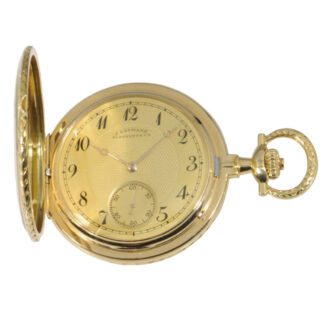
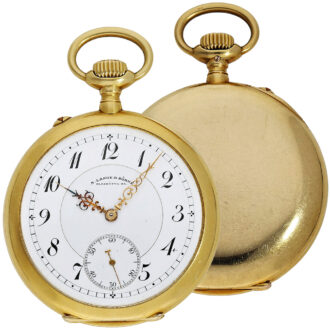
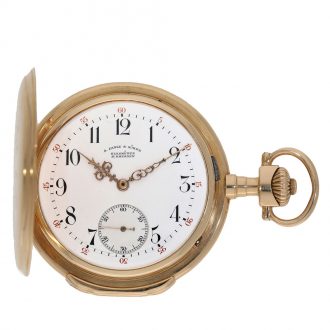
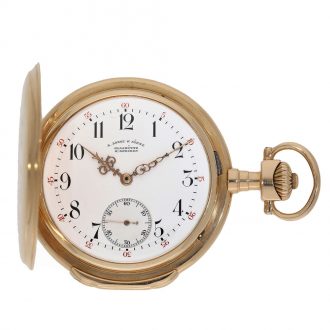
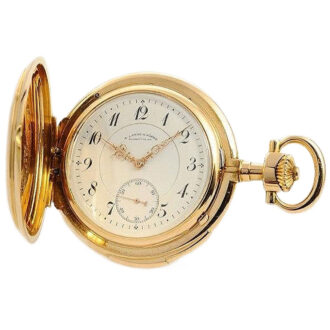
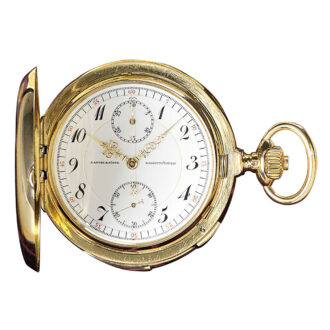
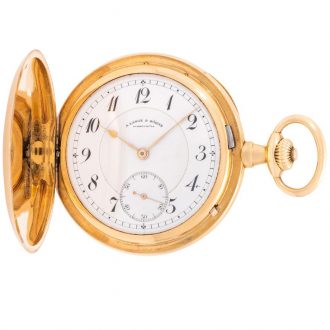
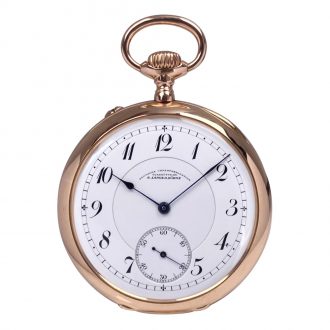
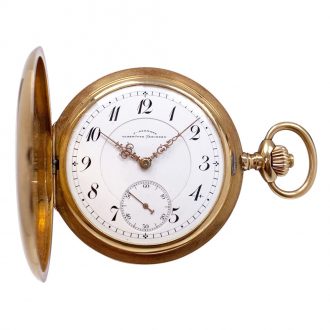
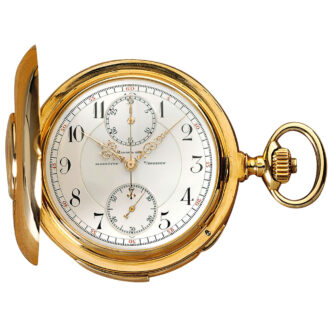
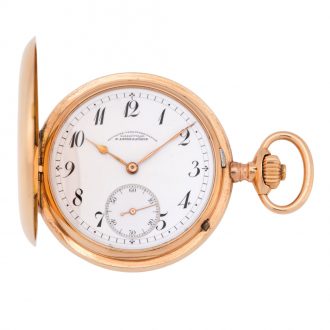
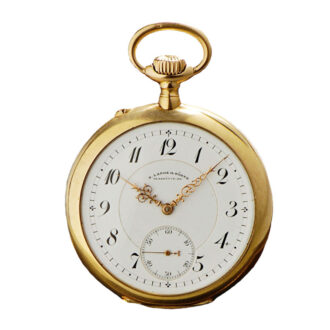
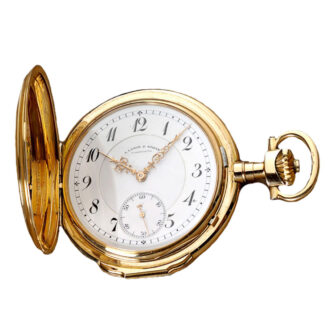
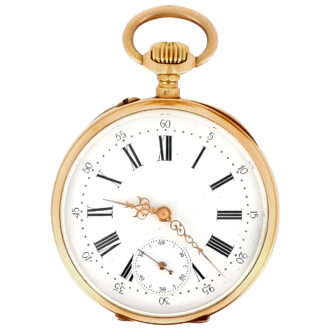
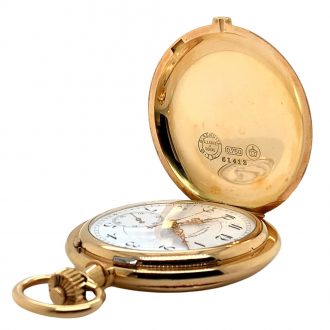
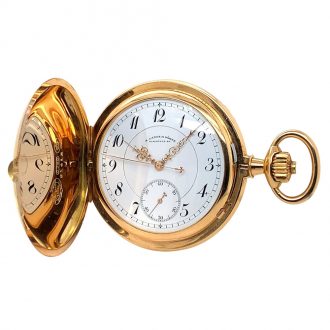
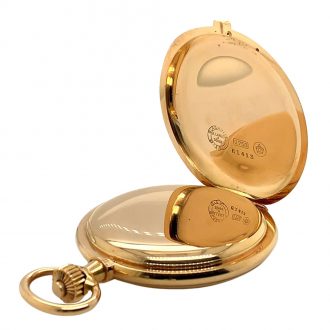
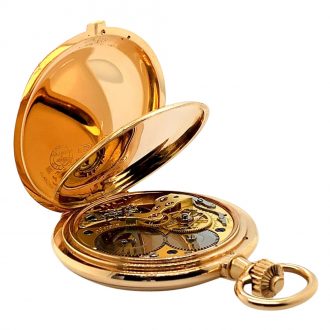
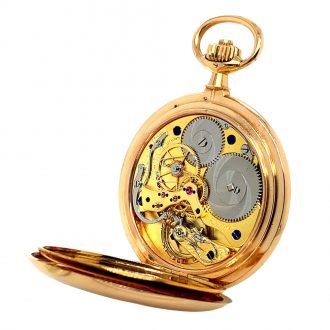
German rose gold quality 1A seconde morte lever watch Circa 1912
- Kenmerk
- DB0871
- Diameter
- 54 mm
- Estimate
- € 22.500 - 35.000
- Price sold
- € 26.300
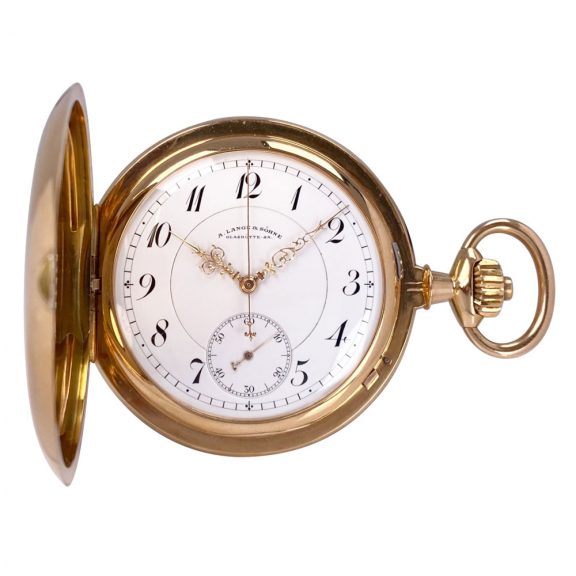
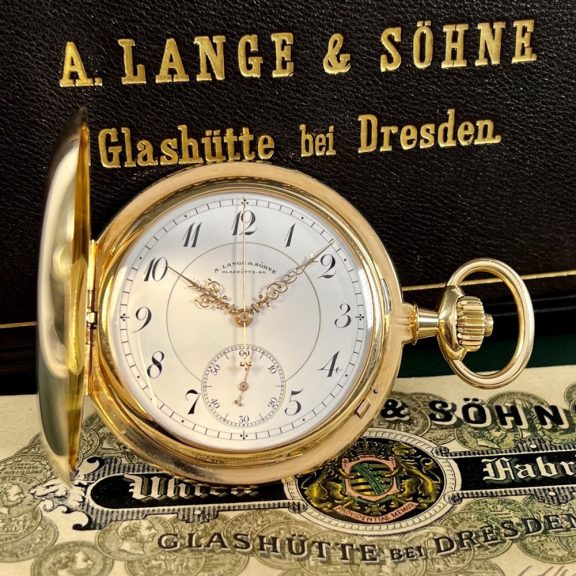
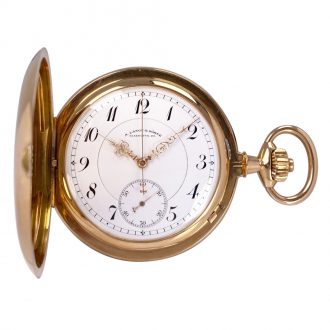
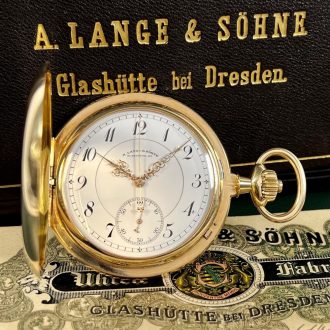
Rose gold full hunter by A. Lange & Söhne
–
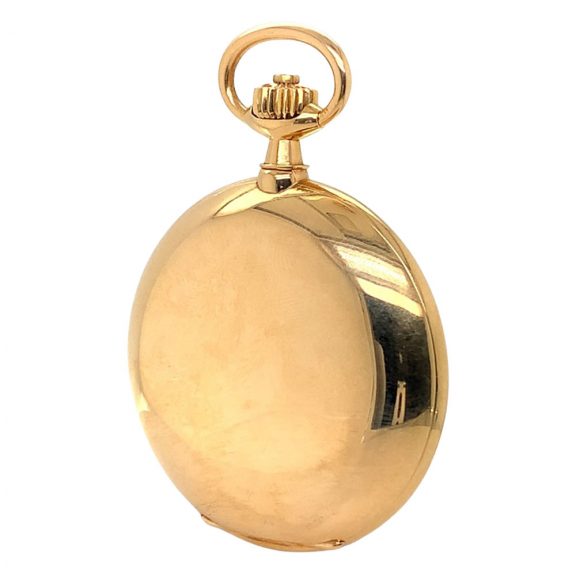
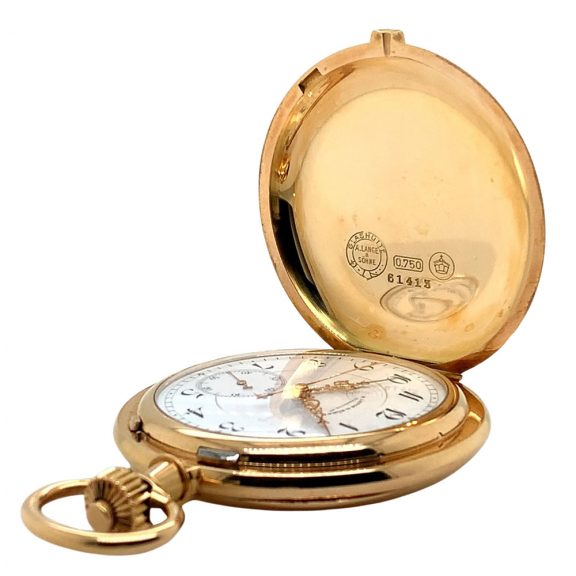
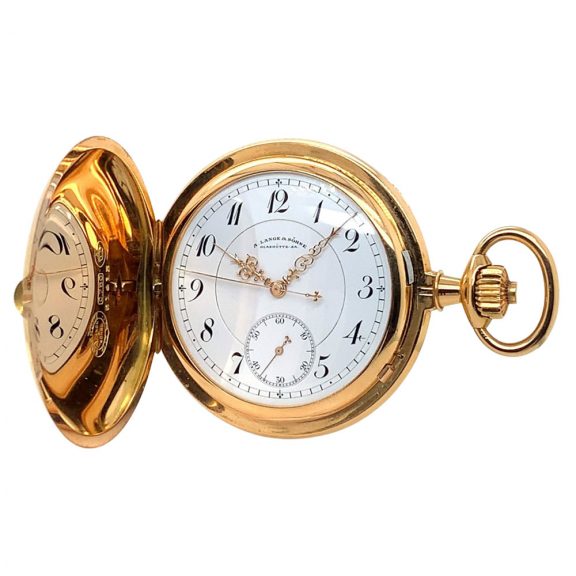
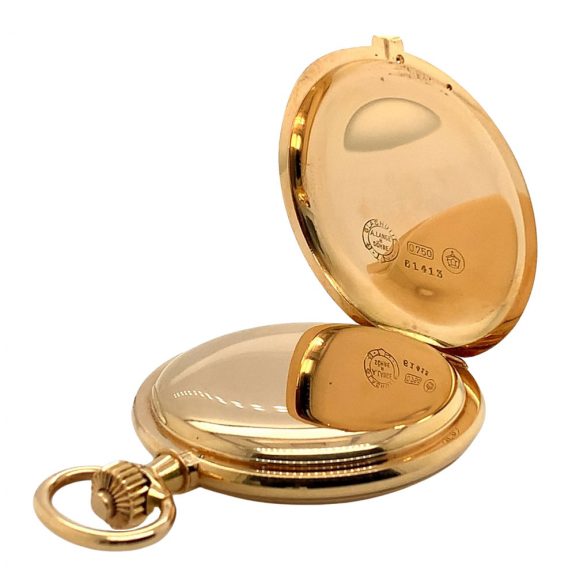
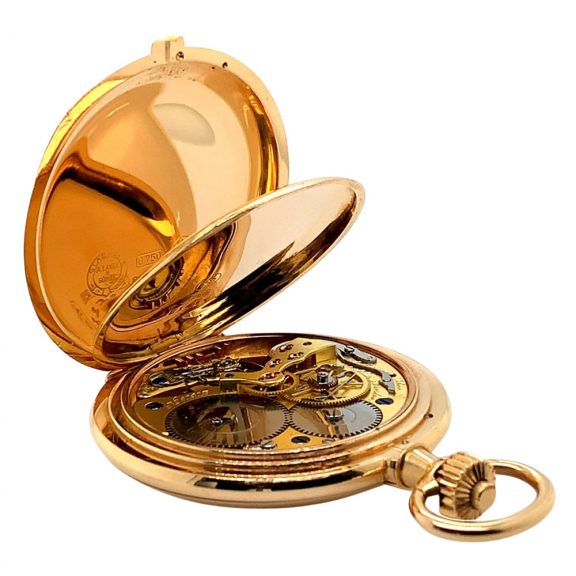
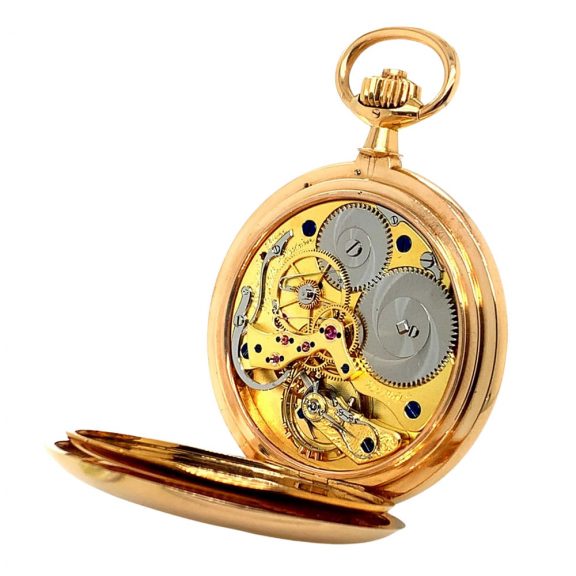
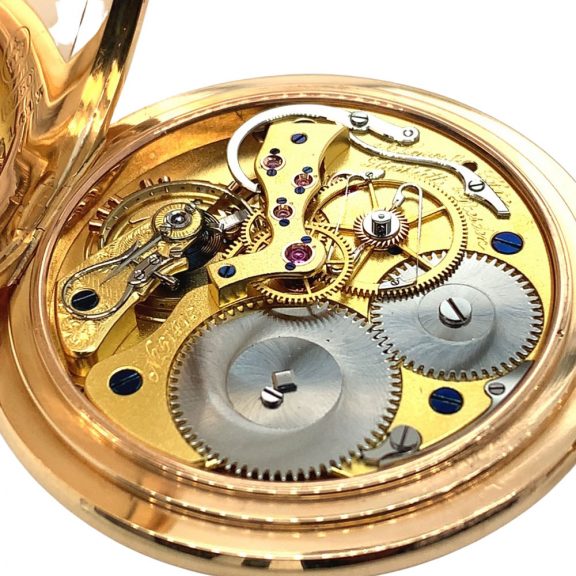
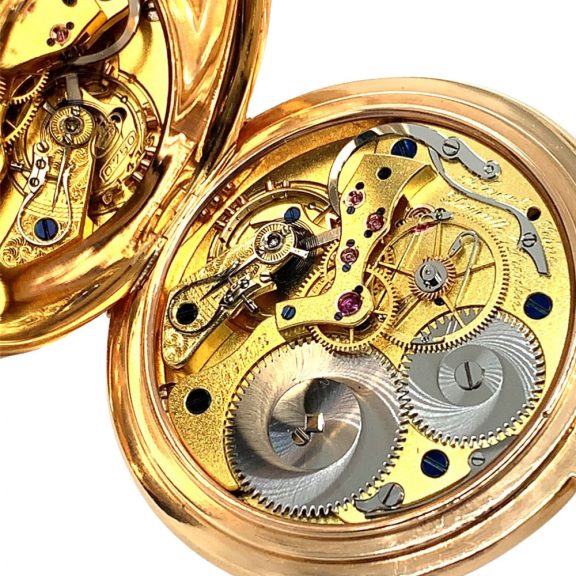
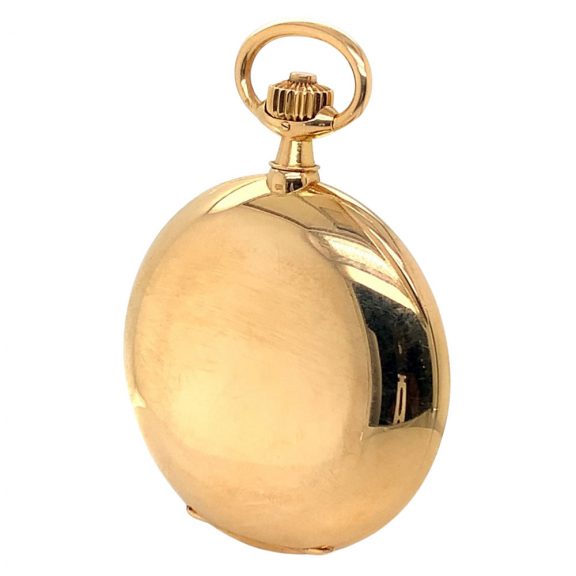
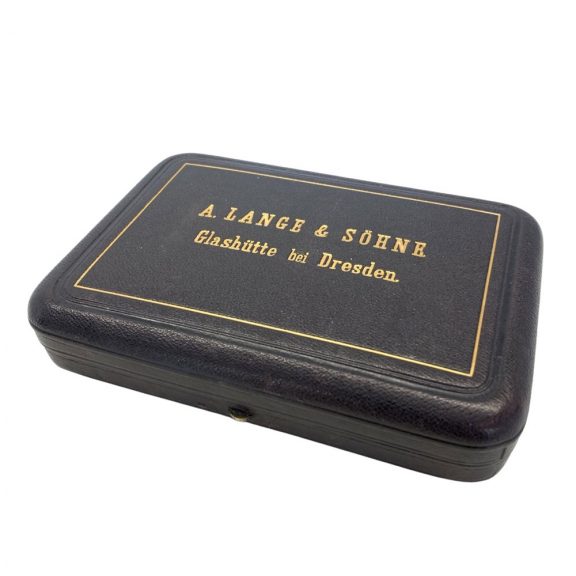
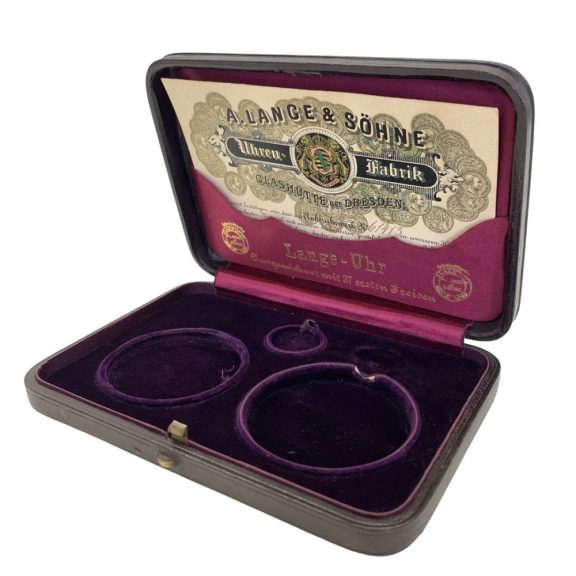
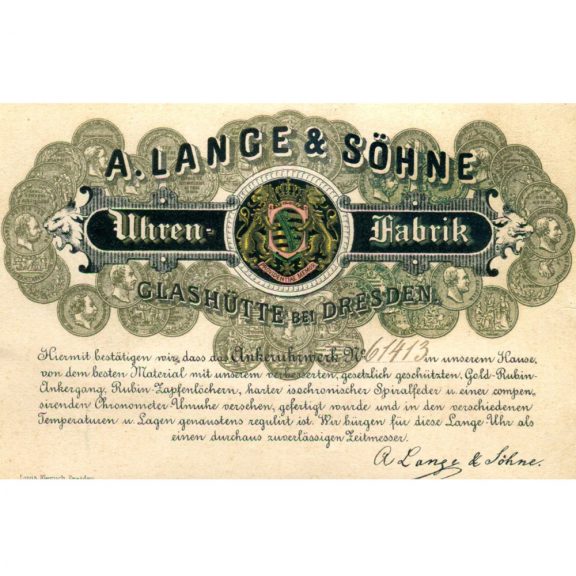
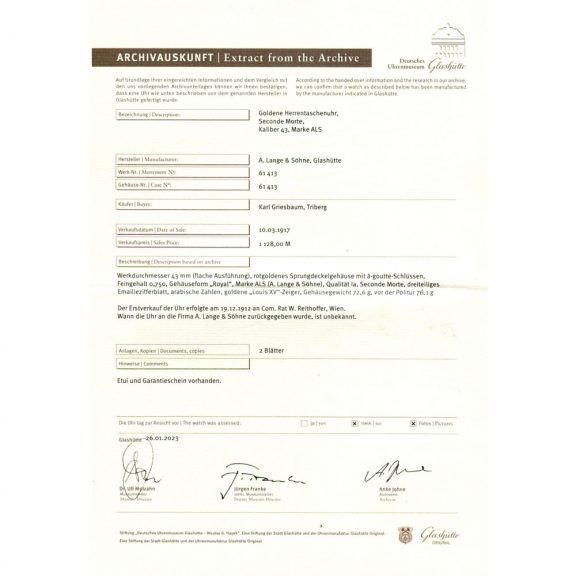
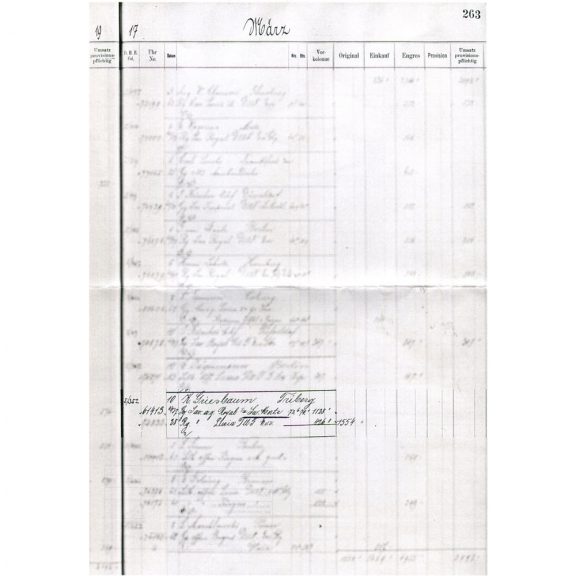
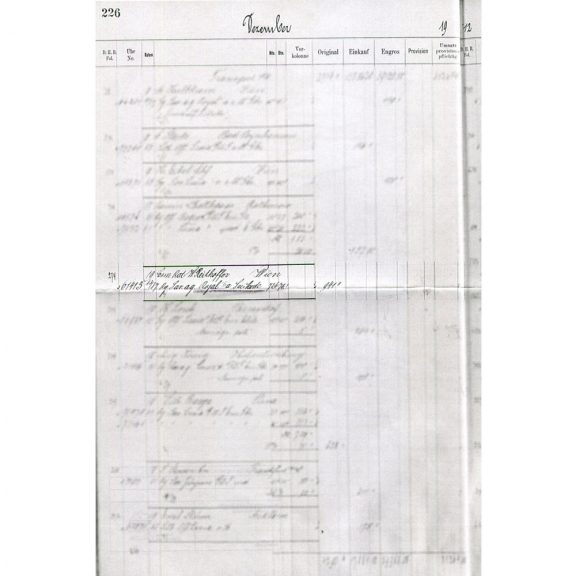
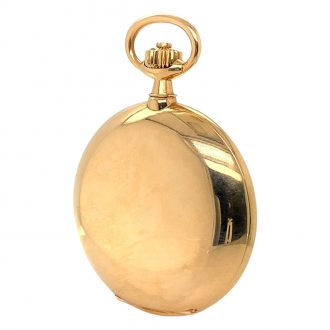
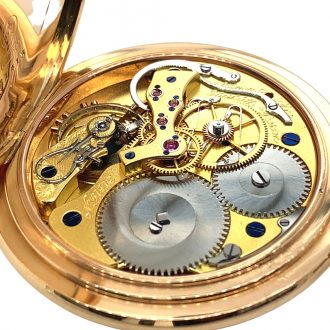
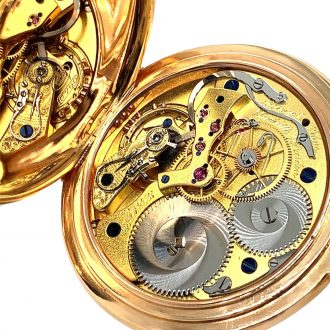
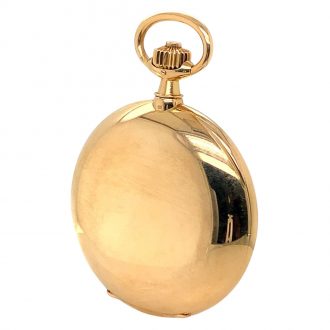
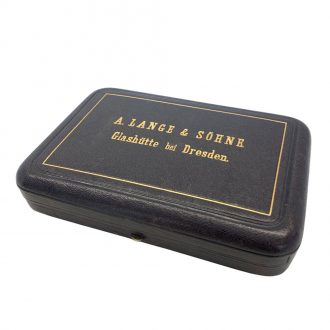
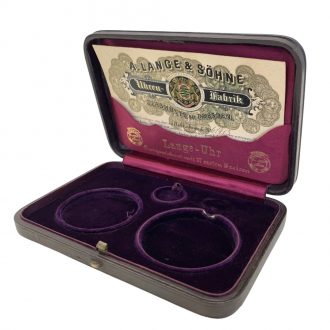
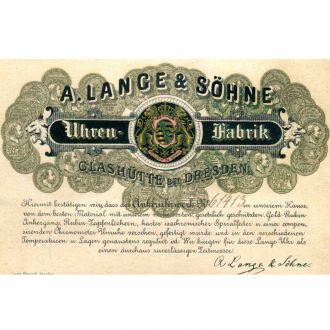
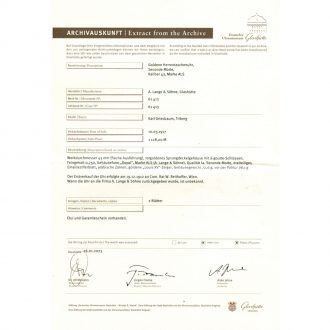
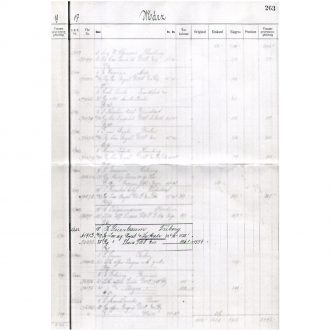
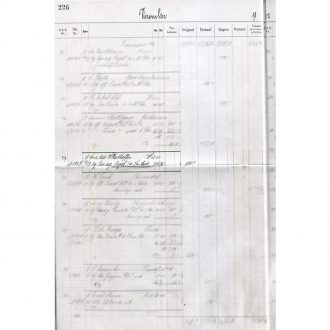
A fine, flat 18 carat rose gold hunting cased quality 1A Glashütte lever pocket watch with seconde morte, circa 1912. First sold on December 19th, 1912, for 941 marks to commercial councillor W. Reithoffer in Vienna and sold again on March 10th, 1917, for 1128 marks to Karl Griesbaum in Triberg. ¾ Plate movement, an applied seconde morte mechanism and large gold screw compensation balance. White enamel dial with Arabic hours, an outer minute track, a sunk center and subsidiary seconds at 6 o’clock, a central jumping seconds hand and Louis XIV hands. A plain case. Dial signed, case and movement signed and numbered, movement and case with matching numbers. Comes with the original presentation box, original certificate and an Extract from the Archives.
–
Diameter: 54 mm
–
Weight: 120 g
–
Signed: A. Lange & Söhne Glashütte-SA.
–
Karl Griesbaum (1871-1941) was the owner of the most famous workshop of automatic songbird cages and songbird boxes in Germany. His workshop was in Triberg in the Black Forest.
–
The seconde morte, also known as dead-beat seconds, is a complication of a mechanical movement in which the second hand moves every second. This is in contrast to the usual ‘running’ of the second hand. This complication is rare and was seen in the years before the quartz revolution, the 1970s and 1980s, but died a silent death because of the same quartz revolution. The reason for this was that the second hand moves per second in almost the same way as quartz watches, which ultimately also use a frequency of 1Hz. With that, the ‘running’ second hand became the distinction between mechanical watches and quartz watches. Incidentally, that external similarity only applies to the second hand jumping per second, the underlying mechanism of the dead seconds complication is of course of a completely different order.
–
Seconde morte (jumping seconds). The legibility of the small jumping second hand in a pocket watch was unsatisfactory for A. Lange, so he steered his experiments in a different direction. Around 1867, he developed a mechanism with which he made an independent large second hand jump from the middle every second. It was usually stoppable, but could not be reset to zero. A modified version of this system by A. Lange was patented by his sons in 1877 (No. 182). With this seconds mechanism above the ¾ plate, a precision watch was created that resembled the display system of an astronomical pendulum clock, but was transportable to 0.
Signed: A. Lange & Söhne Glashütte-SA.
Share this page: