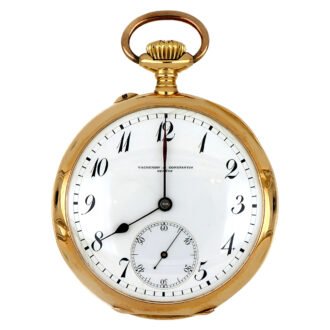
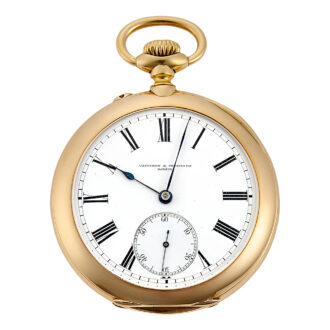
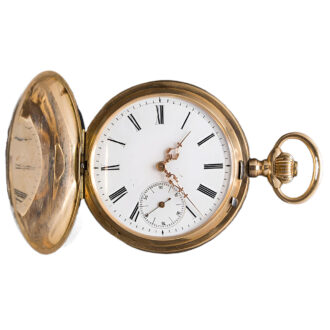
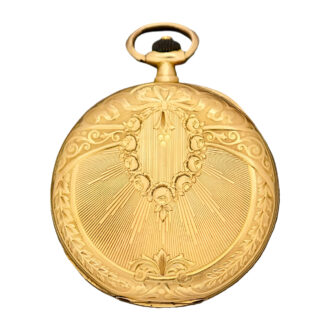
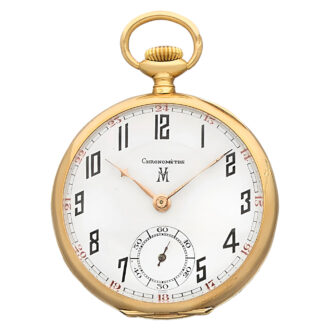
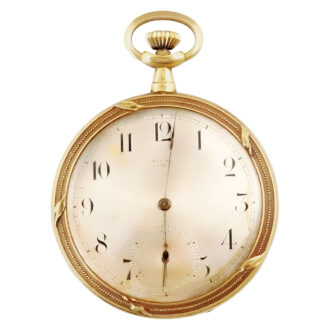
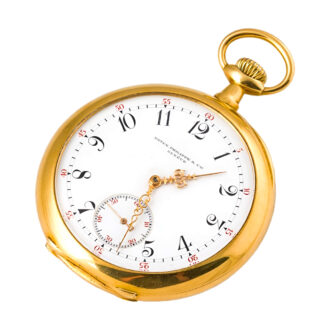
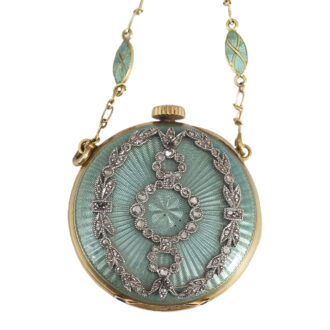
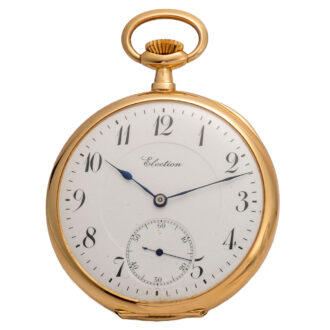
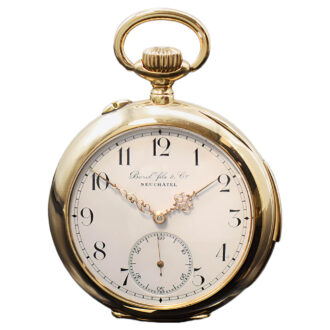
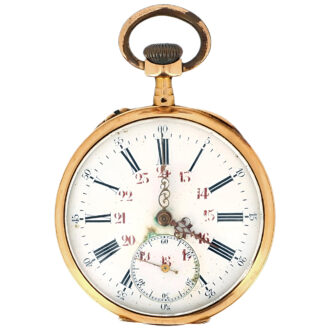
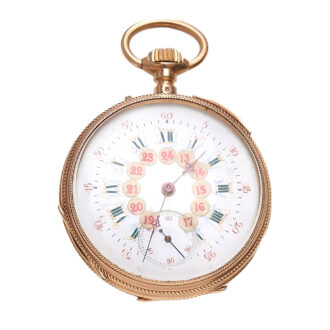
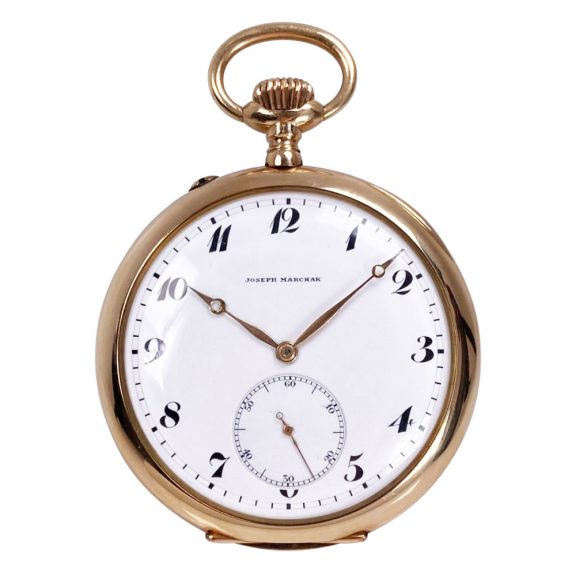
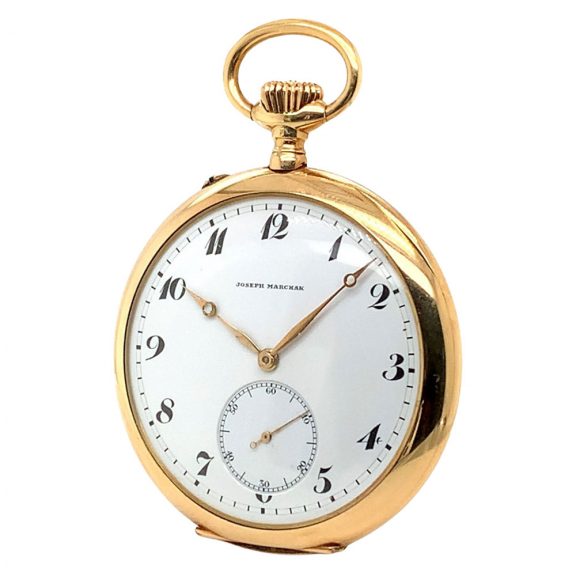
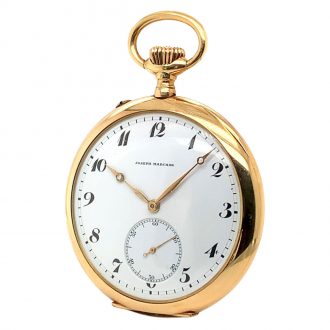
Elegant Swiss rose gold open faced lever watch Circa 1910
- Kenmerk
- DB0936
- Diameter
- 55 mm
- Estimate
- € 1.750 - 3.250
- Price sold
- € 1.700
Rose gold pocket watch by IWC
–
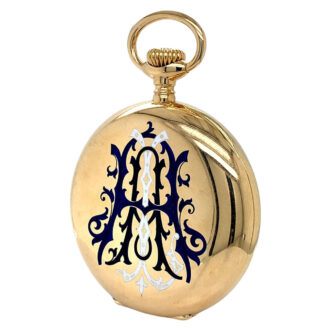
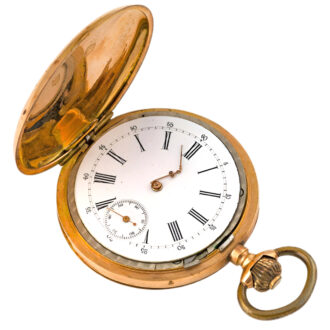
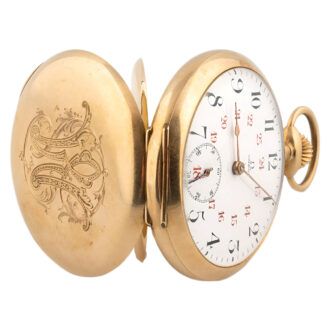
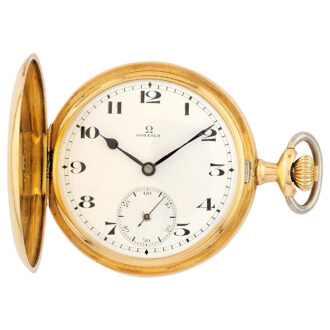
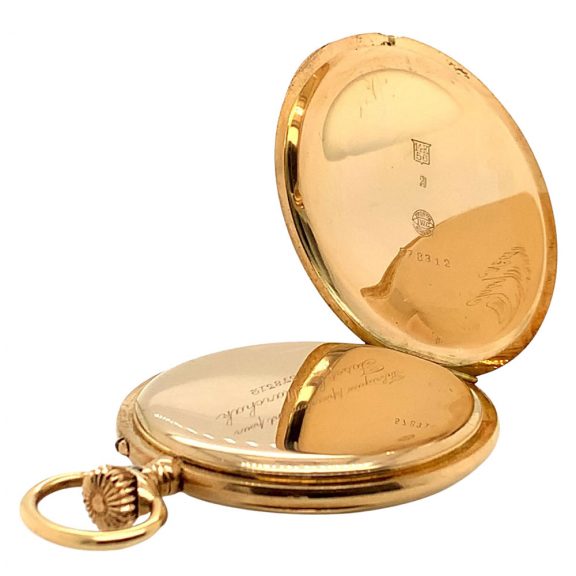
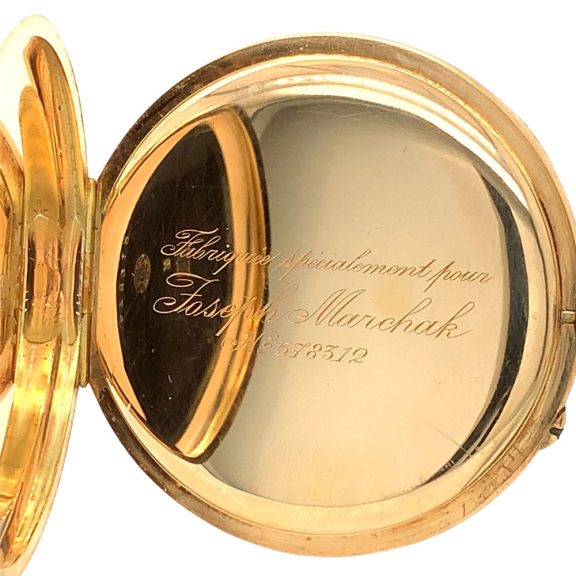
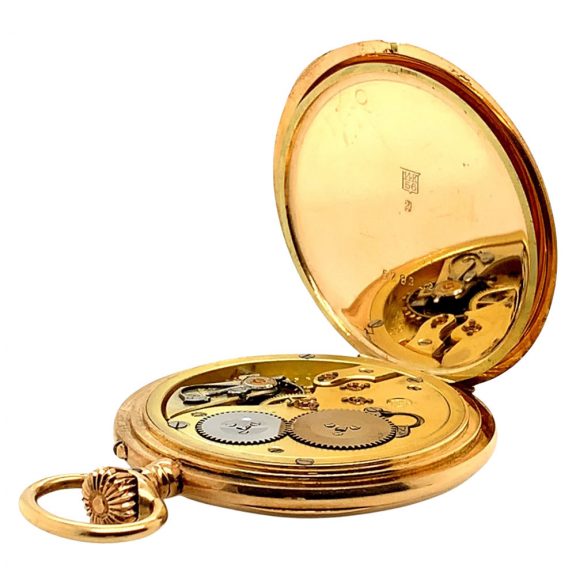
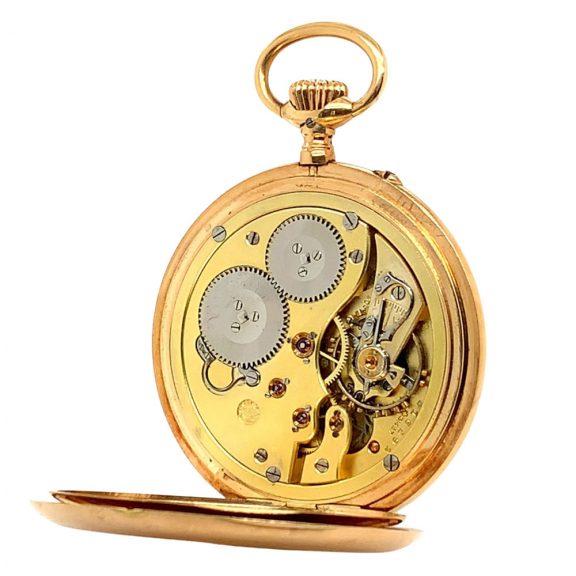
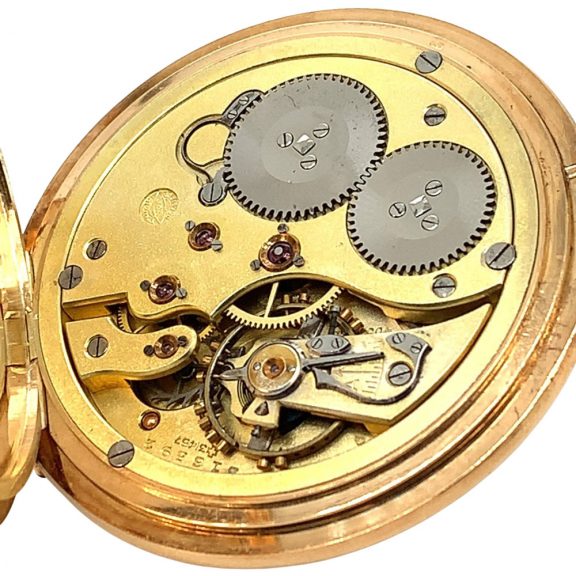
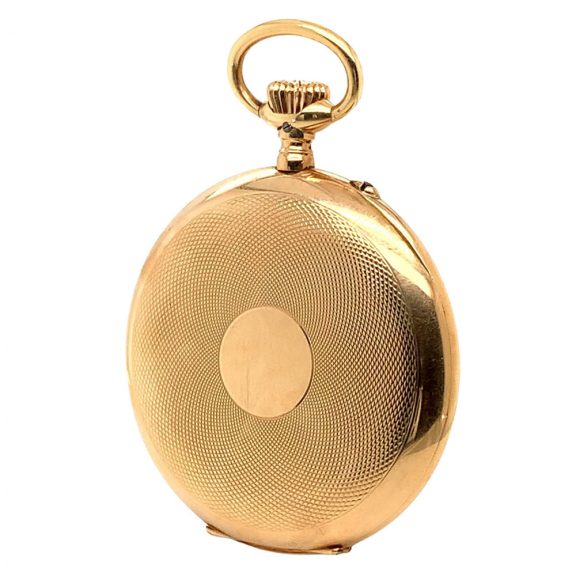
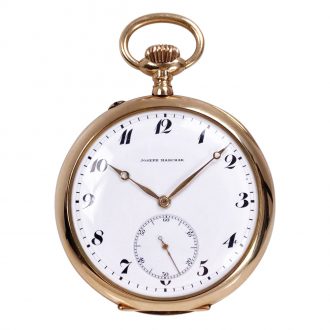
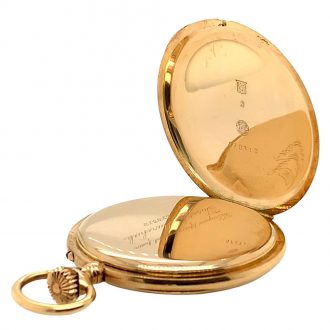
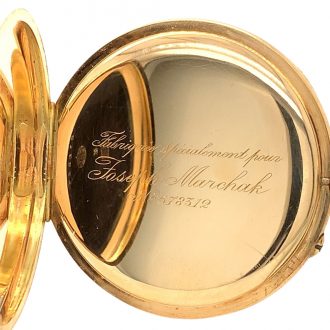
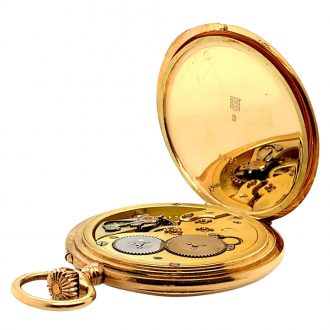
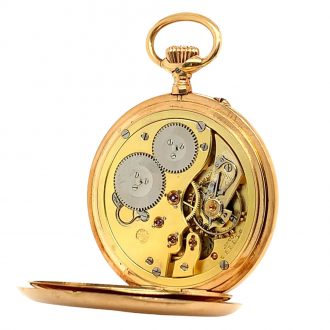
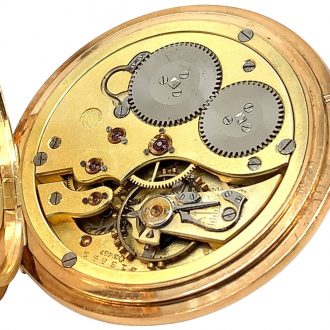
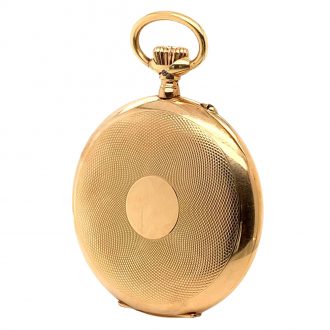
An elegant and flat Swiss 14 carat rose gold open faced lever pocket watch, circa 1910. Sold on September 2nd, 1912, to Joseph Marchak in Kiev, Russia. ¾ Plate movement, Rauschenbach’s Patent 31457, Patent D64025, a piston tooth lever escapement and screw compensation balance. The gold cuvette is inscribed Fabriquée spécialement pour Joseph Marchak. White enamel dial with Breguet numerals, an outer minute track, sunk subsidiary seconds at 6 o’clock and Breguet hands. An engine turned case back, polished bezels, pendant and bow. Dial signed Joseph Marchak, case and cuvette signed and numbered, movement numbered.
–
Diameter: 55 mm
–
Weight: 100 g
–
Signed: International Watch Co.
–
Patent 31457 Rauschenbach’s patented device for limiting the winding of movements with a barrel.
–
Because of his outstanding quality as a goldsmith and jeweller, Joseph Marchak is also known as the ‘Cartier of Kiev’ and is famous for his Art Deco and Retro jewellery. Marchak was born in 1854 in Ignatovka, near Kiev. In 1868, he began training as a goldsmith. In 1878, he established a workshop and soon became one of the most respected jewellers in the Russian Empire. Marchak received a medal at the world exhibitions in Chicago and Antwerp respectively in 1893 and 1894. He was seen as a direct rival of Fabergès. Joseph died in 1918. His son Alexandre opened a shop on Rue de la Paix, two years after his father’s death, where its fine quality and original designs gained notoriety and Marchak rose to become a global brand.
–
International Watch Company Schaffhausen (IWC) was founded in 1868 by Florentine Ariosto Jones (1841–1916), an American engineer and watchmaker from Boston, Massachusetts, who had been a director of E. Howard & Co. in Boston, America’s leading watchmaking company at the time. He established the company intending to combine modern engineering technology from the U.S. with the craftsmanship of the Swiss to manufacture high quality watches exclusively for the American market. Then, wages in Switzerland were relatively low although there was a ready supply of skilled watchmaking labour mainly carried out by people in their homes. Jones encountered opposition to his plans in French speaking Switzerland. People feared for their jobs and the work they did at home because he wanted to open a factory.
In 1850, Schaffhausen was in danger of being left behind in the Industrial Age. At this stage, watch manufacturer and industrialist Johann Heinrich Moser built Schaffhausen’s first hydroelectric plant laying the cornerstone for future industrialization. He probably met Jones in Le Locle and showed great interest in his plans. Together, they laid the foundations for the only watch manufacturer in northeast Switzerland: the International Watch Company in Schaffhausen.
Signed: International Watch Co.
Share this page: