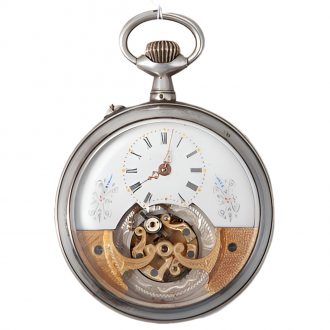
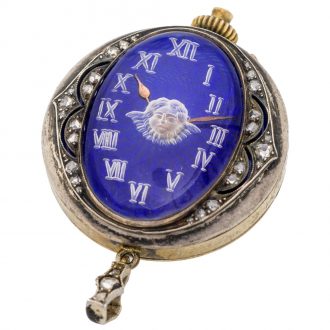
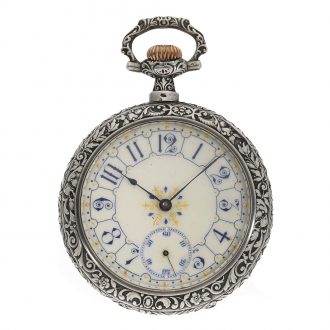
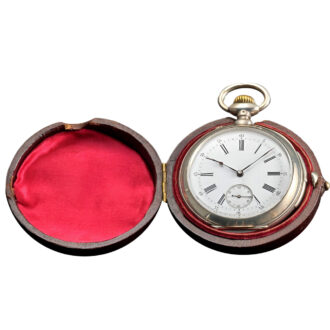
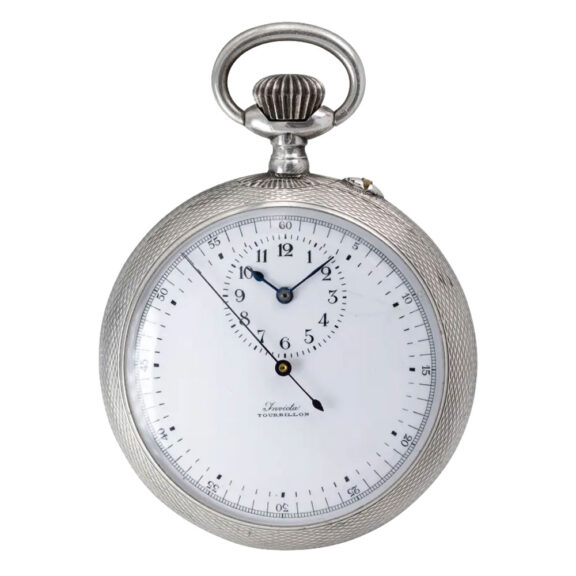
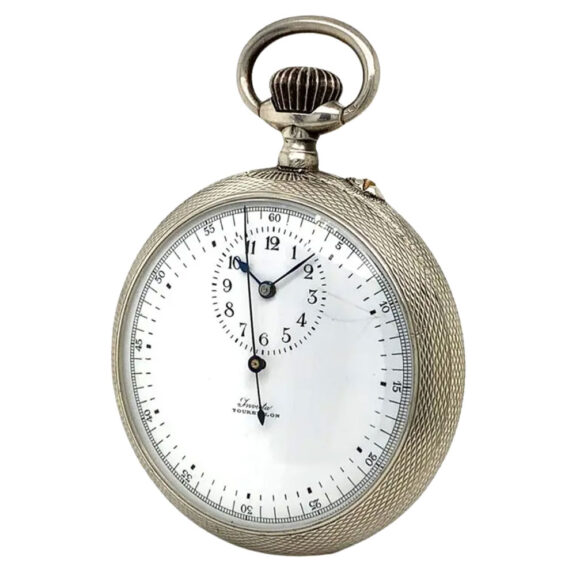
Swiss silver one minute tourbillon pocket watch Circa 1900
- Kenmerk
- DB1027
- Diameter
- 52 mm
- Estimate
- € 1.750 - 3.500
- Price sold
- € 1.800
Silver center seconds lever watch
–
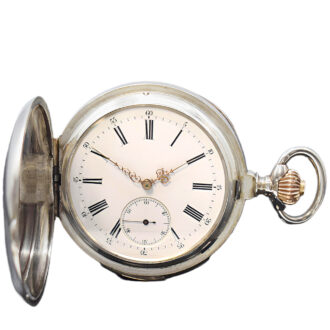
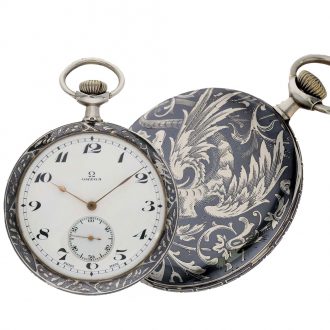
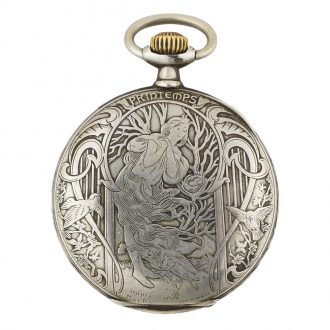
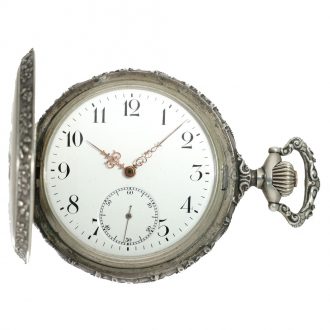
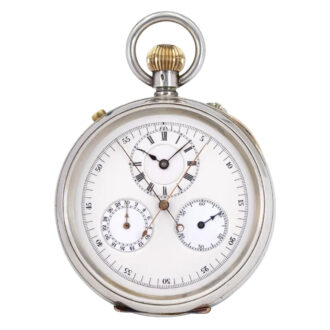
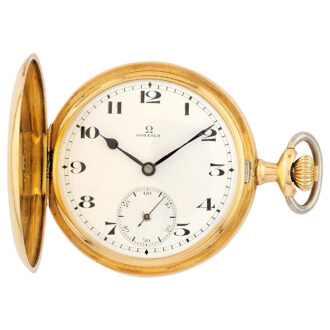
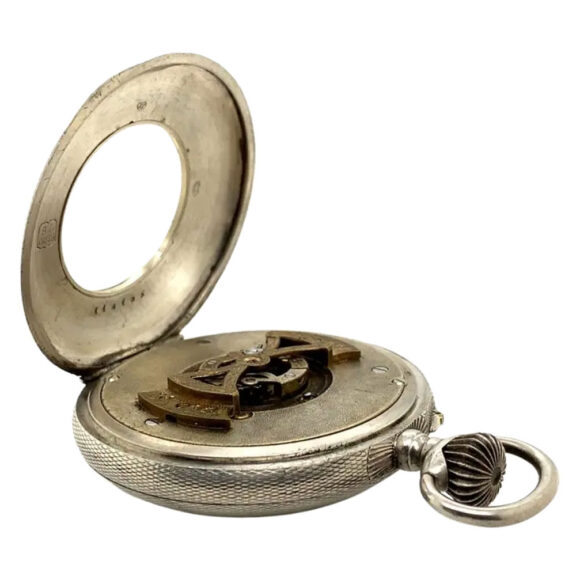
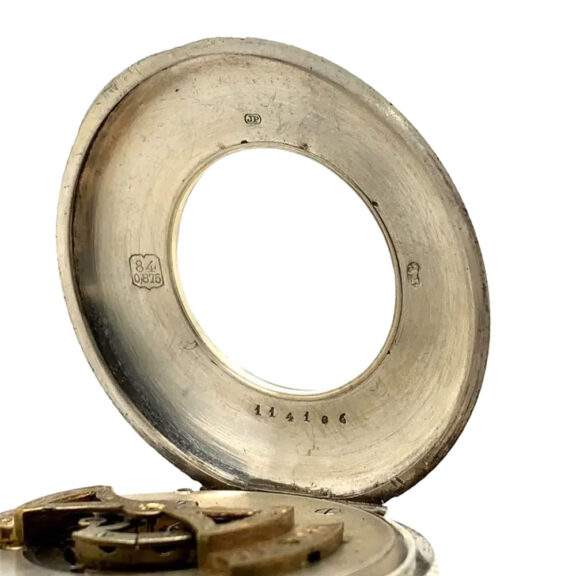
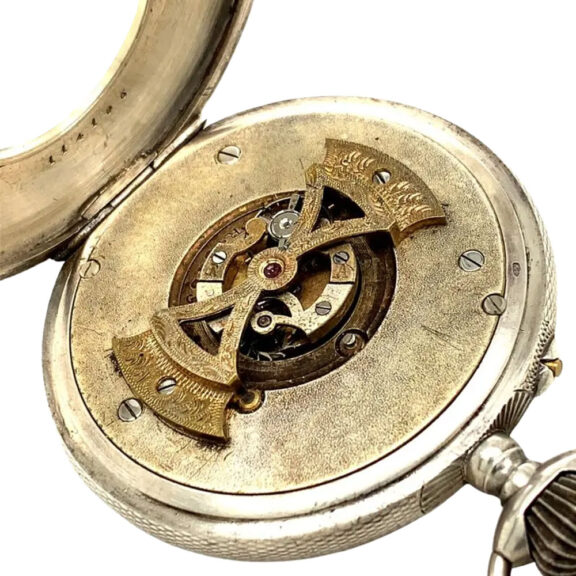
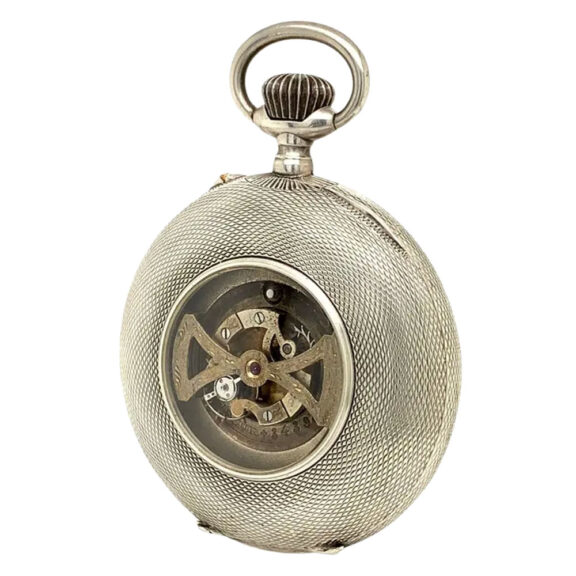
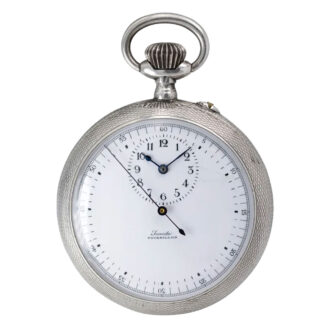
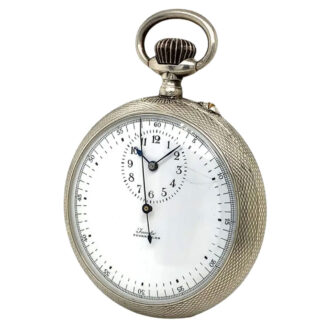
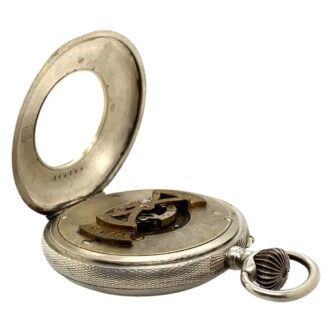
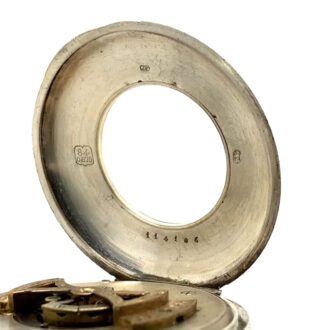
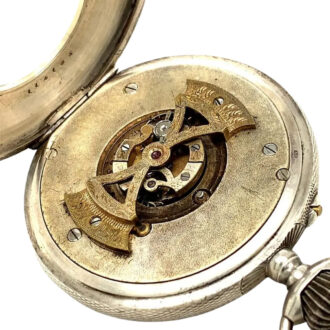
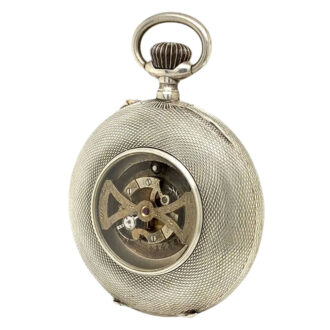
A Swiss silver open faced center seconds pocket watch with visible minute tourbillon made by Invicta in Biel/Bienne, circa 1900. A gilt brass movement with the patent signature Fureur No. 34394, an anker escapement, screw compensation balance, and finely florally engraved and pierced balance bridge. White enamel dial featuring a decentralized hour chapter with radial Arabic numerals and outer minute divisions, an outermost minute track with five minute numerals and fifth of a second markers, and blued hands. The engine turned case with plain pendant and bow, and a glazed aperture for a view to the tourbillon. Dial signed, case numbered.
–
Diameter: 52 mm
–
Weight: 107 g
–
Signed: Invicta Tourbillon
–
In 1837, Raphaël Picard (1810-1884) founded the company R. Picard in La Chaux-de-Fonds, Switzerland. Around 1890, the company was renamed Les Fils de R. Picard by successors Armand Picard (1856-1926) and Gabriel Picard (1865-1935). In 1896, Invicta was trademarked as a watch, parts, boxes and packaging brand name. Invicta and Telescope were registered for watches.
By 1911, the name Invicta, which was derived from Latin, meaning ‘invincible’, was included in the company’s name. The company’s motto was to offer high quality Swiss watches at affordable prices. In addition to regular pocket watches, they supplied timepieces with complications such as striking mechanisms, calendars, moon phases and chronographs with movements by Charles-Ami Barbezat-Baillot. In 1906, the company had 26 employees, in 1922, there were 30.
Invicta was still trading in the 1960’s. The company also traded under the names Seeland Watch Co. and Eno Watch Co. Ads for both Invicta and Seeland in 1922 mentioned a Gold Medal won by the firm in 1914 at the Swiss Exhibition in Berne. Fils de R. Picard & Cie, Invicta was listed from 1920 to 1925. Another firm with which they were associated, Seeland, was listed in 1920 for thin watches at the same address as Invicta. In 1923, this firm was listed as both Seeland Atelier de Terminages and Seeland Watch Co. In 1940, Invicta was further imported to the United States by Morris Hoffman as Invicta-Seeland Inc., New York. Seeland became Iseca SA, La Chaux-de-Fonds in 1967. In 1970, Invicta and Waltham were financially integrated. In 1982, Iseca SA was withdrawn from the Register of Commerce by decision of the shareholders. Eventually in 1986, Invicta was listed as a brand of Ondix SA.
The patent for the present type of watch was filed by Louis and Edouard Fallet Fils, St. Imier, in 1905 and was given the number 34394. By placing the tourbillon on an axis in the center of the watch, Edouard Fallet circumvented a patent that the Frenchman Paul Loichot from Charquemont (Doubs) on June 11th. 1904 in Switzerland under No. 30754 and in which the fact that the bogie was visible on the dial side was part of the patent claim. Two other watches of this type are shown by Reinhard Meis (“Das Tourbillon”, p. 313).
Signed: Invicta Tourbillon
Share this page: