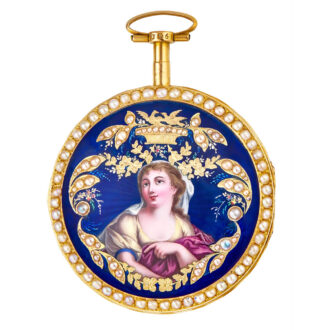
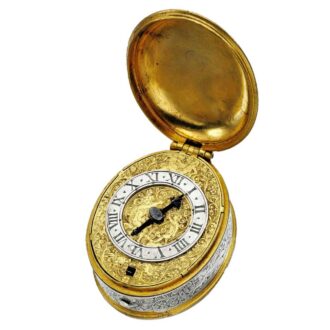
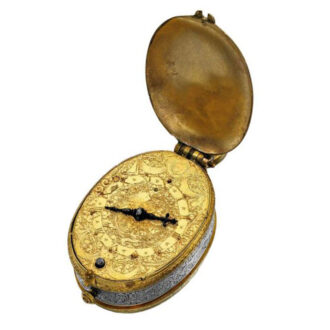
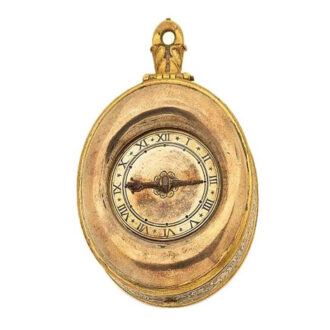
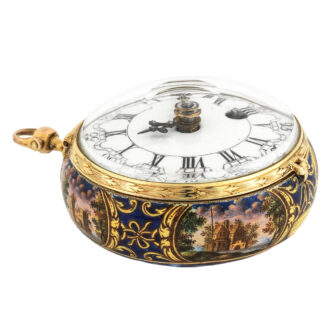
Fine and rare Dutch enamelled verge watch Circa 1660-1699
- Kenmerk
- BB0823
- Diameter
- 41 mm
- Estimate
- € 15.000 - 30.000
- Price sold
- € 11.750
Enamel watch by Johannes van Ceulen
–
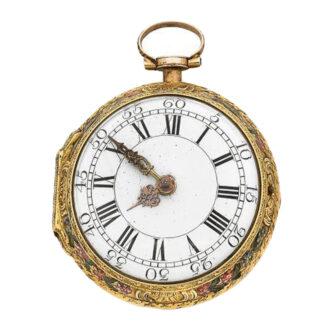
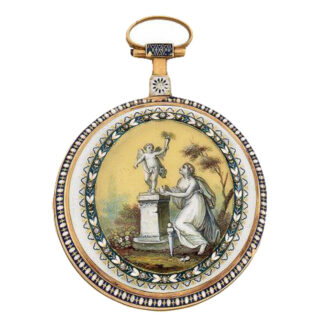
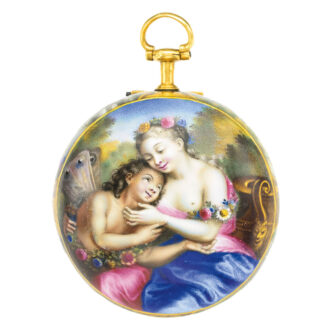
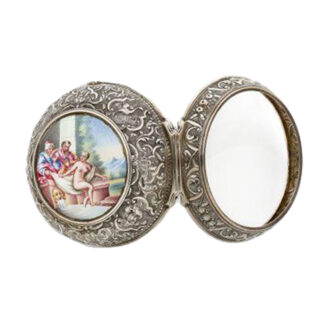
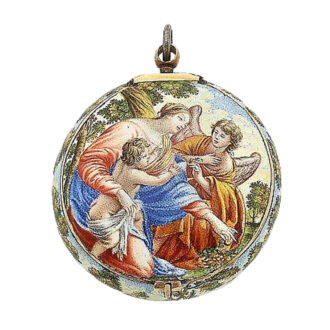
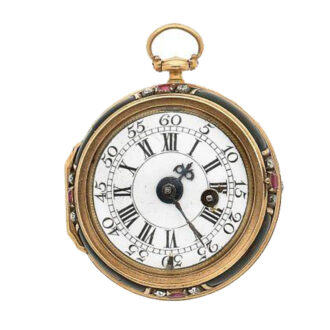
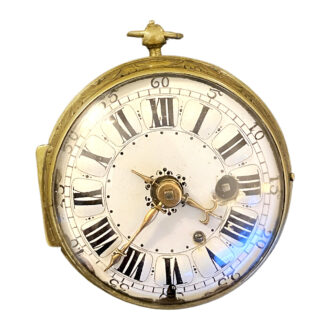
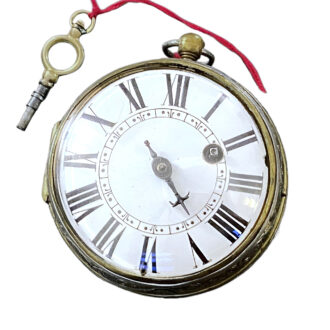
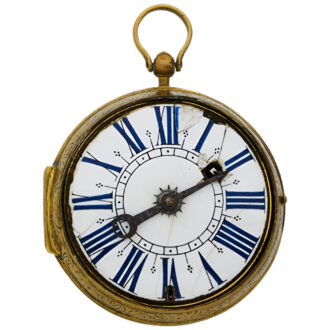
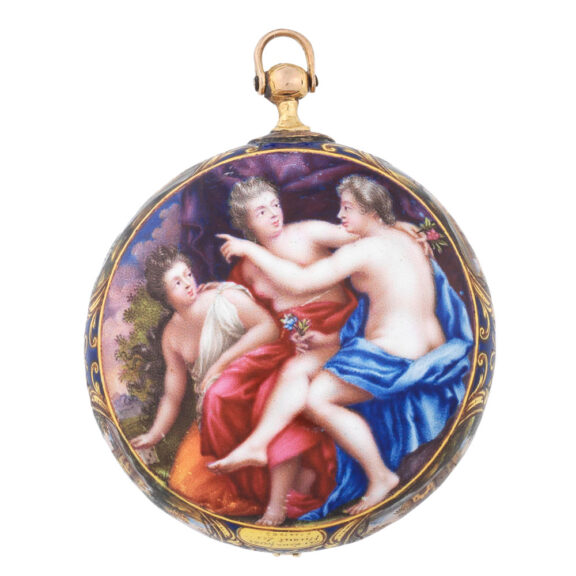
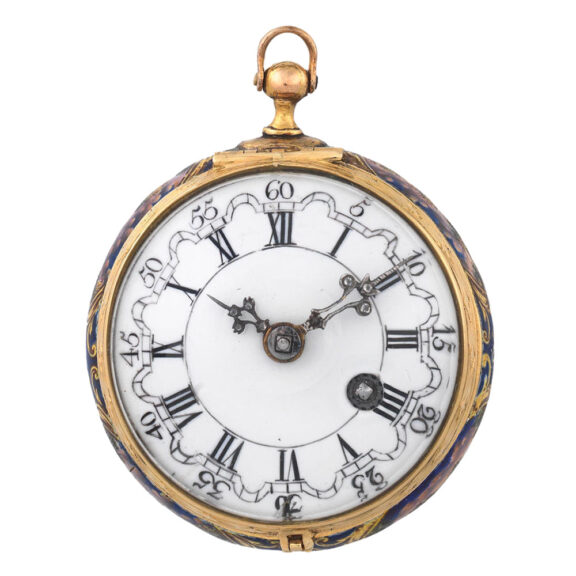
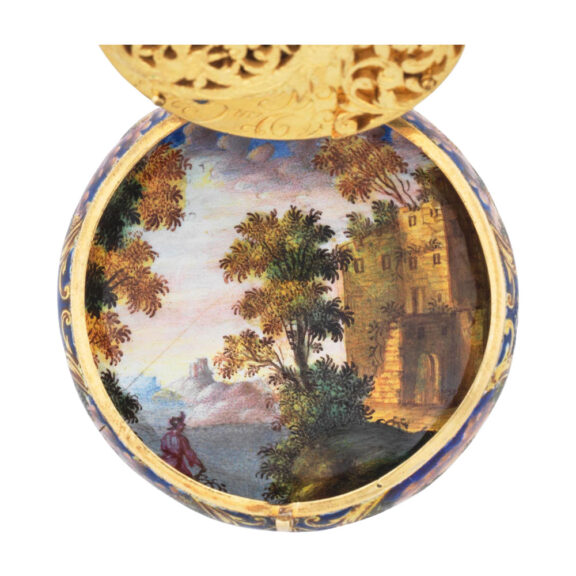
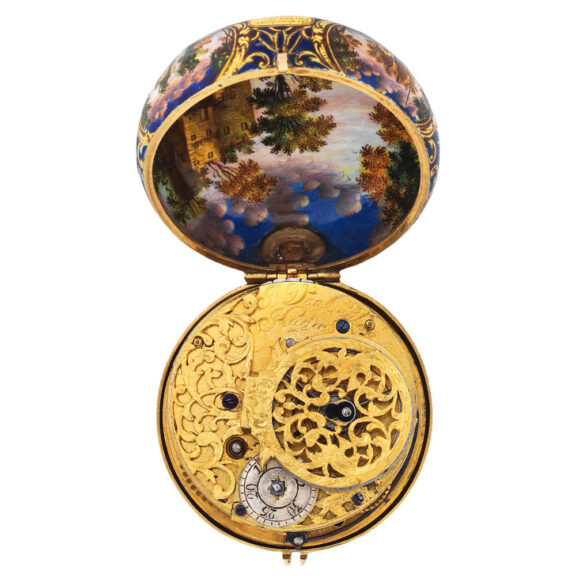
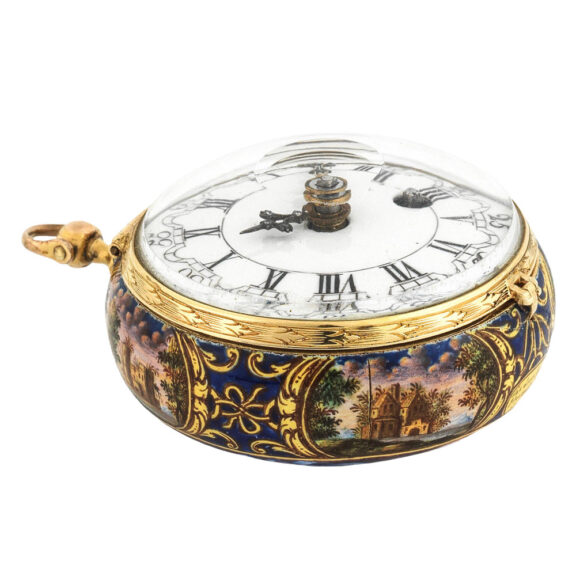
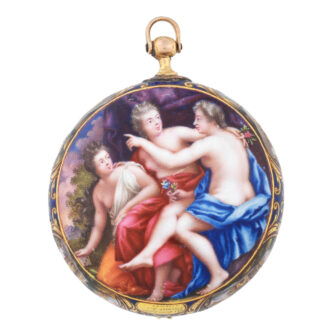
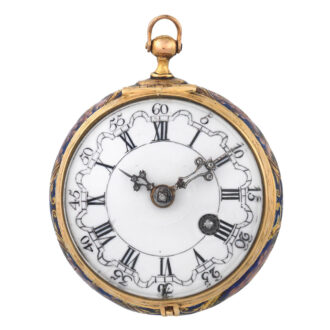
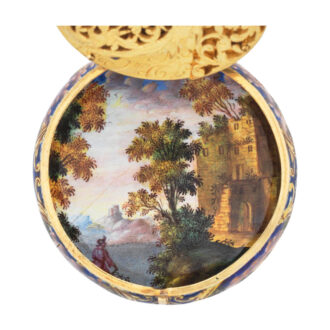
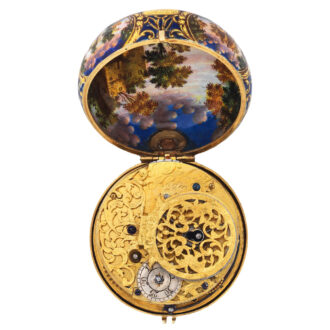
A fine and rare Dutch open faced key wind pocket watch with Les Deux Frères Huaut polychrome enamel case, late 17th Century. Fine gilt full plate fusee verge movement, pierced and engraved single foot balance cock with flora and fauna, plain steel three armed balance, tulip pillars. White enamel dial with black Roman numerals, black arcaded minute chapter, winding aperture at four and stone set decorative hands. Typical Huaut style case with fine polychrome enamel scene depicting three maidens to the reverse, cartouche scenes of grand residences to the sides, and a scene of castle ruins looked on by a solitary gentleman to the inner back; yellow cartouche signed Les Deux Frères Huaut Les Jeunes. Movement signed Van Ceulen; case signed Les Deux Frères Huaut Les Jeunes.
–
Diameter: 41 mm
–
Signed: Johannes van Ceulen Hague
–
Johannes van Ceulen is recorded as being active from 1675 until he died in 1715 and is known to have made several high-quality watches and clocks with balance springs for Huygens, who invented the pendulum in 1656.
–
During the 17th Century, most enamellers who worked on watch cases resided in France or Switzerland. The demand for enamelled watches in Europe, particularly the Netherlands, resulted in huge numbers of empty enamelled cases imported and fitted with locally made movements.
–
Les Frères Huaut (or Huaud). The cases painted on enamel by ‘Les deux Frères Huaut’ were among the finest examples of their kind from the Geneva School and were not only highly valued when originally made but remained as art treasures in the centuries that followed. Pierre I was the founder of the Huaud dynasty. He was born in 1612 in Geneva as the son of a French goldsmith Jean Huaud. He settled in Geneva in 1630, and three of his 11 children became famous enamellists like their father: Pierre II (1647-1698), Jean-Pierre (1655-1723) and Ami (1657-1724). The brothers were most likely trained by their father and worked with him. Pierre II started his own business around 1680. Jean-Pierre and Ami became partners in 1682 and were appointed painters to the Prussian court in 1686 when they moved to Berlin and started working for Elector Frederick William of Brandenburg (1620-1688). Among their most well-known works are Diana and Actaeon, The Judgement of Paris, The Holy Family, St. John the Baptist, The Nativity and The Adoration of the Shepherds.
Signed: Les Deux Frères Huaut Les Jeunes – Van Ceulen Hague
Share this page: