Swiss musical automaton for the Chinese market Circa 1830
- Kenmerk
- DB0001
- Diameter
- 39 mm
- Estimate
- € 25.000 - 50.000
- Price sold
- € 30.000
Gold, enamel and half pearl set cylinder watch by Henry Capt
–
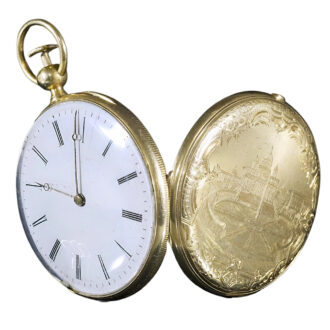
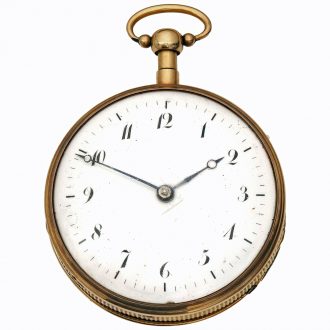
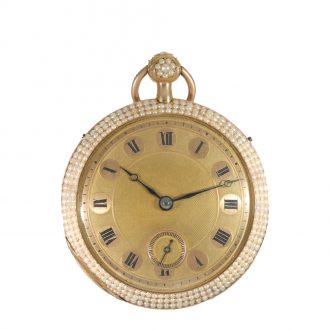
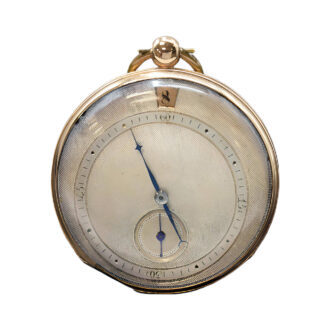
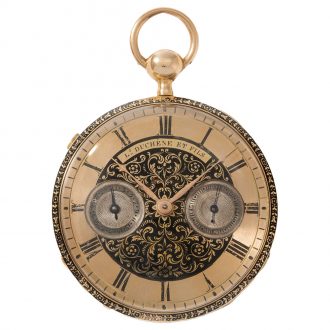
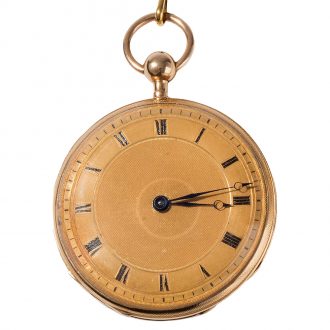
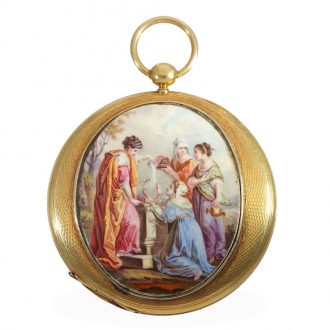
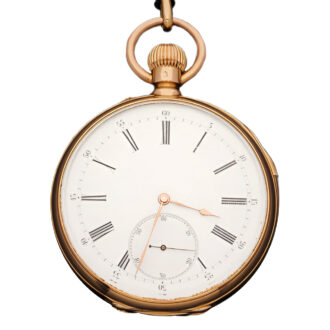
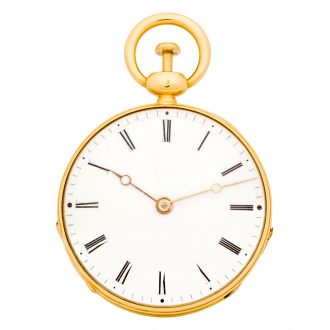
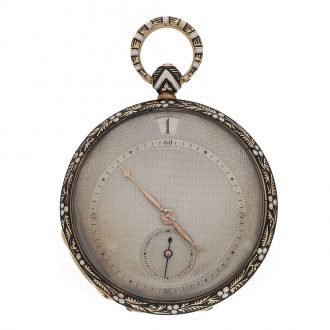
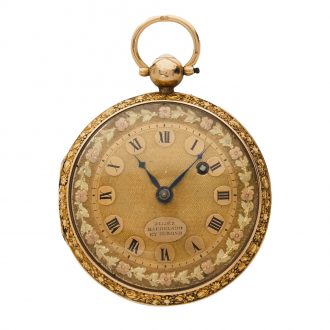
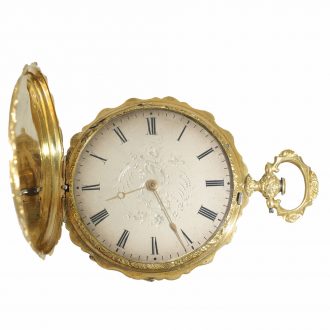
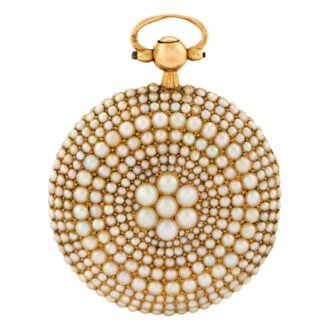
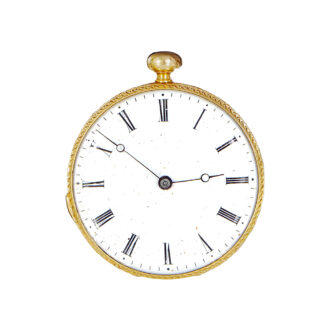
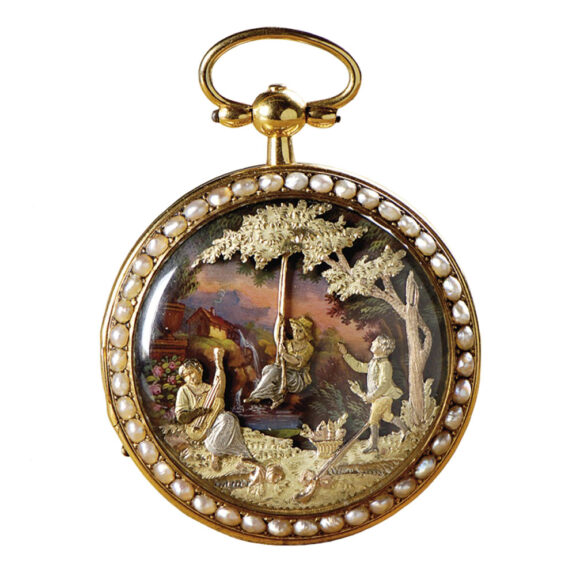
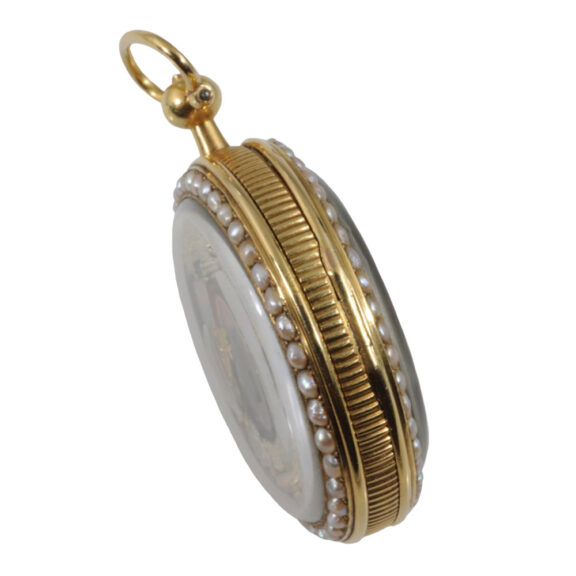
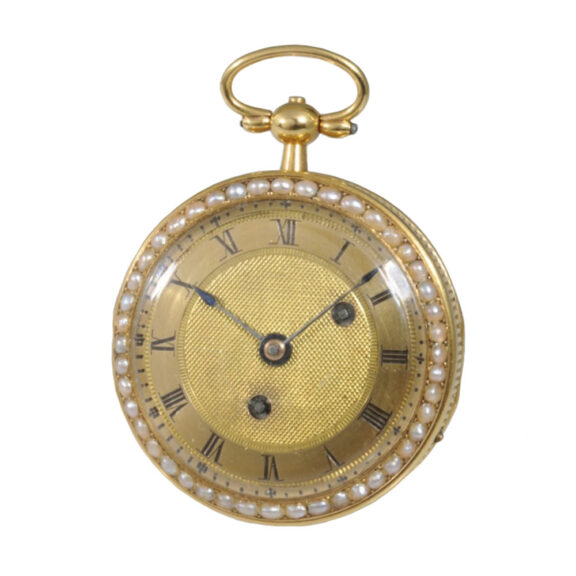
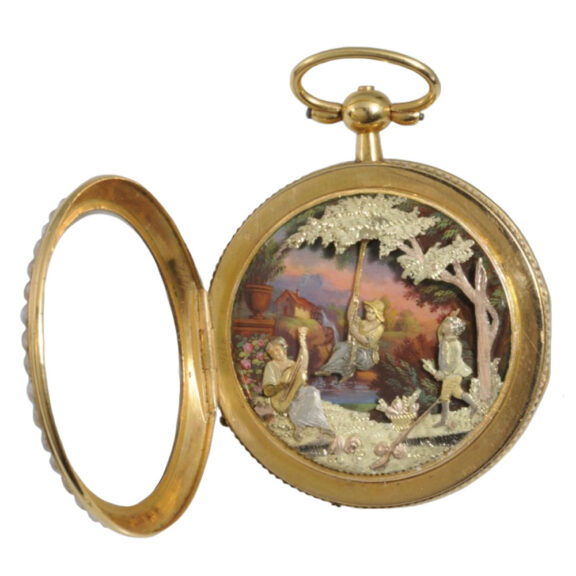
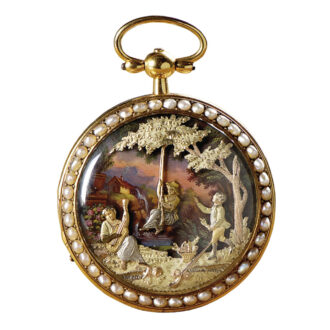
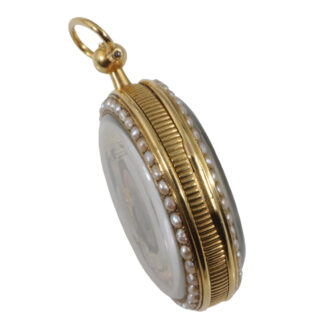
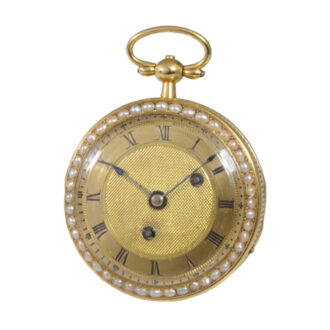
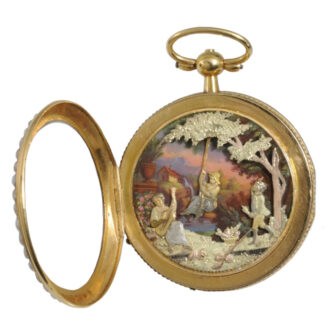
A Swiss 18 Carat gold, enamel and half pearl set double sided musical cylinder pocket watch with two automatons made for the Chinese market, circa 1830. The Swing. Full plate movement, barrel, cylinder escapement, brass balance, musical movement with a barrel with pins and vibrating blades. Gilt dial with Roman hours and outer minute divisions, the center engine turned, winding arbours for the musical movement and automata at 2 o’clock and for the watch at 6 o’clock, spade hands. Case glazed on both sides, the bezels set with half pearls, reeded band, four colour gold automaton scene and polychrome enamelled landscape on the back, a button for activating the automaton at 6 o’clock. The polychrome enamel miniature painting with a mill and mountain stream, a party of three is depicted in multi coloured gold on a wooded knoll. On the left, a lady plays the lute and a young lady with a hat sits on a swing in the middle while her chivalrous admirer to the right looks at the scene. The staff with which he pushed the swing is on the ground. When the automaton is activated, the lute is played and the swing moves back and forth. Case numbered.
–
Diameter: 39 mm
–
Weight: 52 g
–
Signed: Henry Capt à Genève
–
During the 1780s, Geneva opened a most intriguing chapter of horological history. The city developed, with great flair, the art of automatons: machines designed to imitate the movements of live beings or creatures. They ranged from the simplest forms, where a figure’s moving arms could point to the time, to complex, full scale productions, such as pastoral scenes, theatre pieces or concerts. Automata were soon being used to animate a wide variety of objects, such as scent bottles, amphorae, mirrors or snuffboxes. Their use as timepieces was often merely a pretext for possessing these exquisite creations. And since where there is life, there is sound, the automata were fitted with a musical mechanism. The acknowledged masters of this marriage between ornamental watches and automata included Pierre Morand, Henry Capt, Isaac Daniel Piguet and Philippe Samuel Meylan as well as the Jaquet Droz workshop in Geneva, with colleagues and successors Jean-Frédéric Leschot and Jacob Frisard. All were the brilliant creators of musical watches functioning first with chiming bells and later with a cylinder or pin drum that caused a comb made up of a set of blades to vibrate. These watches were especially prized in the East and during trade with Turkey and China, they acquired a subtle local touch, a discreetly exotic charm that makes them easy to distinguish today. In the hands of the Rochat family and the Bruguier workshop, this tradition continued until 1850.
Signed: Henry Capt à Genève
Share this page: