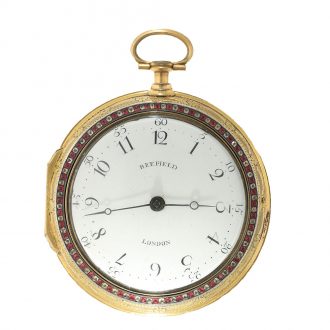
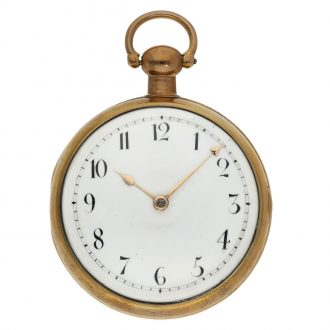
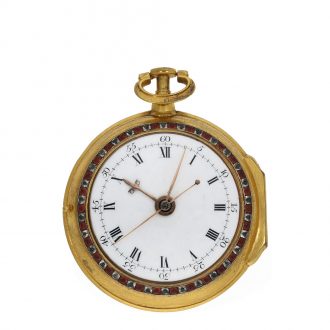
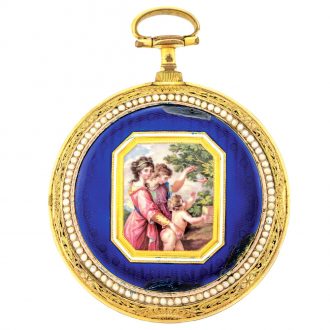
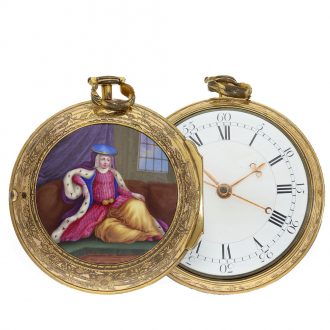
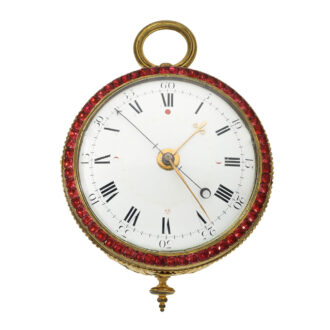
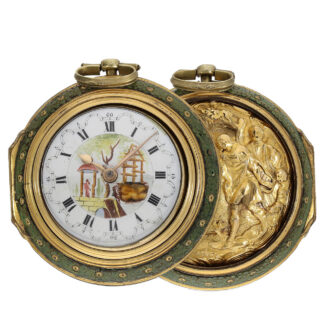
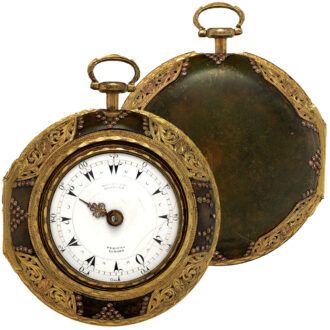
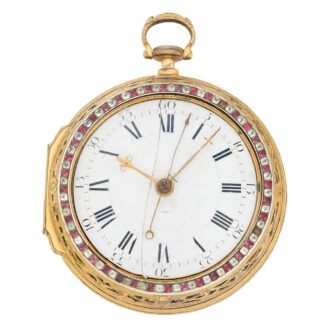
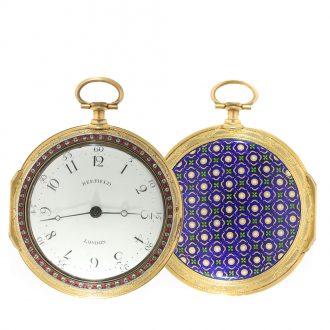
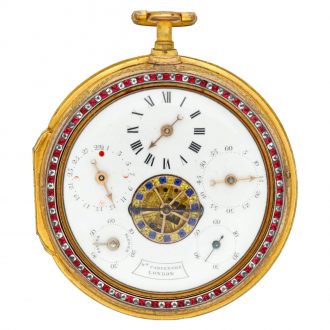
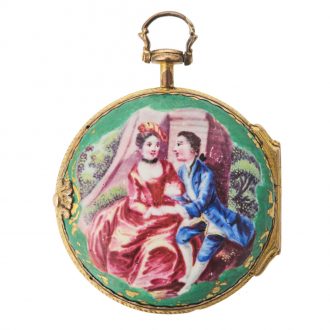
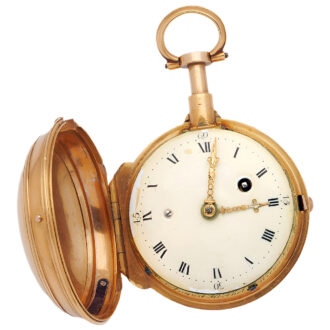
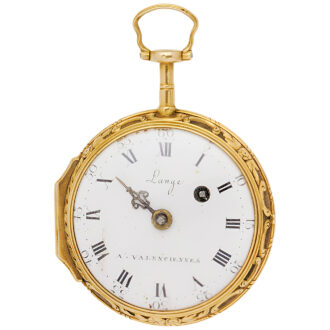
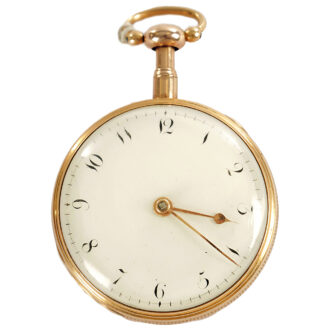
English gilt two tune musical coach watch Circa 1780
- Kenmerk
- BA0684
- Diameter
- 132 mm
- Estimate
- € 35.000 - 70.000
- Price sold
- -
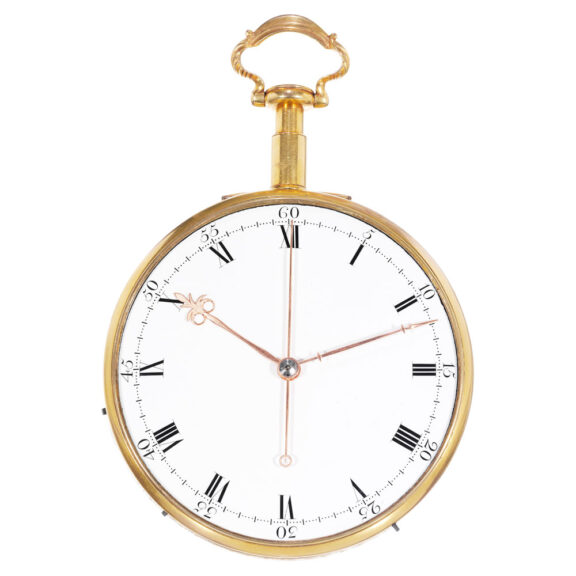
Gilt musical coach watch with centre seconds and stop feature by Brockbank
–
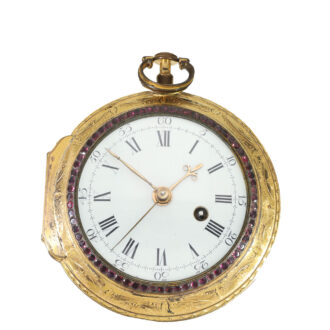
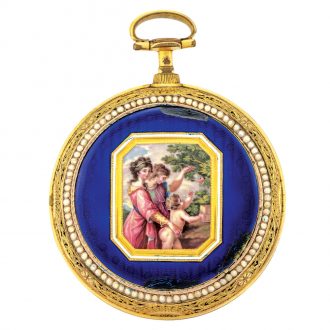
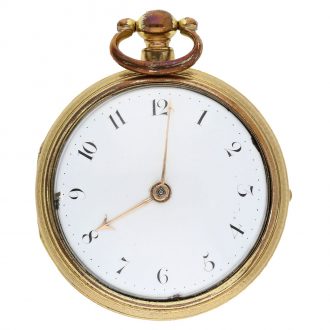
A very fine, extremely rare and very large English gilt open faced two tune musical coach watch with centre seconds and stop feature, playing music on the hour or at will with six hammers on six bells made for the Chinese market, circa 1780. Two tier, foliate engraved full plate movement with openings for the nest of bells and the musical cylinder, both secured by detachable bridges, tapered cylindrical pillars, fusée and chain mounted within a small plate between the dial plate and the middle plate, cylinder escapement with flat steel balance, flat balance spring, engraved regulation dial on the backplate with blued steel hand. Musical train with fusee and chain, six hammers on six bells, pinned brass cylinder mounted vertically, fly mounted beneath a separate cock on the back plate, levers for stop feature, musical selection and music activatation in the bezel. White enamel dial with Roman numerals, outer minute and seconds divisions with Arabic five second numerals, gold beetle and poker hands. Finely pierced and engraved foliate case back with apertures for winding, hinged polished bezel, large cast and chased foliate bow. Movement signed.
–
Diameter: 132 mm
–
Signed: Jno. Brockbank London
–
Watches using this type of pinned cylinder and a nest of bells are extremely rare, this watch is also unusually large and finely made. Six hammers play on what is so aptly named a nest of bells, six bells of decreasing size inside one another. The musical cylinder can be shifted into two positions to play two tunes, they have a diatonic scale between c3-a3 and the melody makes maximum use of the possibilities and a magnificent example of the bell tuners’ art. The scale of the bells is as follows: c3-d-e-f-g-a3.
–
Coach Watches. As the name indicates, they were used by people going on long trips. The watch was suspended in a conspicuous place in one’s carriage and kept time for the many hours of the journey, not only using the dial but the striking mechanism for the hours of darkness.
–
John Brockbank worked in Old Jewry and later Cooper’s court in London. He was apprecticed in 1761 and admitted to the Clockmakers Company in 1769.
Signed: Jno. Brockbank London
Share this page: