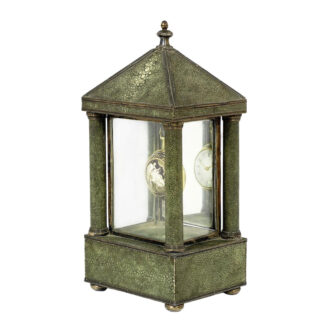
Repeater with Shagreen and glass display case Circa 1770
- Kenmerk
- BB0783
- Diameter
- 55 mm
- Estimate
- € 10.000 - 20.000
- Price sold
- € 38.000
Gold pair cased quarter repeater by Thomas Mudge & William Dutton
–
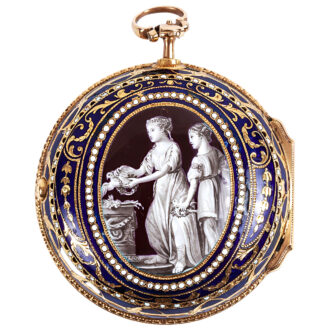
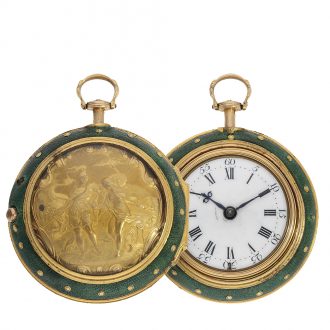
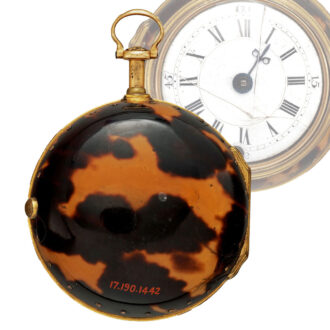
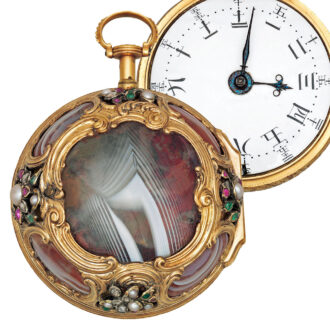
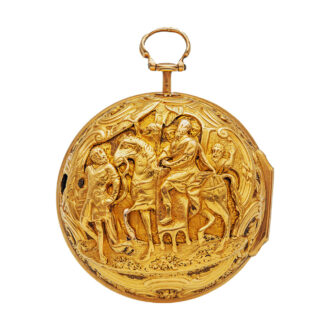
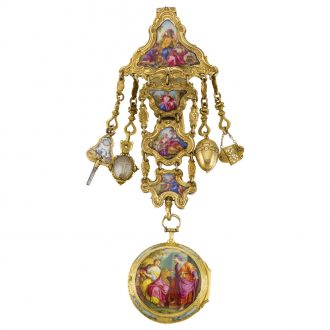
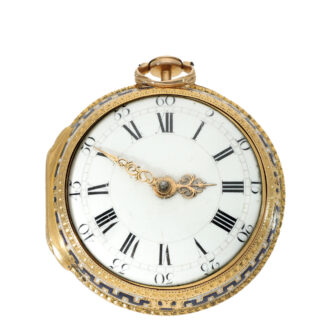
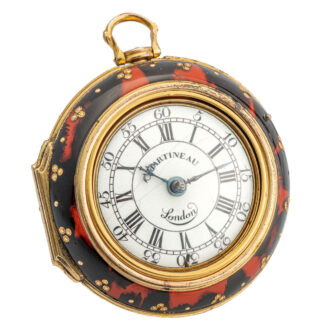
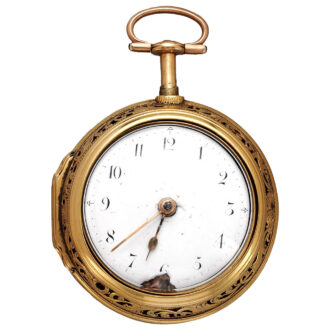
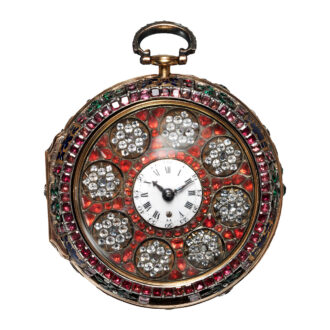
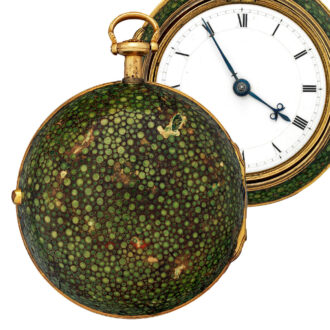
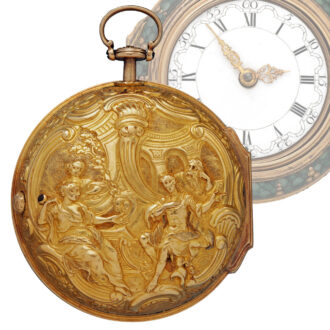
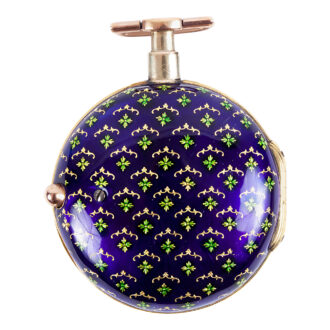
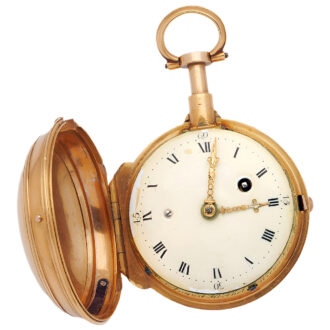
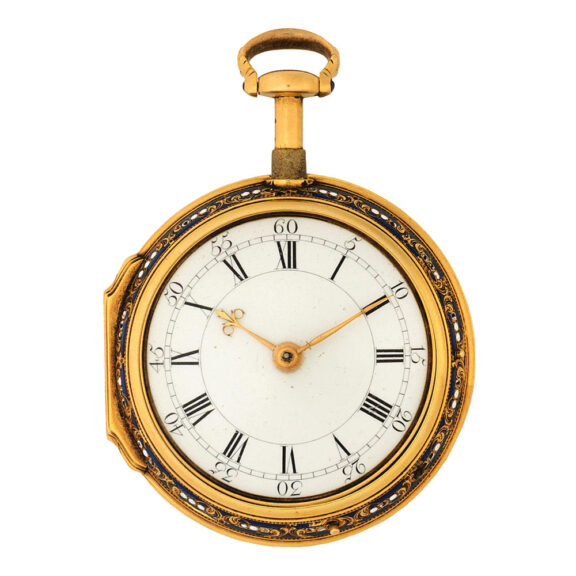
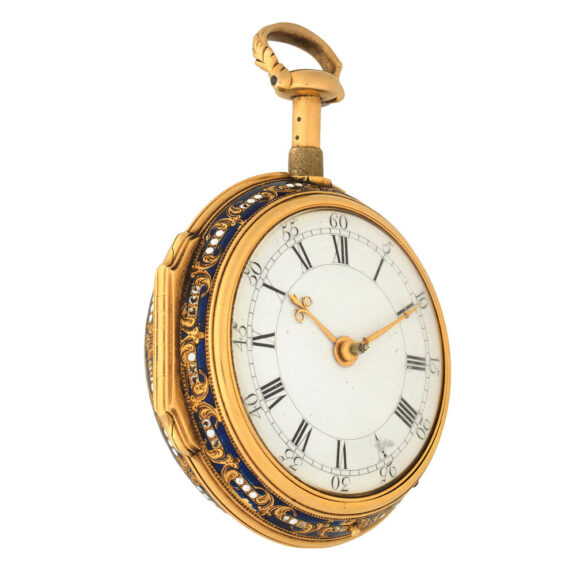
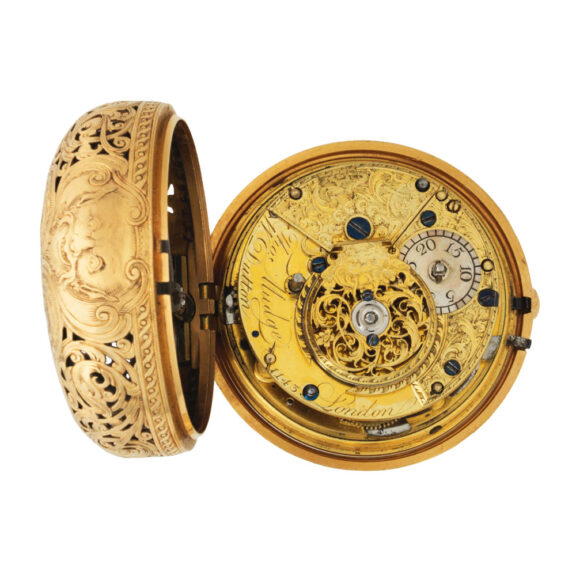
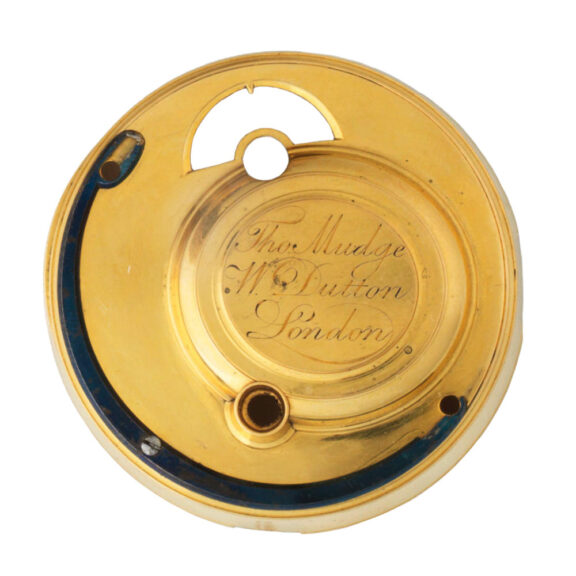
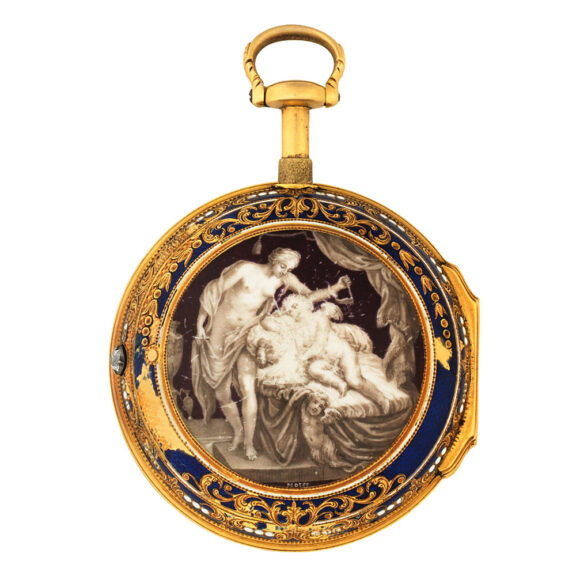
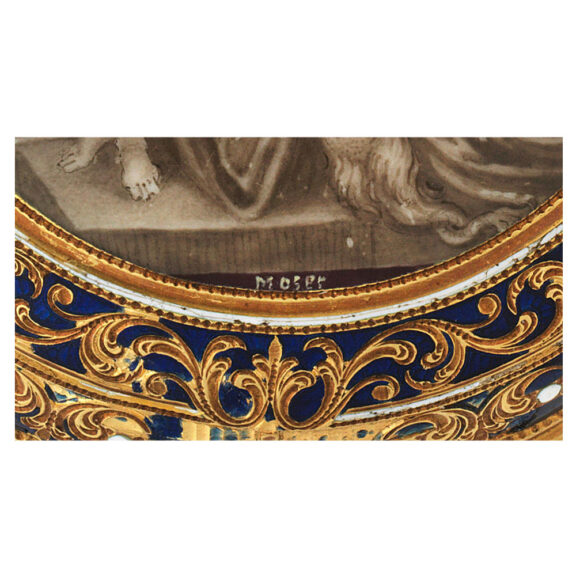
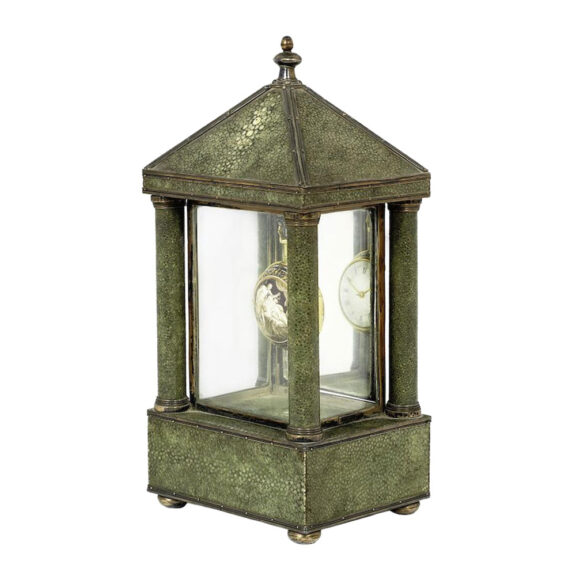
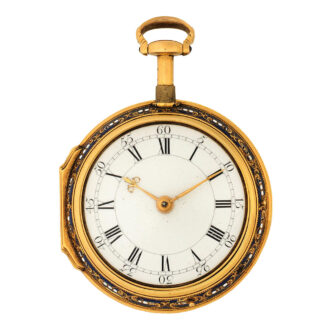
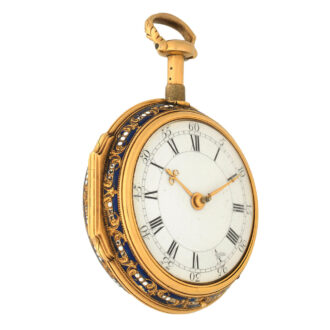
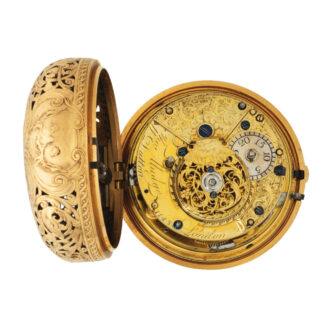
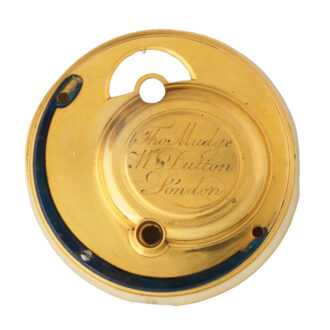
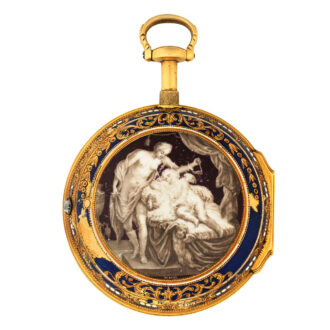
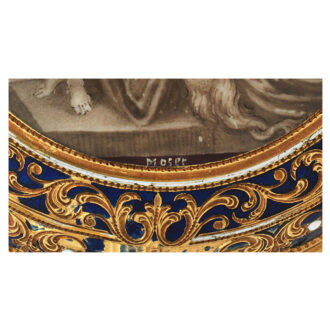
A fine English gold quarter repeating cylinder pair cased pocket watch with later Shagreen and glass display case by John Paul Cooper, circa 1770. Full plate gilt fusee movement, plain polished steel balance, cylinder escapement, pierced and engraved balance cock with winged mask, diamond endstone, silver regulator, baluster pillars, two polished hammers repeating on single bell, signed movement cover. White enamel dial with Roman numerals with outer Arabic minutes, fine gold beetle and poker hands. Inner gold engraved and pierced case with grimacing mask, stamped ITP under bell, plunge repeat through pendant, gold outer case with fine grisaille enamel central panel depicting Venus holding a scythe to Cupids wings, outer borders with translucent blue Guilloché enamel highlighted with gold scrolls and white enamel ‘pearls’, similarly decorated front bezel, pulse piece at 5, 7 knuckle scalloped hinge. Movement and outer cover signed Tho. Mudge W. Dutton London, inner case stamped ITP, enamel signed Moser. Accompanied by a fine architectural display case with shagreen covered corner pillars and pitched top, glass front and sides and mirrored back, with plaque of maker John Paul Cooper, circa 1900.
–
A fine English gold quarter repeating cylinder pair cased pocket watch with later Shagreen and glass display case by John Paul Cooper, circa 1770. Full plate gilt fusee movement, plain polished steel balance, cylinder escapement, pierced and engraved balance cock with winged mask, diamond endstone, silver regulator, baluster pillars, two polished hammers repeating on single bell, signed movement cover. White enamel dial with Roman numerals with outer Arabic minutes, fine gold beetle and poker hands. Inner gold engraved and pierced case with grimacing mask, stamped ITP under bell, plunge repeat through pendant, gold outer case with fine grisaille enamel central panel depicting Venus holding a scythe to Cupids wings, outer borders with translucent blue Guilloché enamel highlighted with gold scrolls and white enamel ‘pearls’, similarly decorated front bezel, pulse piece at 5, 7 knuckle scalloped hinge. Movement and outer cover signed Tho. Mudge W. Dutton London, inner case stamped ITP, enamel signed Moser. Accompanied by a fine architectural display case with shagreen covered corner pillars and pitched top, glass front and sides and mirrored back, with plaque of maker John Paul Cooper, circa 1900.
–
Diameter: 55 mm
–
Signed: Tho. Mudge W. Dutton London
–
The current watch represents an amazing collaboration of masters who not only excelled at their craft but are also lauded throughout history for their contributions to the study of horology and the arts.
–
Executed by George Michael Moser (1706-1783) the case depicts Venus holding a scythe to Cupids wings. This is an unusual representation of the subject as typically we see Chronos, god of Time, immobilising Cupid in such a way rather than Venus. Representing the allegory of time over infatuation this portrayal is an excellent example of why Moser has long been considered one of the best enamellers as well as gold chasers of his time. Raised in Switzerland, Moser emigrated to London at the age of 22 picking up a diverse resumé in the process that saw him work as a coppersmith and furniture maker before settling as a goldsmith. His versatile artistic accomplishments led him on to become Drawing Master to the Prince of Wales, the future King George III as well as a Founder Member of the Royal Academy. Widely respected, his other notable achievements included being an original member of the St Martins Lane Academy founded by Hogarth as well as going on to foster the talents of future artists such as William Blake. At his funeral, his friend and first President of the RA, Joshua Reynolds spoke with great praise of his teachings which he credited with the creation of many of the next generation of Artists. Seldom found on watch cases, his enamel work is of the highest quality and there are very few examples in existence today.
–
The exclusive nature of this watch is further enhanced by the movement produced by Thomas Mudge (1715-1794) and William Dutton (1720-1794). Both watchmakers were apprenticed to George Graham (1673-1751) and the reputation that still stands for Graham transcended to his protegees as well. Famous for inventing the lever escapement, in this example Mudge along with Dutton focused on Grahams achievement of the cylinder escapement. By adding the complication of quarter repeating, the refined execution of the movement made it worthy of the extravagant and fine case it is housed in.
–
Included with the watch is a finely executed architectural display case with shagreen covered pillars and pitched top created by the 19th century architect and designer John Paul Cooper (1869-1933). A prominent member and believer in the Arts and Crafts movement after William Morris, he went on to become the Head of the Metalwork Department at the Birmingham School of Art. His philosophy was that you should be able to make the pieces that you designed so this display was likely to have been physically made by Cooper himself. It is interesting to note that the family held this watch in such high regard that they had a well-known and famous artisan create the Display case.
Diameter: 55 mm
–
Signed: Tho. Mudge W. Dutton London
–
The current watch represents an amazing collaboration of masters who not only excelled at their craft but are also lauded throughout history for their contributions to the study of horology and the arts.
–
Executed by George Michael Moser (1706-1783) the case depicts Venus holding a scythe to Cupids wings. This is an unusual representation of the subject as typically we see Chronos, god of Time, immobilising Cupid in such a way rather than Venus. Representing the allegory of time over infatuation this portrayal is an excellent example of why Moser has long been considered one of the best enamellers as well as gold chasers of his time. Raised in Switzerland, Moser emigrated to London at the age of 22 picking up a diverse resumé in the process that saw him work as a coppersmith and furniture maker before settling as a goldsmith. His versatile artistic accomplishments led him on to become Drawing Master to the Prince of Wales, the future King George III as well as a Founder Member of the Royal Academy. Widely respected, his other notable achievements included being an original member of the St Martins Lane Academy founded by Hogarth as well as going on to foster the talents of future artists such as William Blake. At his funeral, his friend and first President of the RA, Joshua Reynolds spoke with great praise of his teachings which he credited with the creation of many of the next generation of Artists. Seldom found on watch cases, his enamel work is of the highest quality and there are very few examples in existence today.
–
The exclusive nature of this watch is further enhanced by the movement produced by Thomas Mudge (1715-1794) and William Dutton (1720-1794). Both watchmakers were apprenticed to George Graham (1673-1751) and the reputation that still stands for Graham transcended to his protegees as well. Famous for inventing the lever escapement, in this example Mudge along with Dutton focused on Grahams achievement of the cylinder escapement. By adding the complication of quarter repeating, the refined execution of the movement made it worthy of the extravagant and fine case it is housed in.
–
Included with the watch is a finely executed architectural display case with shagreen covered pillars and pitched top created by the 19th century architect and designer John Paul Cooper (1869-1933). A prominent member and believer in the Arts and Crafts movement after William Morris, he went on to become the Head of the Metalwork Department at the Birmingham School of Art. His philosophy was that you should be able to make the pieces that you designed so this display was likely to have been physically made by Cooper himself. It is interesting to note that the family held this watch in such high regard that they had a well-known and famous artisan create the Display case.
Signed: Tho. Mudge W. Dutton London
Share this page: