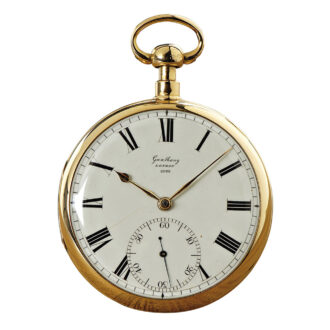
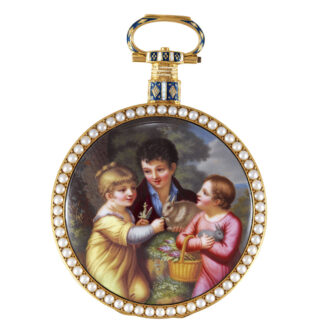
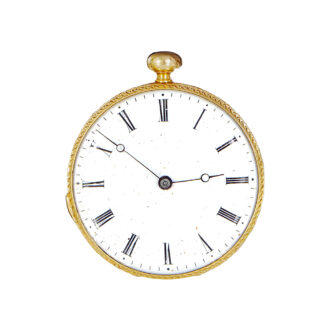
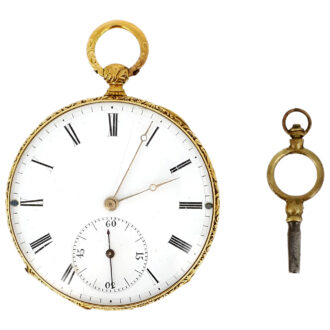
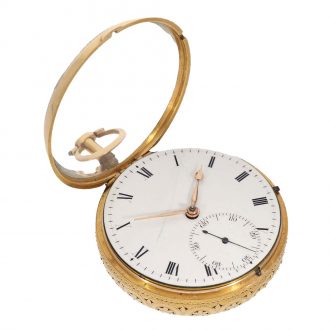
Heavy English 18K gold watch with stoppable seconds Circa 1815
- Kenmerk
- HC1809
- Diameter
- 58 mm
- Estimate
- € 7.500 - 15.000
- Price sold
- -
Gold quarter repeating cylinder watch
–
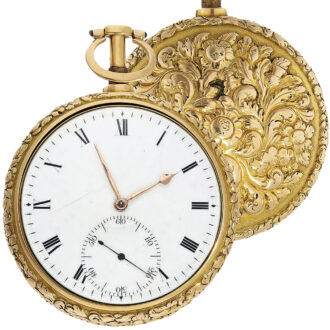
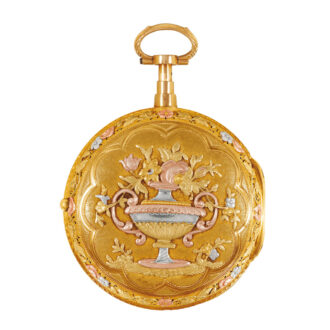
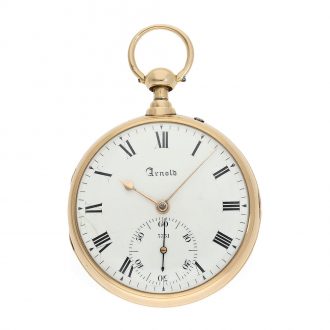
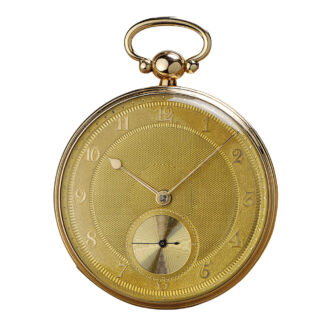
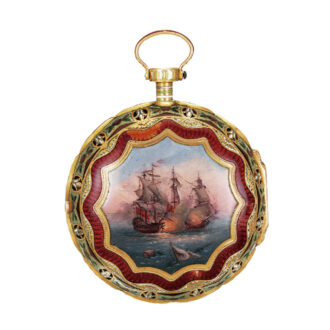
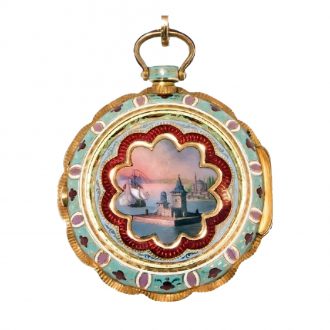
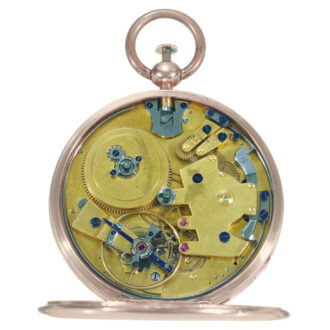
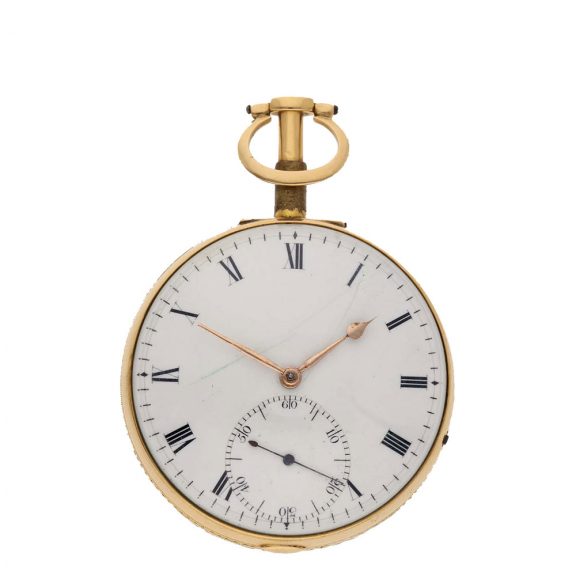
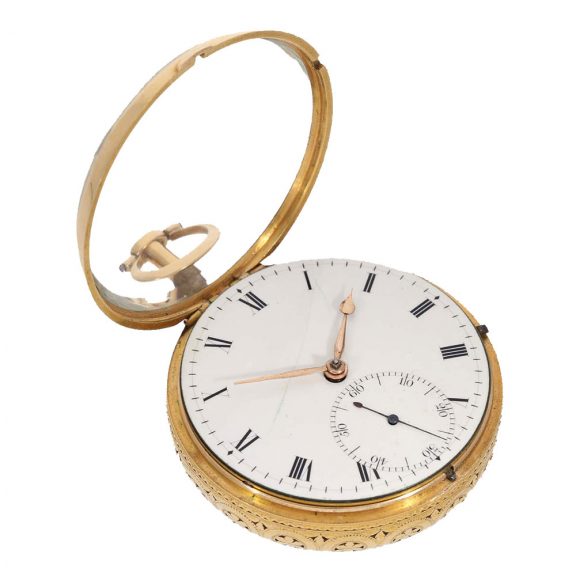
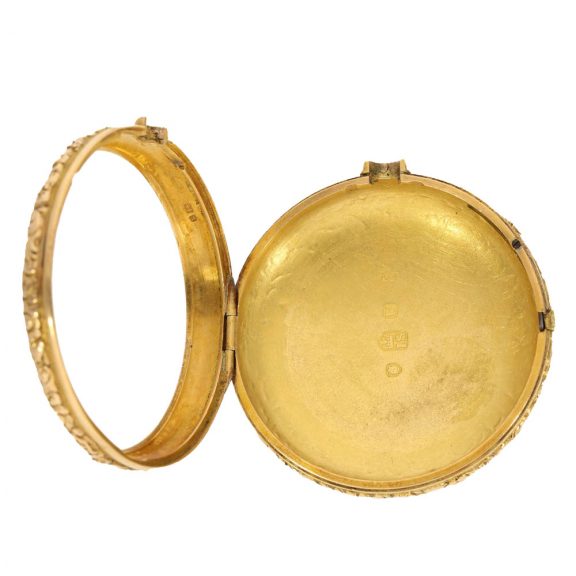
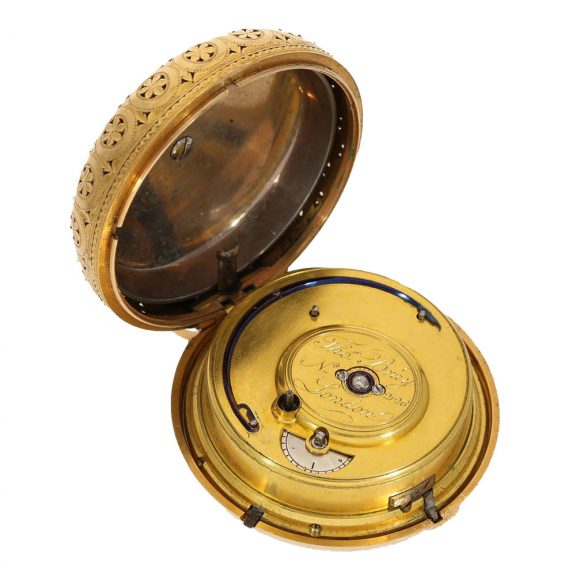
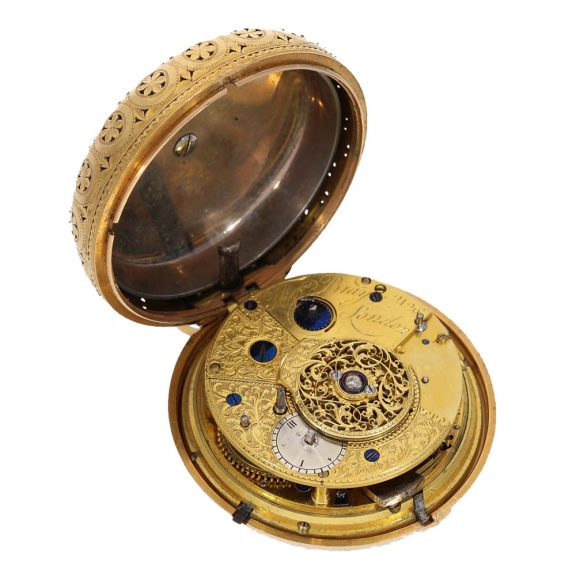
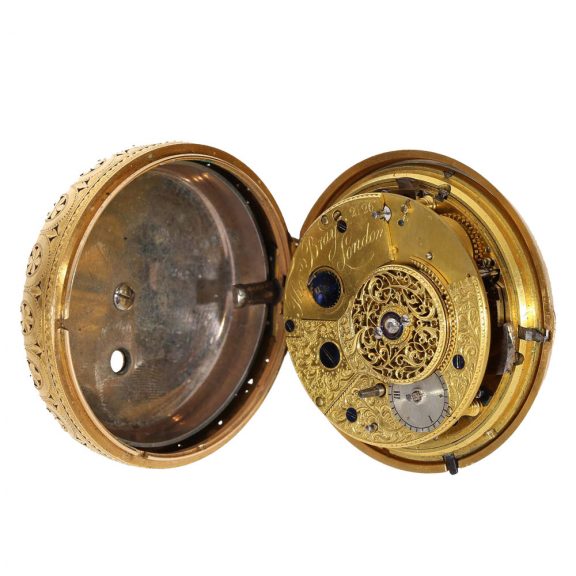
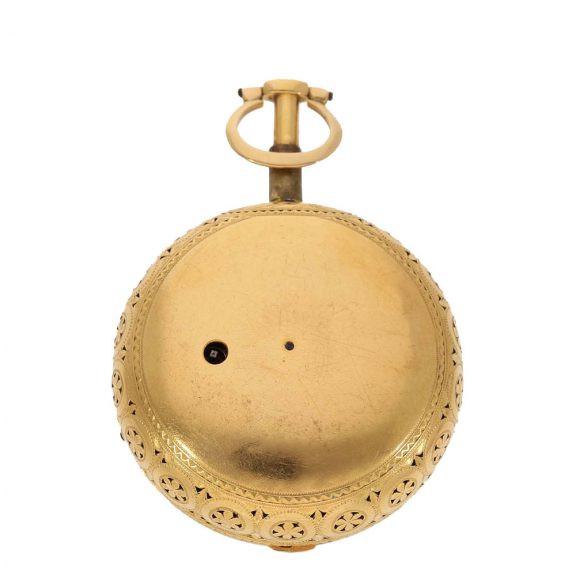
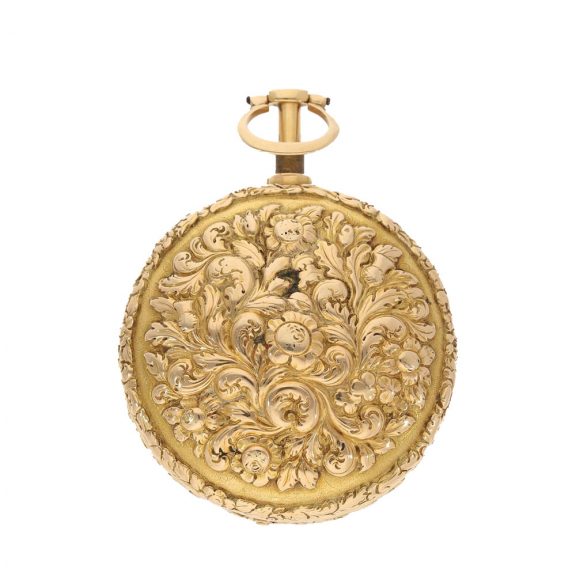
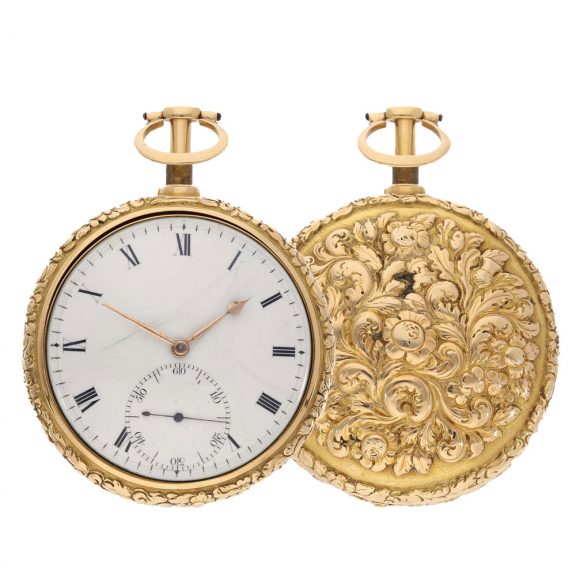
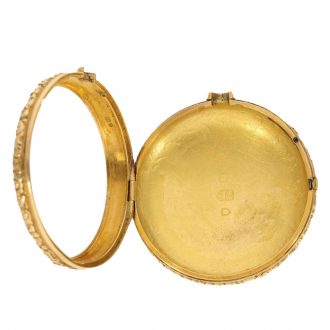
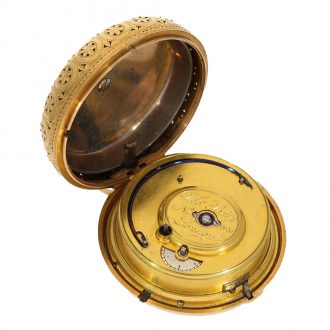
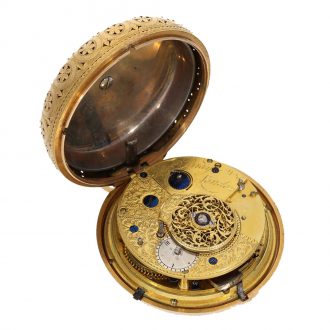
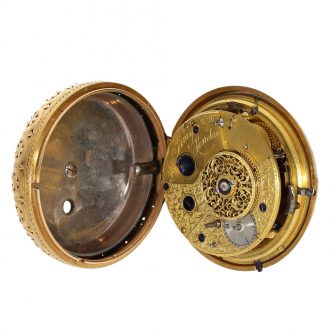
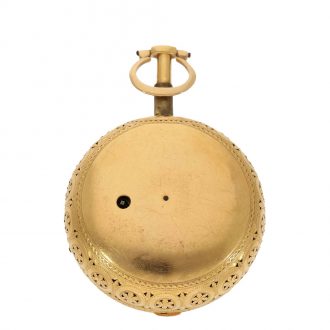
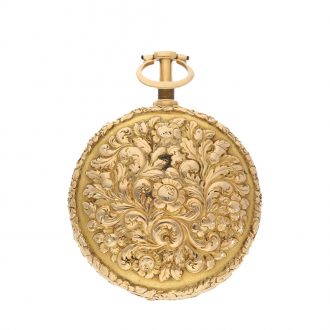
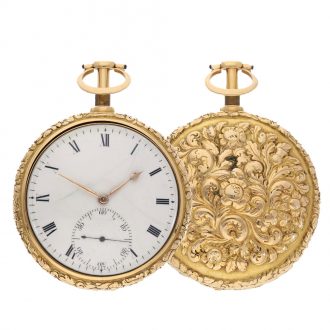
An extremely heavy pair cased quarter repeating deck watch with early, stoppable seconds made by Thomas Bray in London, England, circa 1815. The two cases of this watch were crafted from 18 carat gold. The outer case features maker’s punch mark LC for Louis Comtesse, London Hallmarks for 1815 and a decorated back. The inner case is very finely pierced. The white enamel dial has Roman hour numerals, outer minute divisions, a subsidiary seconds dial at 6 o’clock and gold spade hands. The numbered movement has an early ruby cylinder escapement and a diamond end stone, repeating the quarter hours on a bell.
The cuvette and movement have matching numbers and are signed.
–
Diameter: 58 mm
–
Weight: 240 g
–
Signed: ThoS Bray London
–
Bray
Thomas Bray was a London based watchmaker active between approximately 1797 and 1825. He operated from two known addresses in London: St Margaret’s Church Yard and 8 Little Queen Street, Westminster.
His work included both pocket watches and bracket clocks. Surviving examples are occasionally found at auctions and in collections.
Bray’s history is recorded in established horological bibliographies, such as Watchmakers and Clockmakers of the World by Brian Loomes and Old Clocks and Watches and Their Makers by F.J. Britten. Records from institutions like the British Museum help confirm his working dates and addresses.
–
Comtesse
Louis Comtesse was a prominent London based pocket watch case maker in the 19th century. His “LC” maker’s mark, often found below a serpent, is found almost exclusively on high quality gold cases for movements made by the best London watchmakers of the era.
Comtesse worked from the beginning of the 19th century until at least the 1840s, operating from 10 East Street, Red Lion Square. His cases house movements by eminent makers such as Charles Edward Viner, Barwise and Vulliamy. One notable example of his work includes the case for a repeating watch with the cipher of King George III, made in 1802-1803 and now part of the Royal Collection Trust.
His business was later taken over by another highly regarded casemaker, Alfred Stram.
Signed: ThoS Bray London
Share this page: