English brass “One day” marine deck chronometer Circa 1812
- Kenmerk
- HC0993
- Diameter
- -
- Estimate
- € 6.000 - 15.000
- Price sold
- € 6.800
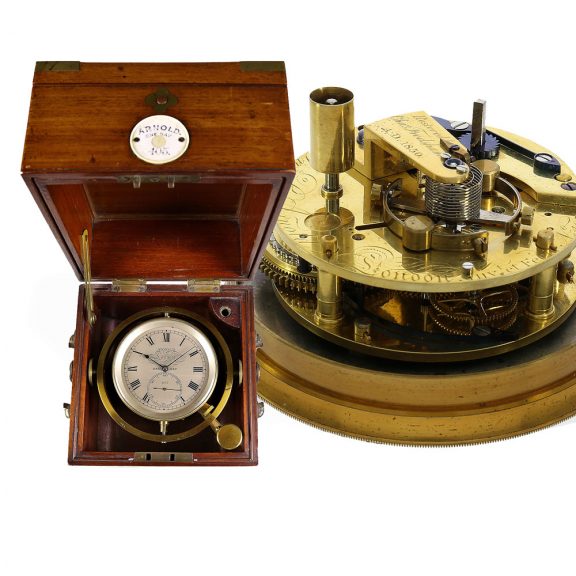
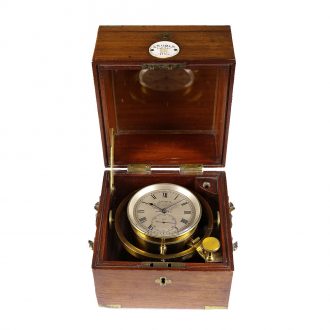
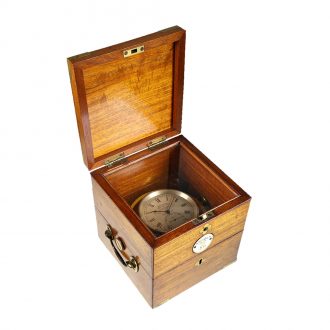
Marine chronometer in glazed mahogany box
–
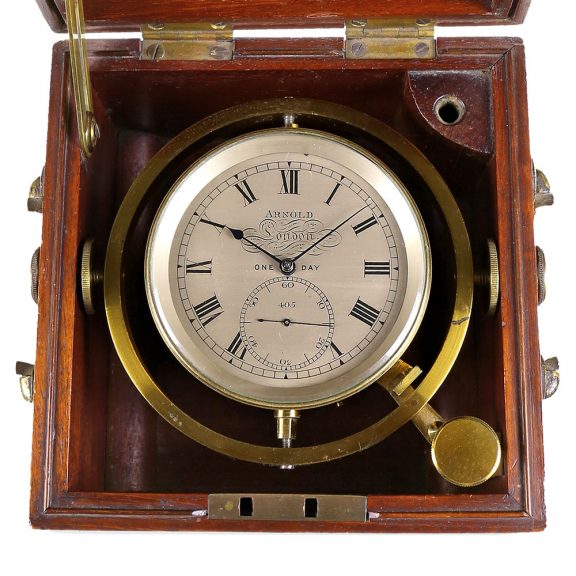
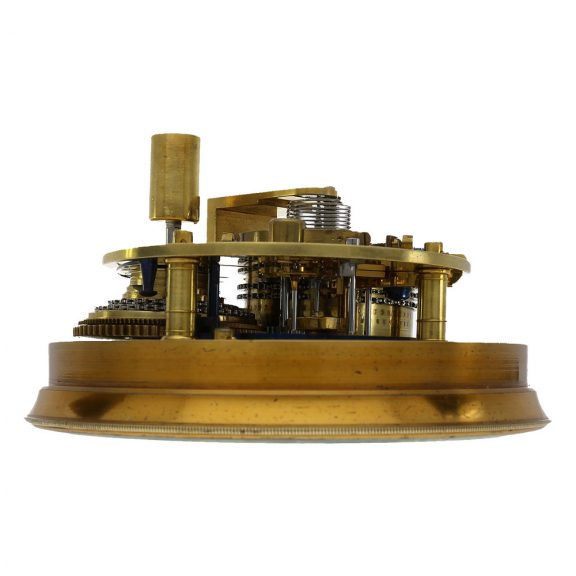
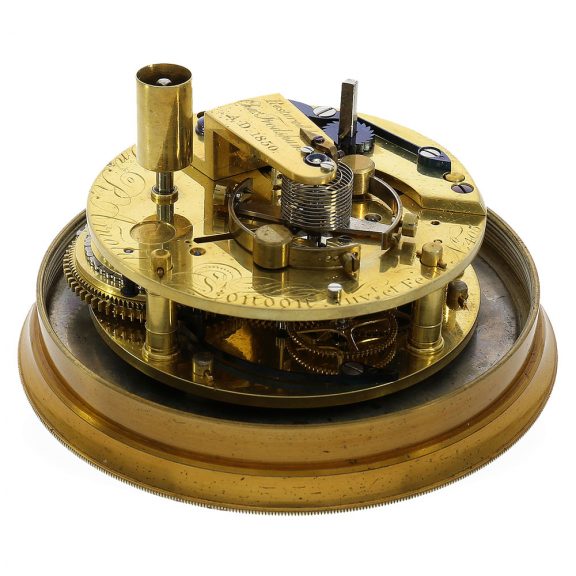
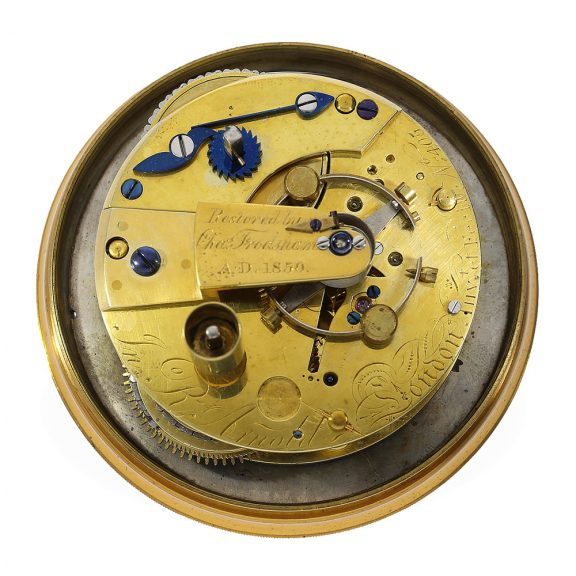
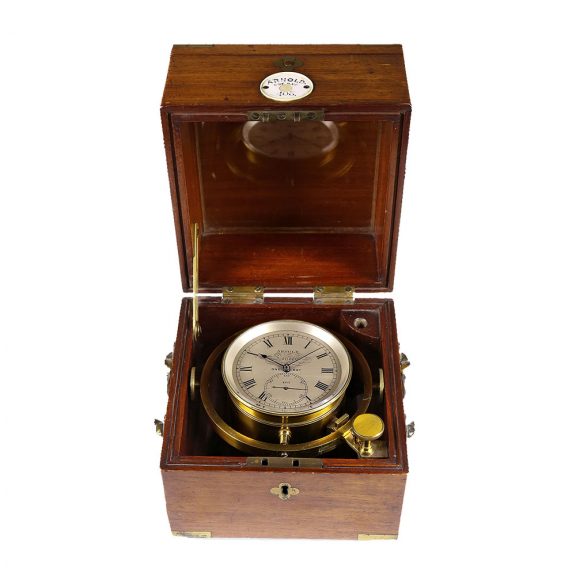
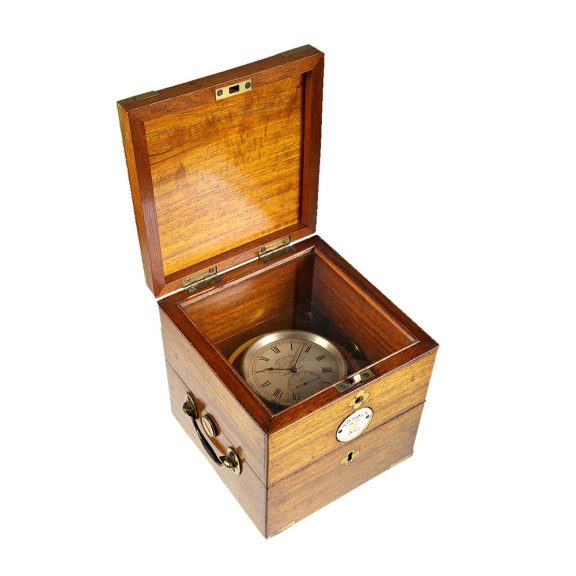
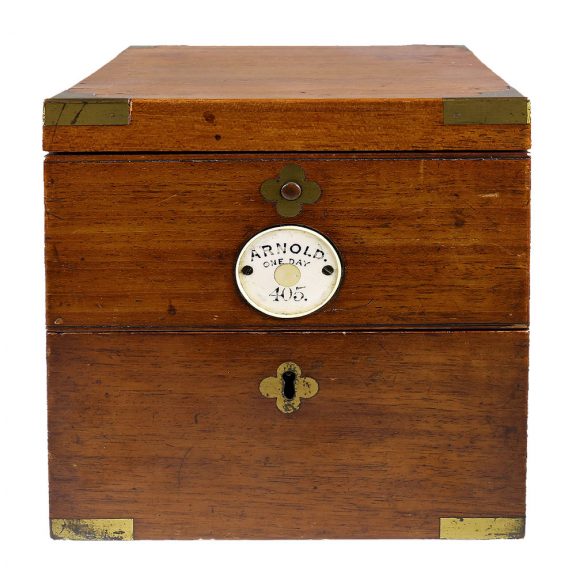
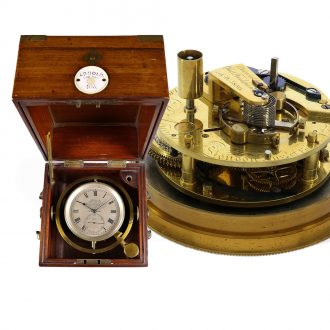
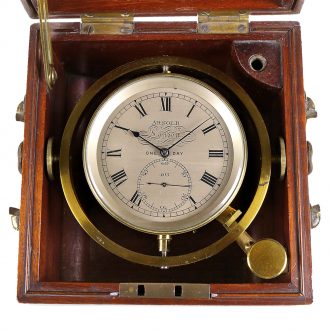
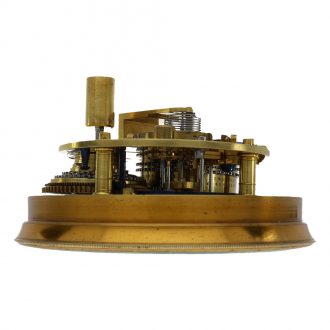
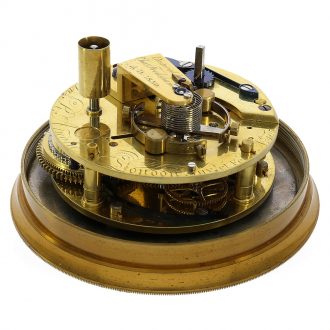
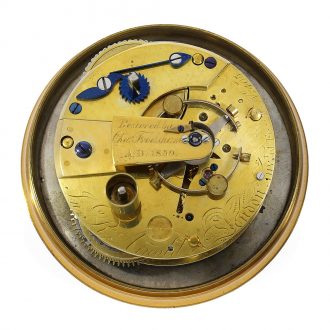
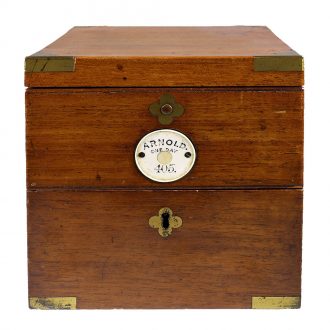
A numbered marine deck chronometer made by John Roger Arnold in London, England, circa 1812. The open faced brass case of this chronometer is crafted from brass and is mounted in a three part glazed mahogany box with ivory plaque. The silvered and numbered original dial marked “One Day” has Roman hour numerals, a subsidiary seconds dial at six o’clock and blued steel hands. The movement has an Arnold’s detent chronometer escapement with helical hairspring, an Arnold’s chronometer balance, a diamond end stone and is marked “Invenit et Fecit”.
Box, dial and movement have matching numbers and are all signed.
–
Dimensions: 165 x 165 x 165 mm
–
Signed: Arnold, London
–
The chronometer was part of one of the most important German collections for a long time. It is listed in Hans Staeger’s “100 Jahre Präzisionsuhren von John Arnold bis Arnold & Frodsham”. There it is mentioned that the chronometer was in the inventory of the British Royal Navy in Greenwich from 1824 – 1913, was in service on HMS “Littey” under Henry Duncan in West India and was restored in 1850 by Arnold’s partner Frodsham, which is documented on the movement with an engraving. The chronometer was originally part of the Kotis Collection, was then auctioned in 1988 and has since been in one of the most important German collections.
–
John Roger Arnold
John Roger Arnold was born in 1769. He was the son of renowned British horologist John Arnold. He served an apprenticeship with both his father in 1783 and the eminent French watchmaker Abraham-Louis Breguet in Paris in 1792. In 1787, John Roger and his father founded the company, Arnold & Son. The younger Arnold became a member of the Clockmakers’ Company in 1796 and became a master in 1817. After his father died in 1799, he continued the business, taking up a partnership with E.J. Dent in 1830. The two craftsmen experimented heavily during their work together, in particular, they concentrated on the effects of magnetism on chronometers. Dent left Arnold in 1840, whereupon Arnold continued working on his own but died only three years later. Charles Frodsham bought the business after Arnold’s death in February 1843 and it flourished until 1858 under the name Arnold & Frodsham.
Signed: Arnold, London
Share this page: