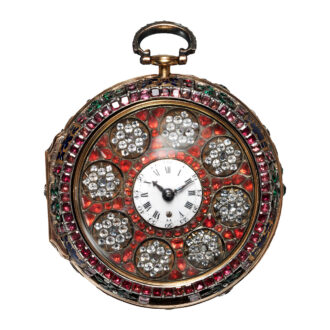
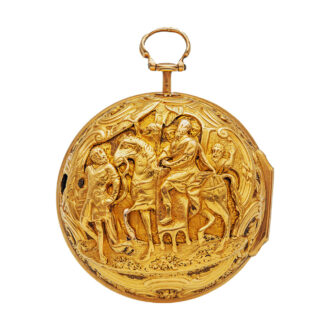
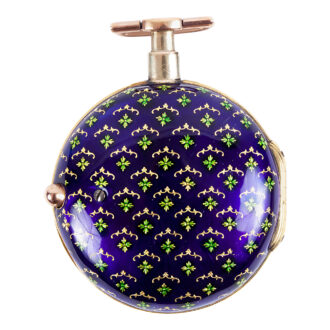
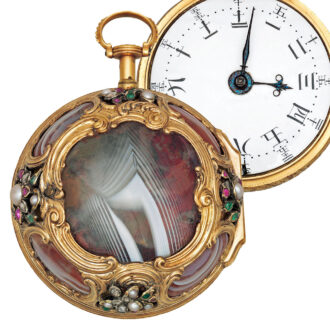
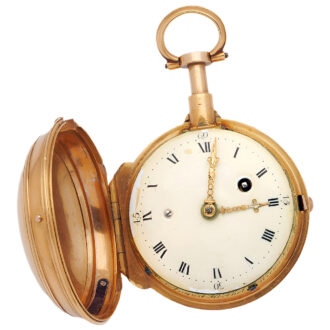
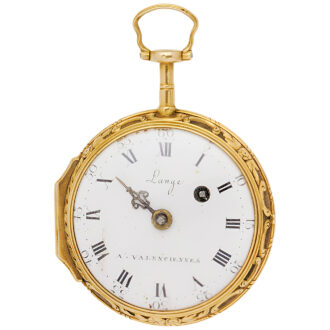
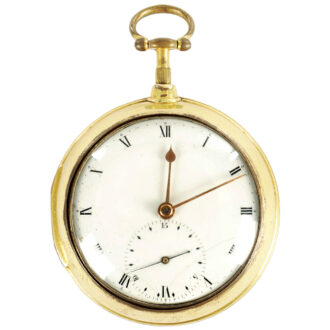
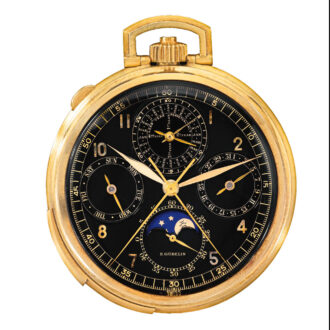
English quarter repeating verge with chatelaine Circa 1770
- Kenmerk
- SA0130
- Diameter
- 47 mm
- Estimate
- € 15.000 - 25.000
- Price sold
- -
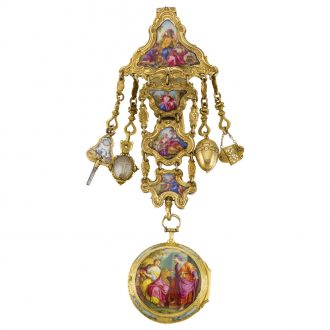
Gold and enamel verge quarter repeater with chatelaine
–
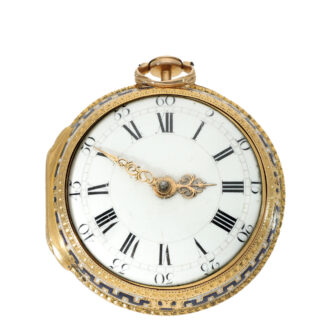
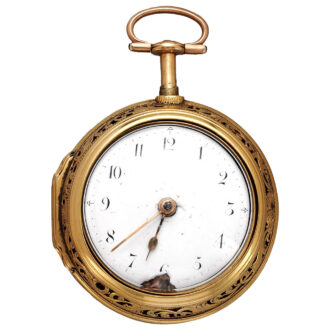
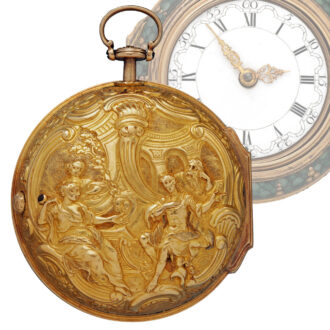
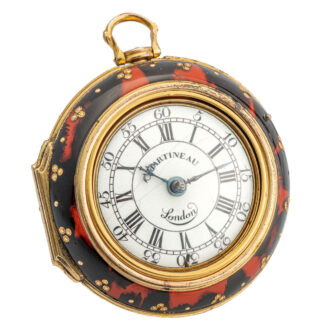
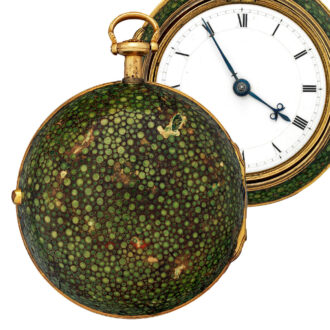
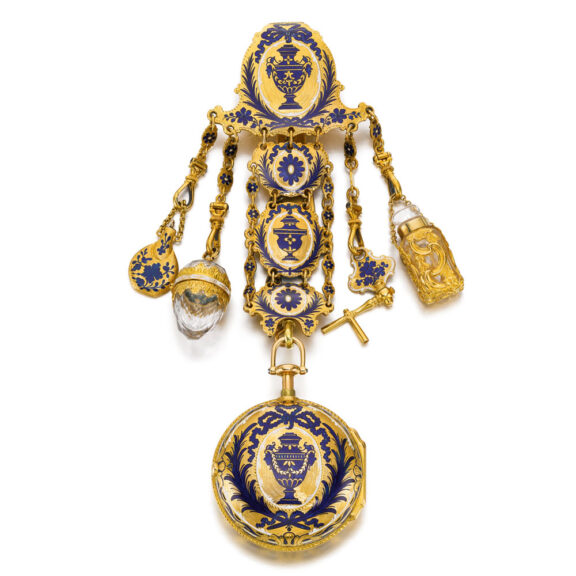
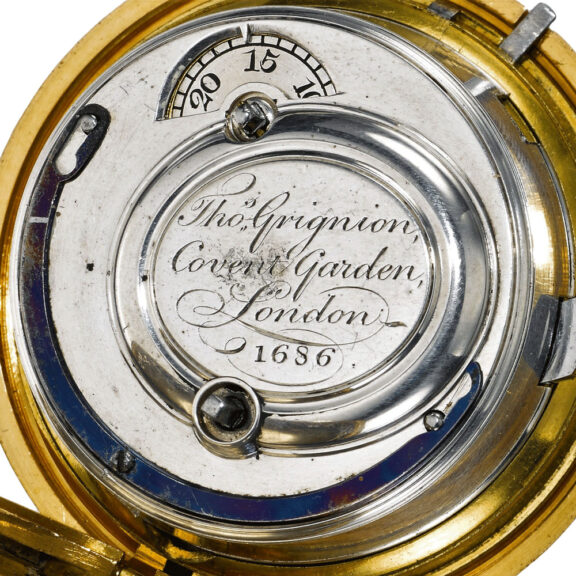
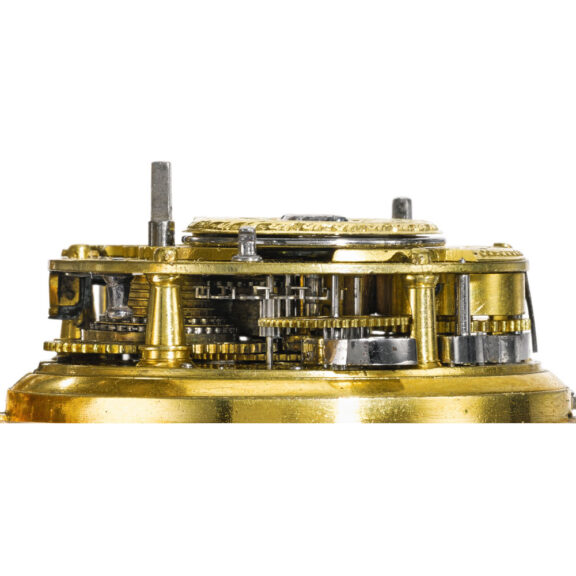
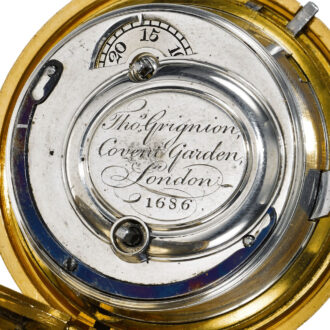
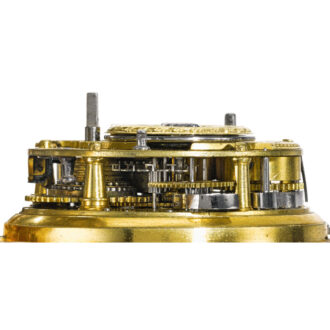
An English very fine gold and enamel pair cased quarter repeating verge watch and chatelaine, circa 1770. Full plate gilded movement, cylinder escapement, steel escape wheel, decoratively pierced and engraved masked balance cock, diamond endstone, fusee and chain, cylindrical pillars, repeating on a bell to the inside case back, silver dust cap, dust cap signed Thos. Grignion Covent Garden London, movement signed Thos. Grignion London
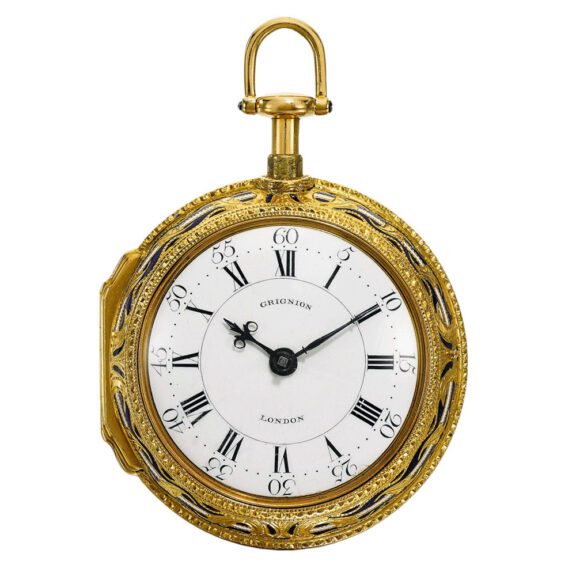
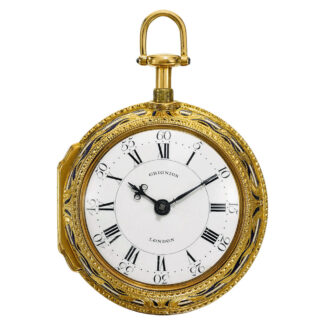
White enamel dial, Roman hours, Arabic outer minute ring and blued steel beetle & poker hands, signed Grignion London.
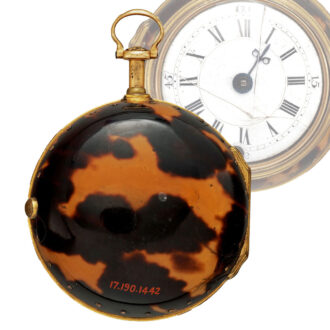
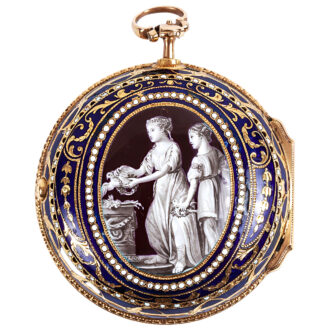
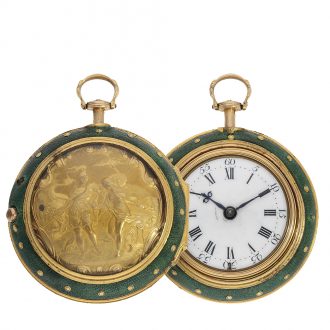
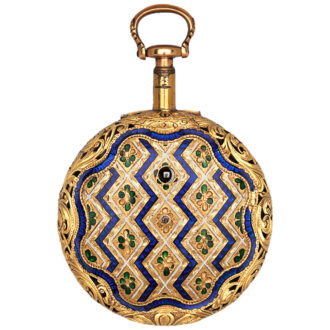
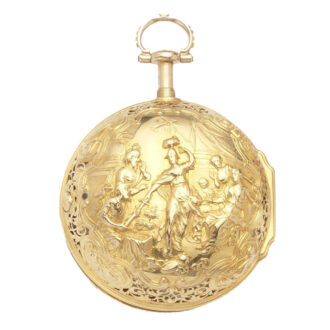
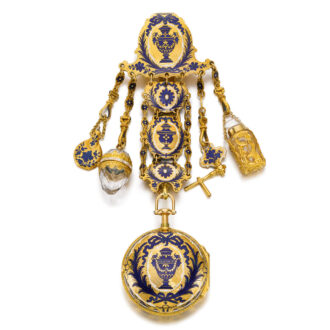
Gold inner case with pierced and an engraved band of scrolling foliage inhabited by dolphin heads, a grotesque mask at the base, a bird and foliage engraved to the centre of the back with a winding aperture above, the outer case also gold, the back decorated with amphora, palm fronds, flowers and tied ribbons in imperial blue and white basse taille and champlevé enamel, case maker’s mark HT incuse probably Henry Cleaver Taylor or Henry Teague. Comes with a matching gold mounted chatelaine decorated en suite, a snuff bottle, vinaigrette, scent flask and the original crank key hanging from the pendant chains.
–
Diameter: 47 mm
–
Length chatelaine: 115 mm
–
Signed: Thos. Grignion London
–
Thomas Grignion 1713-1784 was the son of Daniel Grignion (circa 1684-1763), who arrived in England from France around 1688. In his book, The Early Clockmakers of Great Britain, the Grignions were recorded as “finishers to the late Mr Daniel Quare at the Kings Arms and Dial in Russel Street, Covent Garden”. A watch by Thomas Grignion is in the collection of the Victoria and Albert Museum.
–
Basse taille is an enamelling technique in which the artist creates a low relief pattern in metal, usually silver or gold, by engraving or chasing. The entire pattern is created in such a way that its highest point is lower than the surrounding metal. A translucent enamel is then applied to the metal, allowing light to reflect from the relief and creating an artistic effect. It was used in the late Middle Ages, and then again in the 17th century.
Signed: Thos. Grignion London
Share this page: