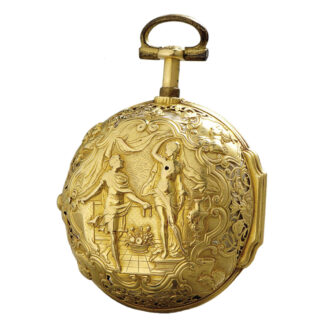
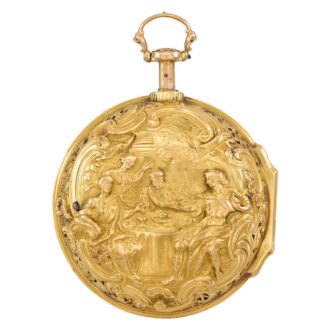
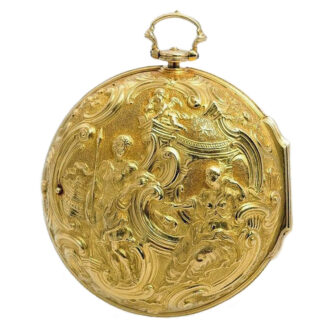
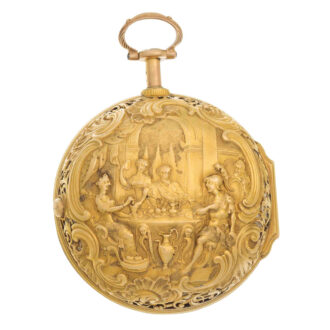
English gold enamel verge with a snake automaton Circa 1720
- Kenmerk
- AM0030
- Diameter
- 54 mm
- Estimate
- € 12.000 - 22.500
- Price sold
- -
Gold enamel date watch by Charles Clay
–
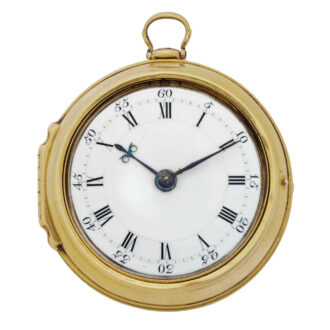
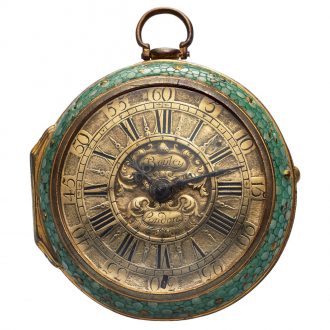
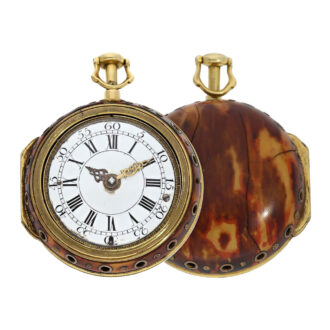
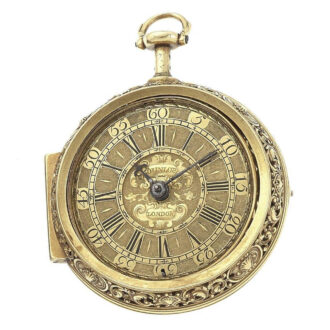
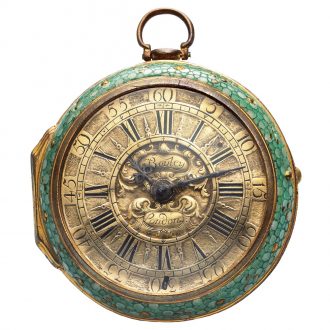
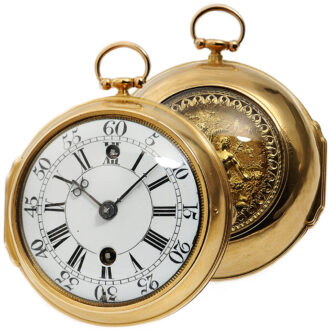
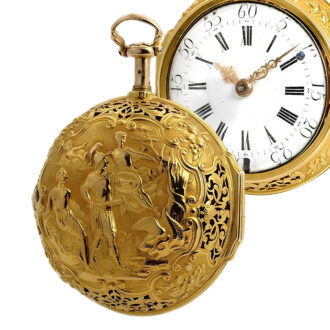
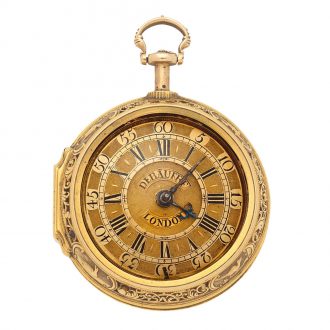
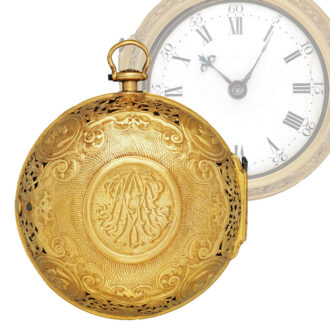
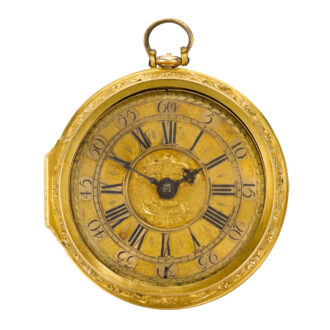
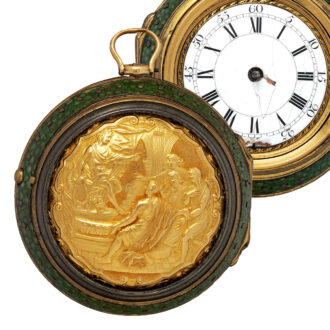
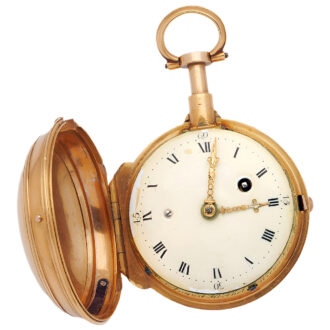
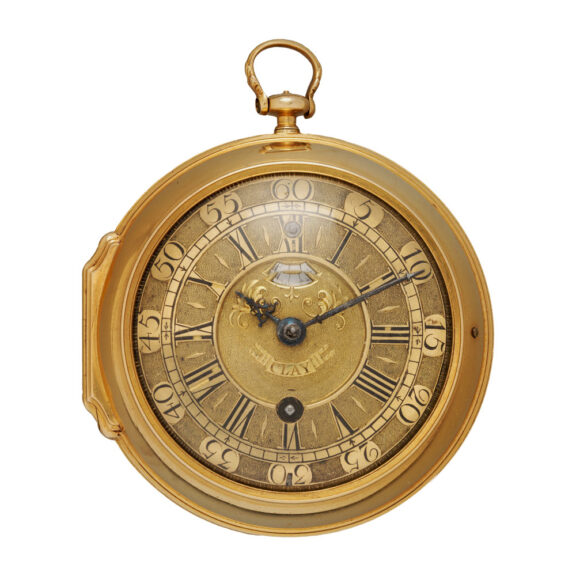
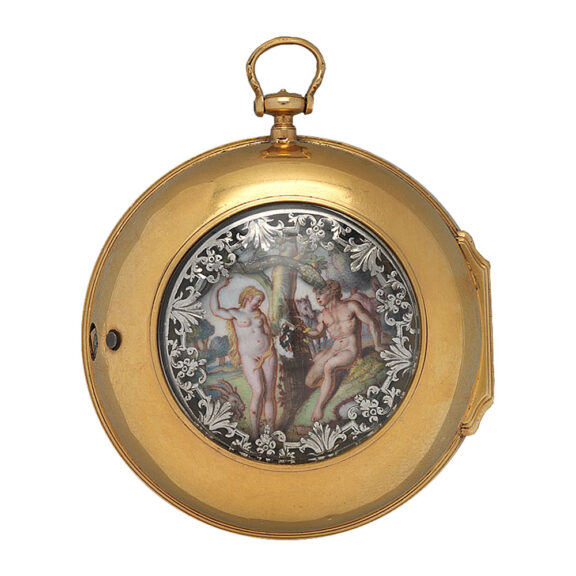
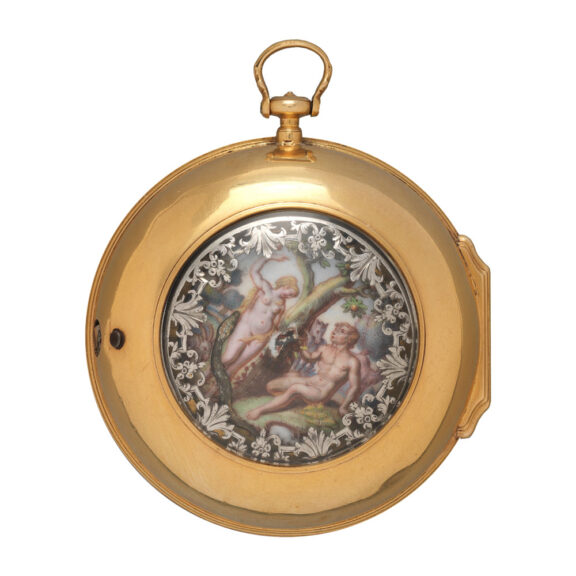
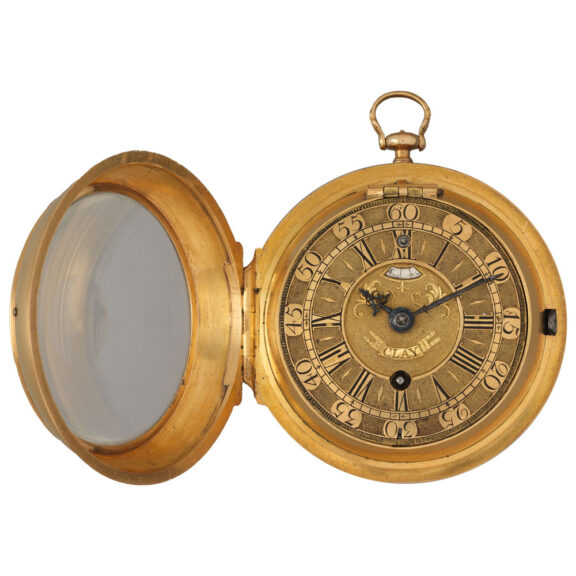
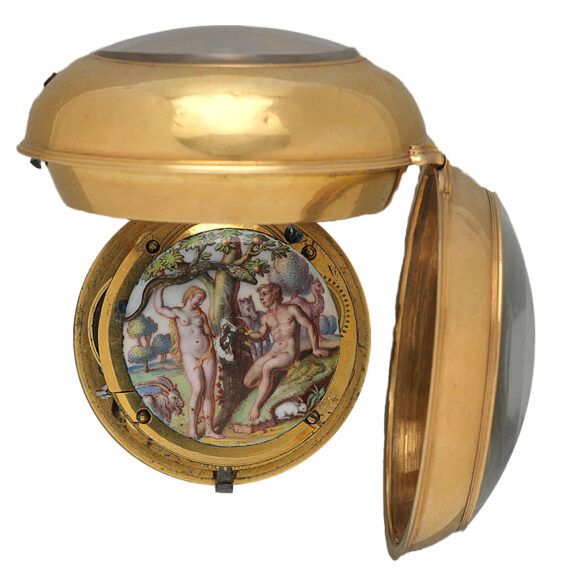
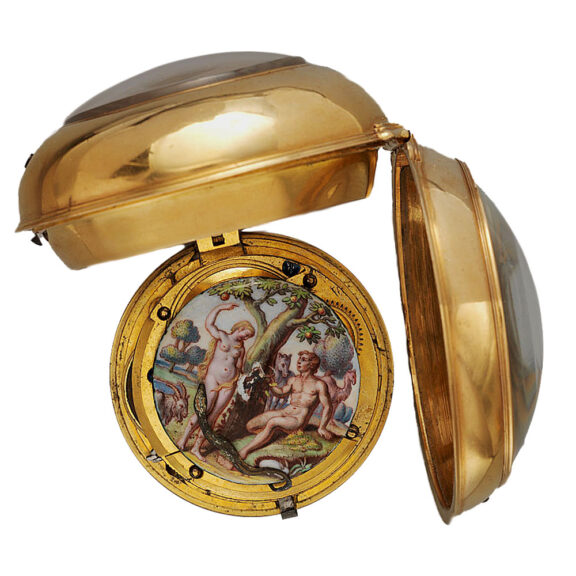
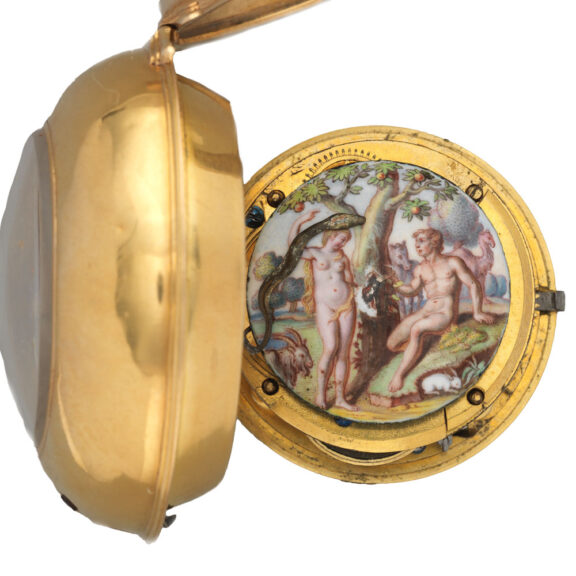
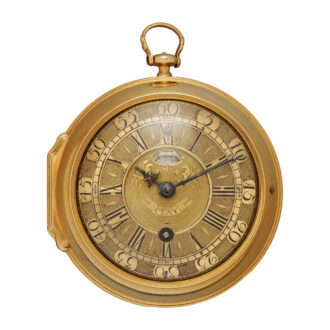
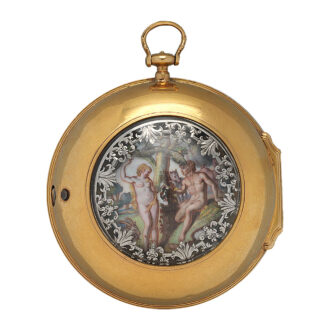
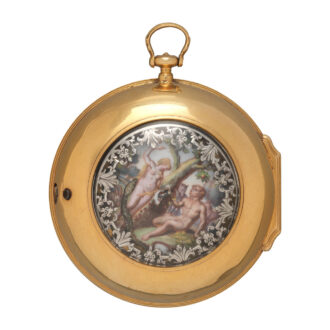
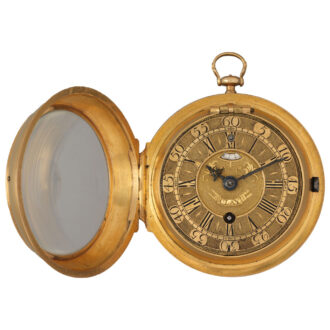
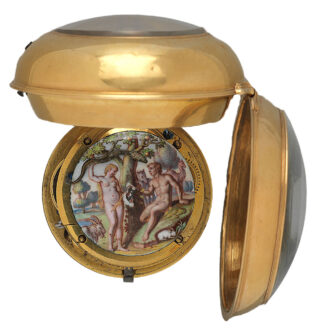
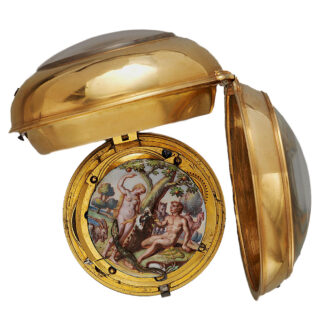
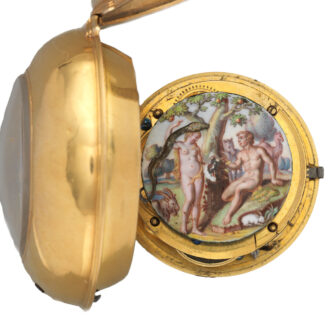
An important English gold enamel verge date watch, Adam and Eve in the Garden of Eden, with a snake automaton and champlevé dial, circa 1720.
Gilt full plate movement, verge escapement, decoratively pierced and engraved balance cock, diamond endstone, fusee and chain, cylindrical pillars with baluster foot. Gold champlevé dial, Roman numerals, outer Arabic minute track, aperture for the date, blued steel hands, and signed Clay. Gold and silver case. A painted enamel scene of Adam and Eve replaces the standard pierced and engraved brass cock for the balance staff on the back plate of this watch. With the ticking of the watch, the silver snake moves around the circumference of the enamel. Automata like this one were often exported to Russia; its probable maker, Charles Clay, is better known for having collaborated with George Frideric Handel in producing a series of musical clocks.
–
Diameter: 54 mm
–
Signed: Clay
–
Charles Clay, English watchmaker
Charles Clay was born about 1680 and was originally from Emley near Huddersfield in Yorkshire from Stockton, Yorkshire, but worked in ‘the Strand’ in London. However, other sources mention Stockton, Yorkshire, as the place of birth. In the National Archives of Kew, he was mentioned in 1717 with a patent application for an invention of a repeating clock. The location of residence is Flockton, about 3 km from Emley. However, the request was contested by Daniel Quare. Although the Parliamentary Bar ruled in favour of Clay, the Clockmakers Company fought backside with Quare – a well-known watchmaker and former master of the guild. Clay’s patent application was ultimately rejected after a year.
–
He then opened a workshop near St. Mary-Le Strand in London in 1720. In 1723 he was appointed Clockmaker to His Majesty (His Majesty’s Board of Works) and provided the tower clock for St James Palace. He held this position until at least 1737. Clay also collaborated with George Pyke.
–
Clay died probably in 1739 – his last will is dated January 18th 1739. On his deathbed, Charles instructed his wife to destroy a watch that had taken him so much time and effort to perfect. Happily, on August 27th, 1743, his wife Sarah announced an exhibition in Cecil Street, Strand, with “the most remarkable and valuable watches of her late husband”. Including the clock “The Temple and Oracle of Apollo” and the “Four Grand Monarchies of the World”, now in the collection of Her Majesty Queen Elizabeth II’s “Royal Collection Trust” at Windsor Castle and Kensington Palace. Clay was best known for his musical clocks with melodies by George Friedrich Handel, among others.
Signed: Clay
Share this page: