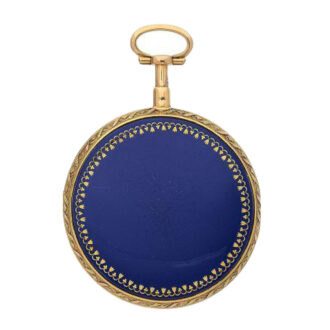
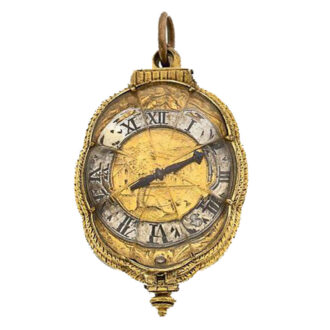
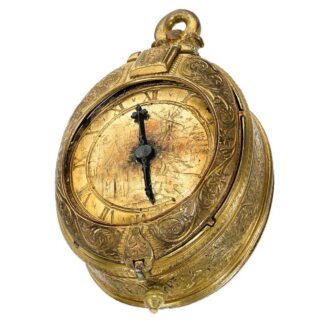
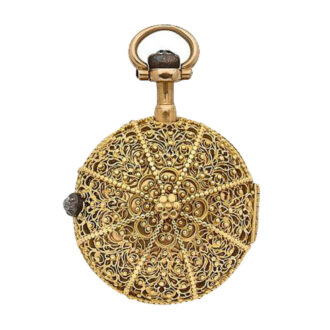
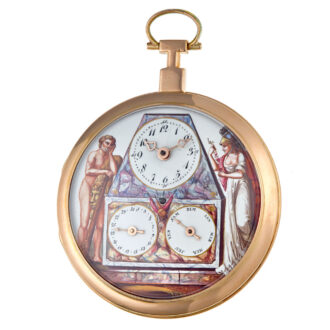
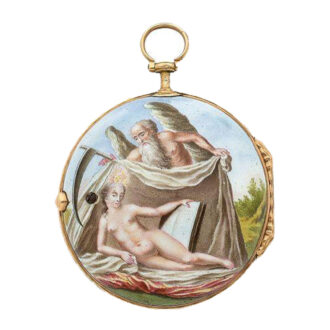
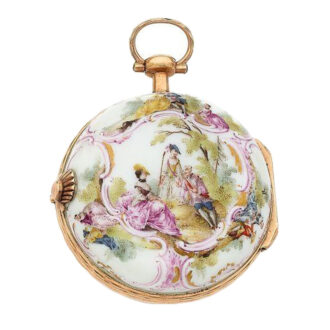
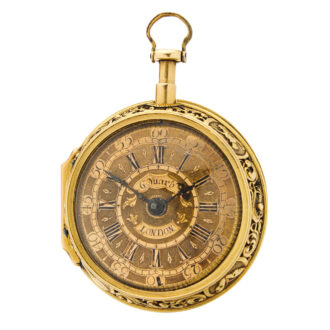
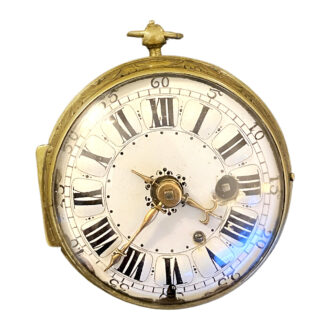
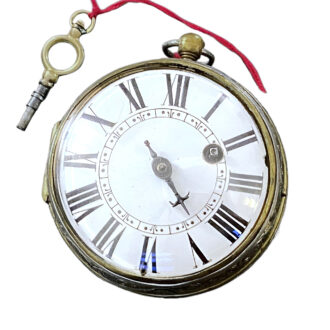
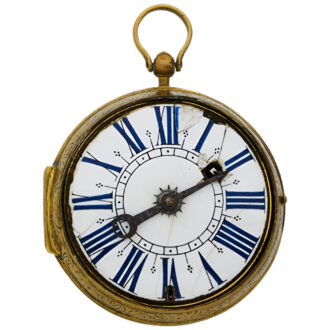
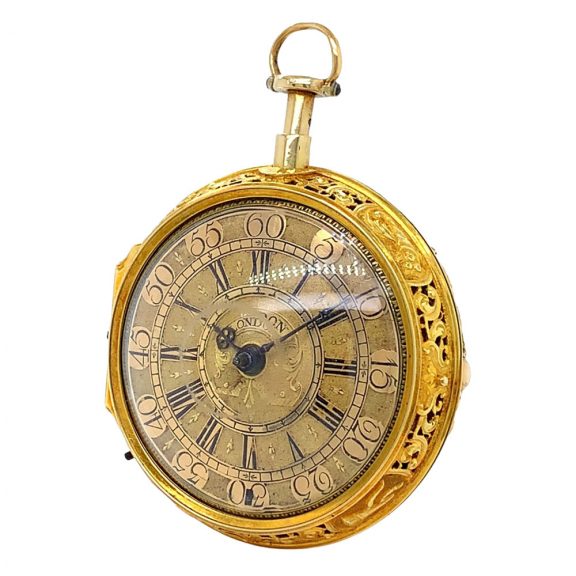
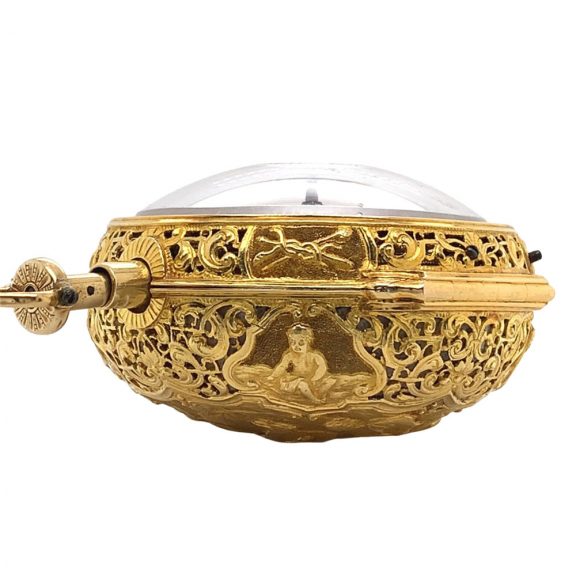
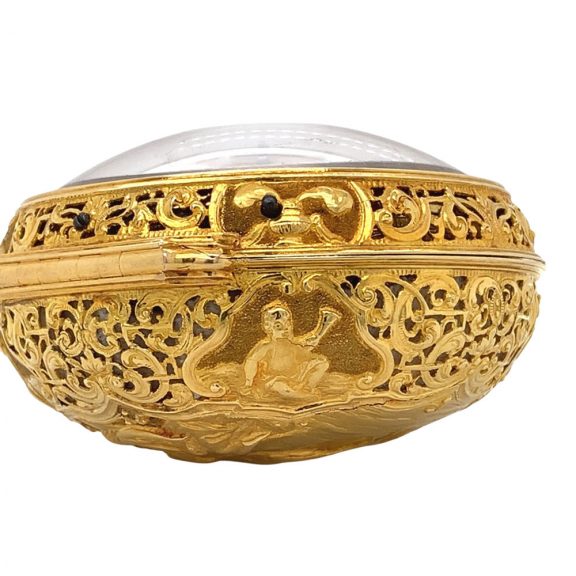
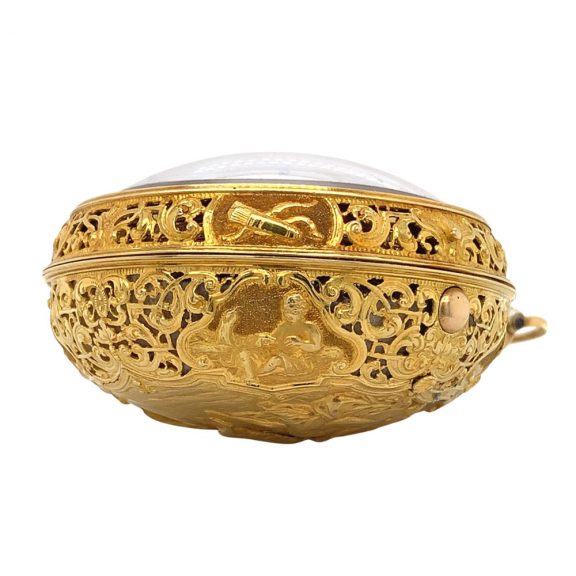
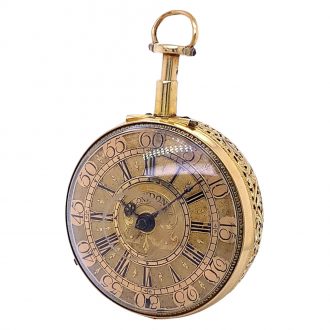
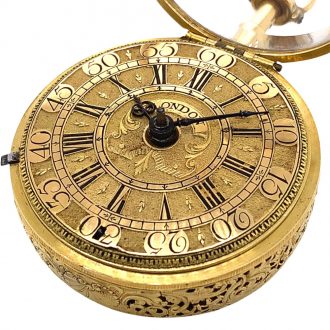
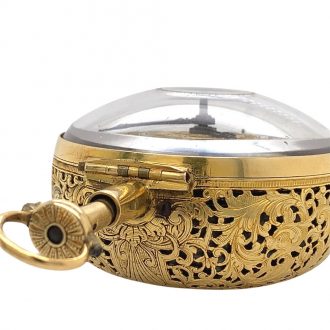
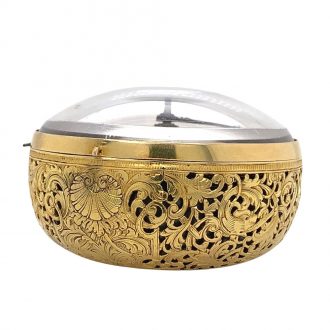
English gold pair-cased quarter repeating verge watch Circa 1696
- Kenmerk
- DB0545
- Diameter
- 56 mm
- Estimate
- € 25.000 - 50.000
- Price sold
- € 47.500
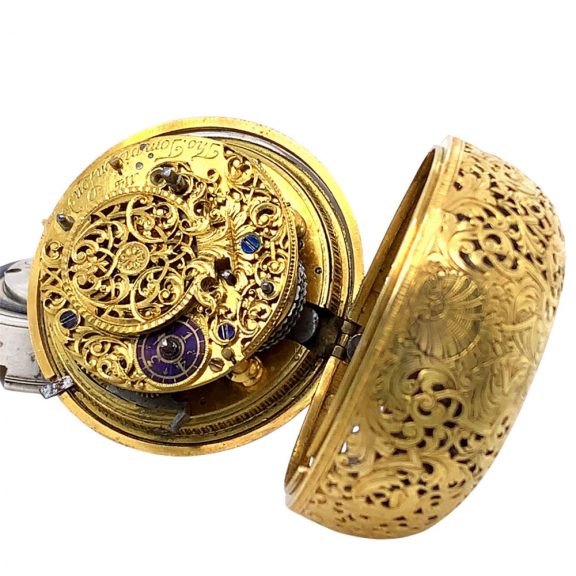
Gold repeater in pair cases by Thomas Tompion
–
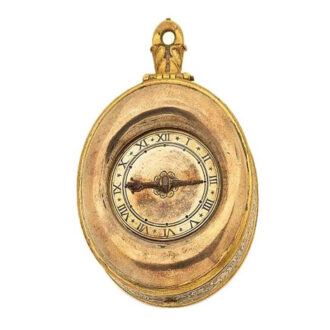
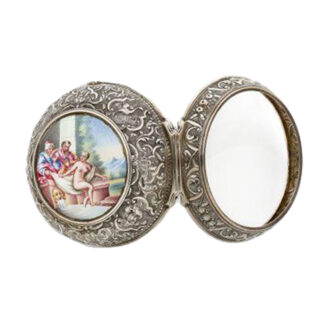
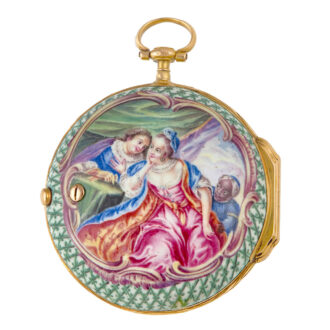
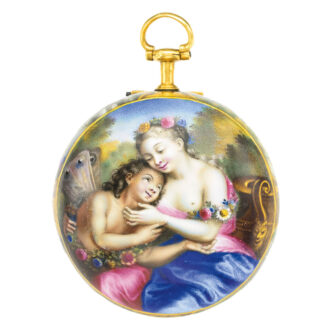
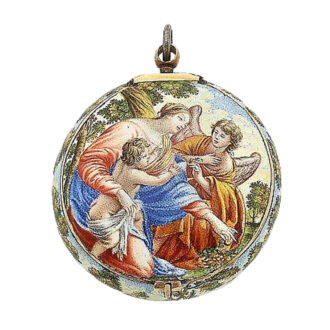
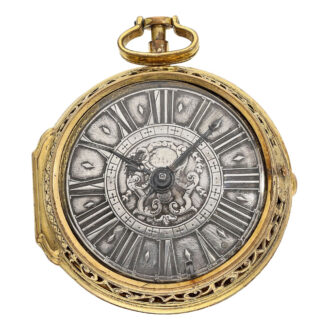
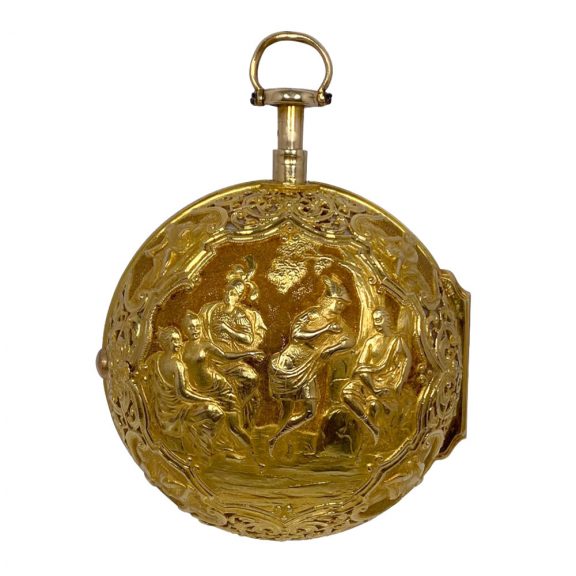
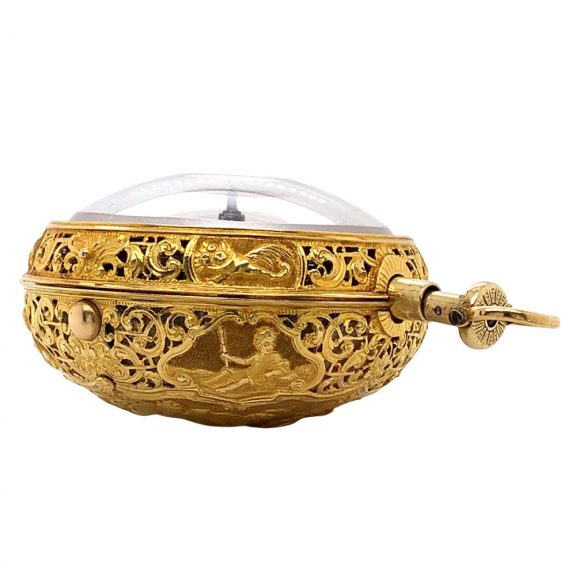
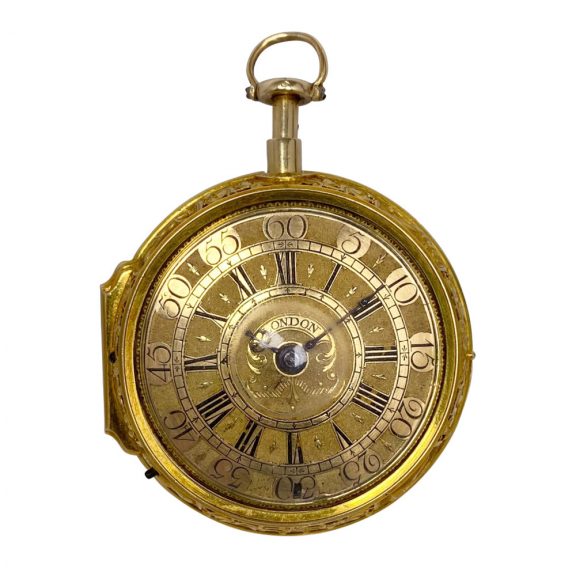
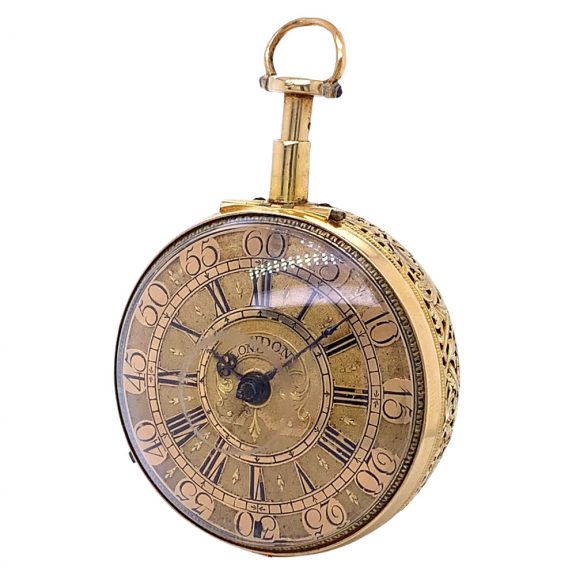
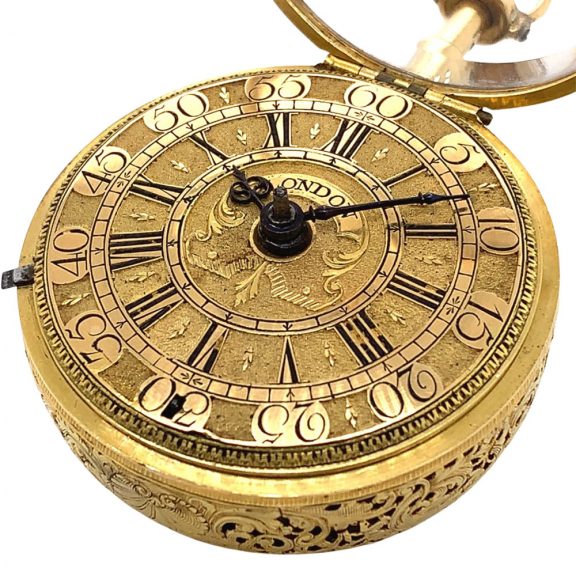
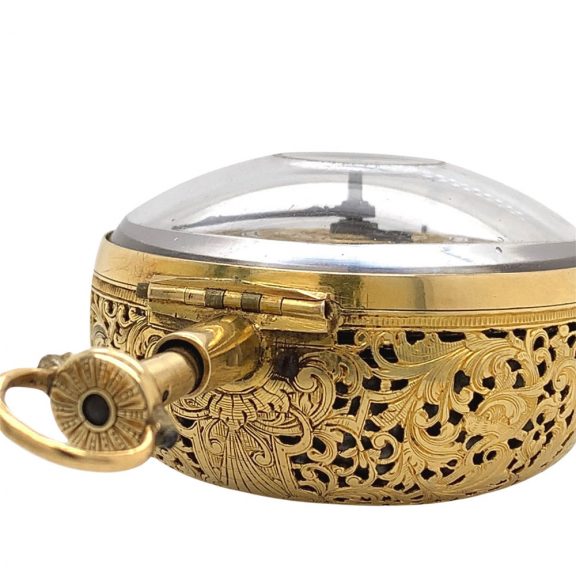
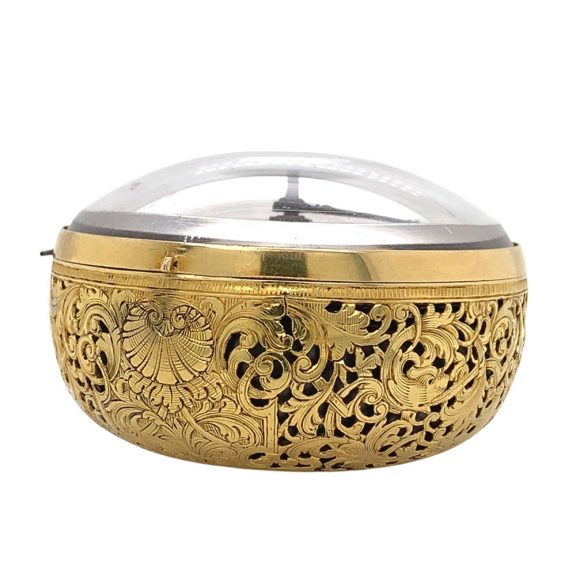
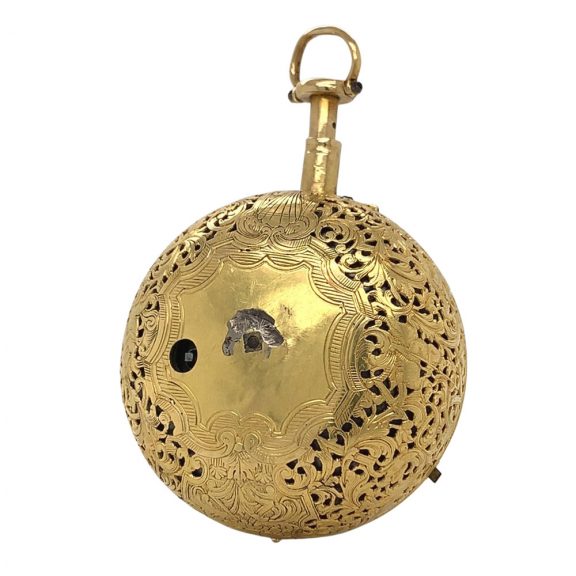
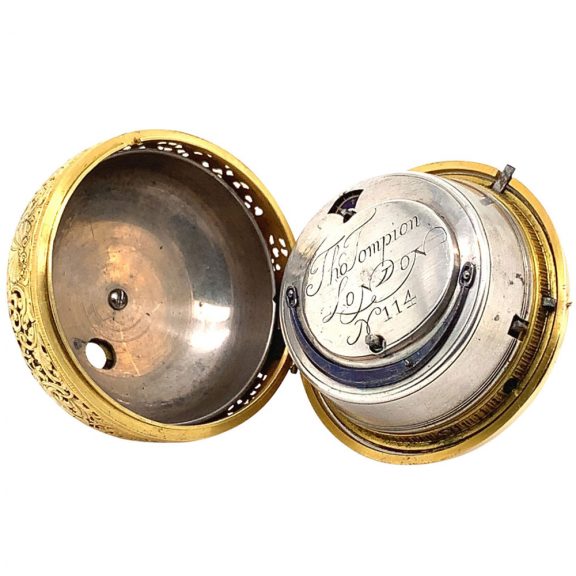
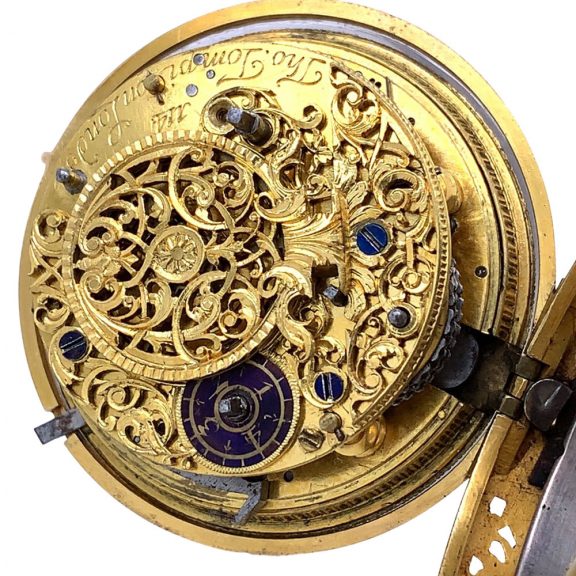
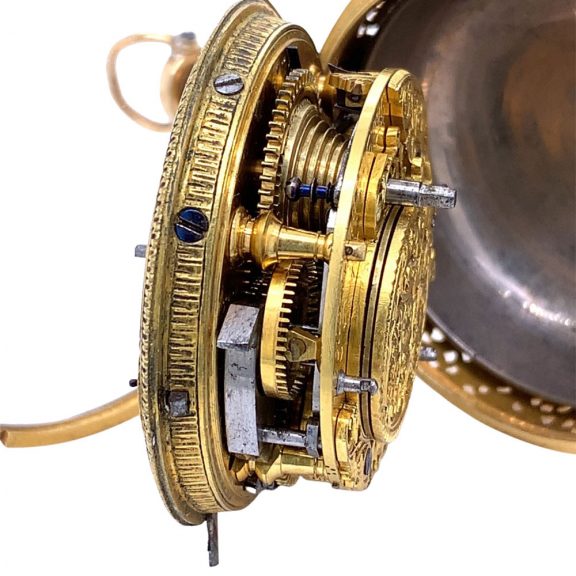
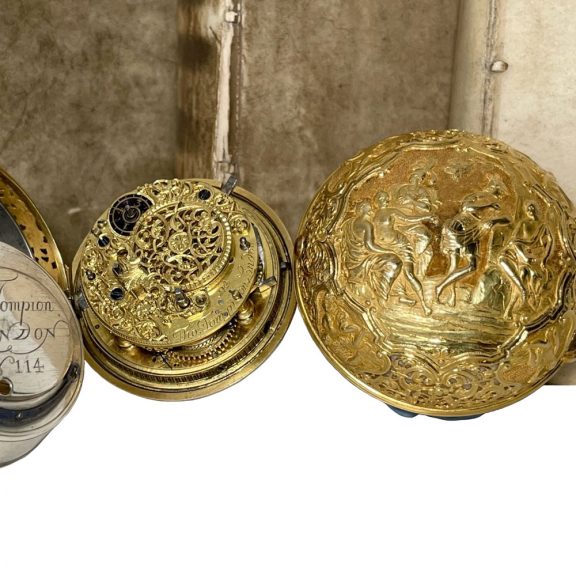
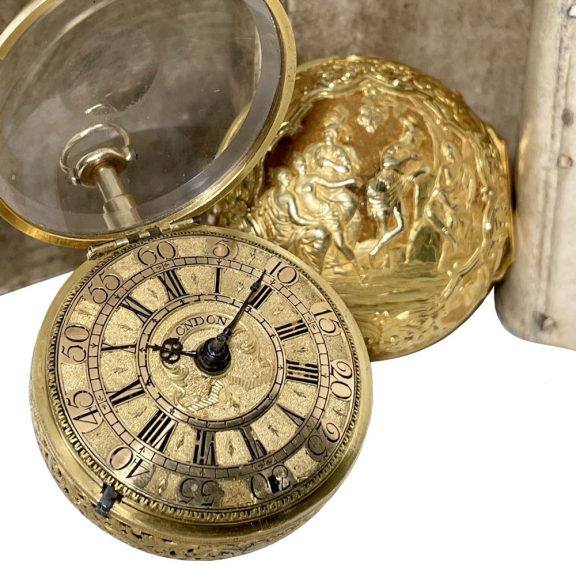
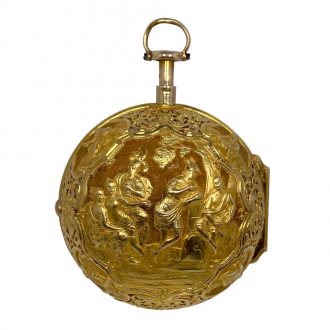
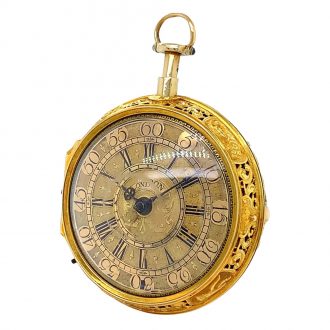
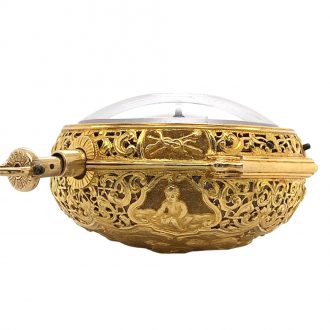
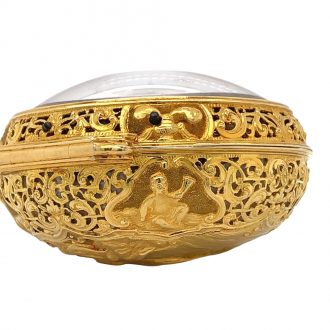
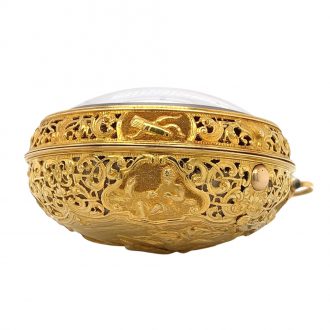
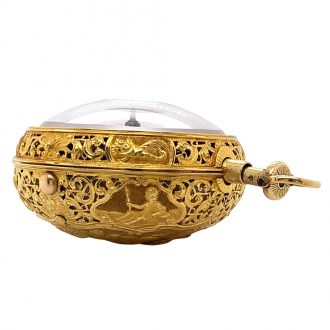
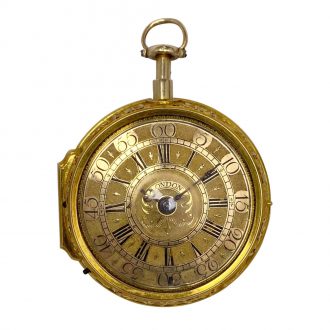
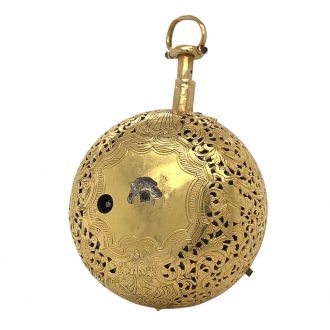
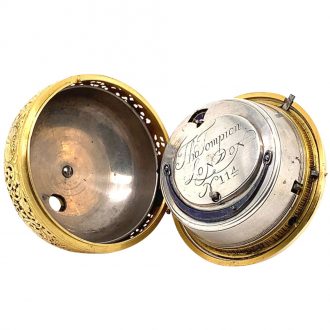
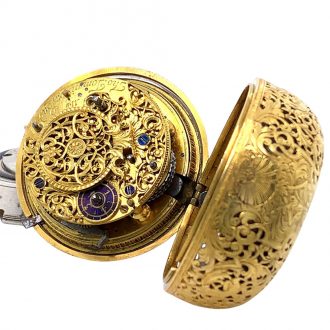
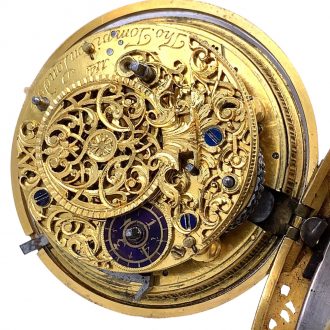
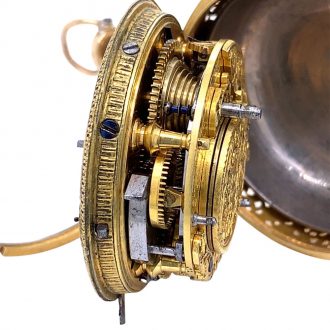
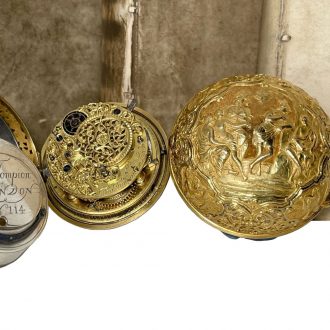
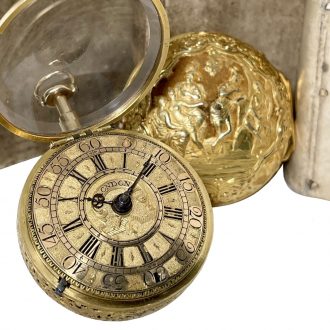
An English 18 carat gold pair-cased quarter repeating verge pocket watch, circa 1696. Exquisitely ornamented full plate movement, key wind, chain and fusee, a verge escapement, two polished steel hammers striking the hours and quarter hours on a bell and a three-arm brass balance with finely floral engraved balance cock. A movement protection cap. Gold champlevé dial decorated with concentric circles, black enamel Roman hours, an outer minute track and outermost Arabic five-minute numerals, a central cartouche, blued poker & beetle hands. The repoussé outer case with a scene depicting a Greek mythological scene The Judgement of Paris, the young Paris is to decide, which of the three goddesses is the most beautiful: Aphrodite, Athena or Hera, vignettes with personifications on the rim, a pierced bezel with transverse oval medallions and chased attributes, the inner case is elaborately decorated with lavish foliage work, birds’ heads and boar-riding monkeys, rear bell. Dial signed London, dust cap and movement signed and numbered, case numbered.
–
Diameter: 56 mm
–
Weight: 179 g
–
Signed: Tho. Tompion London
-|
Without a doubt, Thomas Tompion, born in 1637, must be considered the most famous of all English clockmakers. In the 18th century, he alone was responsible for the rise to supremacy of English clockmaking. He became a brother of the Clockmakers’ Company in 1671 and in 1674 moved to a workshop in Water Lane, from where he conducted his business for the rest of his life. In the very same year, Tompion met Robert Hooke, when Hooke sought his help in proving that his invention of the balance spring was prior to that of Huygens’. This brought Tompion to the notice of King Charles II and his status was rapidly elevated. Tompion created the first clock for the Greenwich Observatory in 1676 and collaborated with Booth and Houghton in 1695 in patenting an escapement with a horizontal escape wheel, which was considered to be a forerunner of the cylinder.
Buckingham Palace today holds two equation clocks which were probably supplied to William III in the 1690s. Some time between 1680 and 1685, Tompion started to number his production, apparently being the first maker to do this. He was elected Master of the Clockmakers’ Company in 1703. Tompion’s niece Margaret was the daughter of his sister Margaret Kent, she married the watchmaker Edward Banger, who worked with Tompion from 1701 to 1708. In 1711 Tompion formed a partnership with George Graham that lasted until the end of his life. Thomas Tompion died in 1713 and was laid to rest in Westminster Abbey.
Signed: Tho. Tompion London
Share this page: