English gold cylinder watch with regulator dial Circa 1809
- Kenmerk
- SA0144
- Diameter
- 63 mm
- Estimate
- € 10.000 - 17.500
- Price sold
- € 14.000
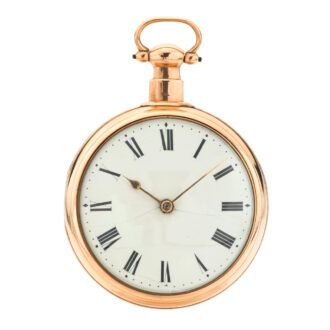
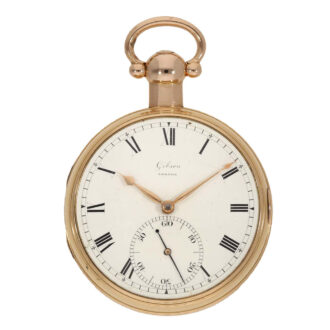
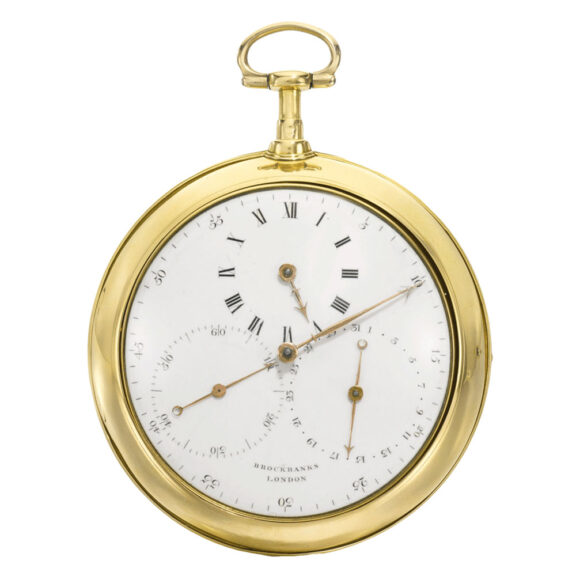
Gold pair cased ruby cylinder watch with regulator type dial
–
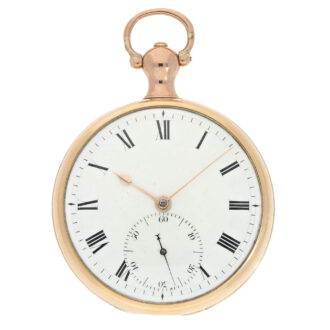
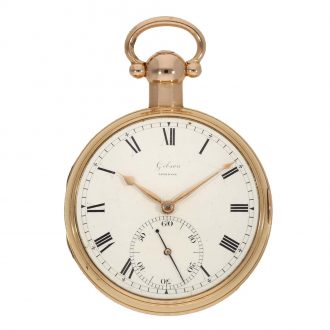
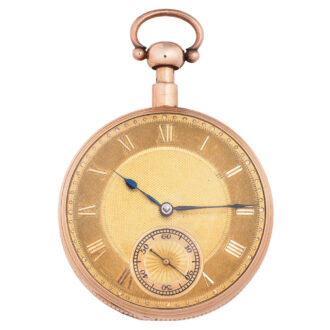
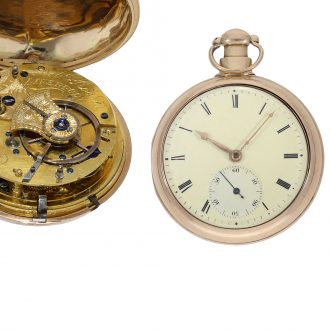
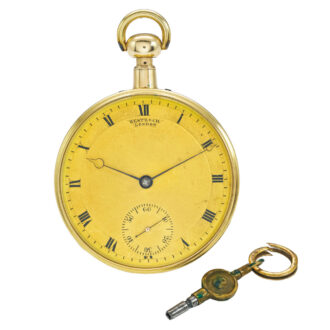
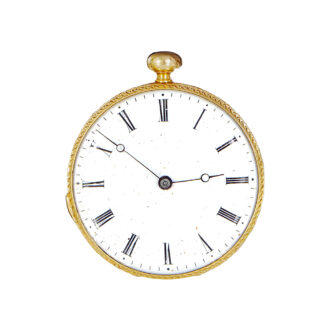
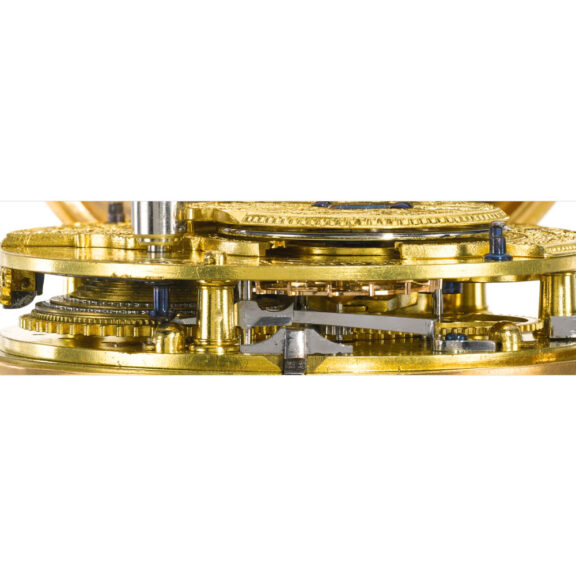
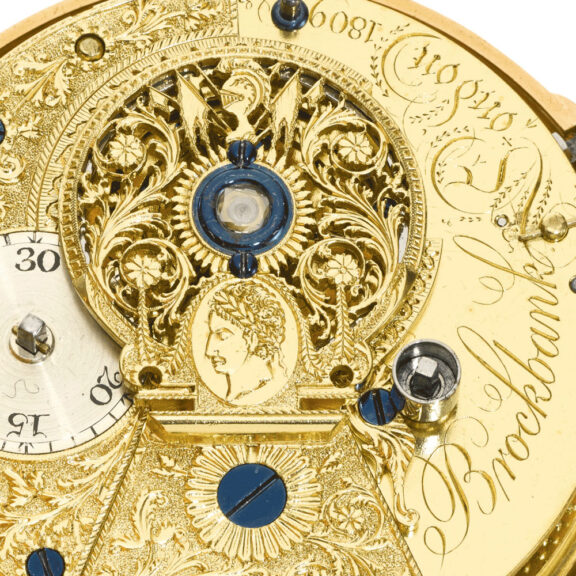
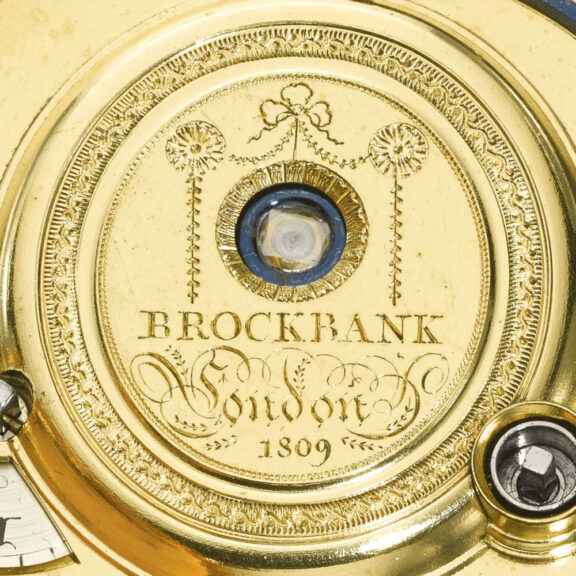
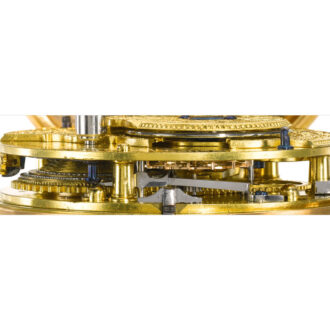
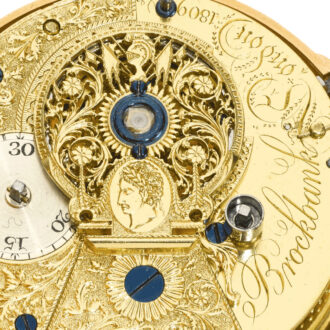
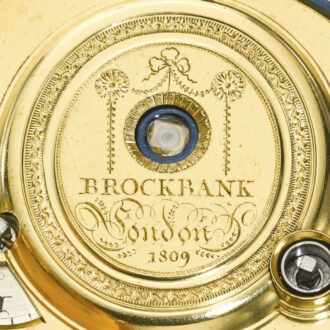
An English gold pair cased ruby cylinder watch with regulator type dial and date, circa 1809, gilded full plate movement, ruby cylinder escapement, the backplate and cock decorated in a neoclassical manner, the cock’s neck with a classical bust in profile wearing a laurel crown, fusee and chain, Harrison’s maintaining power, gilt metal dust cap with decorative classical engraving, movement and dust cap signed and numbered Brockbank, London 1809
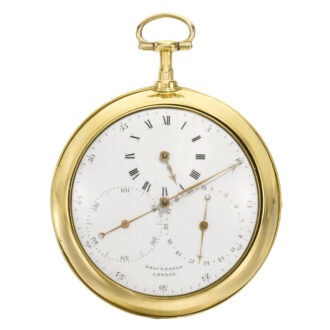
White enamel regulator type dial with subsidiary hour dial above, seconds to the left and date to the right, outer minute ring, gold hands, dial signed Brockbanks
Plain inner and outer cases with maker’s mark JC incuse (probably Joseph Carpenter)
–
Diameter: 63 mm
–
Signed: Brockbank London
–
This handsome watch has a dial with regulator style layout that is reminiscent of those used by Josiah Emery and others on their lever watches. The high quality movement follows a pattern that the Brockbanks employed in small numbers for some years and is an especially fine example, with a ruby rather than steel cylinder as well as Harrison’s maintaining power.
John and Myles Brockbank were among the pioneers of chronometer making. John was admitted to the Clockmakers’ Company in 1769. Myles was apprenticed to his brother and was Free of the Clockmakers’ in 1776. At the end of 1780, Thomas Earnshaw worked with the Brockbanks on the construction of chronometers with pivoted detent escapements. Shortly after Thomas Earnshaw claimed to have invented the spring detent escapement (1781), he quarreled with John and Myles, taking his designs instead to Thomas Wright (see lot 39). Earnshaw was later to accuse the Brockbank brothers of revealing his designs of the spring detent to Arnold.
The Brockbanks were based at 6 Cowper’s Court between Cornhill and Lombard Street in the City of London. John Brockbank was a liveryman from 1777-1806, Myles retired in 1808 and the pair were succeeded by their nephews, also called John and Myles who continued under the name ‘John Brockbank & Company’. From 1815-1835 the company was known as Brockbank and Atkins, still at 6 Cowper’s Court.
The Brockbanks were based at 6 Cowper’s Court between Cornhill and Lombard Street in the City of London. John Brockbank was a liveryman from 1777-1806, Myles retired
in 1808 and the pair were succeeded by their nephews, also called John and Myles who continued under the name ‘John Brockbank & Company’. From 1815-1835 the company was known as Brockbank and Atkins, still at 6 Cowper’s Court.
Signed: Brockbank London
Share this page: