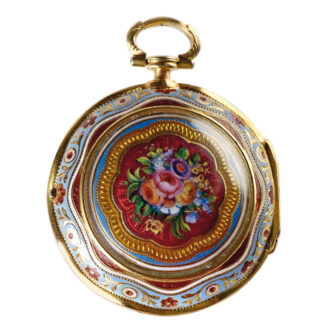
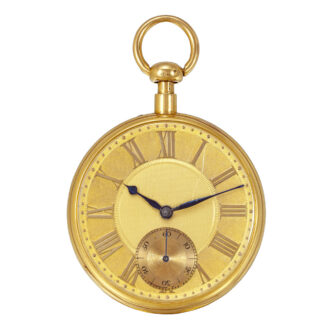
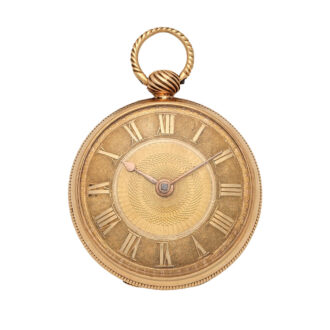
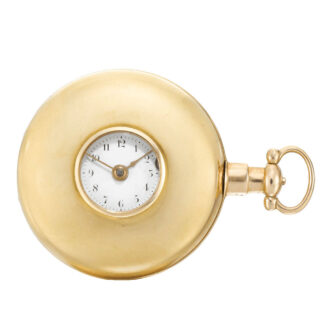
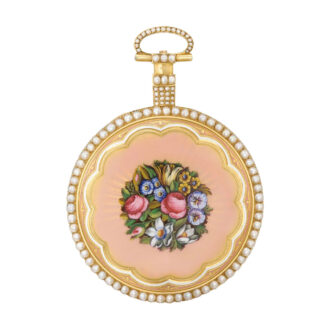
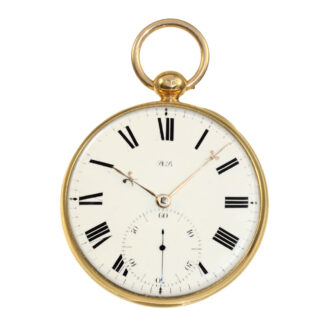
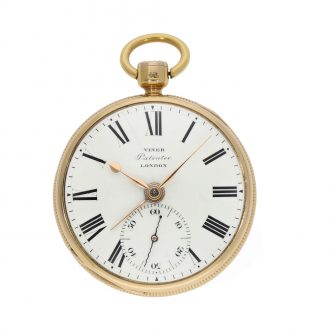
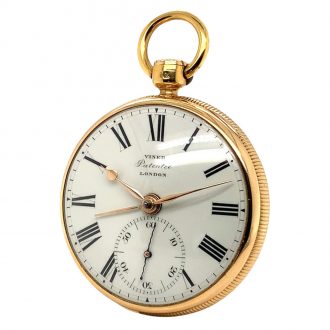
English impressive 18K gold deck chronometer Circa 1817
- Kenmerk
- AD8545
- Diameter
- 64 mm
- Estimate
- € 12.500 - 25.000
- Price sold
- € 27.300
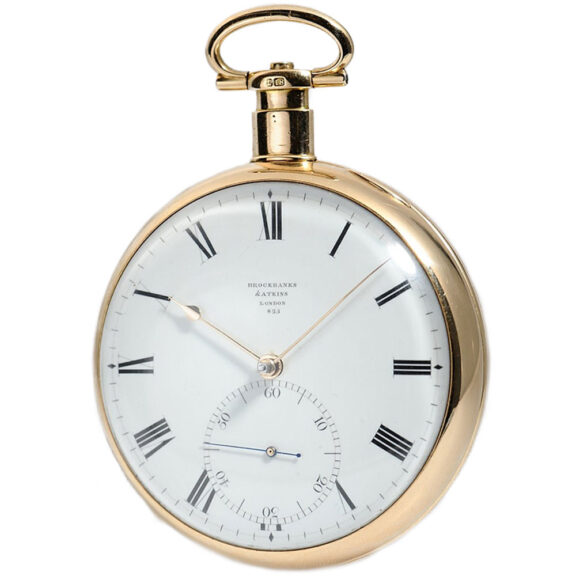
Gold open faced deck watch by Brockbanks & Atkins
–
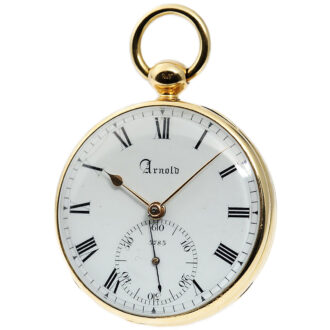
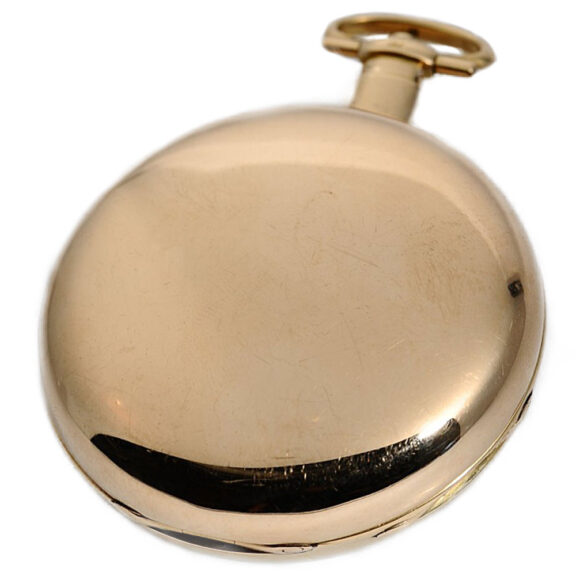
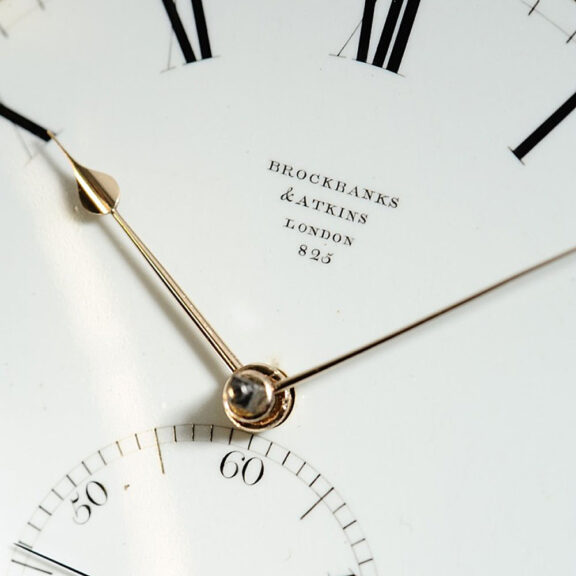
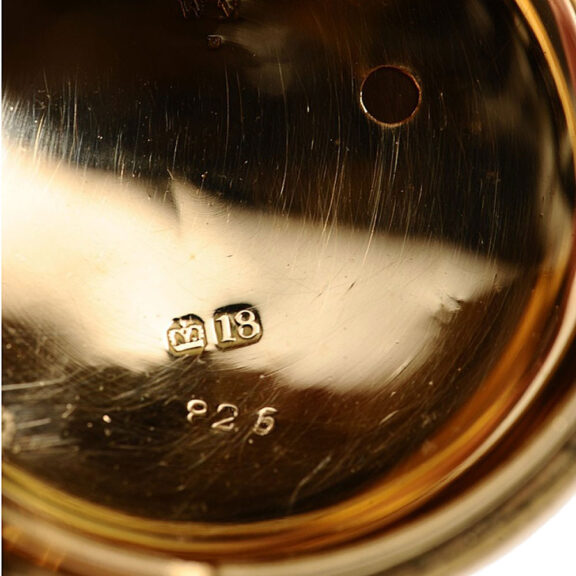
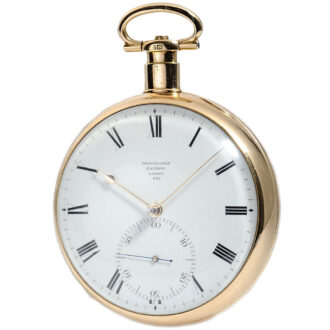
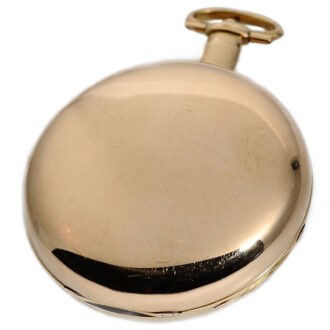
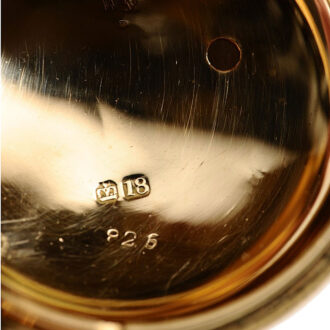
An impressive, heavy English deck chronometer watch, circa 1817. 18 Carat rose gold, polished, consular case with an engraving of a forearm with a Maltese cross tattoo on the inner case back; the arm holds an oak branch with leaves and acorns and is surrounded by an engine-turned belt with buckle and inscription: Robert Williams, Bridehead, and with case maker’s punch mark WM (William Mean). Signed enamel off-white dial with Roman radial hours, auxiliary seconds, and gold spade hands.
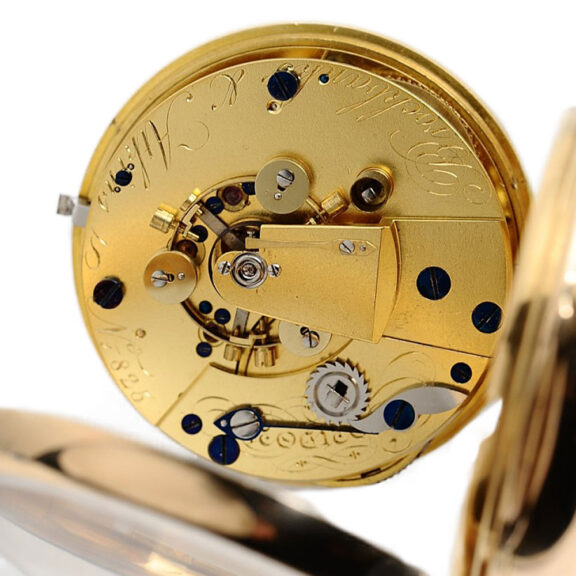
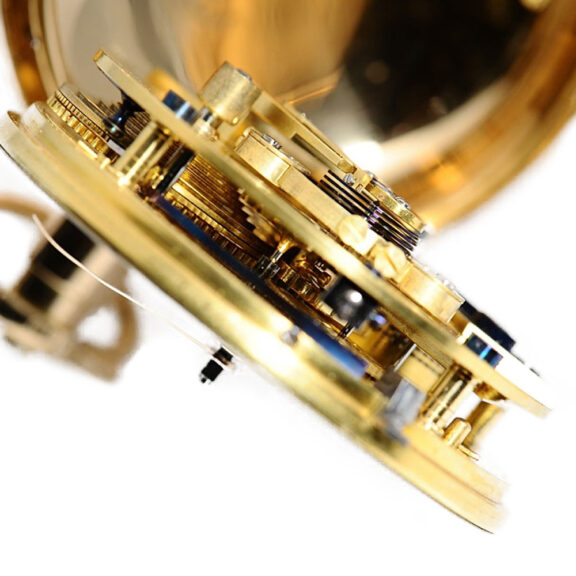
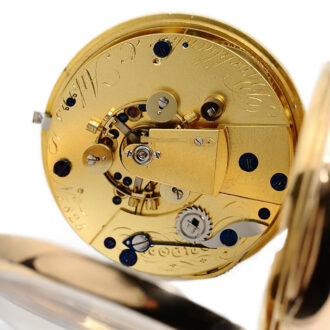
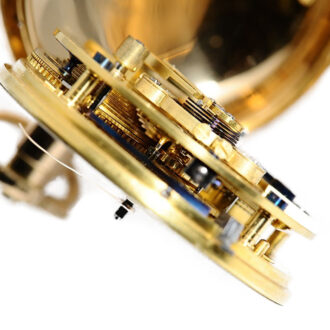
Full plate movement, frosted, gilt, signed, and chatoned; with gold escape wheel, chain/fusee, moulded pillars, screwed gold chatons, finely adjustable spring detent escapement according to Thomas Earnshaw, triangular Brockbanks compensation balance with three screwed-on round weights, three screws and three regulation screws, free-sprung blued helical balance spring, chatoned diamond endstone on balance, and chatoned sapphire endstone on the escape wheel.
–
Diameter: 64 mm
–
Weight: 244 g
–
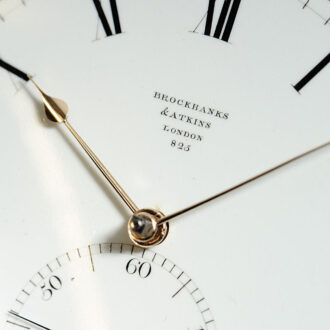
Signed: Brockbanks & Atkins, London
–
This watch was once the property of Sir Robert Williams II (1767-1847), a financier in London; he was Alderman and Sheriff of London in 1796/1797, as well as Member of Parliament and Magistrate and Deputy Lieutenant for Dorset.
In 1814, Williams inherited Bridehead Estate in Dorset from his father. King George IV believed Robert to be a most respectable, loyal man, always supporting the king’s government.
–
The case maker William Mean, who produced this case, worked in 1817 – when this watch was made – at 19 St. John Lane. His first mark was registered on April 9, 1783, at 8 St. John’s Street Road; the next followed on August 15, 1791, at 7 Albemarle Street, St. John Square. There was another one at 19 St. John Lane on August 2, 1799, and a later one at 2 Jerusalem Passage on December 1, 1818. All these addresses were located close to each other in eastern Clerkenwell.
–
“Brockbanks” was the signature the brothers John and Myles Brockbank of London used for their watches, which were usually excellent pocket and marine chronometers. The brothers were outstanding early chronometer makers and members of the Clockmakers’ Company. They often worked with prominent makers like Thomas Earnshaw and Peto, who developed a variant of the spring detent escapement – the “cross detent”. Some of the existing Brockbank chronometers are fitted with this type of escapement and fetch high collector prices today.
–
Between 1775 and 1815, the Brockbank brothers took Samuel Elliot Atkins as a partner, and the company began trading under the name of Brockbank & Atkins.
Signed: Brockbanks & Atkins, London
Share this page: