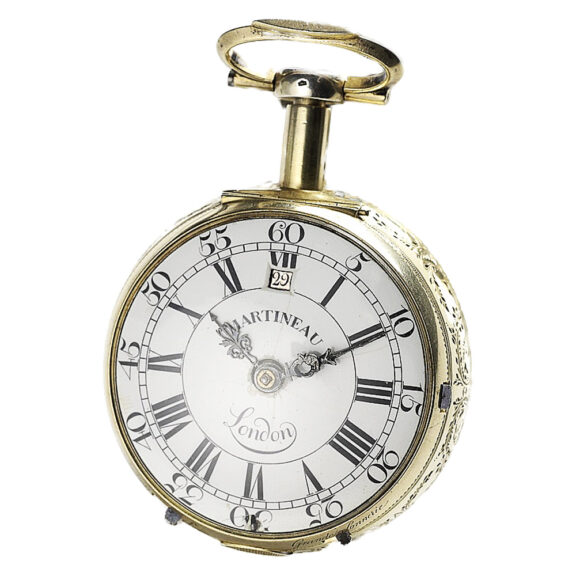
English repeating coach clock with self strike and date Circa 1750
- Kenmerk
- AD0973
- Diameter
- 86 mm
- Estimate
- € 12.500 - 20.000
- Price sold
- -
Small silver pair-cased coach clock by Joseph Martineau Senior
–
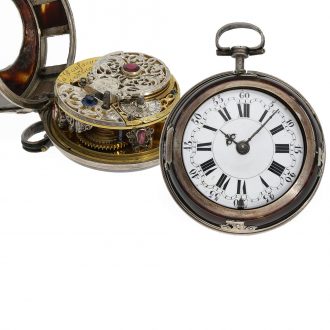
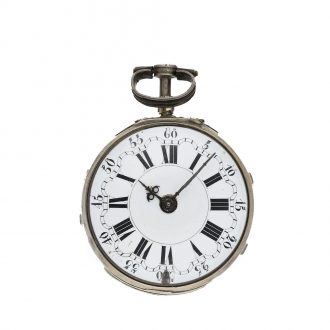
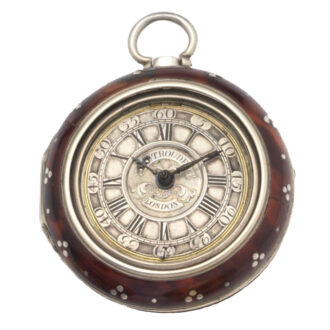
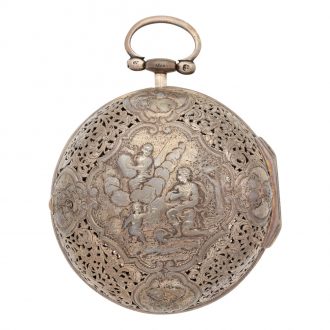
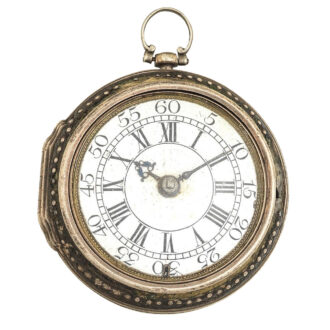
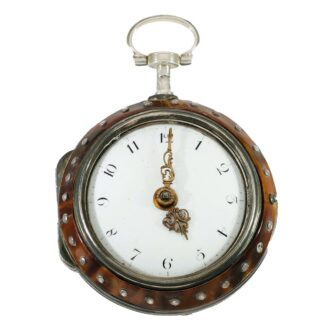
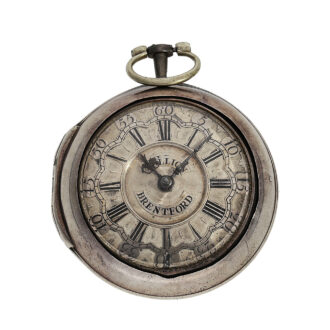
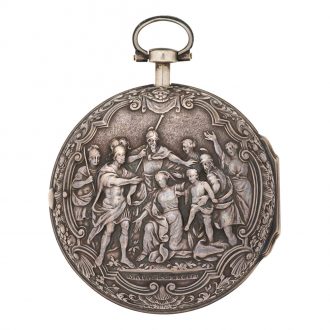
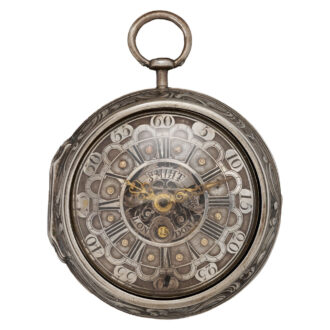
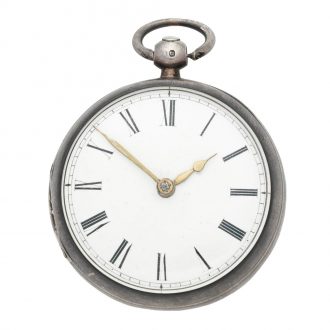
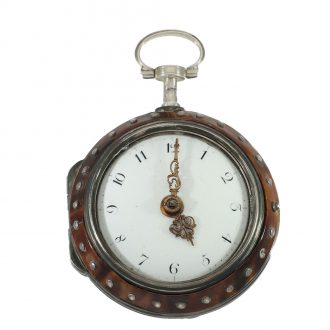
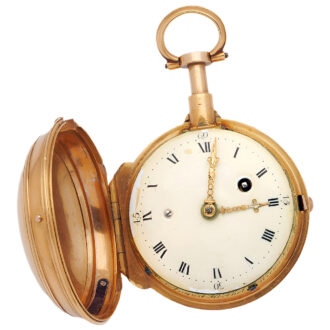
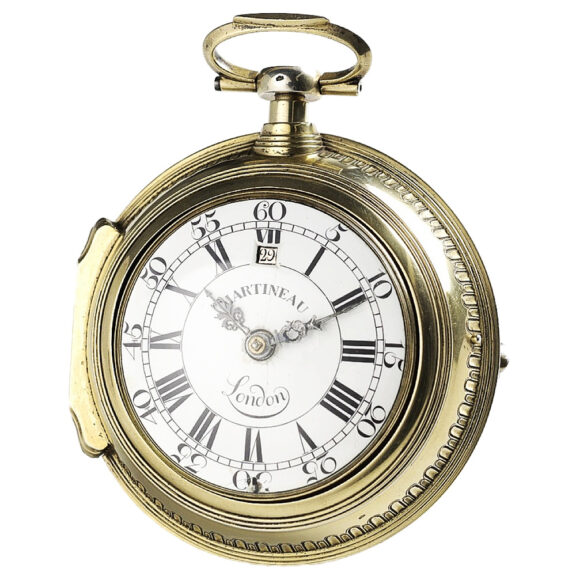
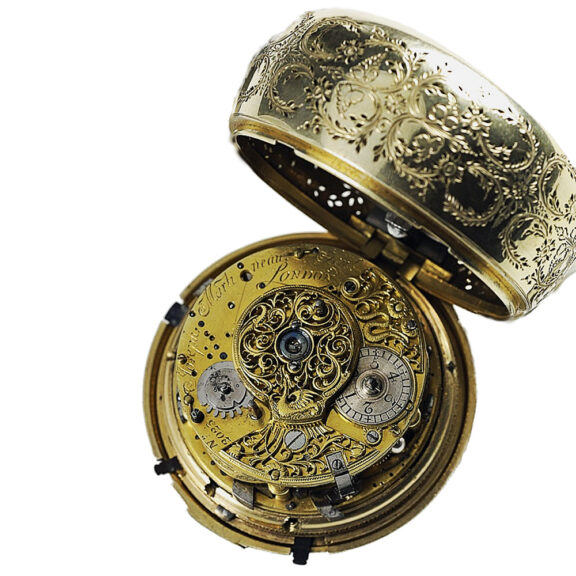
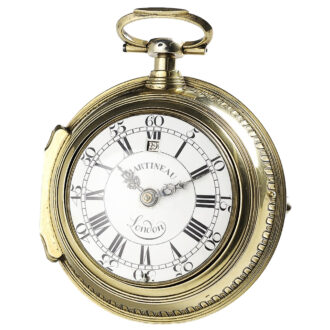
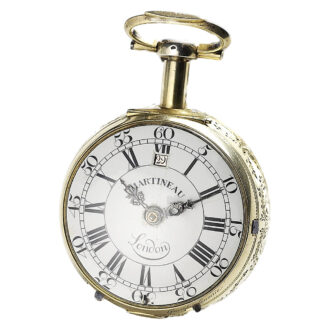
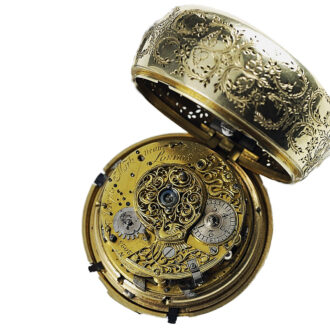
A small English pair-cased coach clock with quarter-hour self strike Grande Sonnerie, quarter repeater and date, circa 1750.
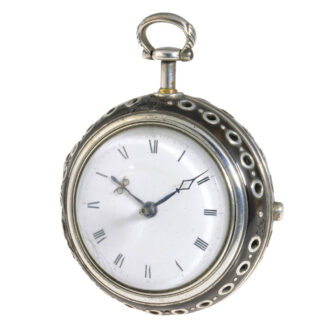
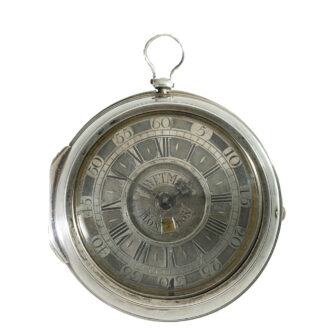
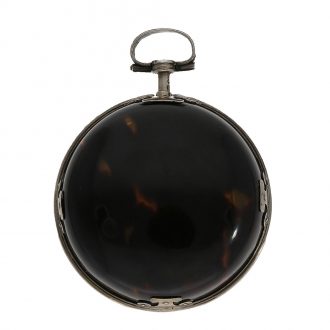
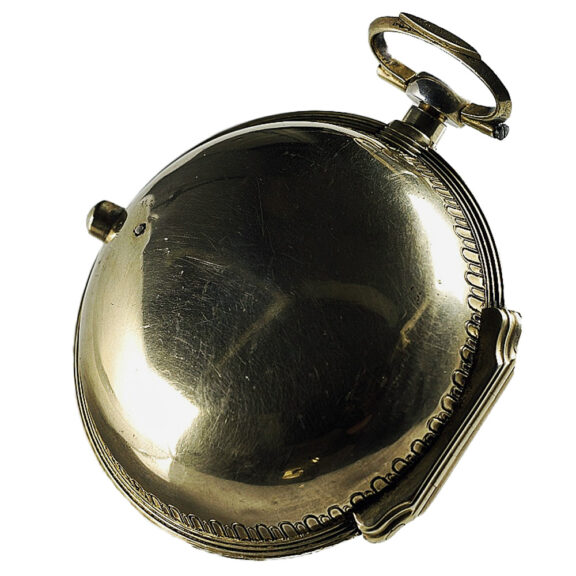
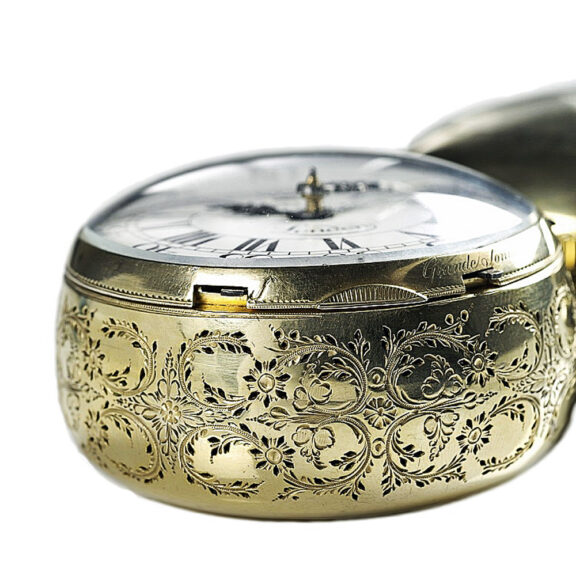
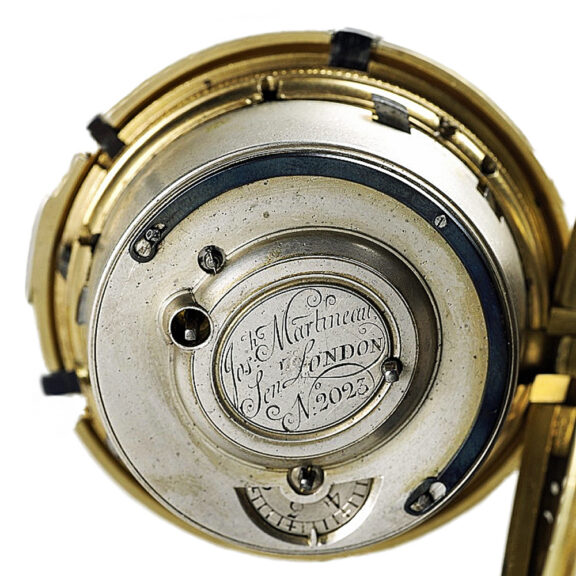
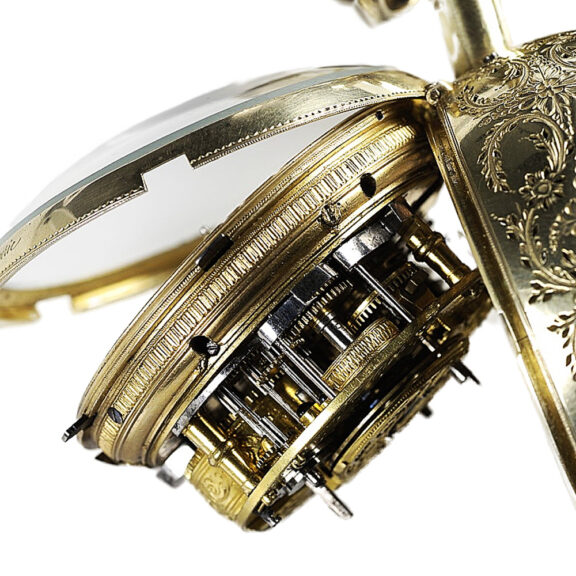
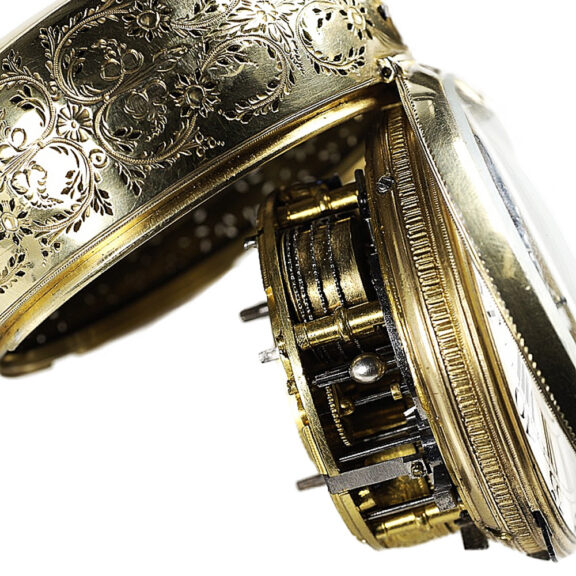
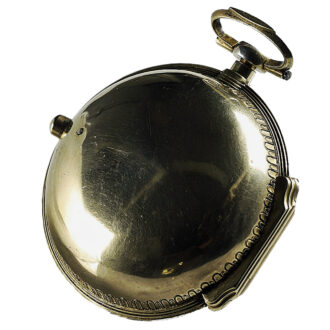
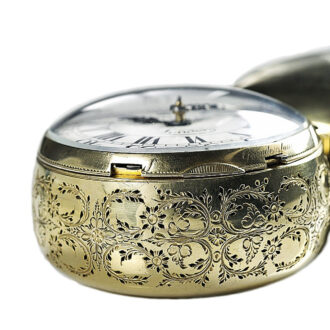
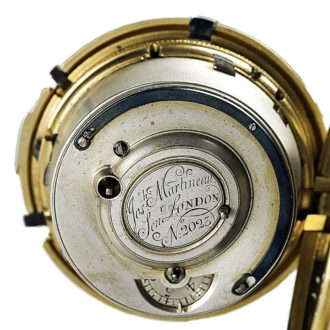
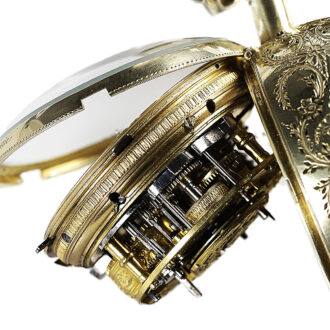
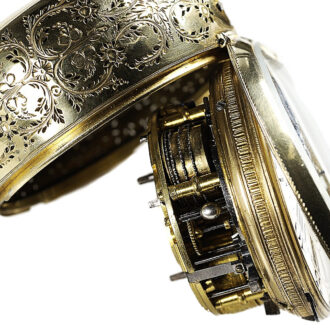
Two cases: an outer case – silver, sound holes; and an inner case – silver, rear bell, movement protection cap. Signed enamel dial with Roman radial hours, outer minutes track with Arabic five minutes numerals, aperture for the date, and steel hands. Signed full plate movement, chain/fusee for going train, engraved barrel for repeater, four hammers, verge escapement, three-arm brass balance.
–
Diameter: 86 mm
–
Weight: 493 g
–
Signed: Joseph Martineau Sen., London
–
Joseph Martineau Senior was an important watchmaker.
He is recorded as working in London from 1744 until he died in 1759. His watches are found in numerous museums, such as the “Metropolitan Museum of Art” in New York or the “Mathematisch Physikalischer Salon” in Dresden.
–
The so-called coach clocks are de facto travel clocks, early spring-driven mechanical clocks dating from when travellers began to lay value on having accurate timekeepers with them on their journeys. These clocks were oversized pendants, or pocket watches that – due to their size – obviously could not be worn on the body. However, the measure was a prerequisite since this type of timepiece needed a robust case and a large balance that was not too sensitive to the environment. Carriage clocks have a large dial on the front that is usually enamel; champlevé or repoussé techniques were used less frequently. They are built with a robust verge movement between two round plates connected with finely cut baluster columns that were often decorated with delicate chasing or fluting. The barrels for the clock, strike and alarm are usually finely engraved. The hour strike mechanism originally used a locking disc, which was later replaced by a rack capable of repeating. To ensure that the clocks did not suffer during transport, they were normally protected by several cases and additional outer cases often coated with tortoiseshell, or they had leather covers. On the journey, the clocks most likely sat on a seat in the carriage. Early watches were created from gilt fire bronze later; most of them were made from silver; they usually have a diameter between 75 and 200 mm.
Signed: Joseph Martineau Sen., London
Share this page: