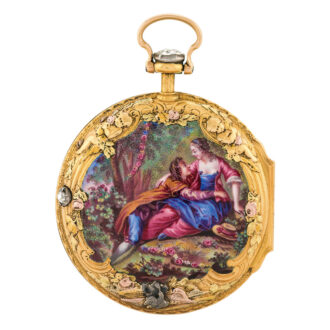
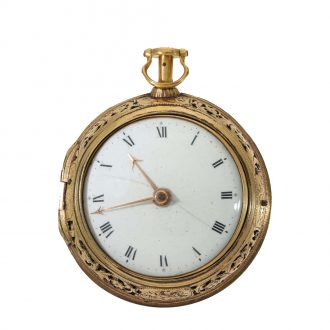
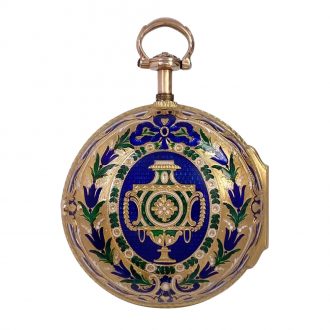
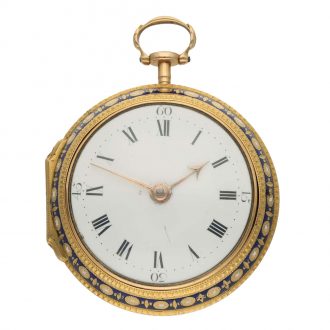
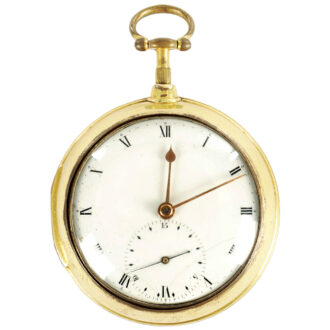
English verge watch with corresponding chatelaine Circa 1775
- Kenmerk
- AD6370
- Diameter
- 48 mm
- Estimate
- € 10.000 - 20.000
- Price sold
- € 10.650
Gold and enamel verge in pair cases by Robert Allam
–
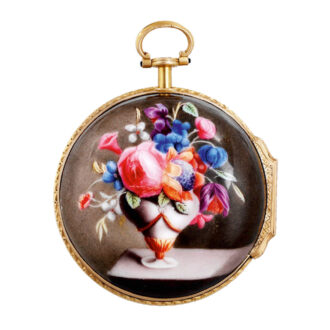
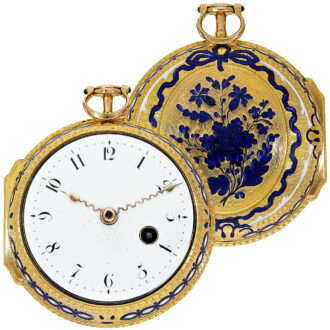
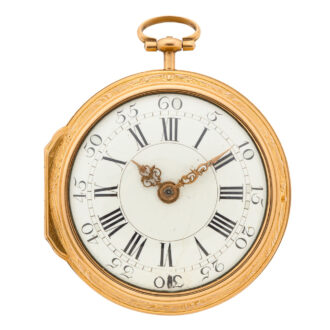
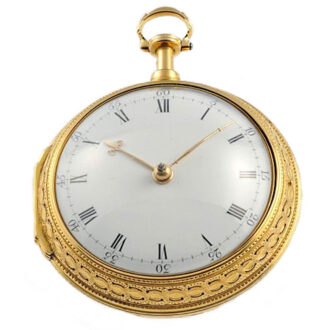
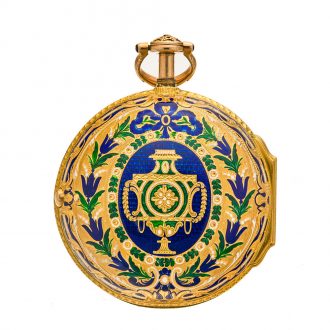
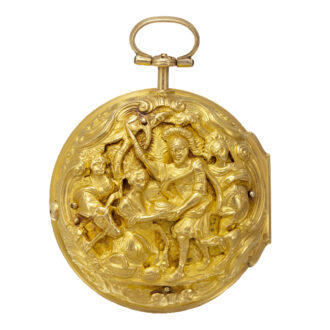
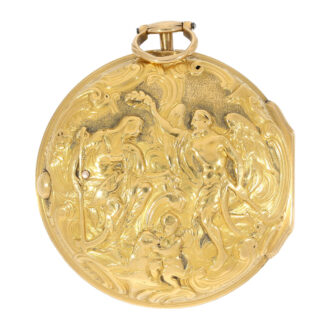
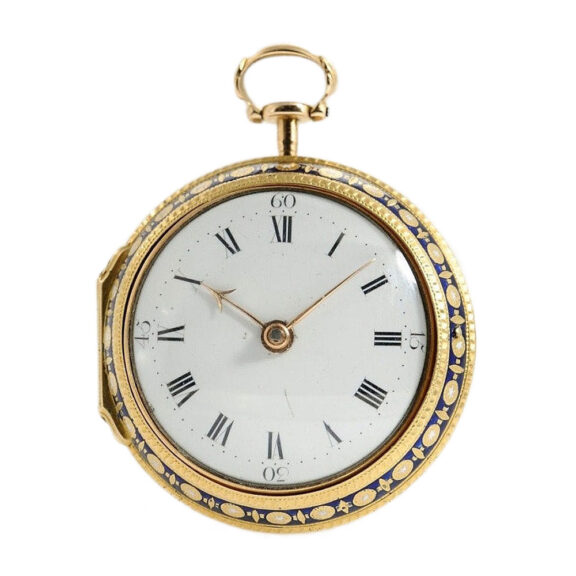
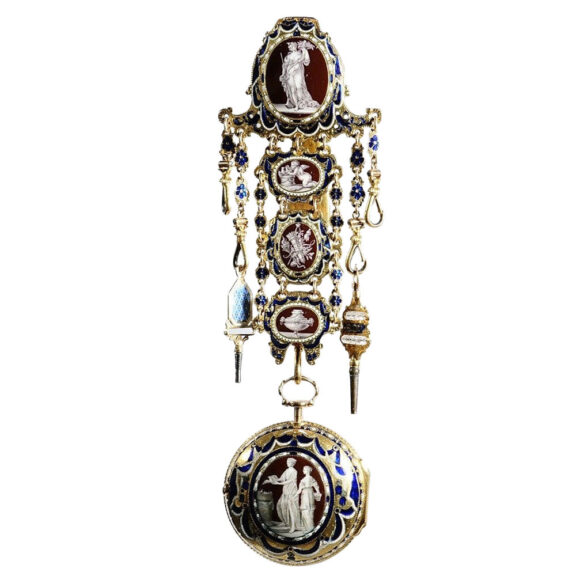
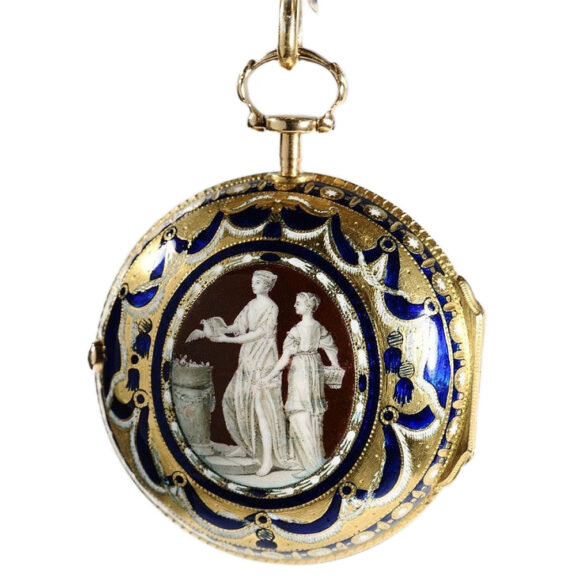
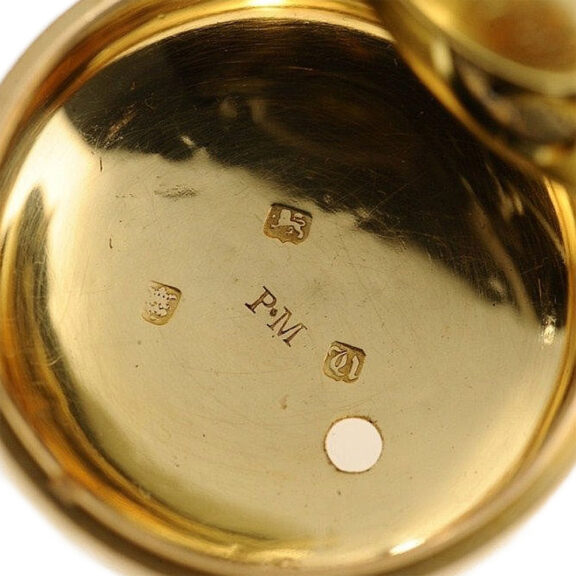
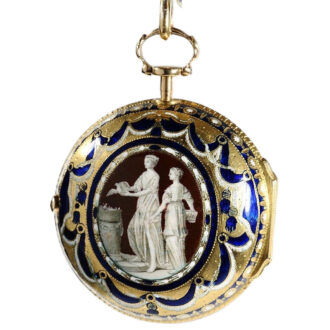
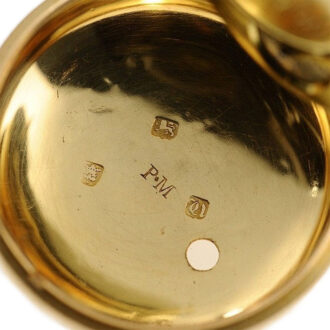
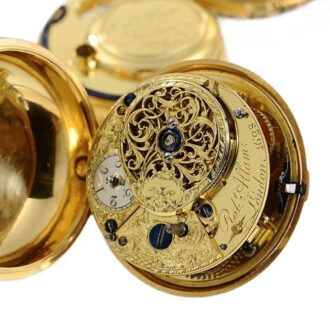
A very fine English gold and enamel pair cased verge pocket watch with a corresponding chatelaine, circa 1775. Two cases. 18 Carat gold outer case, the band on both sides with stylized white and gold champlevé enamel flowers against a translucent cobalt blue ground, the back side with white and blue enamelled flower festoons and in the center an oval en grisaille enamel depiction of a classical scene on a brown ground showing Venus, the Roman goddess of Love and a nymph with pigeons in their hands attending a flower bedecked altar. The polished inner case is also 18 Carat gold with the case maker’s mark PM, the movement protection cap is signed and numbered.
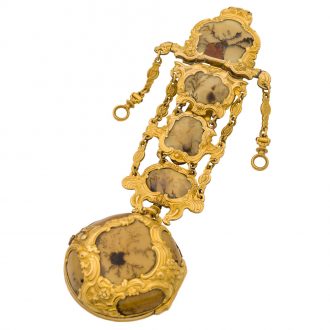
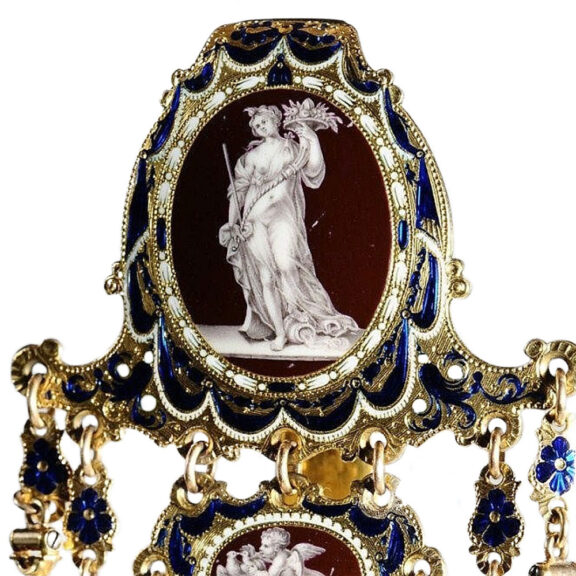
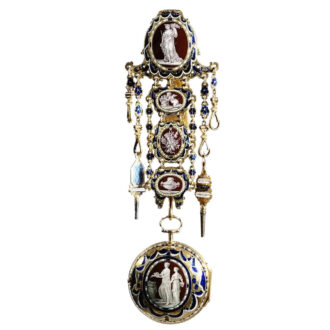
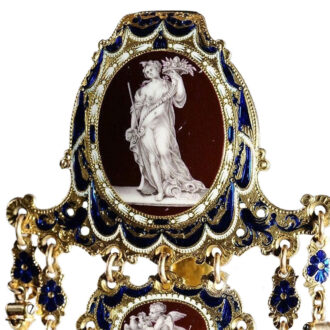
Comes with a matching gold chatelaine with four enamel medallions. At the top, the depiction of Abundantia with cornucopia, the divine personification of abundance and prosperity, below a winged putto playing with two pigeons and a further medallion with military trophies and a vase. The en grisaille enamel paintings are painted in the manner of George Michael Moser and Augustin Toussaint.
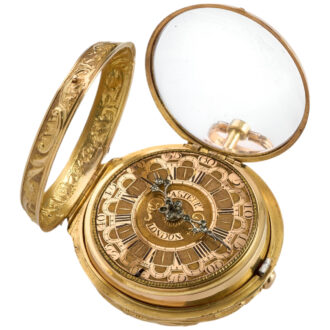
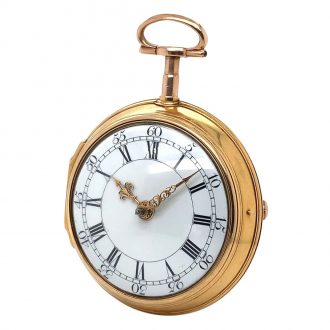
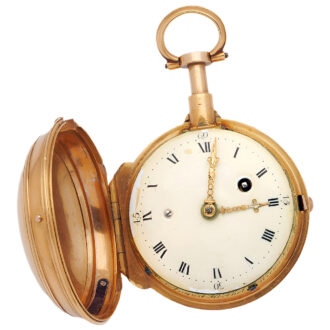
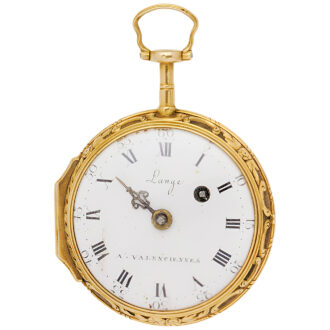
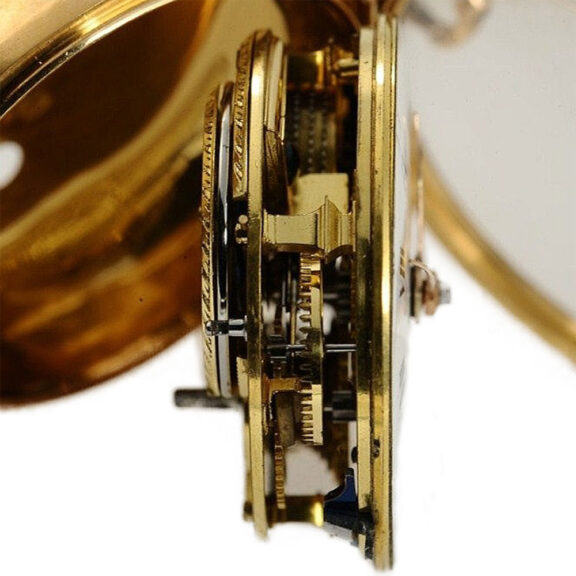
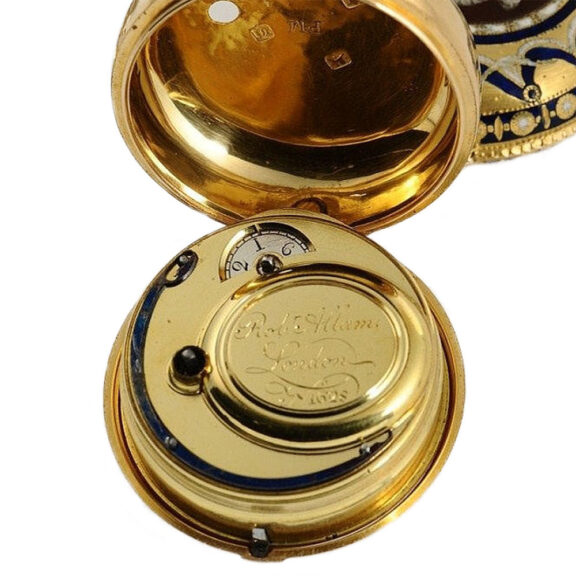
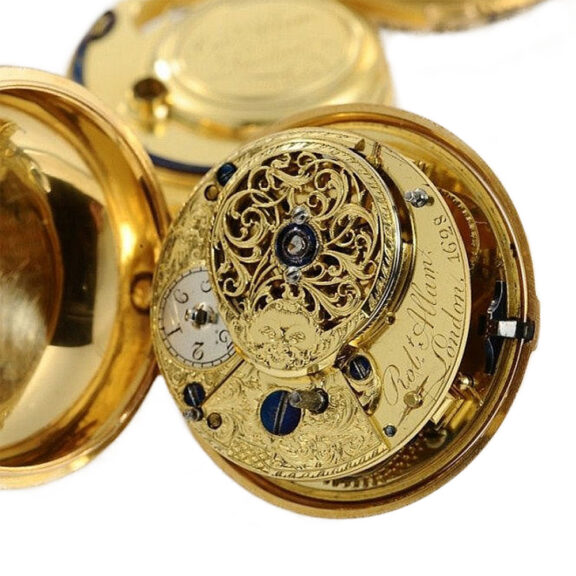
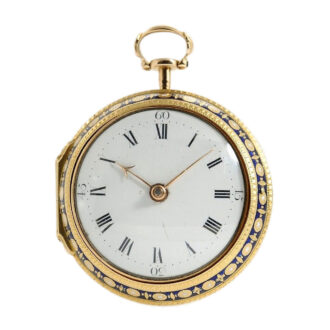
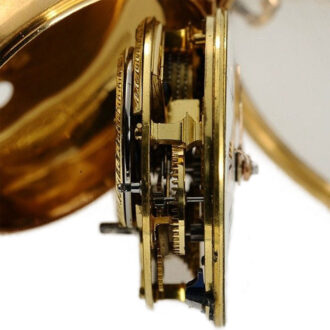
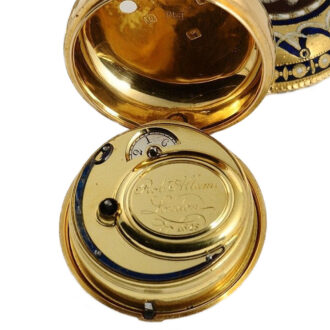
White enamel dial with radial Roman hours, outer minute divisions with Arabic quarter hours and arrow shaped gold hands. Signed fire gilt full plate movement, very finely florally engraved, key wind, florally engraved applied ornaments, chain and fusee, gold train, baluster shaped movement pillars, three arm steel balance, pierced balance bridge with mascaron and a large chatoned diamond end stone.
–
Diameter: 48 mm
–
Weight: 108 g
–
Signed: Robert Allam London
–
The neoclassical en grisaille enamel decoration was particularly popular in late 18th century London.
A grisaille (en grisaille), or grey painting, is a painting in which one does not apply natural colours but restricts oneself to depicting things in all possible shades of the same colour, usually grey or brown.
Robert Allam was apprenticed to Thomas Smith, master and citizen clockmaker in London for seven years, and was free between 1742-1765.
Augustin Toussaint was a London-based jeweller and enameller. His son, Augustin, was apprenticed in 1768 to the renowned enameller and gold chaser George Michael Moser as an enamel painter for the enormous fee of 200 guineas. Augustin Toussaint’s works were exhibited at the Royal Academy (1775 to 1788) and are recorded on watches signed by Emery for example.
George Michael Moser (1706-1783) was born in Schaffhausen on January 17, 1706. He studied chasing and gilding under his father Michael, a coppersmith. He moved to London in 1726 and worked for John Valentine Haidt, goldsmith and watch chaser. By 1737 he was working on his own account at Craven Buildings off Drury Lane. In addition to chasing he also produced fine enamel cases of which only about twenty are known to survive. He designed the great seal of George III and painted enamel portraits of the royal children for Queen Charlotte. In the 1740s Moser became a leading figure at the St Martins Lane Academy and later and in 1769 he became the first Keeper of the Royal Academy. His repoussé watch casework is among the finest to be found. Moser continued to work at least until the late 1770s and was active for the Royal Academy until the end of his life. On January 30, 1783, the Gentleman’s Magazine reported that Moser “was followed to his grave in grand funeral pomp by all the capital artists, Sir Joshua Reynolds at their head as chief mourner, Sir William Chambers, etc. Ten mourning coaches, besides two gentlemen’s coaches, were in the procession”.
Signed: Robert Allam London
Share this page: