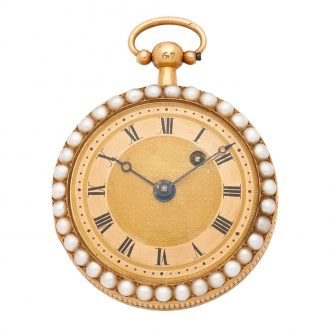
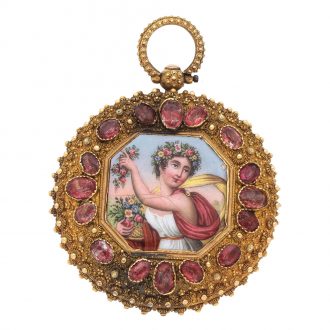
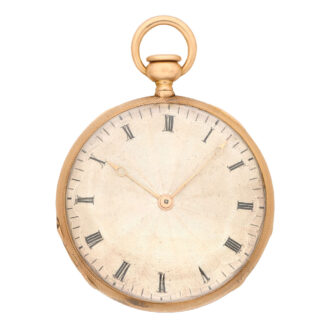
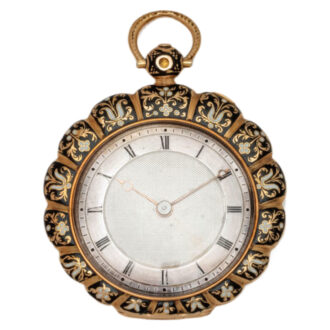
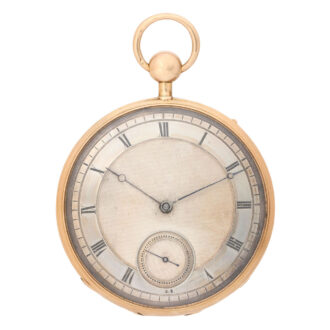
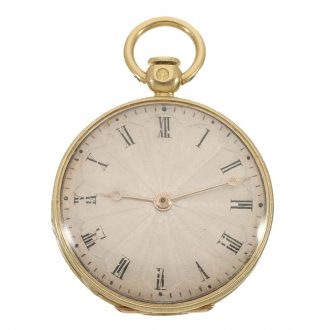
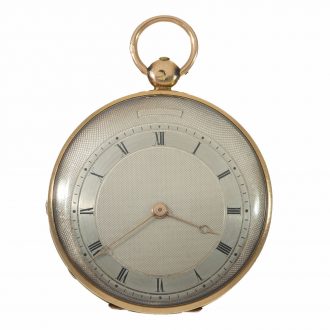
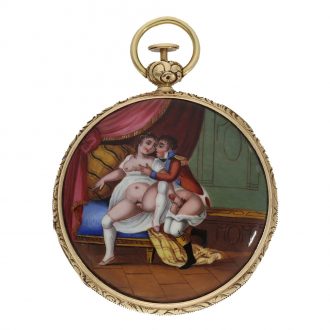
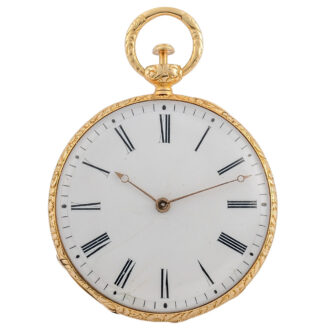
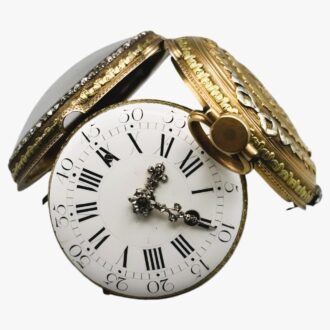
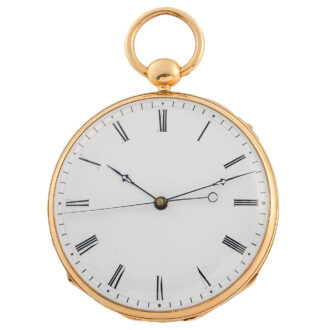
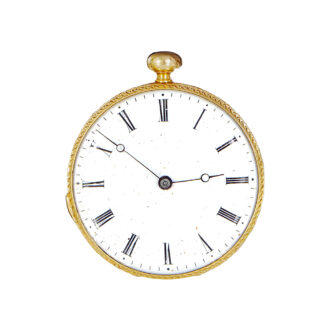
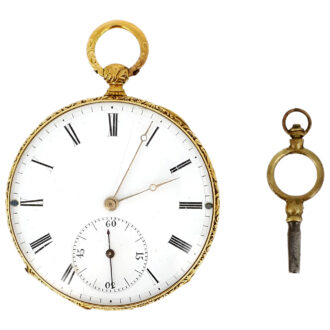
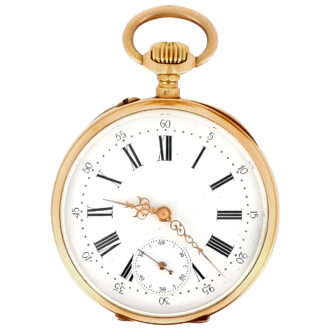
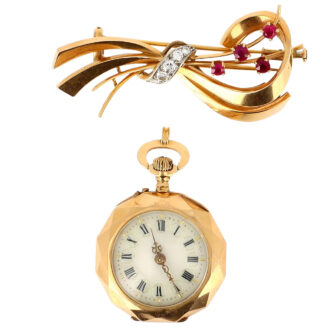
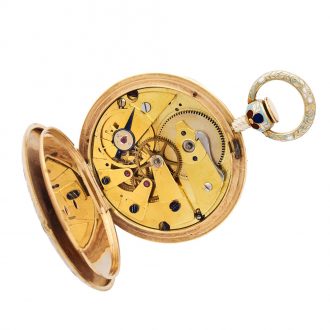
French 18K gold and enamel key wind cylinder watch Circa 1830
- Kenmerk
- FF0023
- Diameter
- 48 mm
- Estimate
- € 7.000 - 12.000
- Price sold
- -
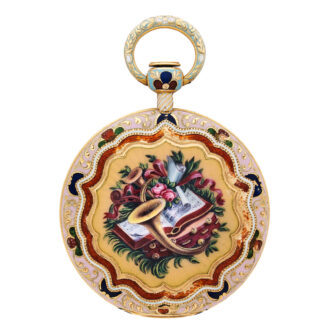
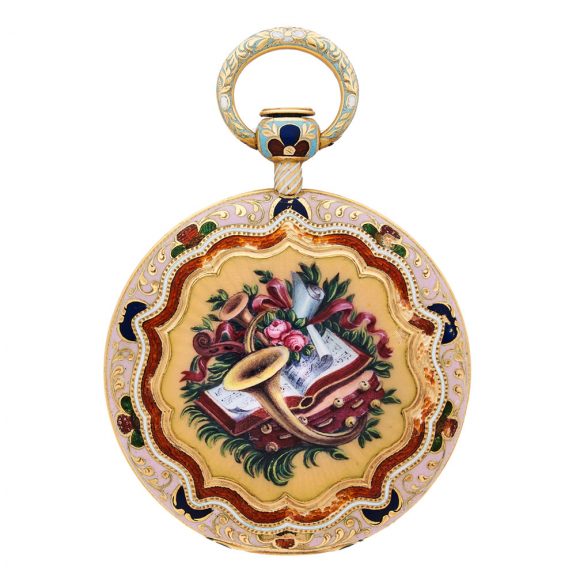
Gold watch with polychrome enamel scene called Allegory of Music
–
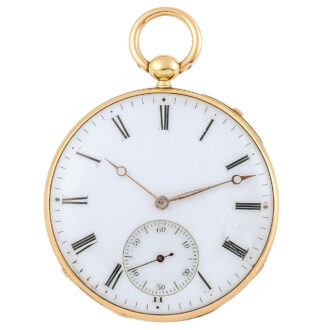
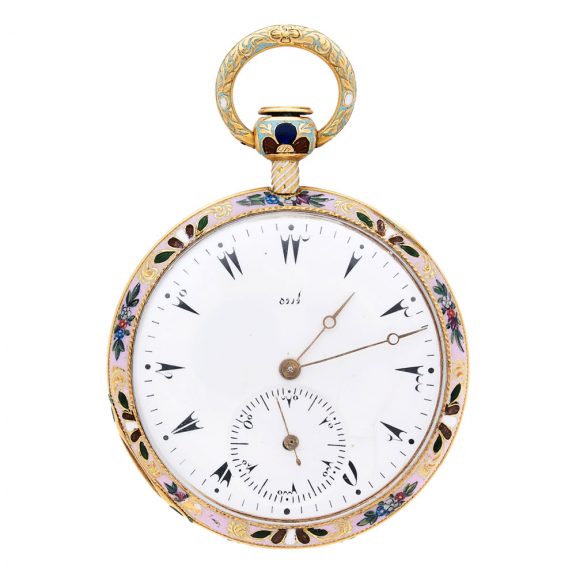
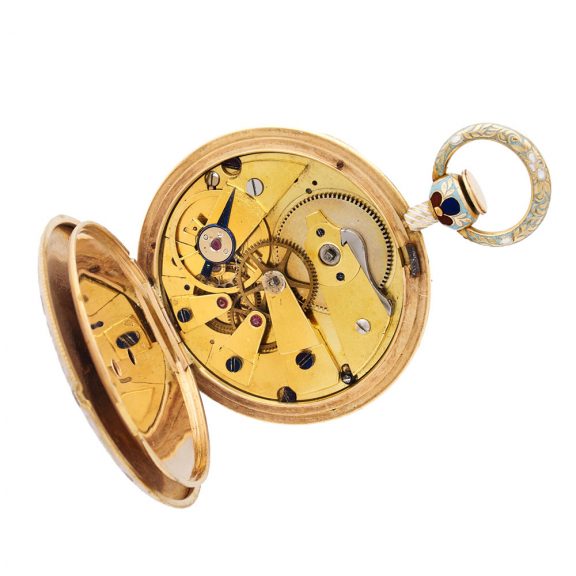
A French 18 carat gold open faced watch with polychrome enamel scene called Allegory of Music made for the Ottoman market, circa 1830. Gilt movement with key winding, cylinder escapement, calibre called Lépine, blued balance spring, advance/delay adjustment index.
White enamel dial with Turkish numerals for indicating the hours, railway minute track, gold Breguet-style hands, small second hand, bears the signature in Arabic characters in the centre.
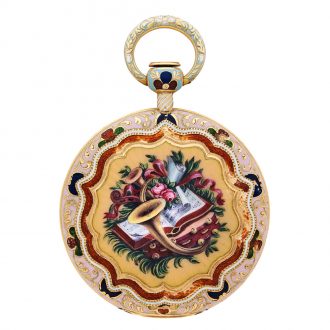
Round case, the whole richly decorated with stylized enamel motifs, the bezel and the border on the back on a pink enamel background with flower motifs, the back with an allegorical trophy in the centre representing the attributes of music on a translucent yellow enamel background, cuvette bearing the words Le Roy towards the winding square.
–
Diameter: 48 mm
–
Weight: 58.2 g
–
Signed: Le Roy
–
The Le Roy workshop, which enjoyed a great reputation in France and Europe, produced several watches intended for the Ottoman court and the elites of the Empire. These watches were distinguished by their technical finesse and aesthetics, meeting the cultural and artistic demands of the Ottoman market.
Ottoman Design and Aesthetics
Luxurious Dials and Cases: Le Roy watches intended for the Ottoman market were often adorned with precious metals such as gold and enriched with enamel decorations, sometimes colored to please the Ottoman taste for visually striking objects.
Oriental Numerals: As with other watches created for the Ottoman market, Le Roy watches often featured dials with Arabic or Turkish numerals, making them easier to read for local users.
Detailed decoration:
Dials, hands, and cases often featured motifs inspired by Islamic art, with arabesques, floral motifs, and an absence of figurative iconography to respect the cultural sensibilities of the Ottoman Empire.
Mechanical innovation
Watches intended for the Ottoman Empire retained this superior quality and were often equipped with: Repeater mechanisms: Some Le Roy watches included repeaters, which allowed wearers to hear the time without looking at the watch, a feature highly valued in the Ottoman courts.
–
Reliability and robustness: Le Roy watches were renowned for their great reliability, an asset for buyers located far from the Parisian workshops and often involved in constant travel between the West and the East.
The house of Le Roy also benefited from specific commissions for the Ottoman court. Due to its prestigious reputation, it produced custom pieces for Ottoman dignitaries and members of the Sultans’ court under the Ottoman Empire.
Signed: Le Roy
Share this page: