Finnish chronometer with power reserve indicator Circa 1870
- Kenmerk
- AD8565
- Diameter
- 59 mm
- Estimate
- € 4.000 - 8.000
- Price sold
- € 6.700
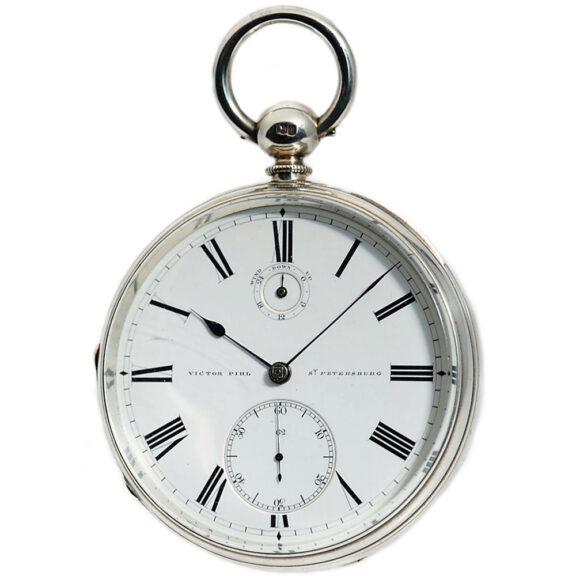
Silver deck chronometer by Gustav Victor Pihl
–
A Finnish deck chronometer with 24h power reserve indicator, circa 1870.
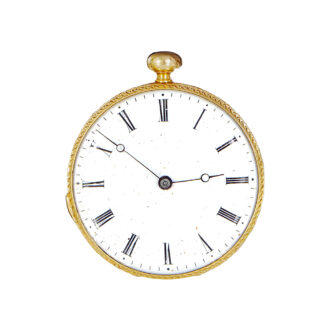
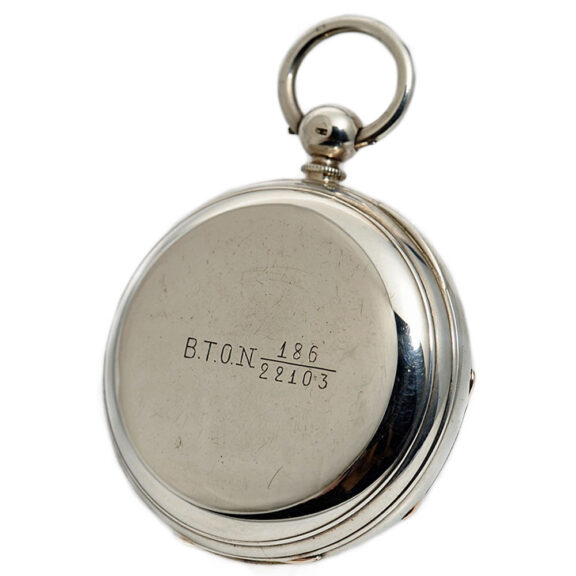
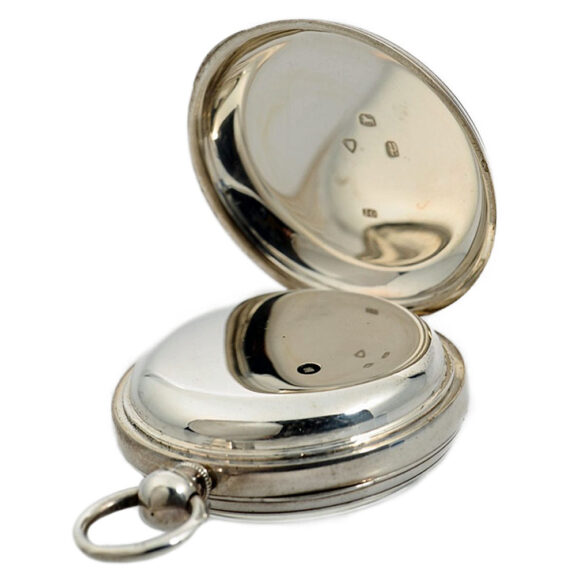
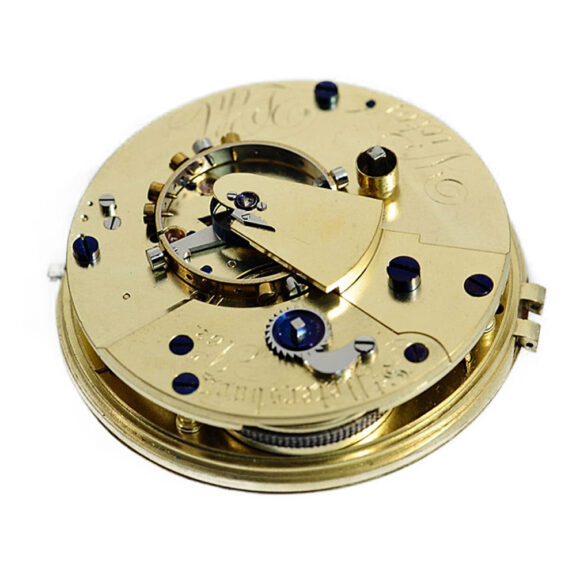
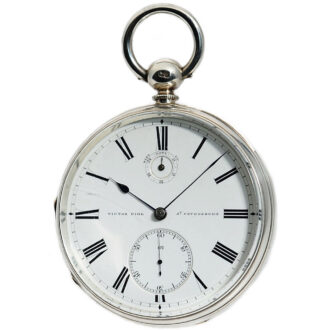
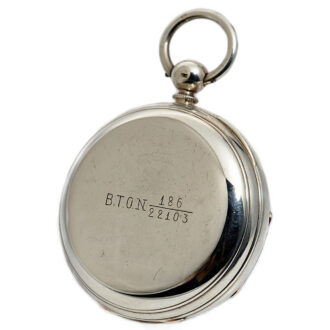
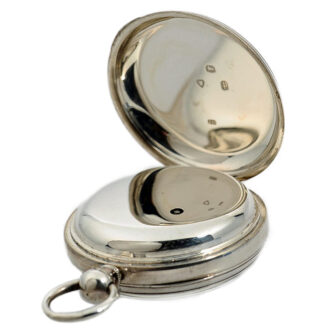
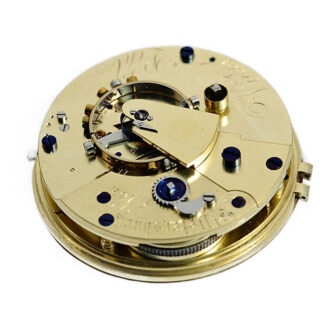
Silver polished case with engraving on the back lid: B.T.O.N. 186/22103 and case maker’s punch mark JO (James Oliver, London). Signed enamel dial with radial Roman hours, auxiliary seconds, and blued spade hands. Chatoned, keywind, frosted gilt full plate movement with chain/fusee, spring detent escapement according to Thomas Earnshaw, heavy bimetallic chronometer balance with gold and platinum screws, free-sprung blued helical balance spring, and chatoned diamond endstone on balance.
–
Diameter: 59 mm
–
Weight: 187 g
–
Signed: Victor Pihl, St. Petersburg
–
As to the signature B.T.O.N. 186- 22103 on the back cover, we can only assume that it is an observatory designation like that on a pocket chronometer no. 483 by A. Ericsson, St. Petersburg, – that piece also carries the inscription B.T.O.N. 43/16780 on his back.
–
Gustav Victor Pihl
Gustav Victor Pihl was one of the Pihl brothers, usually simply called Victor Pihl.
The name Pihl stands for a number of watchmakers who – with one exception – came from Lojo (Pojo) in the Finnish province of Nyland and worked as outstanding representatives of their craft in Saint Petersburg.
–
Bernhard Wilhelm Pihl was initially an agent in the Russian capital for E. Dent in London, his former employer. Soon he also took over the representation of Victor Kullberg. One of his clocks with the number 20 is in the Hermitage. He died in 1860. All of his duties were apparently then taken over by his brother Gustav Victor Pihl, who in 1846was also born in Lojo. It is very likely that he continued the numbering of his brother on his watches. The numbers 63 (1870; it is the Kullberg number 1884), 66 (1871; Kullberg No. 2118), 67 (1871; Kullberg No. 2139), 68 (1871; Kullberg No. 2231) are known. The pictured, Pihl No. 62, now fits perfectly into this list, because it bears the punched number 1896 on the front of the dial plate, which means that this pocket chronometer was made by Victor Kullberg in London under this number produced! From the year numbers belonging to this enumeration it is clear that it was not Bernhard Wilhelm Pihl (as stated by Mercer, Chronometermakers) who bought and worked on these watches (including number 62), but Gustav Victor Pihl, presumably together with one another brother, Anders Victor Pihl, born in Lojo in 1836. We can safely assume that the Pihl brothers did not simply resell the watches they bought in England at a premium, but instead – as chronometer makers – optimized their technology and rate behaviour.
–
After Gustav Victor Pihl died in 1873, August Ericsson took over his workshop.
Signed: Victor Pihl, St. Petersburg
Share this page: