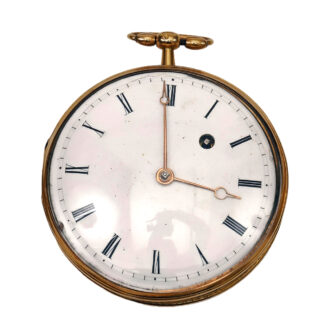
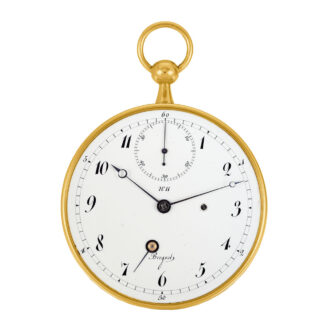
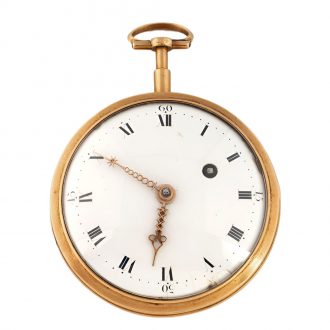
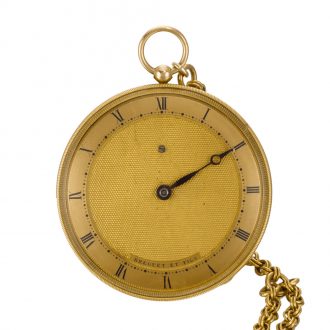
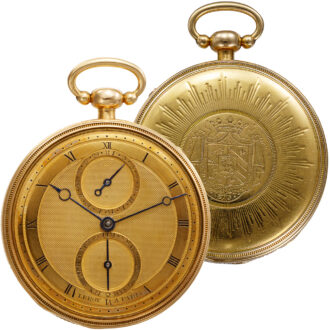
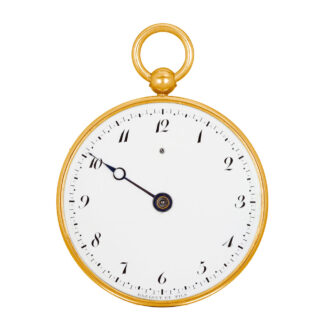
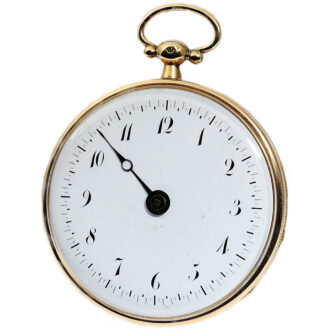
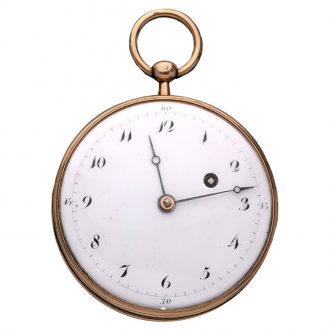
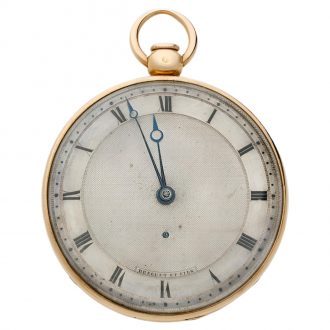
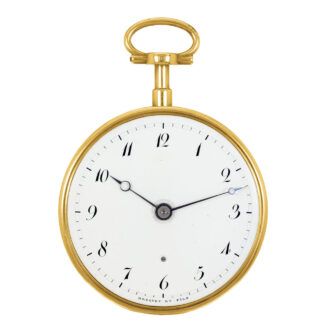
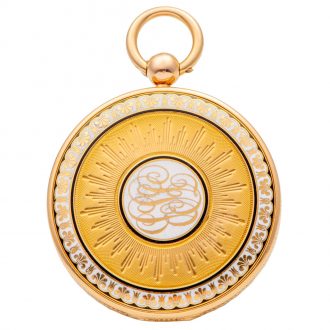
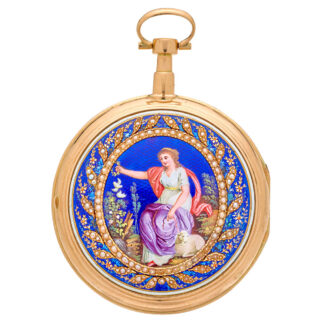
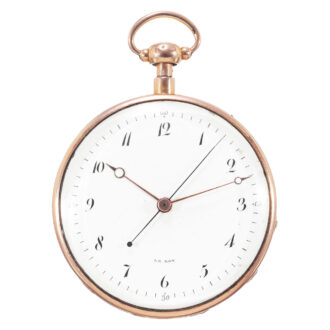
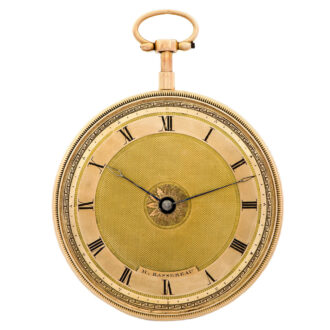
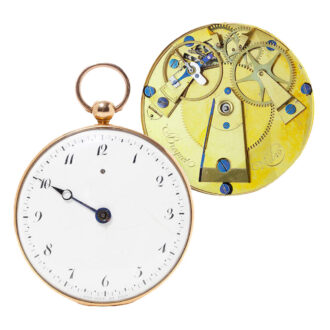
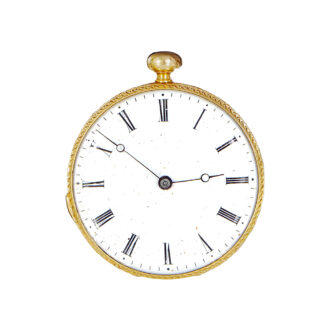
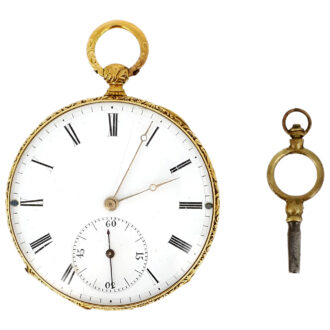
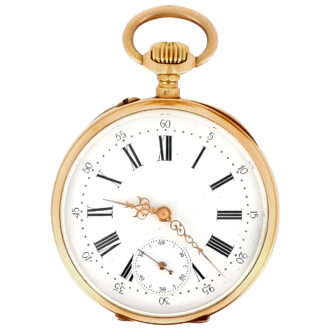
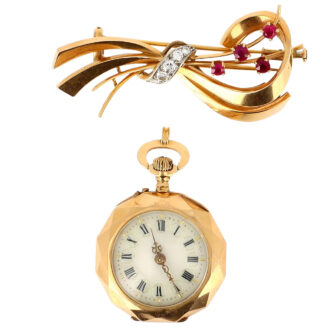
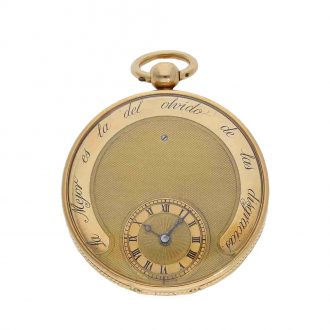
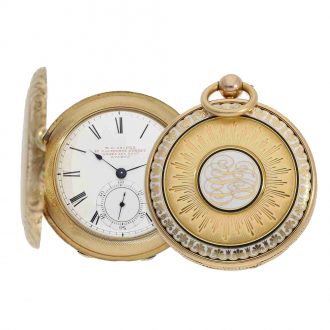
French 18 carat gold and enamel lépine watch in Tavernier case Circa 1805
- Kenmerk
- HC1522
- Diameter
- 38 mm
- Estimate
- € 3.000 - 6.000
- Price sold
- -
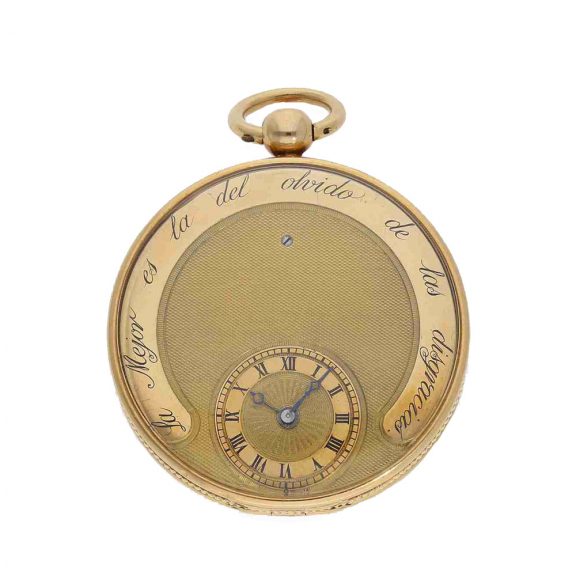
Pocket watch type ‘Médaillon à la Breguet’
–
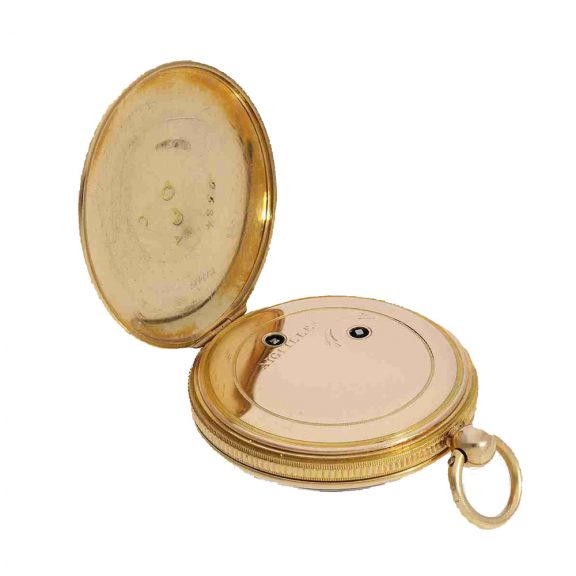
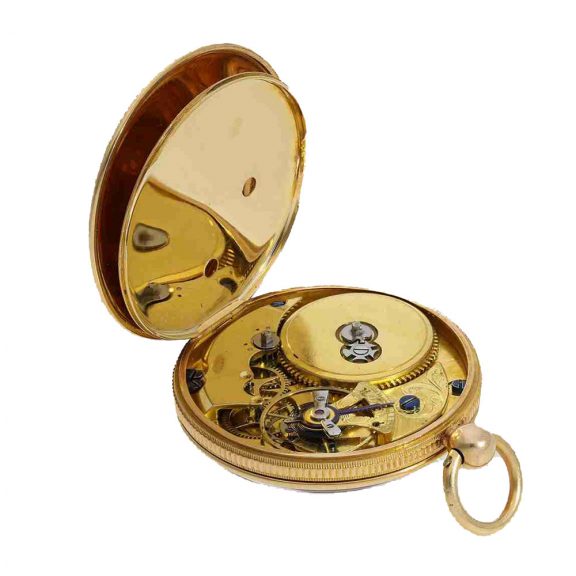
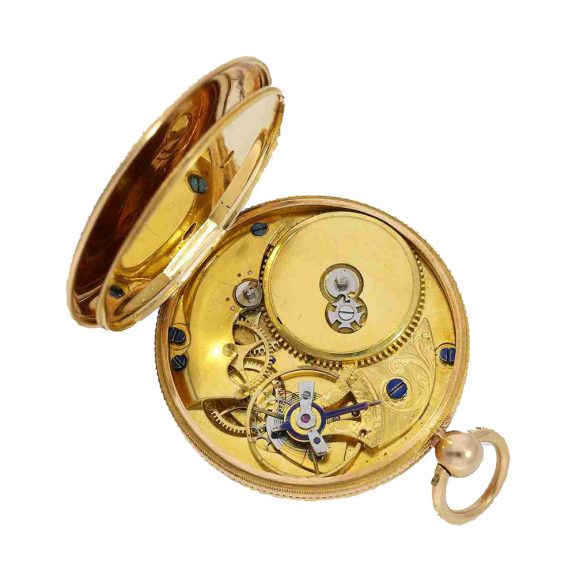
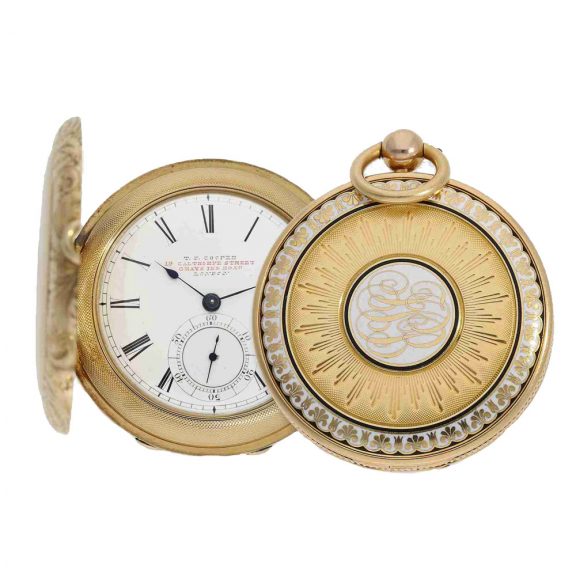
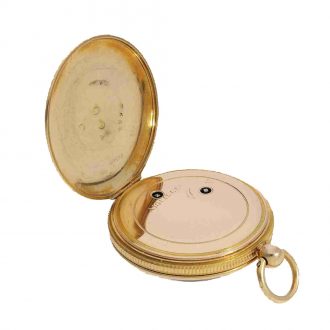
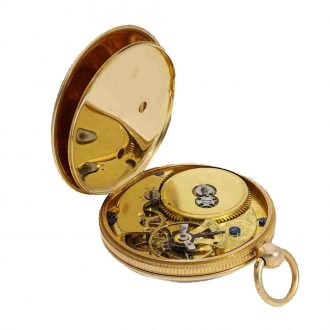
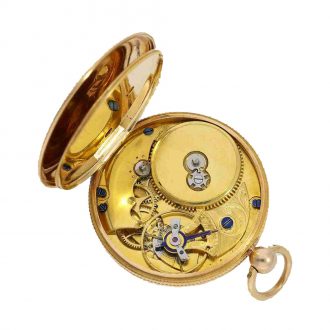
A very fine gold and enamel lépine watch type ‘Médaillon à la Breguet” in Tavernier case, France circa 1805. The numbered open faced case of this watch was crafted from 18 carat gold, has the case punch Tavernier, its engine turned face has a enamelled slogan ‘La Mejor es la del olvido de las disgracias’ (‘The best [hour] is that of forgetting about the misfortunes’) and the decentralised dial at 6 o’clock has Roman hour numerals and Breguet steel hands. The highly interesting movement features a cylinder escapement.
–
Diameter: 38 mm
–
Weight: 43 g
–
Signed: No name
–
Tavernier
The Tavernier’s were a watchmaking dynasty from Paris starting with Jean-Pierre Tavernier (1714 – 1795). He was a reputable 18th century Parisian clockmaker who signed his dials Tavernier à Paris.
–
He worked in Paris in the rue de Bussy parish of Saint-Sulpice and was appointed master in 1746. He published tables with the equation of time “Table de différence du temps vrai au temps moyen” in 1754. Tavernier was regarded as a specialist in small portable clocks. Among other things, he made small jewellery clocks in rings and bracelets. He is said to have presented a sea clock to the Académie des Sciences around 1766 at around the same time as Pierre Le Roy and Jean Romilly. He was best man at the wedding of master watchmaker François Huet to Marie-Louise Quetin, a daughter of Joseph Quetin, a master watchmaker in Paris and Chatillon-sur-Loire. His aristocratic clientele included engraver and connoisseur the Duc de Caylus. He was especially renowned for his watches but also made and sold outstanding clocks. He had three sons, all watchmakers: Louis, Etienne, and Pierre-Benjamin.
–
Louis Tavernier (1754 – 1840), like his father, was one of the most famous watchmakers in Paris. In 1790, he became watchmaker to the Duke of Orleans and was based at 46 Rue Richelieu. Louis Tavernier also worked for Breguet, either in Breguet’s workshop or as external freelancer and Breguet is known to have outsourced some work to Louis Tavernier. He worked extensively and successfully on improving the cylinder movement.
Share this page: