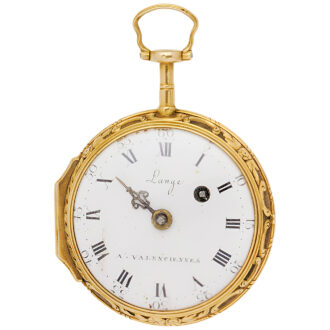
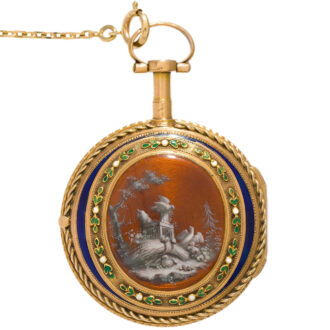
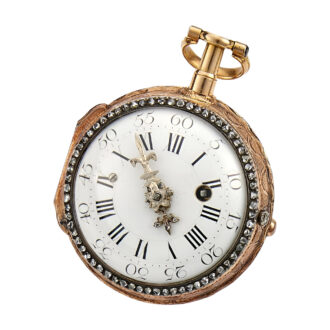
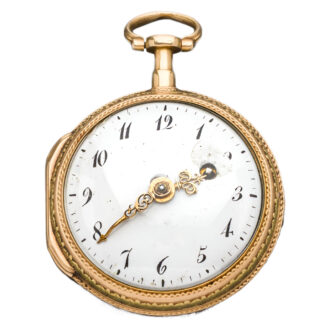
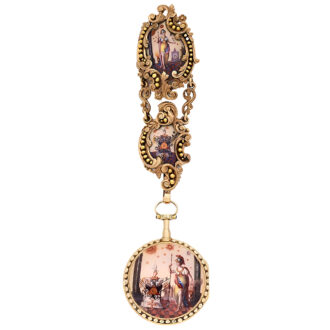
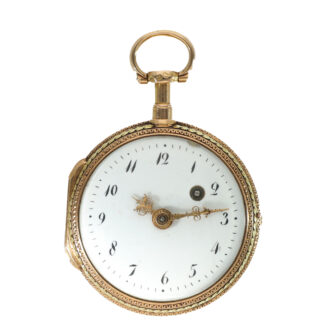
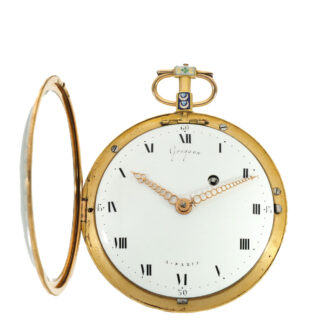
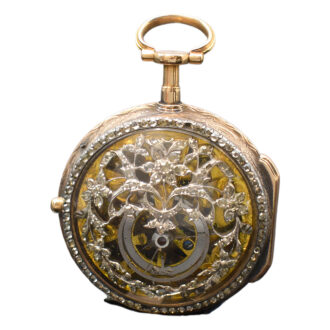
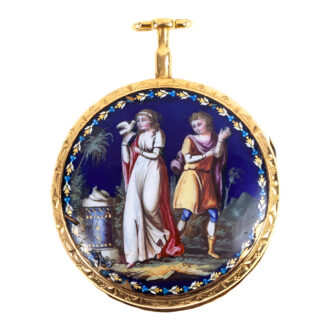
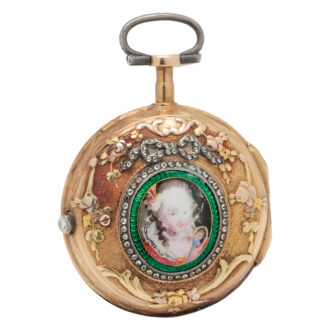
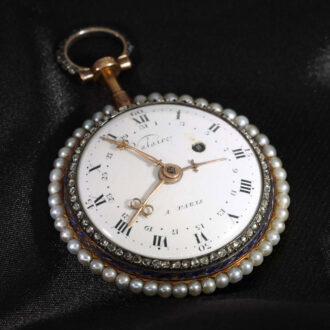
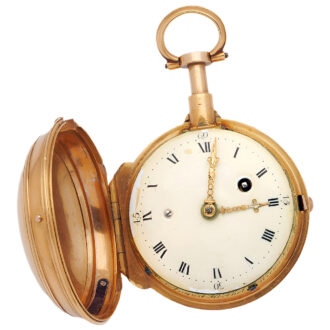
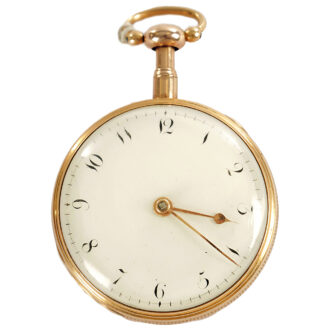
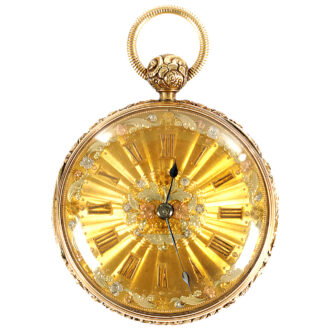
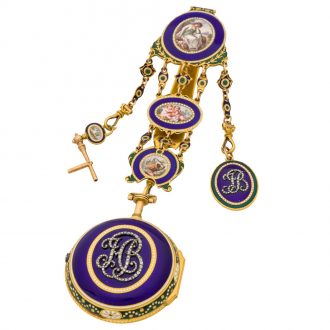
French 18 carat gold exquisite cylinder watch Circa 1780
- Kenmerk
- HC2119
- Diameter
- 40 mm
- Estimate
- € 4.000 - 8.000
- Price sold
- € 3.700
Excellently preserved gold enamel watch
–
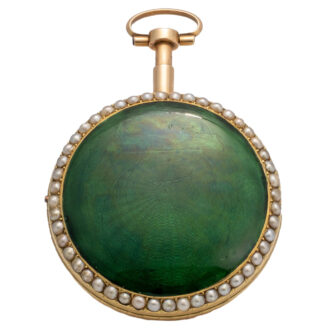
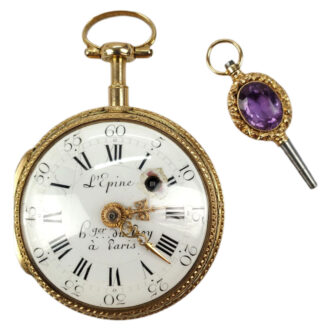
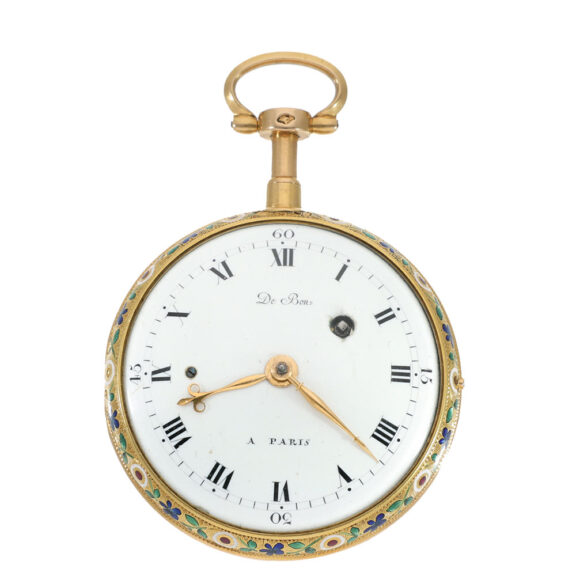
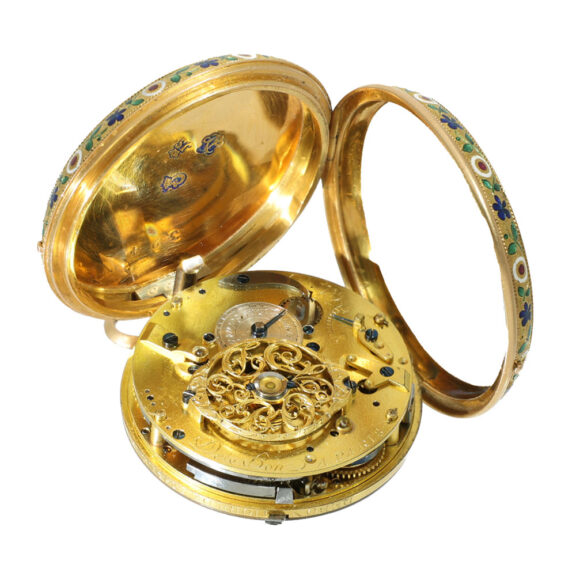
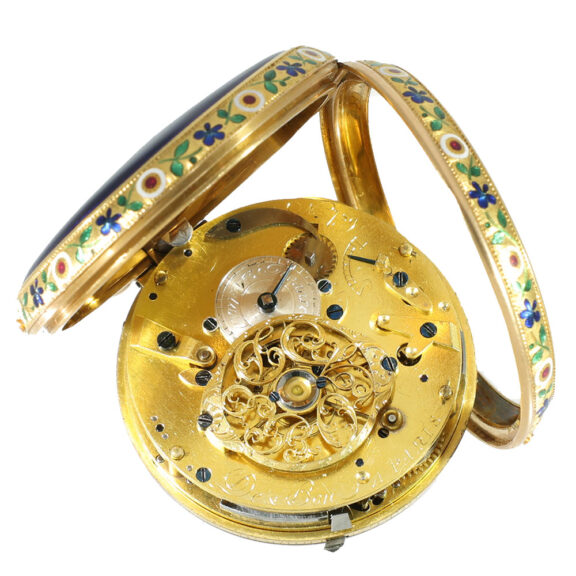
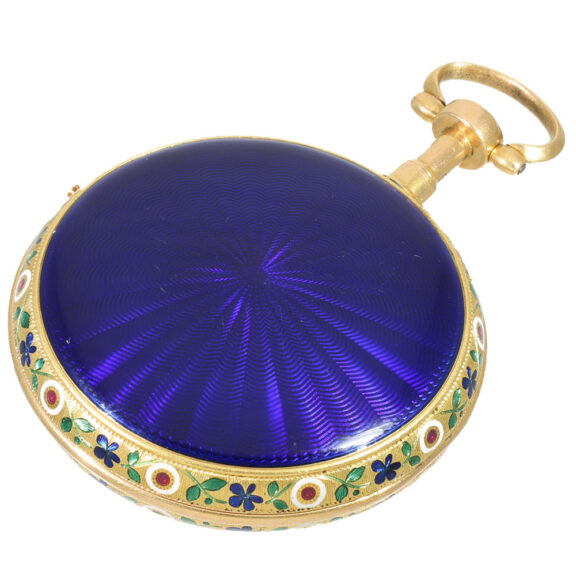
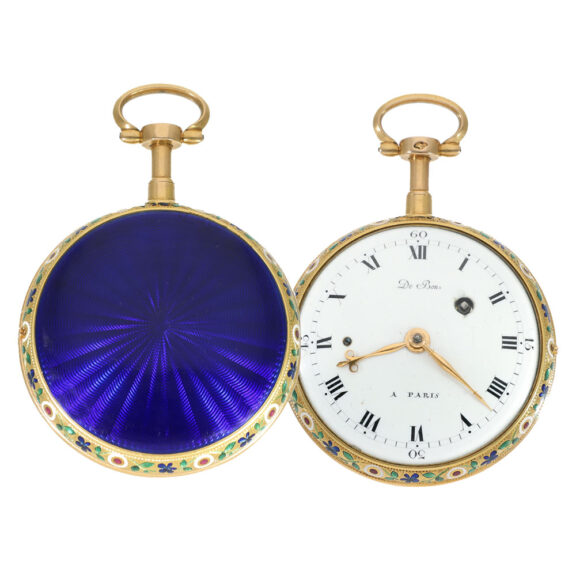
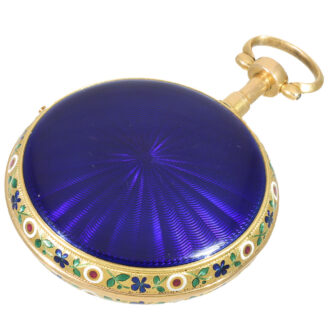
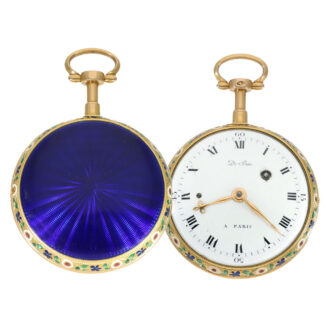
An exquisite, excellently preserved gold and enamel cylinder watch, made by the “Horloger de Mgr. le Duc d’Orléans” Jacques de Bon in Paris, France, circa 1780. This watch features a case crafted from 18 carat gold, bears
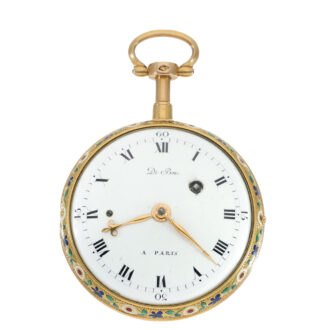
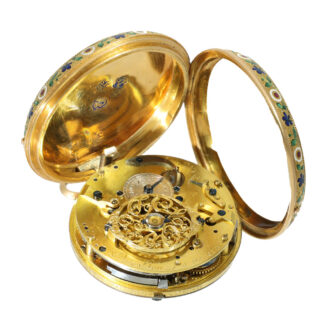
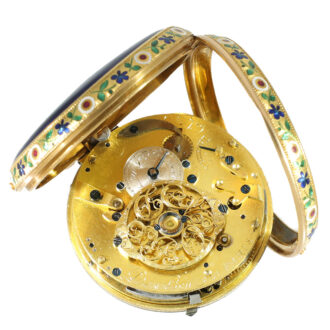
the master’s mark JS with a crown, the Orléans hallmark 1774 – 1780, a decorated bezel and a back lid with blue translucent enamel. The enamel dial features an outer minute an hour track with Arabic 15 minute numerals and Roman hour numerals and original gold hands. The numbered and fantastic quality movement is equipped with a cylinder escapement and a repeater for hours and quarters à toc.
The dial and movement are signed.
–
Diameter: 40 mm
–
Weight: 65 g
–
Signed: de Bon à Paris
–
Louis Philip II. Joseph, Duke of Orléans (13 April 1747 – 06 November 1793), known as Philippe Égalité from 1792, was a member of the French royal family from the House of Bourbon-Orléans and the father of King Louis-Philippe I. From 1778 to 1790, he held the position of Colonel général des hussards. He was a member of the National Convention during the French Revolution and voted for the death sentence against the king, his cousin. On 05 April 1793, he was arrested, and during the Reign of Terror, on 06 November 1793, he was tried, sentenced to death, and guillotined the same day.
–
de Bon
“De Bon” refers to Jacques De Bon (~1719 – 1789) was an esteemed French clock- and watchmaker based in Paris. He was officially appointed as the clockmaker (Horloger) to the Duc d’Orléans in 1767, succeeding the renowned Antoine Thiout.
His timepieces often bear the signature “De Bon, Horloger de Mgr. le Duc d’Orléans”, “De Bon à Paris”, or variations thereof. The Duke he worked for was Louis Philippe II, Duke of Orléans (later famously known as Philippe Égalité).
De Bon passed away right on the cusp of the French Revolution. Because his career was tightly intertwined with the House of Orléans, his clocks and pocket watches represent the absolute peak of pre revolutionary French luxury. Today, his surviving clocks can be found in major museums and exclusive private decorative arts collections worldwide.
Signed: de Bon à Paris
Share this page: