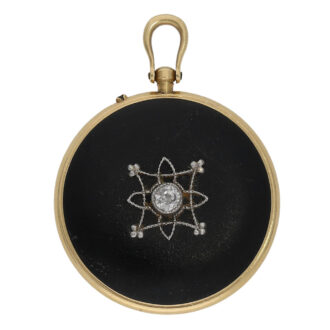
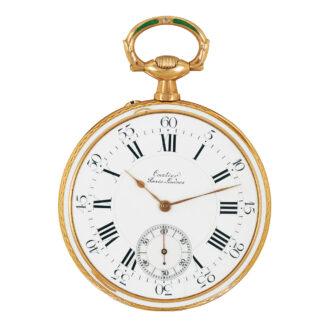
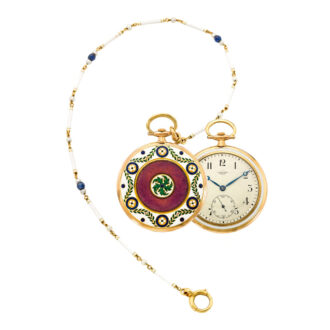
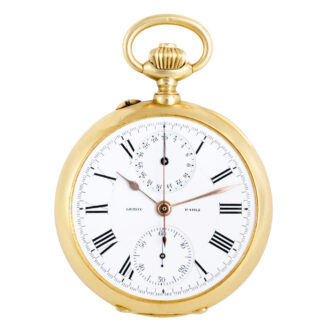
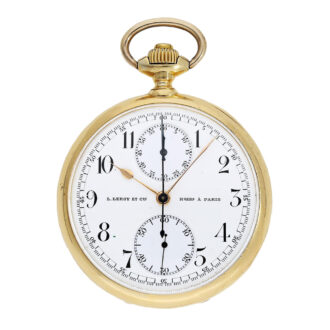
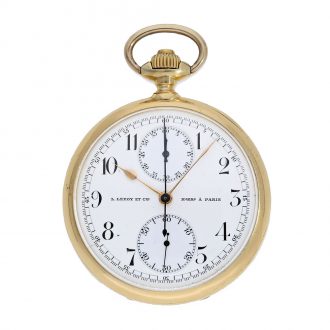
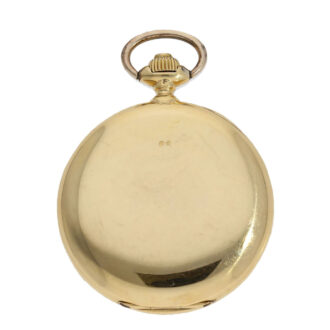
French 18 carat gold anti magnetic chronograph Circa 1905
- Kenmerk
- HC2145
- Diameter
- 51 mm
- Estimate
- € 2.750 - 5.500
- Price sold
- € 2.600
Very rare “Chronographe Ecran Paramagnétique”
–
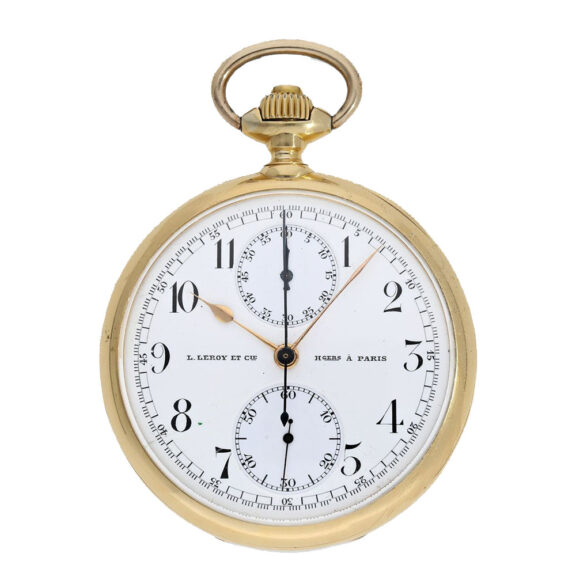
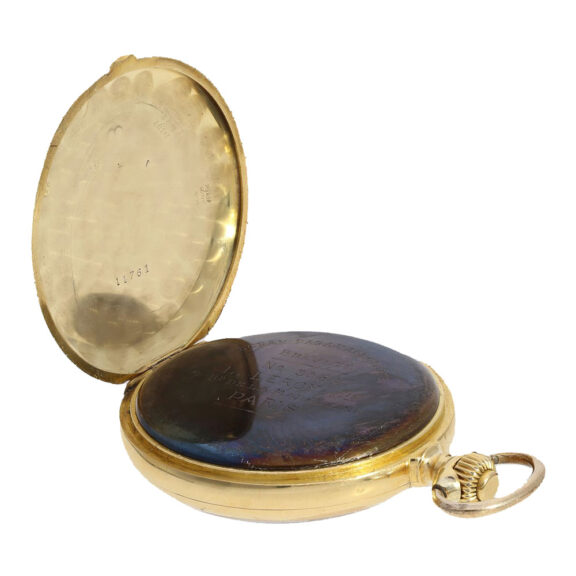
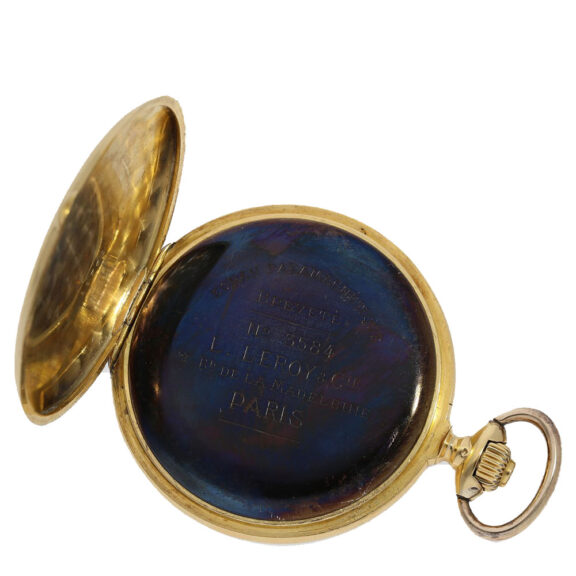
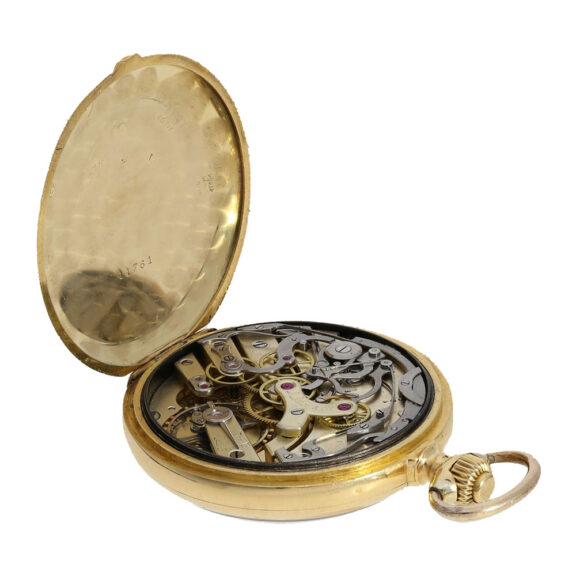
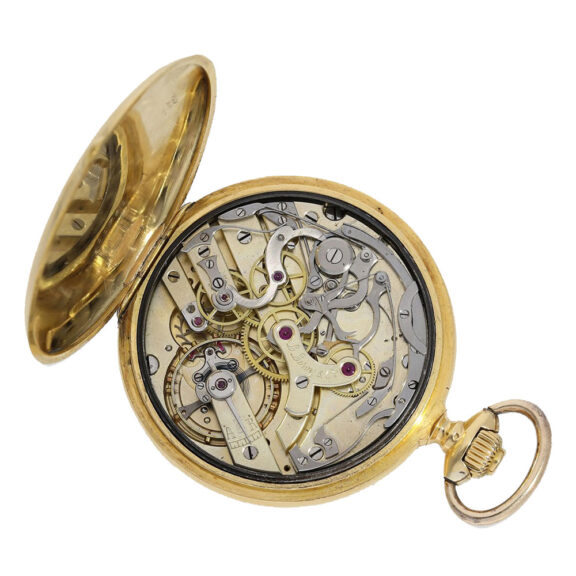
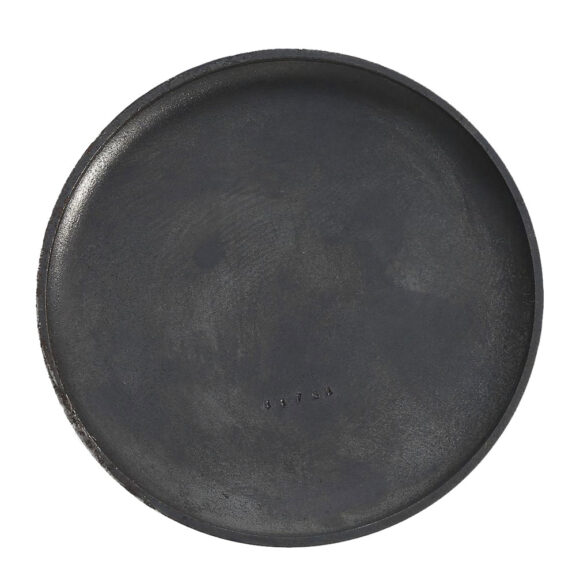
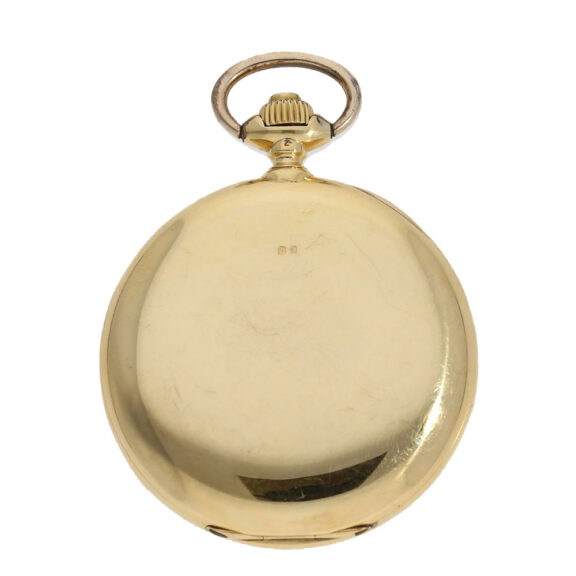
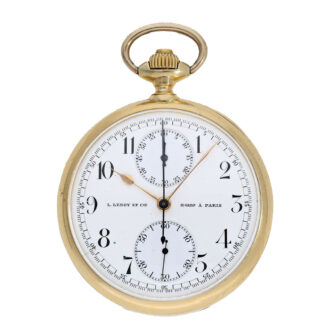
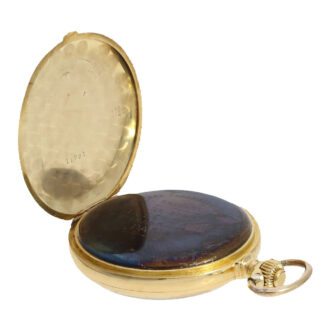
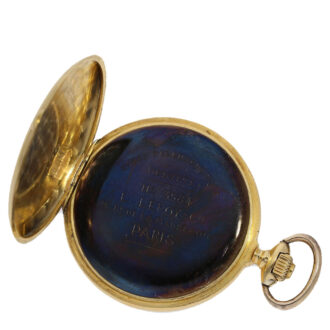
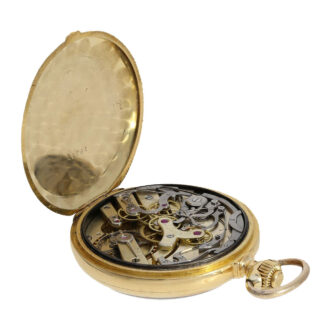
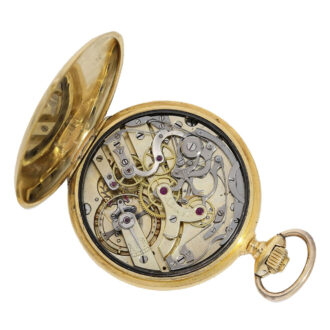
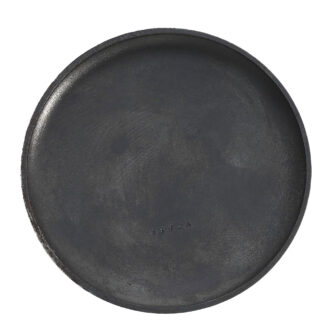
A very rare antimagnetic chronograph in chronometer quality, anker chronometer “Chronographe Ecran Paramagnétique”, made by L. Leroy & Cie. in Paris, France, circa 1905. This watch features a numbered 18-carat gold case and a numbered cuvette with a polished, heat-blued metallic surface, marked “Écran Paramagnétique Breveté,” indicating that the movement is protected by a patented “paramagnetic screen” designed to prevent magnetic interference. The white enamel dial features an outer railway track minute and hour register with Arabic numerals marking the hours and 5 minute intervals which is flanked by 1/5th second markers, a subsidiary seconds dial at 6 o’clock, a 60-minute counter at 12 o’clock and gold spade style hands for the hours and minutes. The probably Swiss made movement is equipped with an anker chronometer quality precision lever escapement, a chronograph and a counter.
The dial, cuvette and movement are signed.
–
Diameter: 51 mm
–
Weight: 100 g
–
Signed: L. Leroy Horlogers à Paris
–
It is highly likely that critical parts of this watch – specifically the movement and its anti magnetic mechanism – were manufactured in Switzerland. While L. Leroy & Cie was based in Paris, the company relied deeply on Swiss craftsmanship during this era for several reasons:
- The Movement Blank (Ébauche): For highly technical complications like the Chronographe Ecran Paramagnétique, French firms routinely imported ultra high grade movement blanks (ébauches) from specialised Swiss valleys (such as the Vallée de Joux or Le Locle).
- The Swiss Laboratory: In 1892, Louis Leroy established a subsidiary workshop and laboratory in Le Locle, Switzerland. This Swiss branch was created specifically to manufacture high precision chronometer components and to test watches at the nearby Neuchâtel Observatory.
- The Paramagnetic Screen: The specialized, anti magnetic soft iron alloy ring (the “écran”) used to shield the movement from magnetic fields was a cutting edge Swiss engineered development of the early 20th century.
Once the Swiss movement parts were completed, they were sent to Leroy’s workshop in Paris. There, French master watchmakers meticulously finished, adjusted, cased and signed the final timepiece.
Signed: L. Leroy Horlogers à Paris (dial)
Share this page: