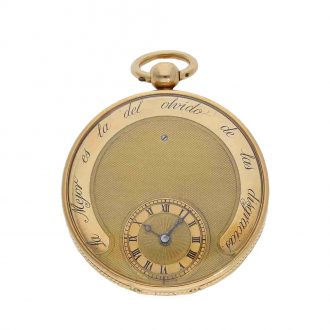
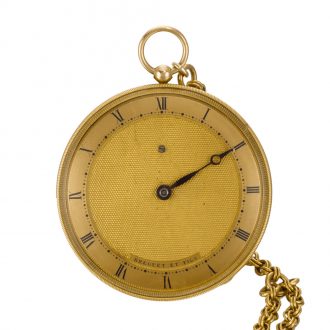
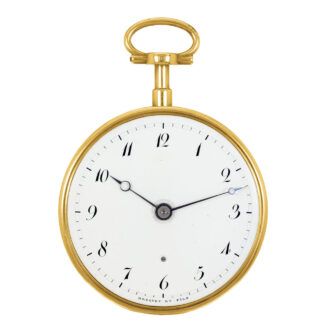
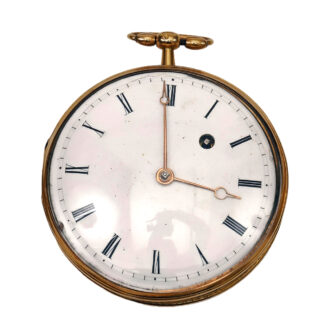
Highly important French gold chronometer watch Circa 1805
- Kenmerk
- TA1393
- Diameter
- 58 mm
- Estimate
- € 150.000 - 300.000
- Price sold
- € 266.750
Gold detent chronometer watch
–
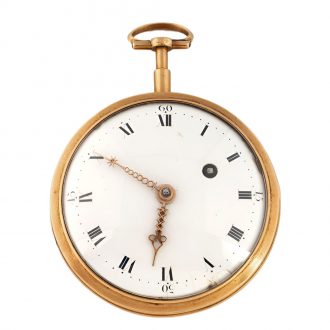
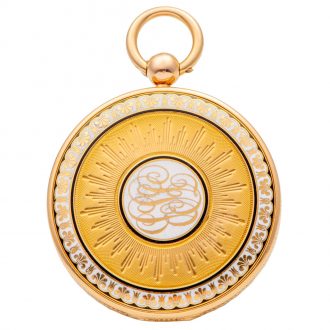
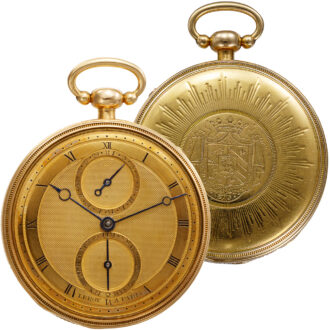
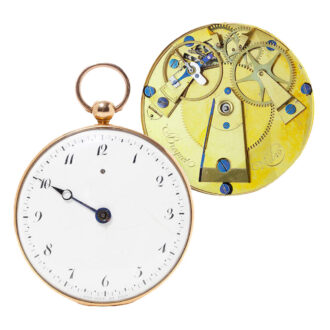
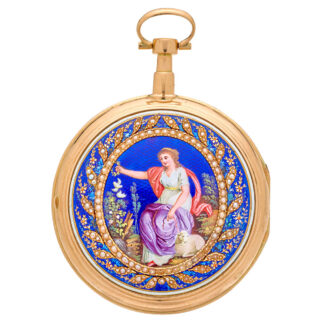
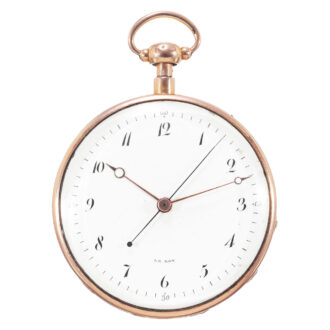
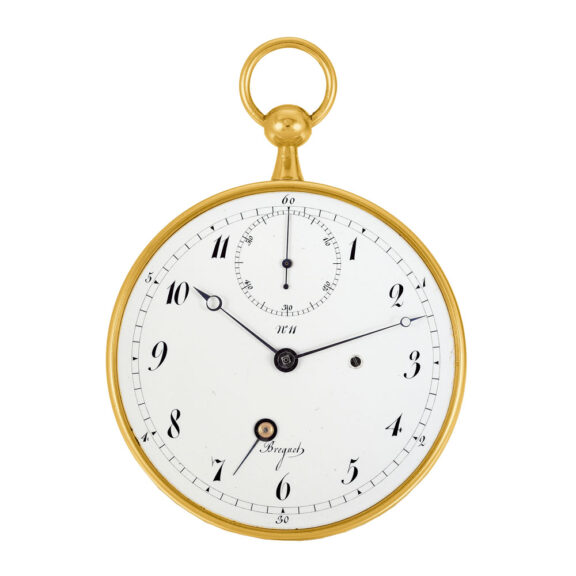
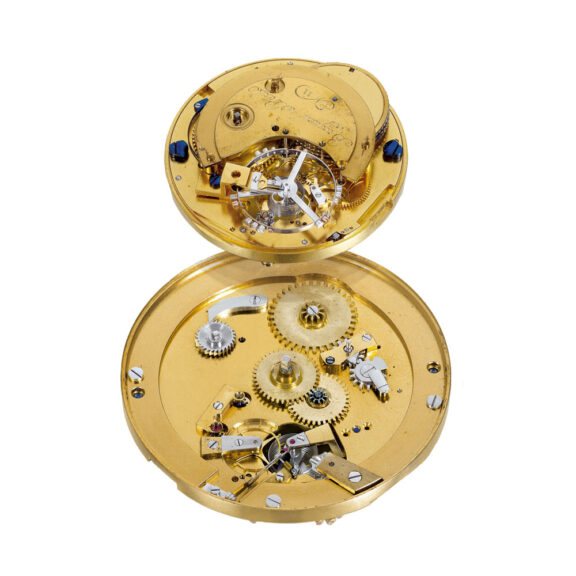
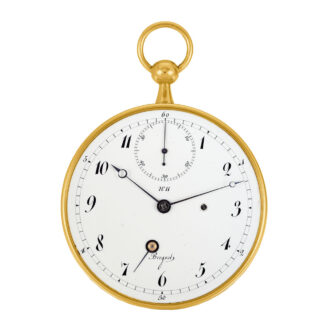
An extremely fine French, highly important and early, 18K gold montre garde-temps pocket chronometer watch, circa 1805. An Arnold-type detent chronometer escapement and power reserve indication. Probably the earliest of Breguet’s watches to be fitted with a detent chronometer escapement. Monsieur de St. Cricq Breguet, number eleven, begun in the late 1780s and completed circa 1805, sold to Monsieur de St. Cricq on October 5, 1807.
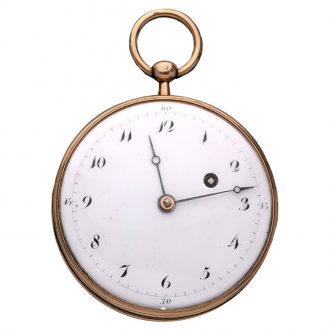
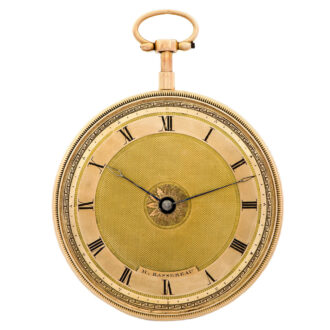
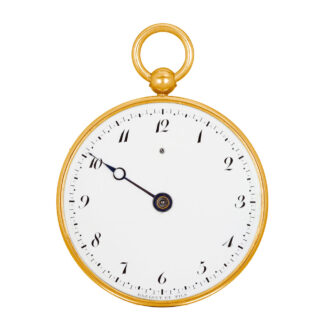
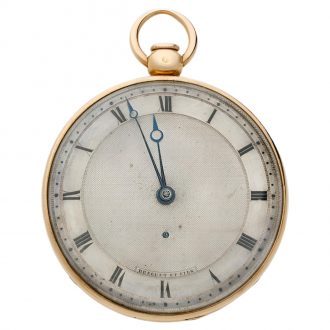
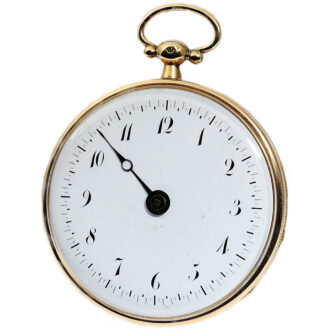
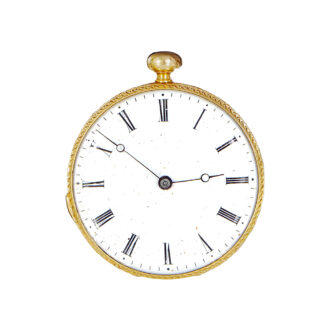
A polished, concealed hinge. White enamel dial by Morimont, with Breguet numerals, outer minute track and Arabic ten-minute numerals, subsidiary seconds at 12, power reserve between 6 and 7 o’clock. Blued steel Breguet hands. A gilt movement, small demi-lune backplate, fusee with chain, gold train, jewelled Arnold type escapement with fifteen-toothed escape wheel, spring detent with jewelled impulse roller and locking stone, cut three-arm bimetallic compensation balance with peripheral timing and temperature adjustment screws and parachute on the top pivot, helical balance spring. Dial, case and movement signed and numbered.
–
Diameter: 58 mm
–
Signed: Breguet Paris
–
Breguet started the manufacture of the garde-temps watches early in his career but they were not completed (fitted with the bimetallic balance, parachute and helical balance spring) until about 1805. The present watch, No. 11, is the only known example of a garde-temps watch signed à Paris in the archaic style of before 1787 and the only example to have the same number on the dial, case and movement. Breguet number eleven would seem to be the first of the garde-temps watches to be completed, with its archaic signature and early train layout, it is also particularly significant because Arnold only devised his spring detent escapement in 1782. The watches entered in the Breguet archives as garde-temps were intended purely as precision timekeepers with no complications and a chronometer escapement. As in the present watch, these watches usually have an Arnold spring detent escapement, three-arm bimetallic balance and helical balance spring. The garde-temps watches were used to carry exact time from place to place for example onboard ship where the watch would have been set to the ship’s chronometer. Breguet used Arnold’s spring detent escapement for the 1794 garde-temps series, this escapement uses a fixed detent as opposed to a pivoted detent, therefore, eliminating the use of oil. The fixing of the detent is by clamp and screw, which allows some adjustment to the position of the locking stone. The escapement as used by Breguet is almost identical to Arnold’s, with the exception of the balance wheel.
Signed: Breguet Paris
Share this page: