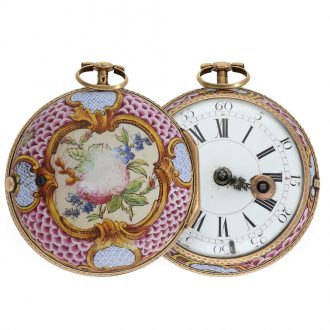
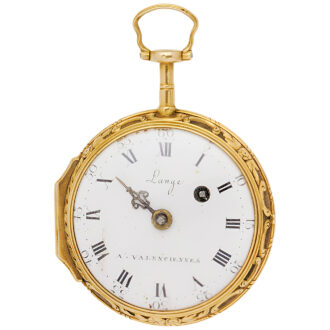
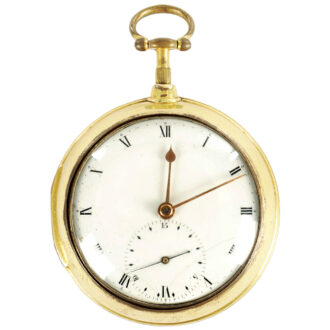
French extremely rare miniature Rococo enamel watch Circa 1770
- Kenmerk
- HC0689
- Diameter
- 30 mm
- Estimate
- € 3.000 - 7.000
- Price sold
- € 3.300
Pocket watch in the Meissen porcelain painting
–
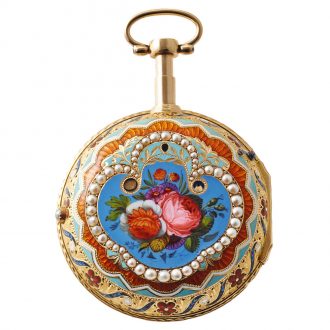
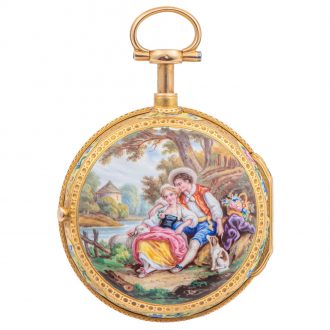
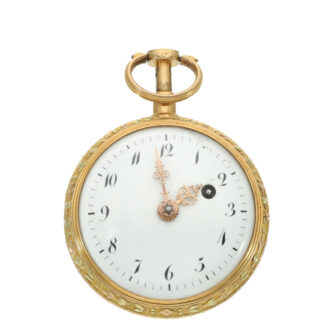
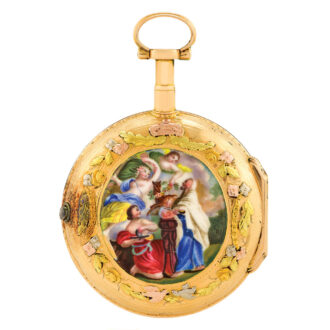
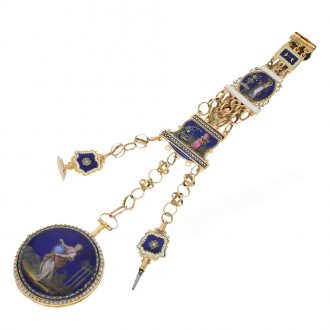
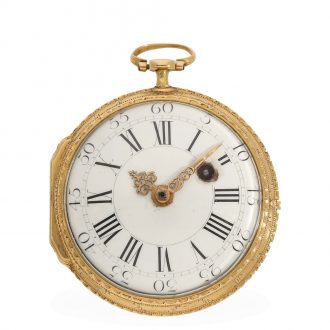
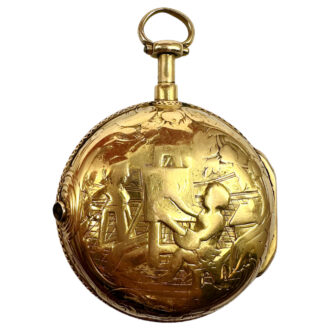
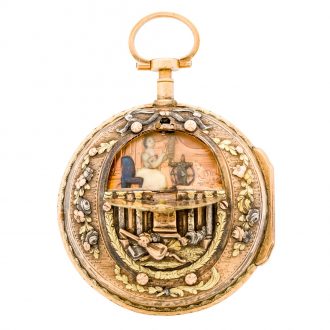
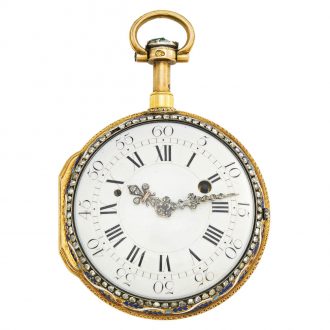
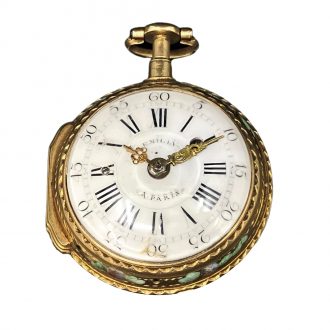
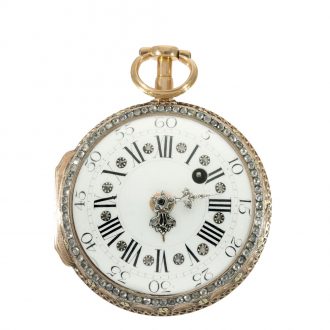
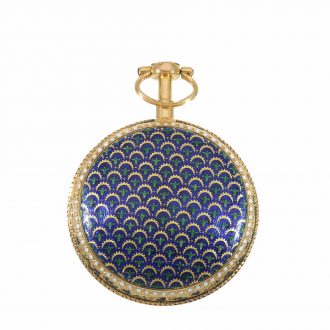
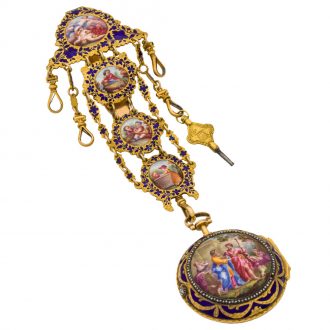
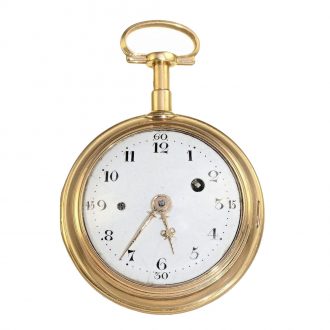
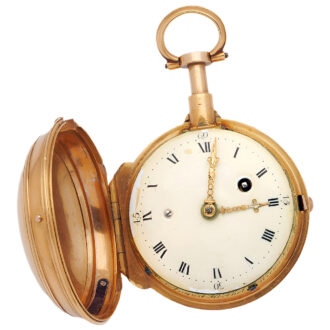
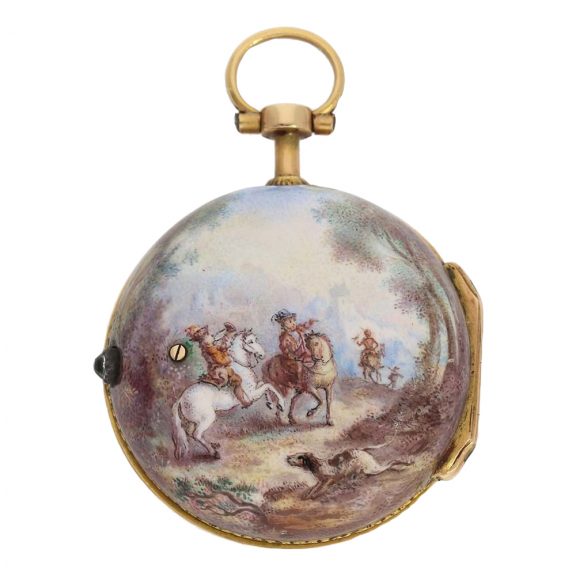
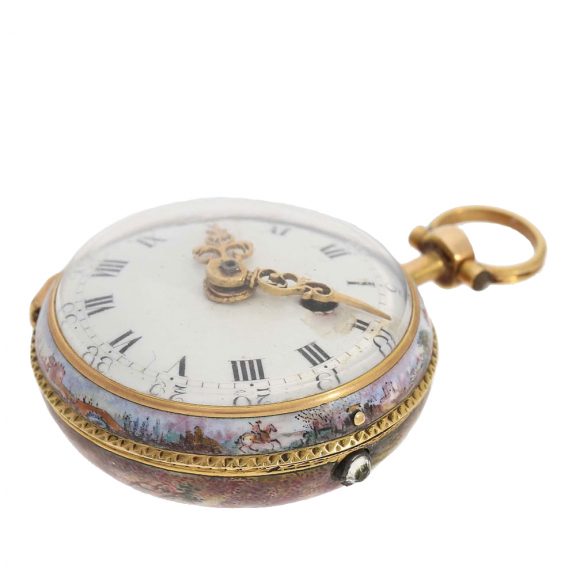
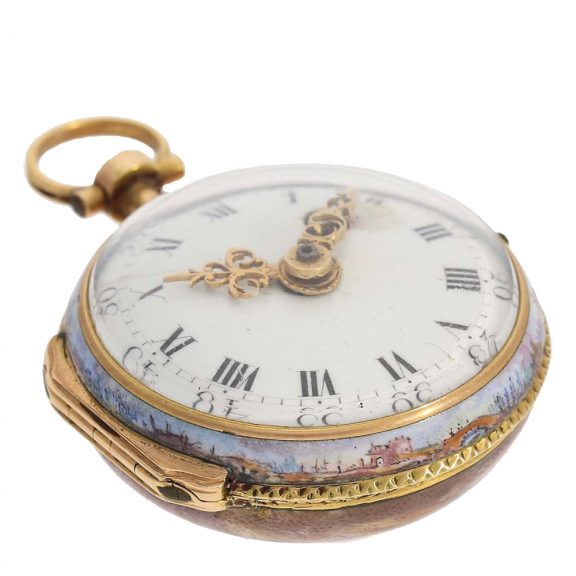
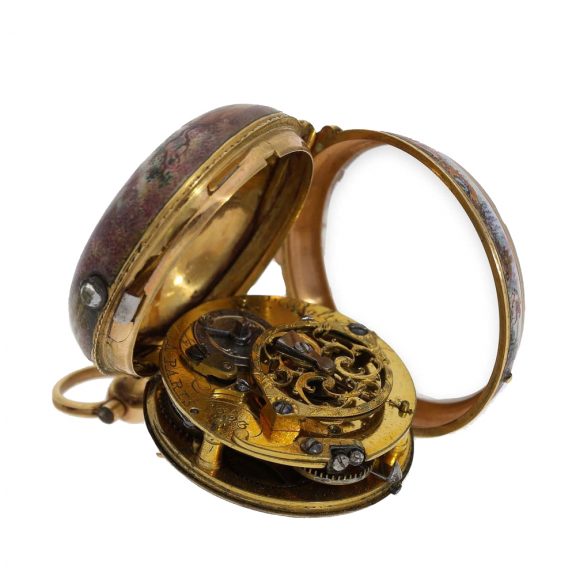
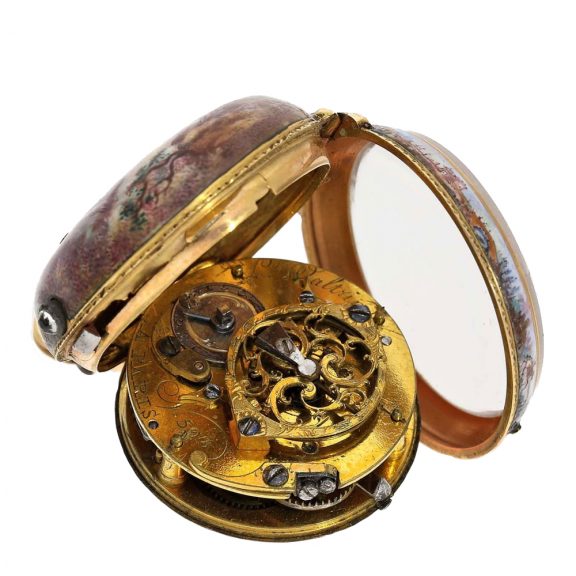
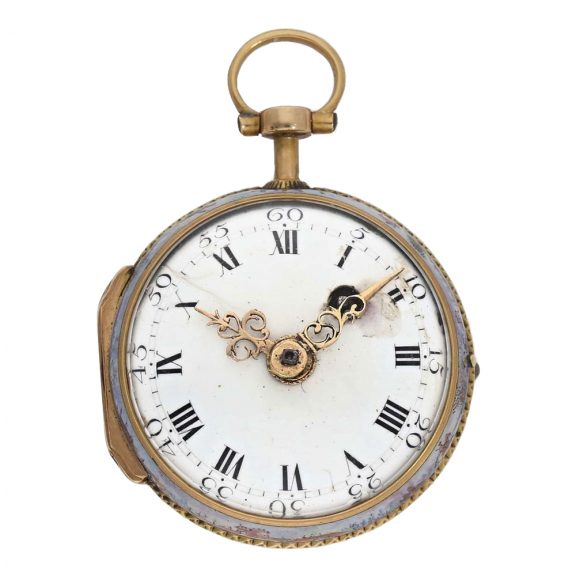
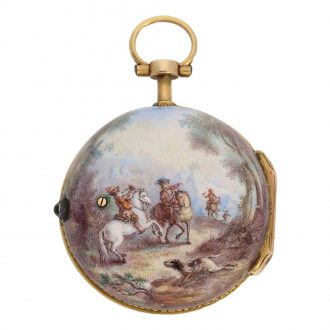
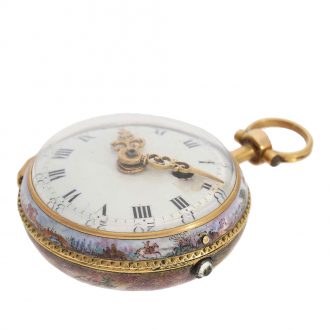
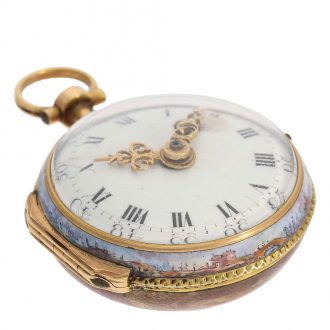
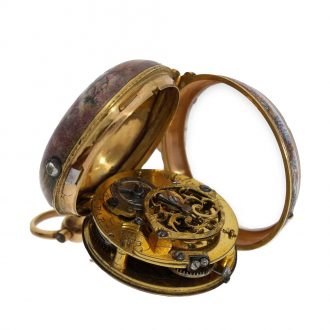
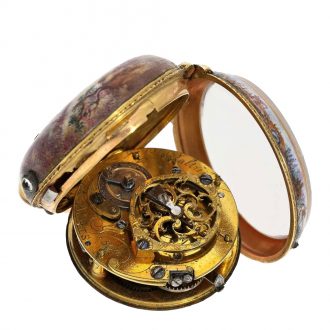
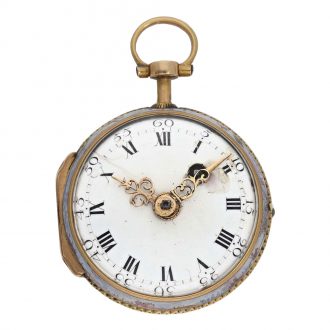
A numbered extremely 20 carat gold rare miniature Rococo enamel watch in the Meissen porcelain painting style, Louis Waltrin in Paris, France, circa 1770. The open faced case of this watch was crafted from 20 Carat gold, has an enamel painting of very rare quality, being an imitation of Meissen porcelain, representing a hunt near a castle and showing a dog and horsemen and the opening button is set with a gemstone. The white enamel dial has an outer ring with Arabic minute numerals (outside), Roman hour numerals (inside) and probably original gold hands. The movement is numbered and has a verge escapement.
Movement is signed.
–
Diameter: 30 mm
–
Weight: 27 g
–
Signed: Louis Waltrin, a Paris
–
Meissen
Meißen is a municipality and place 25 km northwest of Dresden, in the German state of Saxony. It is the Kreisstadt of the Landkreis Meissen. The settlement was formed at a bend in the Elbe and is first mentioned at the end of the 9th century. A Gothic cathedral arose on the steep castle hill in the thirteenth century, which was embellished in the nineteenth century with two iconic towers. At the end of the fifteenth century, the Albrechtsburg was built next to it, the first castle in Germany that was not built as a fortress, intended as a residence for the dukes of Saxony. In 1710, Johann Friedrich Böttger started in the Albrechtsburg with the manufacture of the famous Meissen porcelain, which more than anything else has made the name Meissen world famous.
–
Louis Waltrin
Louis Waltrin is the son of clockmaker Joseph Waltrin (circa 1720-1789), Louis-René Waltrin probably learned the art of clockmaking in his father’s workshop in the rue Saint-Antoine. He acquired his “lettres de maîtrise” as a master’s son on September 24, 1771. He quickly gained renown among the important Parisian collectors of the day, taking over his father’s business in the mid 1780’s. Several probate inventories of the late 18th and the early 19th centuries mention his work, particularly that of the wife of Jean-Baptiste-Hubert Lemarcis, and that of Antoine-François Boula de Montgodefroy, senior member of Parliament. After 1815, and the Bourbon Restoration, Louis-René Waltrin continued his brilliant career, being named Clockmaker to the Duke of Bordeaux. He was known for creating a variety of exquisite pocket watches, including both simple and complex designs. His creations ranged from elegant and ornate pieces with intricate engravings and gemstone embellishments to more functional and practical timepieces. Additionally, some of his pocket watches may have featured innovative mechanisms or unique complications, showcasing his skill and craftsmanship as a watchmaker.
Signed: Louis Waltrin, a Paris
Share this page: