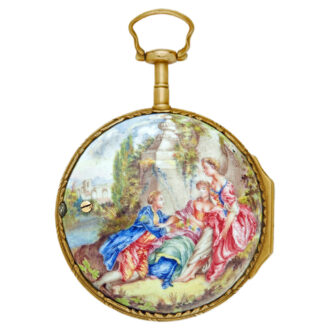
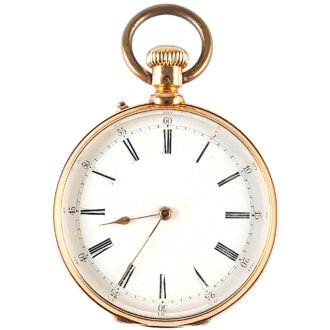
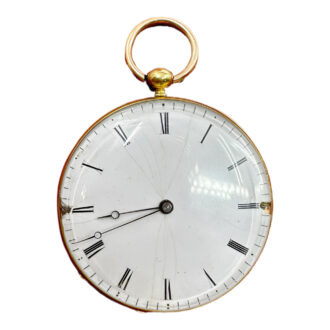
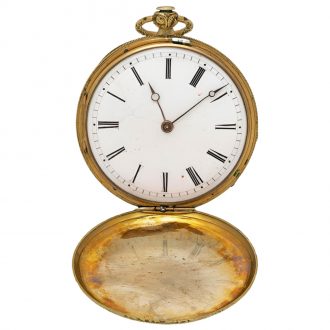
French gold and enamel hunting cased watch Circa 1850
- Kenmerk
- TD0132
- Diameter
- 46 mm
- Estimate
- € 6.000 - 10.000
- Price sold
- -
Gold and enamel repeating pocket watch
–
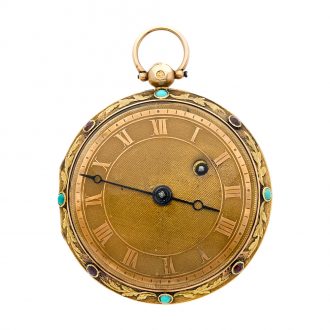
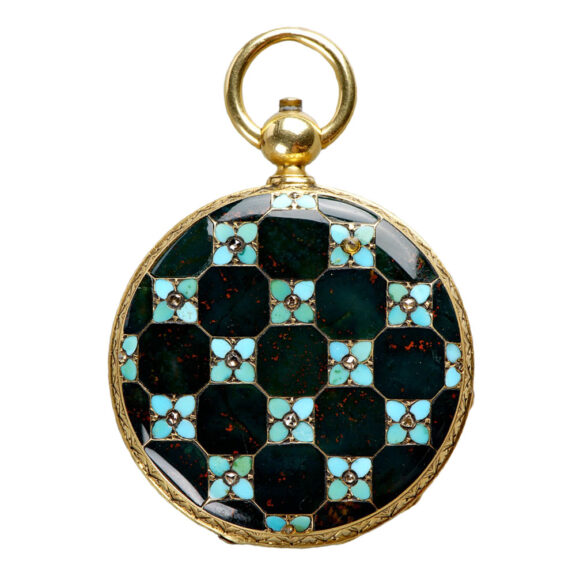
An exquisite and extremely rare 18 carat gold and gemstones-set hunting cased striking verge pocket, circa 1850.
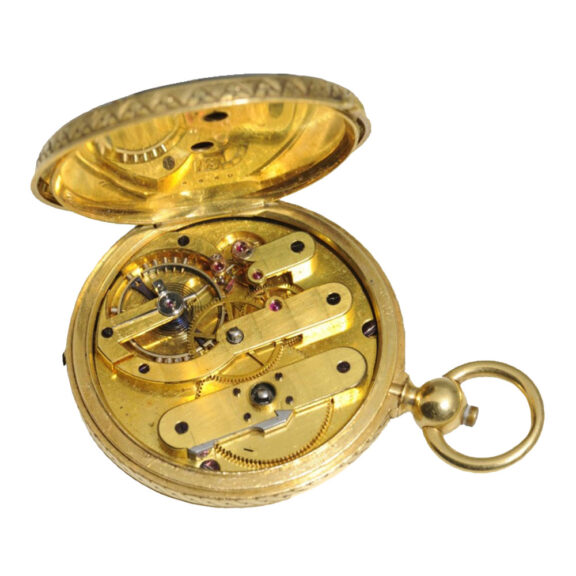
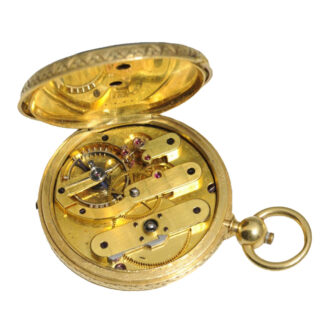
Bridge movement, verge escapement, ébauche by Aubert Frères, gold screwed compensation balance.
–
An exquisite and extremely rare 18 carat gold and gemstones-set hunting cased striking verge pocket, circa 1850.
Bridge movement, verge escapement, ébauche by Aubert Frères, gold screwed compensation balance.
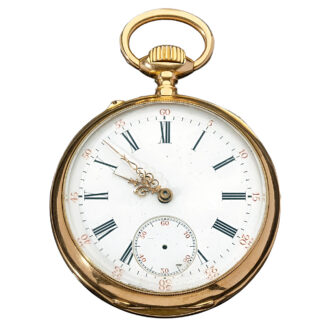
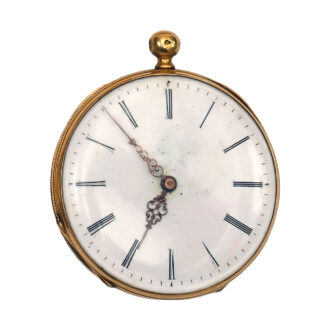
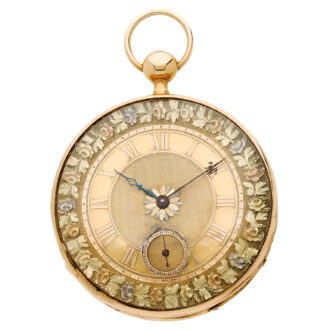
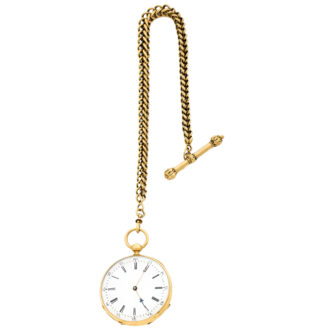
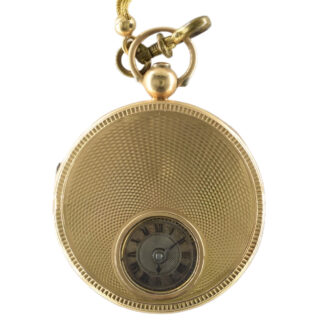
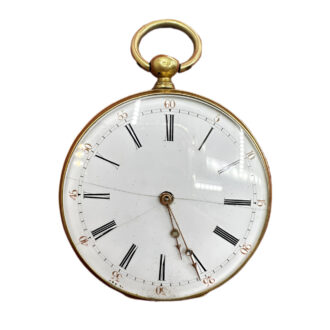
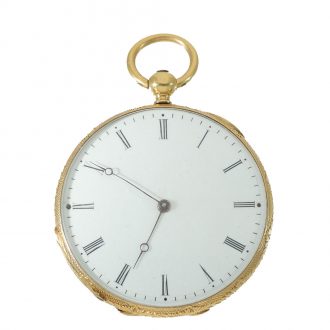
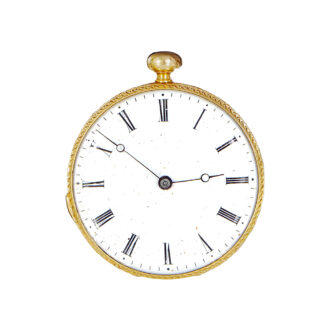
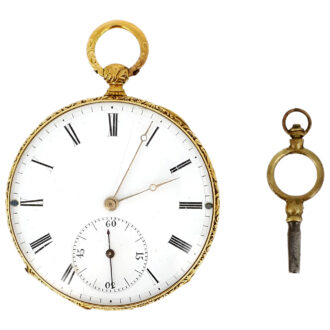
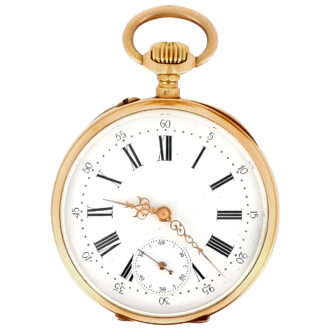
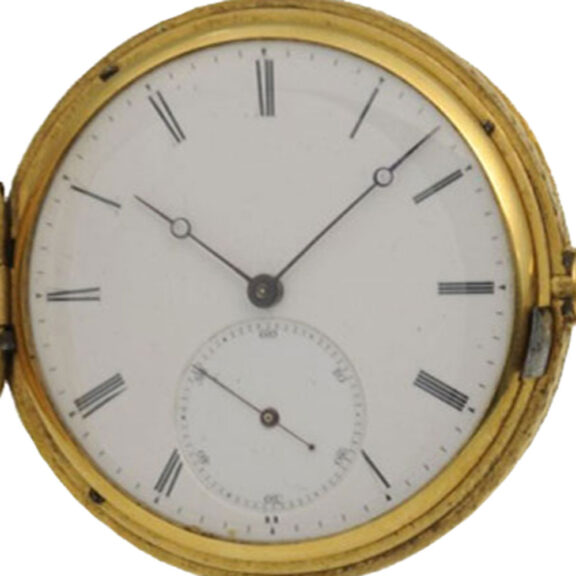
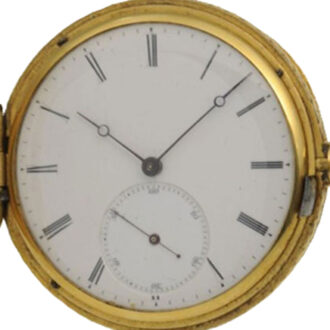
White enamel dial with Roman hours and outer minute divisions, subsidiary seconds at 6 o’clock. The case on both sides covered with tiny tiles of bloodstone, contrasting turquoise and rose-cut diamonds, the band elaborately engraved with a pattern of ornamental bands of classic motifs, case maker’s punch mark AGJ.
–
Diameter: 46 mm
–
Weight: 113 g
–
Signed: Jules Jürgensen/Marrel Ainé Paris
–
Bloodstone is a beautiful, mostly dark green stone with red or brown spots that form due to impurities in the iron oxide. These spots look like blood splatters, giving the stone its English name. The stone is also referred to as a heliotrope and gets this name from the Greek words helio, meaning ‘sun’, and tropos, meaning ‘toward the sun’. It’s said that the colour is also reminiscent of heliotrope plants that face towards the sun. The solid green colour that encompasses the rest of the stone is brought in due to the amphibole or Chlorite minerals found in the green Chalcedony. Chalcedony is a cryptocrystalline form of silica composed of fine intergrowths of moganite and quartz, the minerals that make up most agate stones. Because of its varied composition, the green in bloodstone is not always evenly distributed and may have blue or yellow streaks in addition to green. It has been a popular gemstone for at least two thousand years.
–
Brothers Jean-Pierre-Nazaire and Antoine-Benoît-Roch Marrel began working together as goldsmiths in 1833. It is assumed that Benoît created the objects, whereas Jean-Pierre eventually signed them. During the industrial exhibition of 1839 in Paris, they presented their creations to the public for the first time and immediately won a gold medal. The visitors admired their extraordinary talent and loved that the brothers brought back polychrome goldwork by using precious stones. The exhibition paved the way for the Marrel brothers, who later received national and international commissions from various royal houses.
–
Today some of their gold objects are held in several museums, such as the Louvre in Paris.
–
Weight: 113 g
–
Signed: Jules Jürgensen/Marrel Ainé Paris
–
Bloodstone is a beautiful, mostly dark green stone with red or brown spots that form due to impurities in the iron oxide. These spots look like blood splatters, giving the stone its English name. The stone is also referred to as a heliotrope and gets this name from the Greek words helio, meaning ‘sun’, and tropos, meaning ‘toward the sun’. It’s said that the colour is also reminiscent of heliotrope plants that face towards the sun. The solid green colour that encompasses the rest of the stone is brought in due to the amphibole or Chlorite minerals found in the green Chalcedony. Chalcedony is a cryptocrystalline form of silica composed of fine intergrowths of moganite and quartz, the minerals that make up most agate stones. Because of its varied composition, the green in bloodstone is not always evenly distributed and may have blue or yellow streaks in addition to green. It has been a popular gemstone for at least two thousand years.
–
Brothers Jean-Pierre-Nazaire and Antoine-Benoît-Roch Marrel began working together as goldsmiths in 1833. It is assumed that Benoît created the objects, whereas Jean-Pierre eventually signed them. During the industrial exhibition of 1839 in Paris, they presented their creations to the public for the first time and immediately won a gold medal. The visitors admired their extraordinary talent and loved that the brothers brought back polychrome goldwork by using precious stones. The exhibition paved the way for the Marrel brothers, who later received national and international commissions from various royal houses.
–
Today some of their gold objects are held in several museums, such as the Louvre in Paris.
Signed: Jules Jürgensen/Marrel Ainé Paris
Share this page: