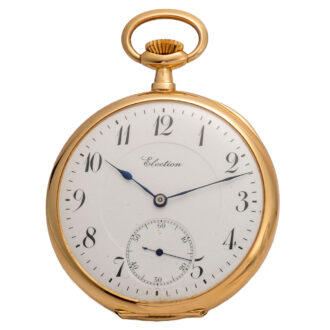
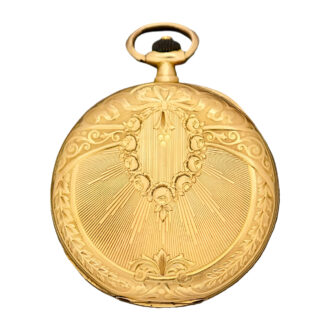
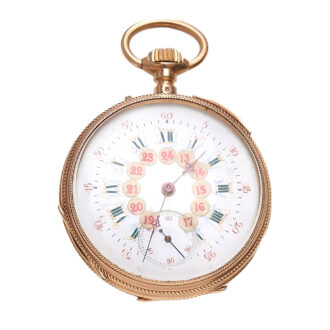
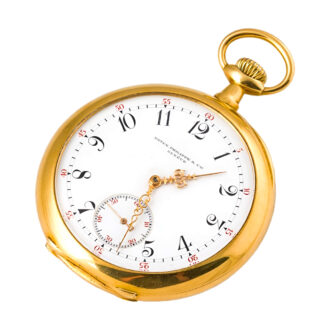
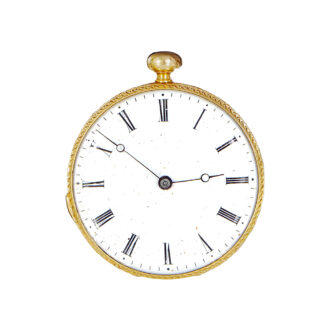
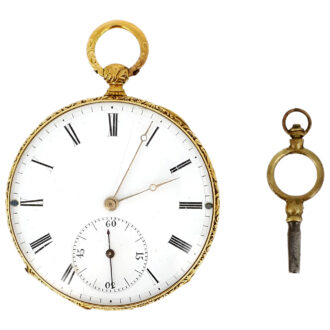
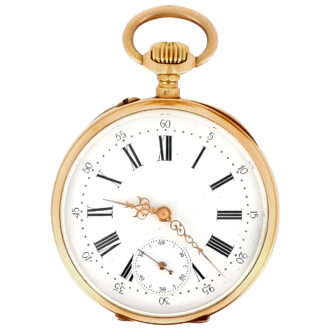
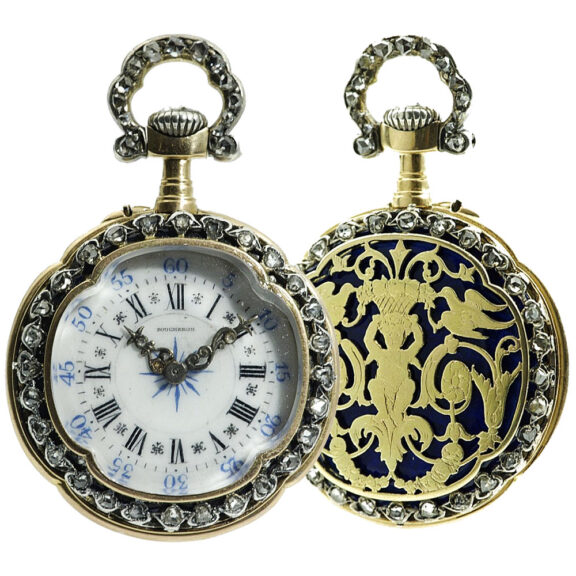
French gold, enamel and diamond set lever watch Circa 1910
- Kenmerk
- AD0724
- Diameter
- 32 mm
- Estimate
- € 2.500 - 4.500
- Price sold
- € 4.000
Gold ladies’ pendant watch
–
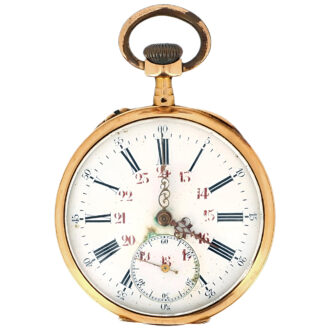
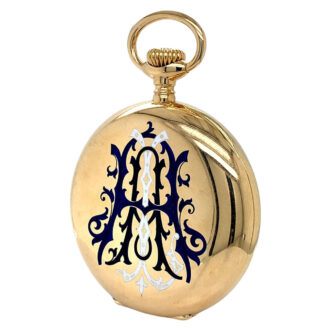
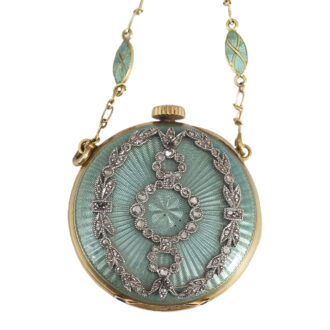
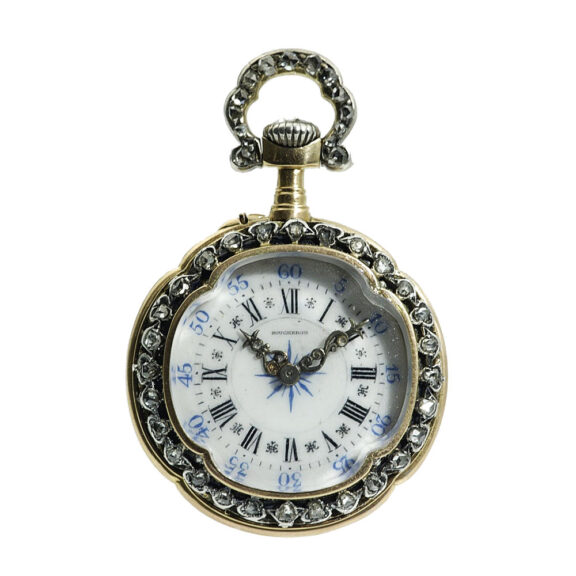
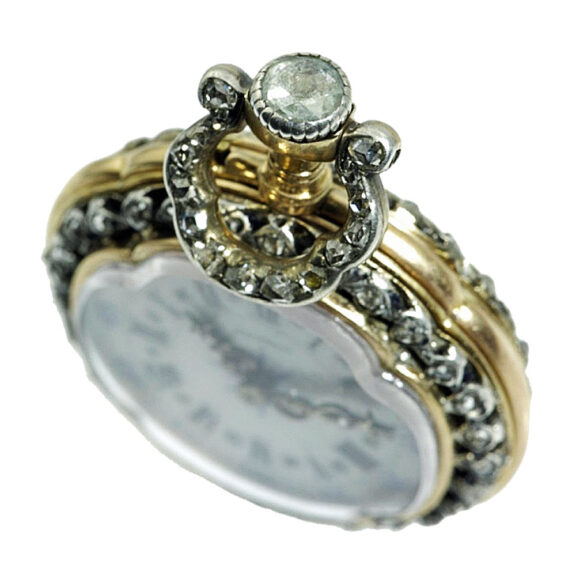
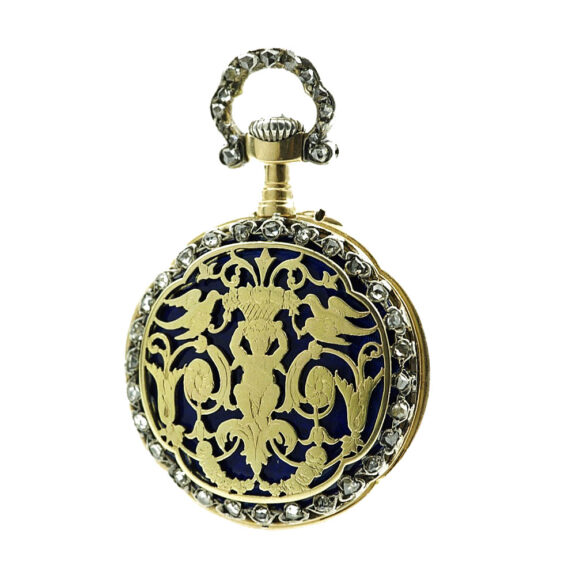
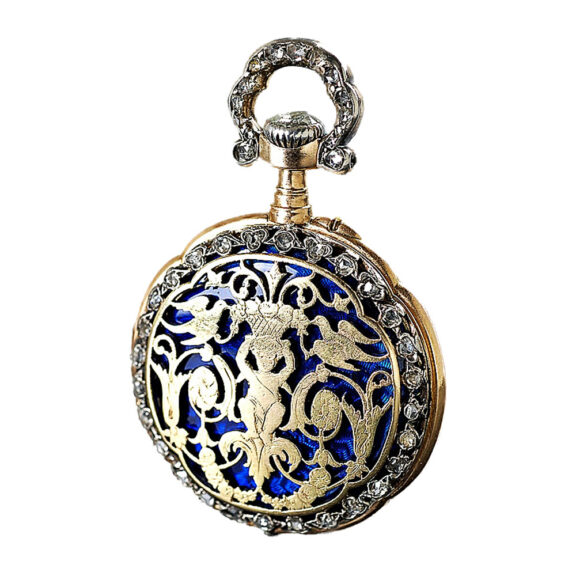
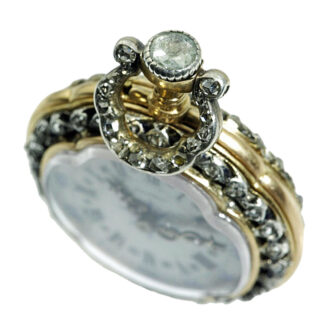
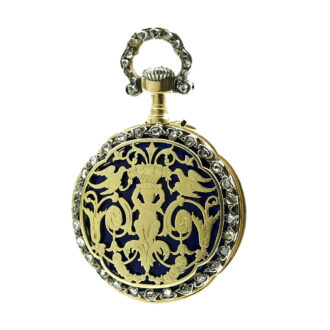
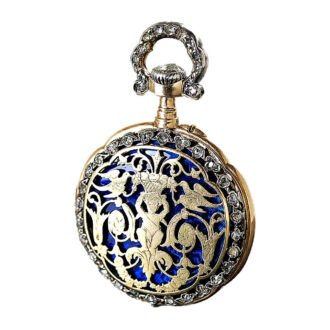
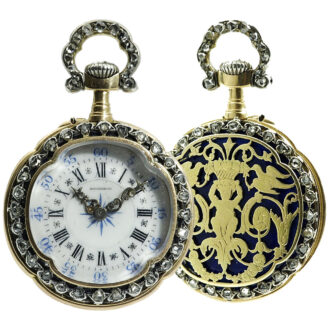
A magnificent Swiss 18 carat gold and enamel ladies’ pendant watch studded with diamonds and decorated with open work gold appliqués made by Vacheron Constantin SA in Geneva, circa 1910. Retailed by Maison Boucheron in Paris. Cobalt blue enamelling on an engine turned ground on the case back with applied gold decor showing Cupid, fruit, birds and foliage, and both bezels, the crown and bow set with
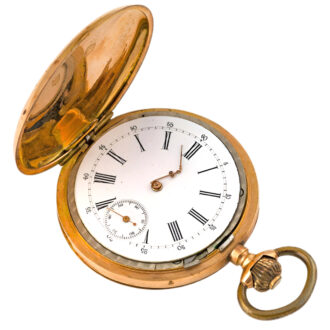
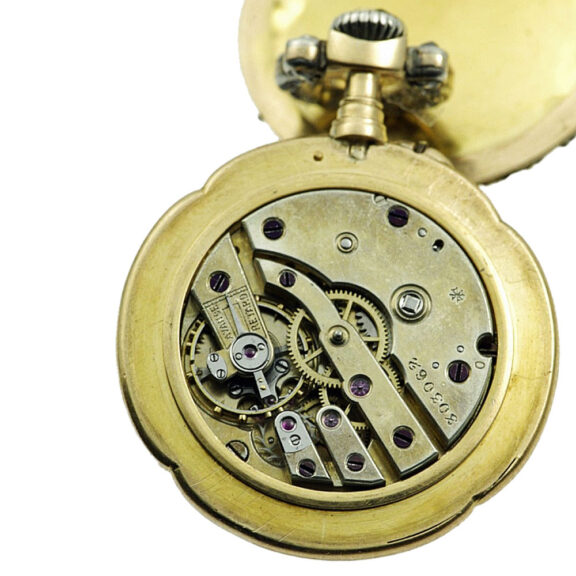
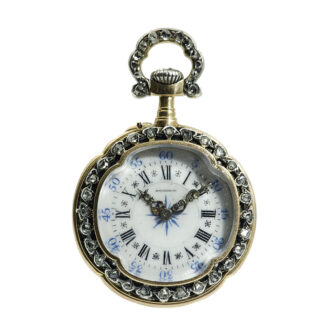
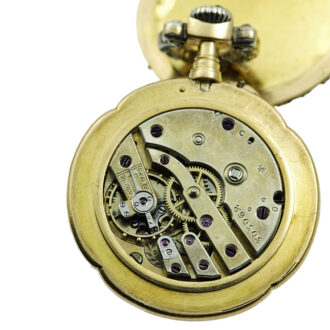
rose cut diamonds. The white enamel dial with black Roman hours, alternating half hour markers, an outer minute track with blue Arabic five minute numerals, central blue enamel decoration and Louis XV hands. The bridge movement fitted with a lever escapement and gold screw compensation balance. The dial is signed by the retailer.
–
Diameter: 32 mm
–
Weight: 39 g
–
Signed: Boucheron
–
Frédéric Boucheron, French jeweller
When Frédéric Boucheron opened his jewellery shop at the Place Vendôme in Paris in 1858, he was the first jeweller in the quarter. He soon gained fame for his expert knowledge of precious stones and his exquisite creations.
–
Maison Boucheron catered for a wealthy and prosperous clientele, and its successes soon allowed the company to branch out to Japan, the Middle and Far East, Moscow and London.
–
Boucheron exhibited at many international expositions, like the 1876 Philadelphia Centennial International Exhibition, the 1889 and 1900 World Exhibitions in Paris, the 1893 Chicago World’s Fair and the 1925 International Exposition of Modern Industrial and Decorative Arts in Paris.
–
The management of the company, which still trades at the Place Vendôme premises, remains in the hands of the family Boucheron.
–
The case of the present timepiece was most likely made by the Verger brothers. They were well known for their cases and jewellery and worked for the most eminent jewellers in the world, such as Boucheron. The Verger brothers were also representatives for Vacheron & Constantin in Paris.
–
Appliqué
Appliqué is ornamental needlework in which pieces or patches of fabric in different shapes and patterns are sewn or stuck onto a larger piece to form a picture or pattern. It is commonly used as decoration, especially on garments. The technique is accomplished either by hand stitching or machine. Appliqué is commonly practised with textiles, but the term may be applied to similar techniques used on different materials. In the context of ceramics, for example, an appliqué is a separate piece of clay added to the primary work, generally for the purpose of decoration.
Signed: Boucheron
Share this page: