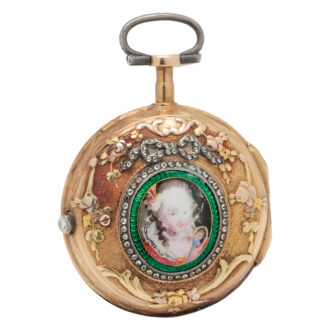
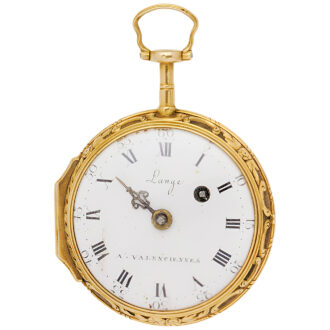
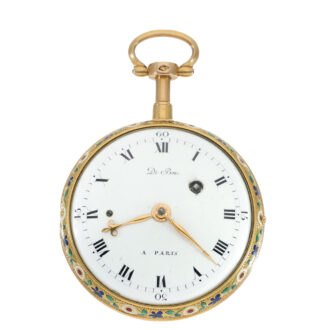
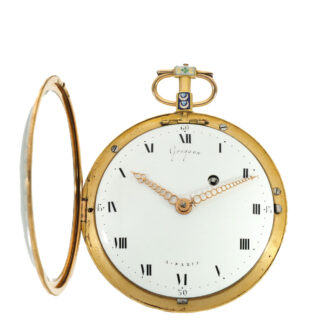
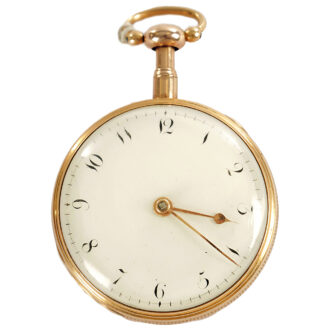
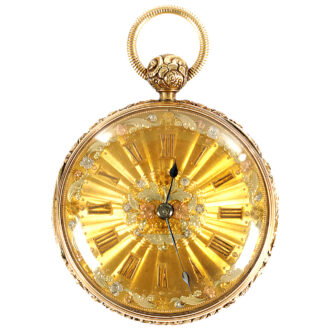
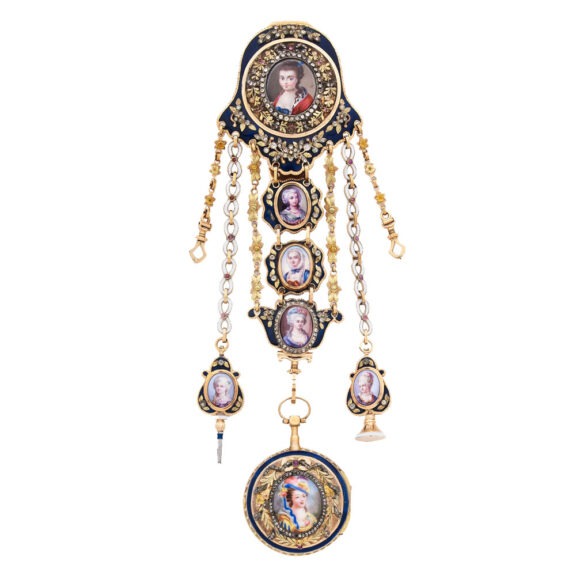
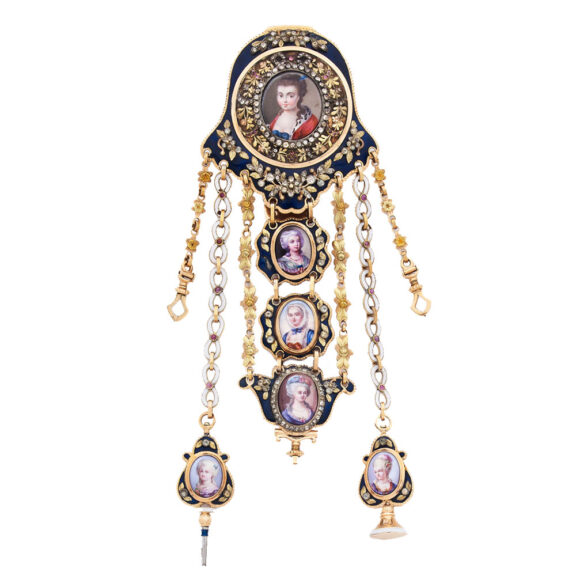
French 18K multicoloured gold chatelaine watch Circa 1780
- Kenmerk
- AL3461
- Diameter
- 37 mm
- Estimate
- € 12.500 - 22.500
- Price sold
- € 10.000
Multicoloured gold verge watch with chatelaine
–
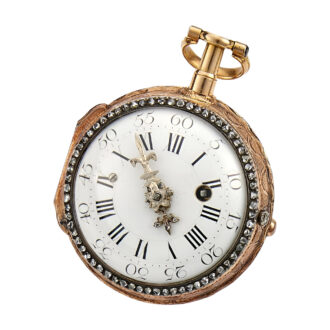
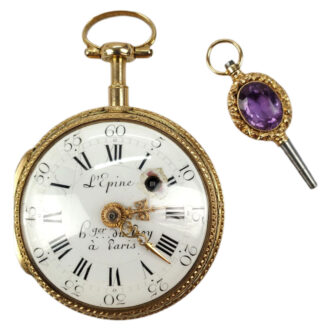
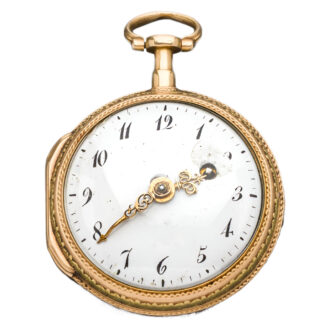
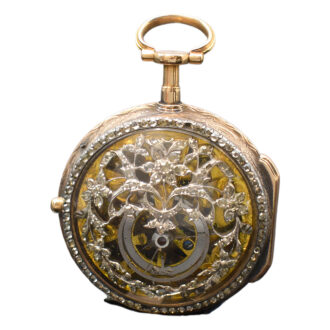
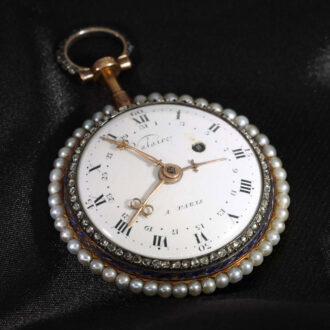
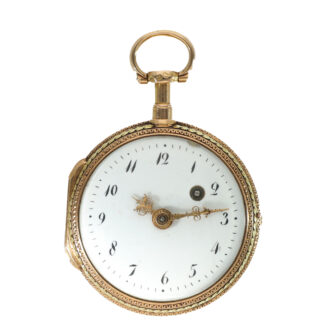
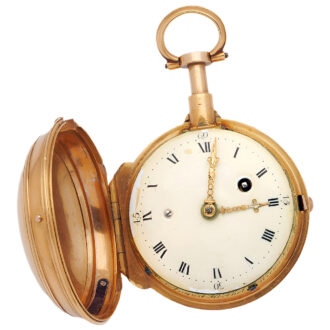
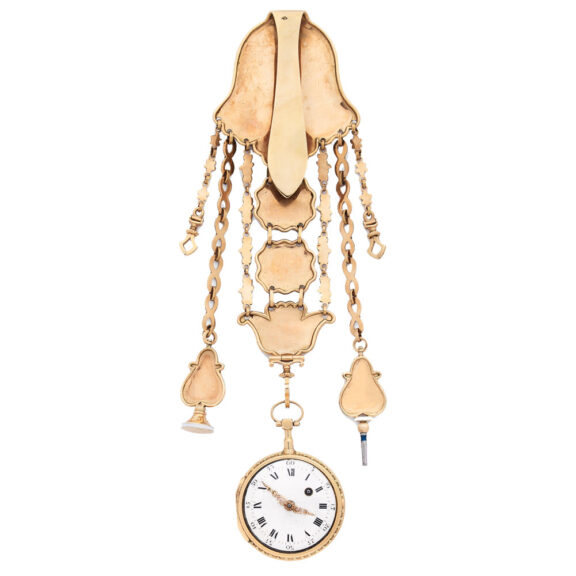
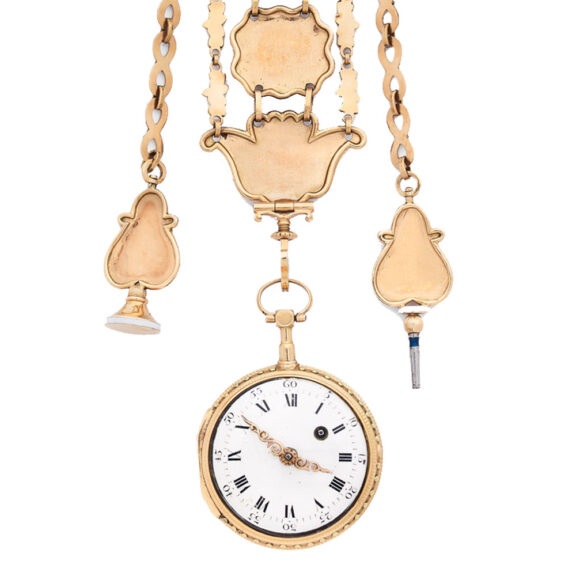
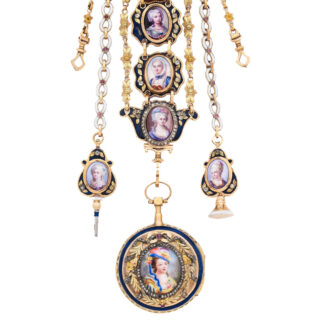
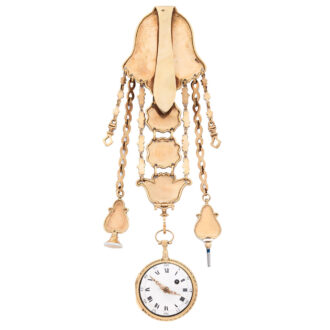
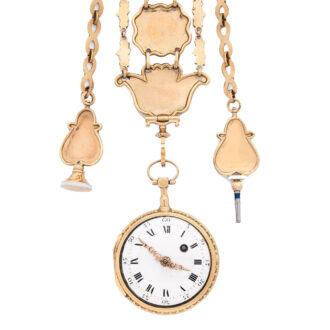
A fine French 18 carat multicoloured gold and enamel open faced pocket watch with matching chatelaine, housed in a shagreen presentation box, circa 1780. It has a gilded brass key wind mechanical movement with a verge fusee escapement, an intricately engraved and pierced balance cock, fusee and chain, and a silver regulation disc. The white enamel dial features Roman numerals for the hours, an outer railway minute track, outermost Arabic five minute numerals, a single winding aperture and decorative stylized hands.
–
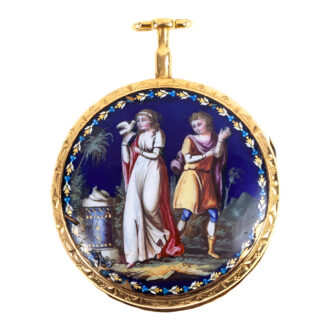
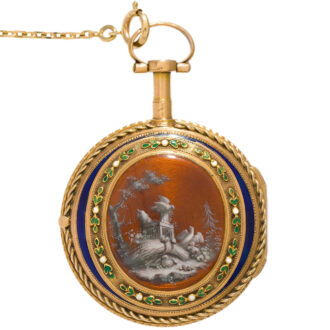
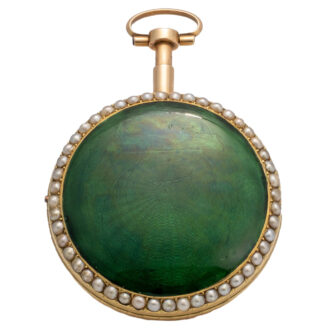
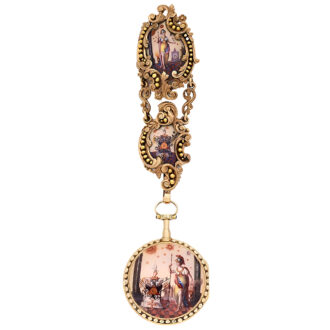
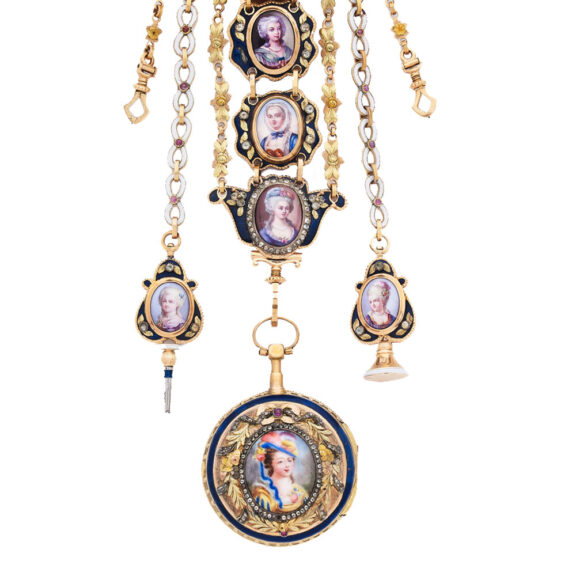
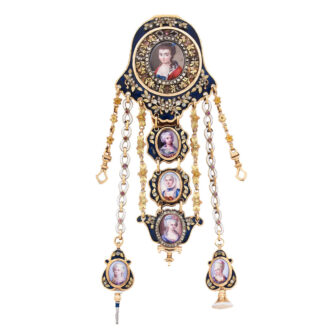
This timepiece is fitted in a refined round hinged case. The reverse beautifully decorated with the finely painted polychrome enamel portrait of a lady, framed by a blue enamelled band and detailed multicoloured gold ribbon and leaf motifs, finished with a stone set bezel. The watch is suspended from a magnificent gold chatelaine consisting of several cartouches set with enamelled pastilles portraying elegant aristocratic women of the French Ancien Régime. The upper link features an enamel painted medallion over a vibrant blue enamel ground with applied multicoloured gold foliage, suspending four hanging chains, two finished in white enamel and completed by a matching decorative seal and key.
–
Diameter: 37 mm
–
Chatelaine: 19 cm
–
Weight: 111.6 g
–
Signed: No name
–
The watch chatelaine, regarded as an accessory of fashion and elegance, was frequently adorned with medallions painted with portraits. Popular during the 18th and 19th centuries, these medallions conveyed complex and layered symbolism.
–
The portraits painted on the medallions often depicted loved ones of aristocratic families. They enabled the wearer to symbolically maintain the presence of cherished individuals.
–
Influence of Travel and Prolonged Absences
In an era when travel and prolonged absences were common, the medallion offered an emotional connection. In this case, the chatelaine probably represents several generations of women from one aristocratic family.
–
Owning a chatelaine with a painted medallion signified considerable wealth and social status.
–
The portraits were executed by skilled miniature artists, a costly service reserved for the elite. The medallion, often embellished with gold, silver, precious stones or pearls, reinforced this display of social status.
–
Portraits of the Aristocracy and Royalty
Sometimes, portraits depicted royal or admired figures, symbolizing loyalty to a family or the monarchy. They also showed royal figures or members of the King’s court. This let the wearer discreetly display political or cultural allegiances.
–
The watch and its medallion also served as reminders of the passage of time. A medallion painted with a portrait functioned as a tribute to a specific individual and highlighted the brevity and transience of life, a concept prevalent in the art of the period.
–
In summary, the medallions of the watch chatelaine symbolized personal sentiment and social identity. They combined art, memory, status, and introspection, rendering the watch and its chatelaine far more than merely functional objects.
Share this page: