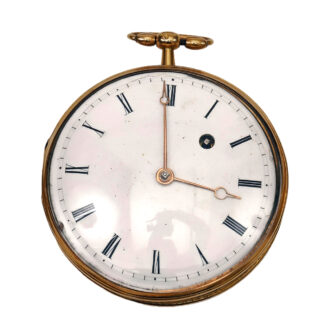
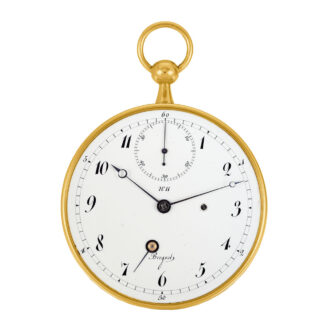
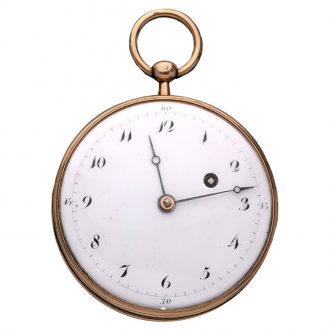
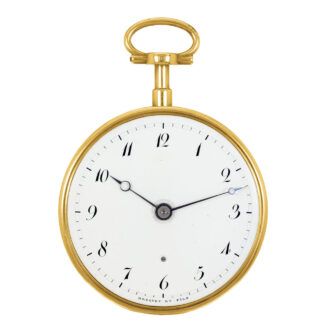
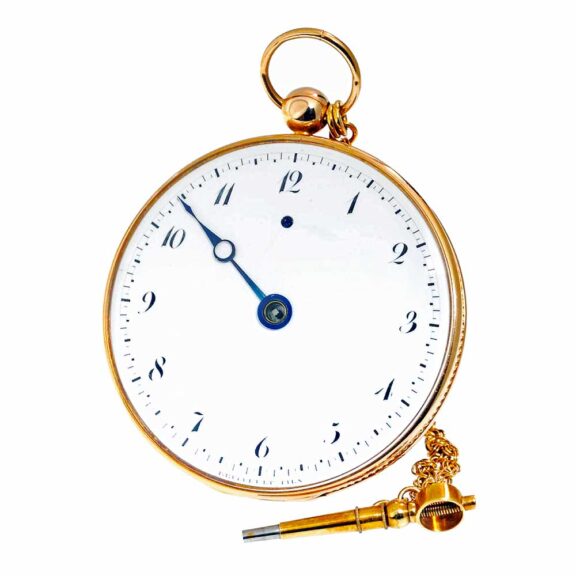
French watch Breguet ‘Montre de Souscription’ Circa 1805
- Kenmerk
- AD0270
- Diameter
- 61 mm
- Estimate
- € 24.000 - 38.000
- Price sold
- € 19.600
Pocket watch with original Breguet certificate and ratchet key.
–
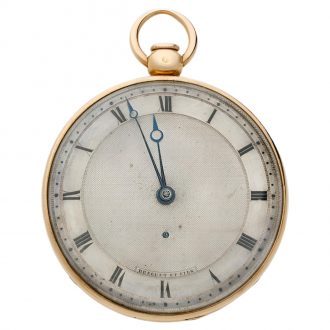
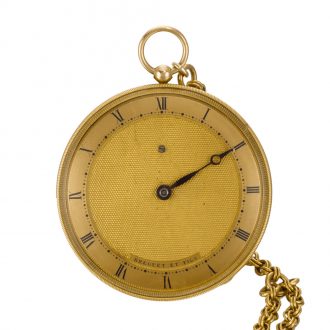
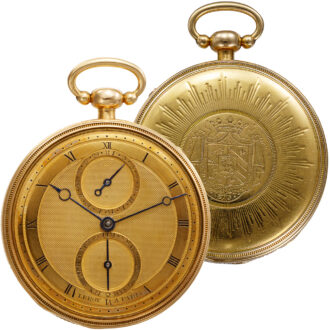
A Swiss important and large Breguet Souscription, circa 1805.
Sold with original numbered silk lined Morocco case, ratchet key and numbered certificate, to Monsieur André Becker on 1er Germinal An 13 (= 22nd of March 1805) for 864 Francs.
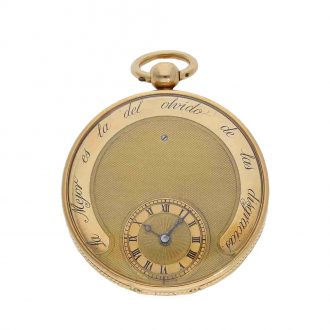
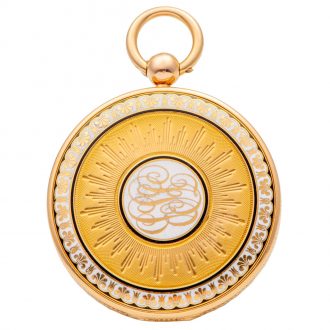
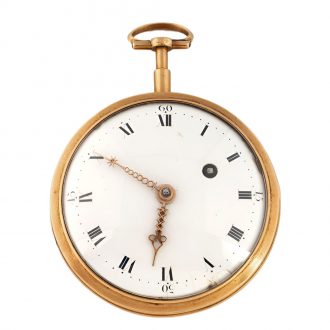
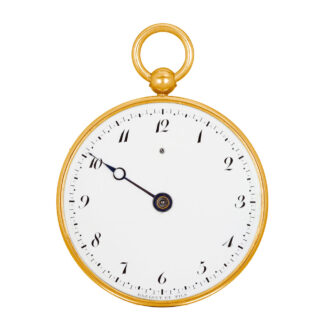
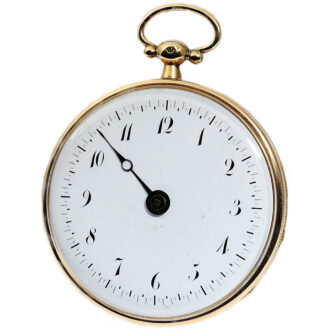
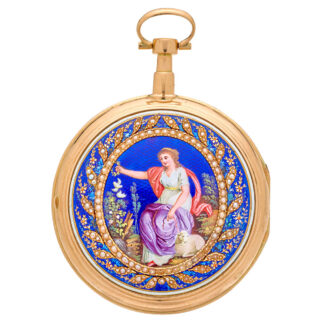
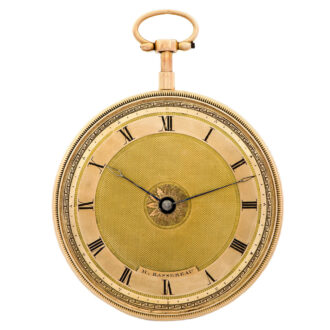
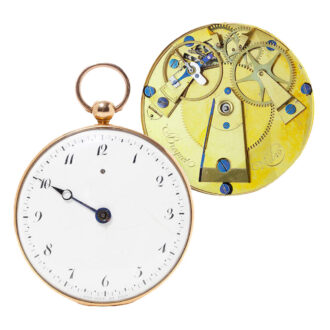
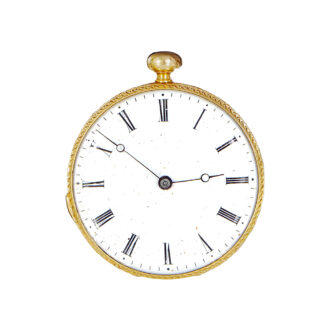
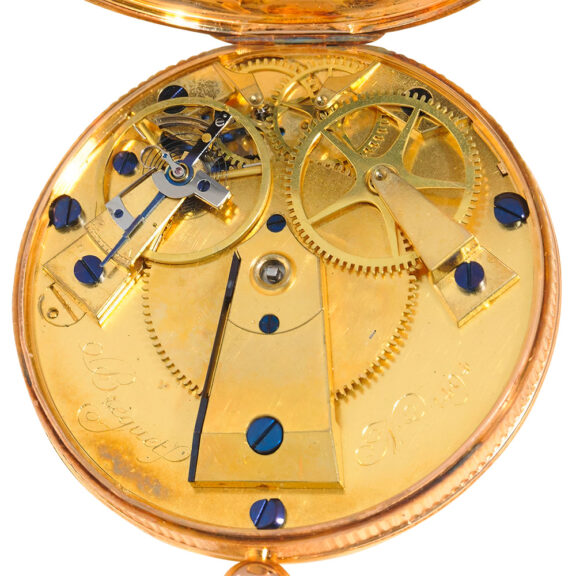
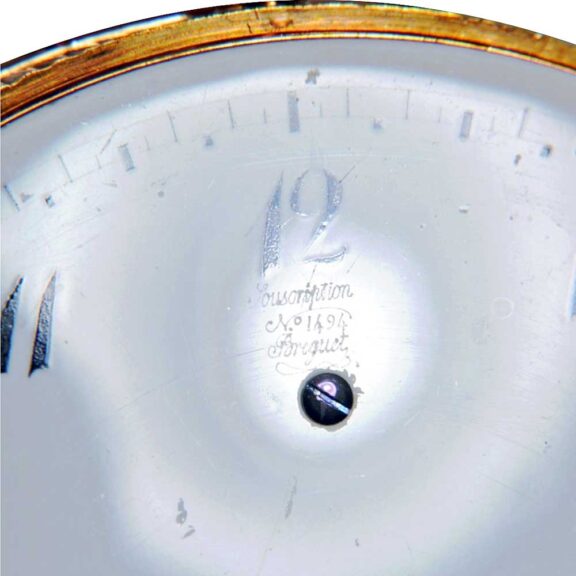
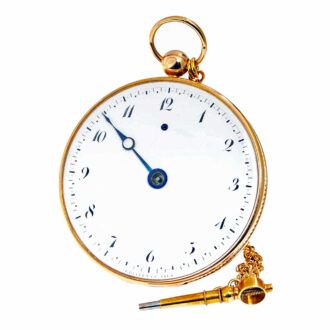
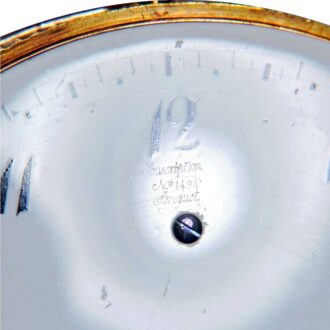
The case is 20 Carat gold engine turned, it has a reeded band and a case maker punch mark “JLJ” (Jolly). The dial is enamel with a secret signature below “12”: “Souscription No. 1494”. It has a bridge movement, an “overhanging” ruby cylinder escapement, a three arm brass balance, a blued balance spring with temperature compensation, a shock protection “parachute” and is key wind.
–
Diameter: 61 mm
–
Weight: 132 g
–
Signed: Breguet, Paris
–
André Becker was a good customer of Breguet. In 1804 and 1805 he purchased about twenty watches from him and was therefore entitled to a discount of 6%.
–
“Breguet’s Souscription watches”
Usually in silver, with the gold rims being the only decoration, the souscription watches were of a large diameter allowing the enamel dial to be divided in such a way that both hours and minutes could be read from a single hand. The movements had a single plate, the spring barrel mounted in the center and the wheels elegantly positioned and retained by bridges. The single hand was driven directly off the barrel arbor, eliminating the motion work and the intendant friction and the ruby cylinder escapement was fitted with a parachute (shock protector) and a compensation curb to assist in correcting temperature errors; features that were the norm for all of Breguet’s first class watches. To further reduce the selling price, Breguet decided to produce these watches in small series (between 12 and 20 examples at a time), with the buyers paying an account of 25% in advance and the balance on completion. Hence the term: de souscription (by subscription). The success of these watches enabled Breguet to both reestablish his business, which had understandably been badly affected by the French Revolution and his exile in Switzerland and to finance much of his research into other areas of horology.
Signed: Breguet. Paris
Share this page: