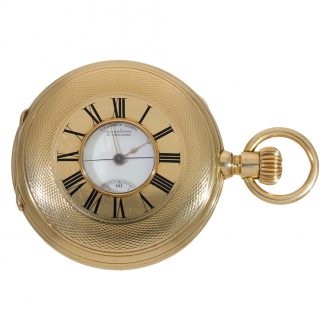
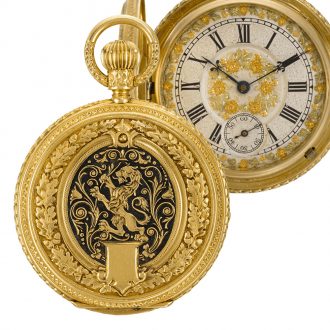
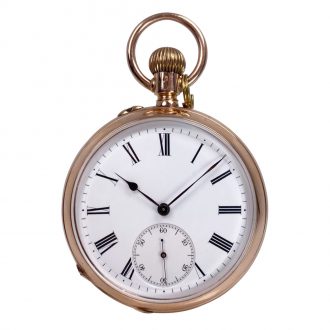
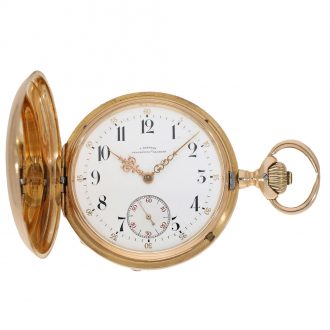
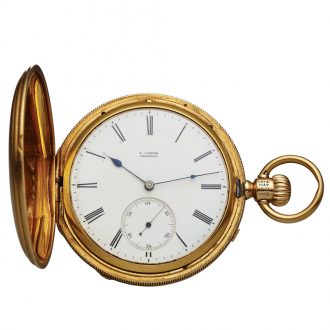
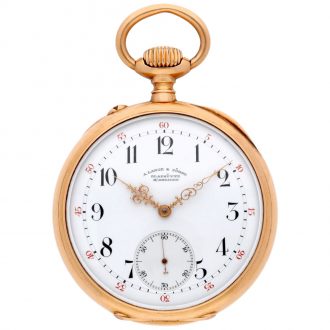
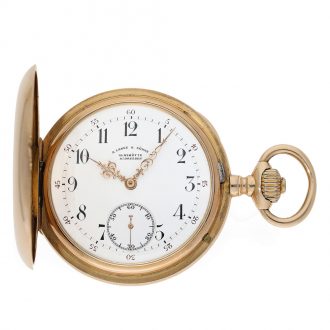
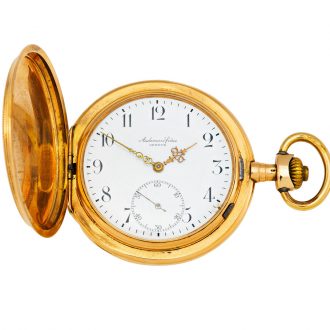
German astronomical minute repeating pocket watch Circa 1890
- Kenmerk
- AD9645
- Diameter
- 58 mm
- Estimate
- € 50.000 - 100.000
- Price sold
- -
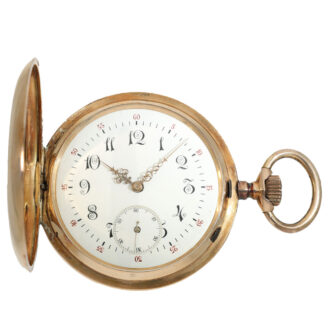
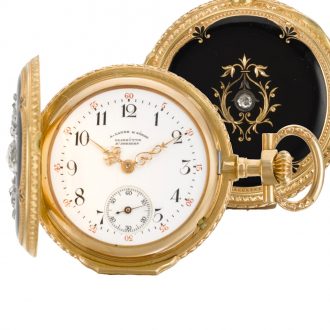
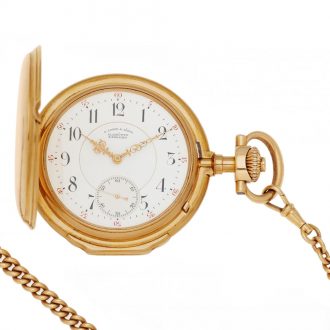
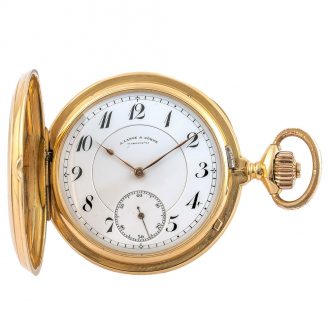
Heavy gold complicated full hunter cased pocket watch by Johannes Dürrstein & Co.
–
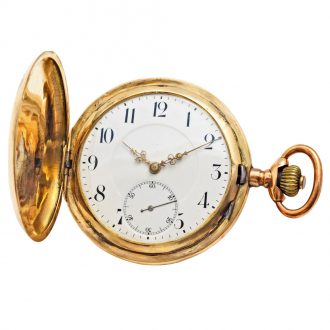
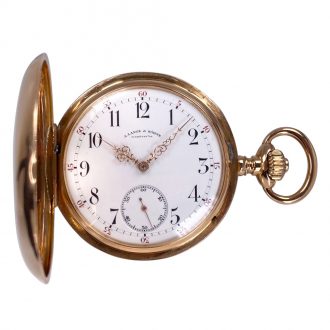
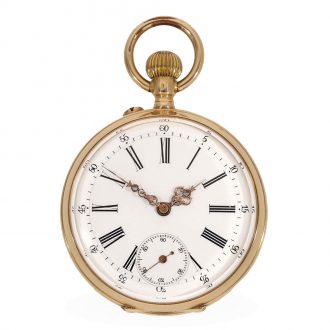
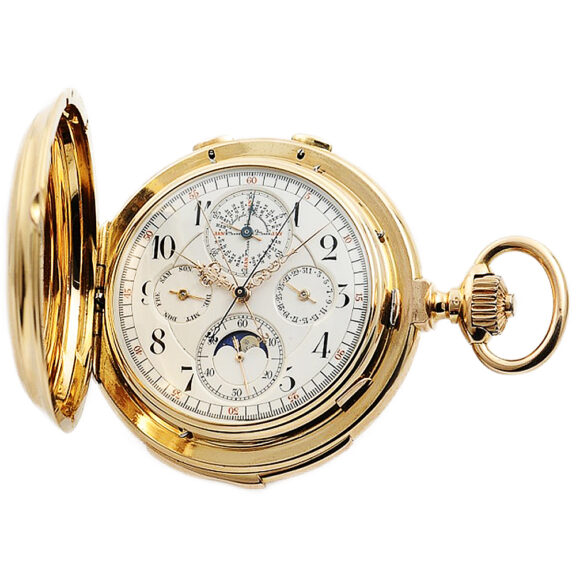
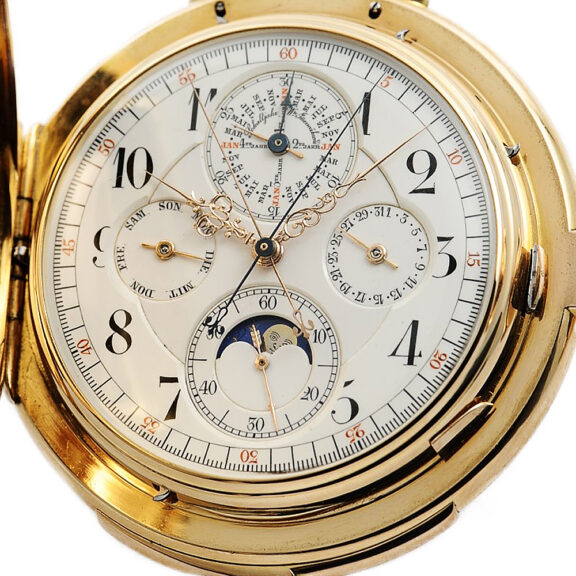
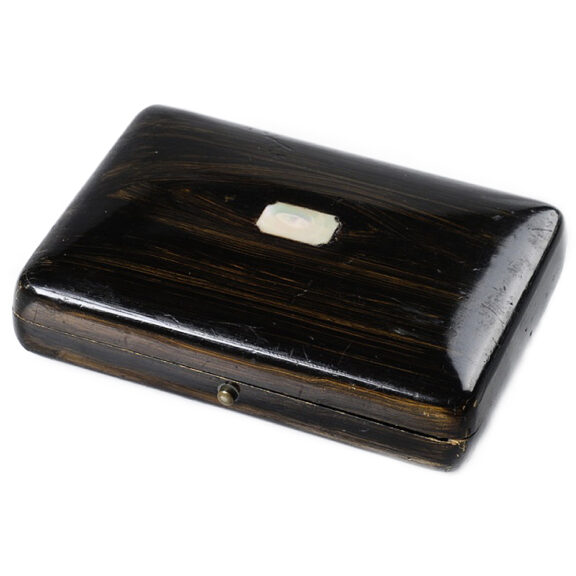
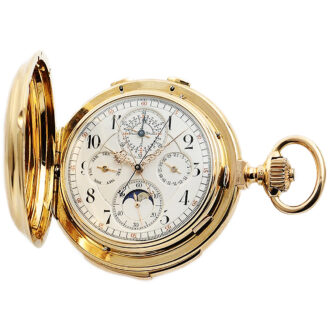
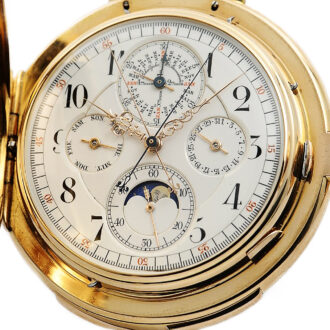
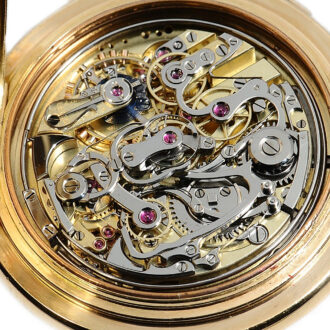
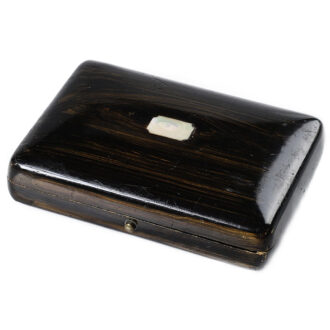
A heavy, German, astronomical, minute repeating full hunter cased pocket watch with split seconds chronograph, 30 minutes counter, perpetual calendar and moon phase – ébauche Louis Audemars – and original mahogany box, circa 1890. This exquisite pocket watch is part of a special edition of complicated watches that were produced for the German market in the late 19th century.
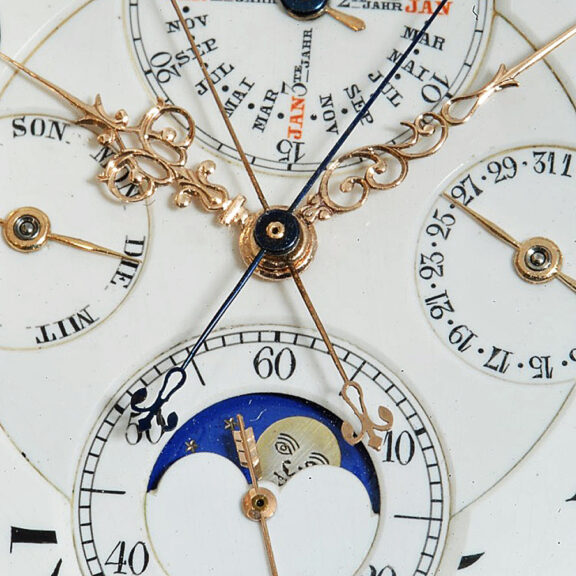
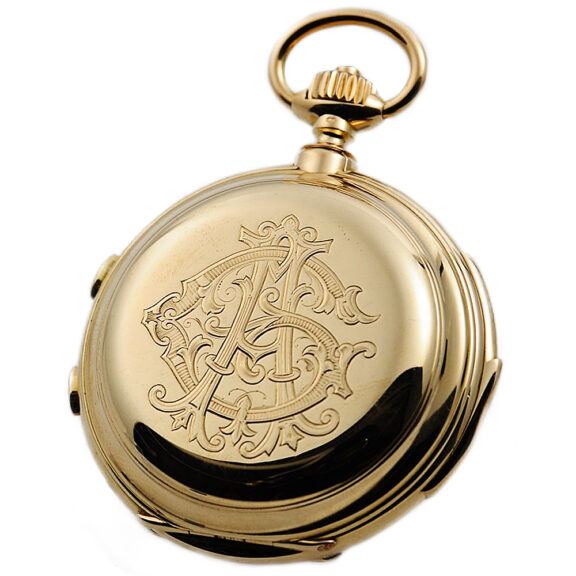
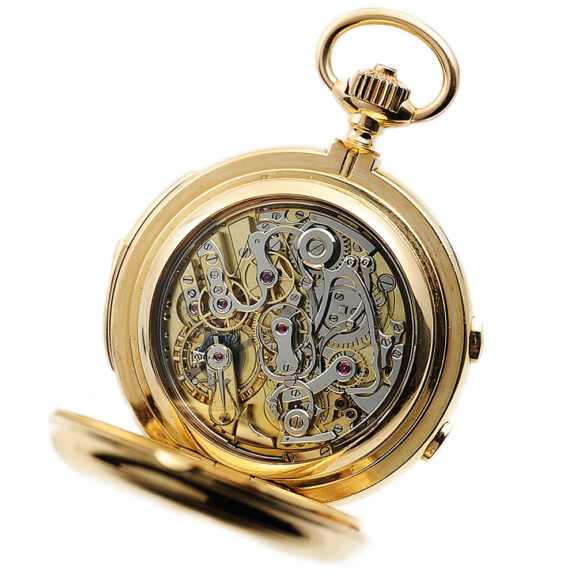
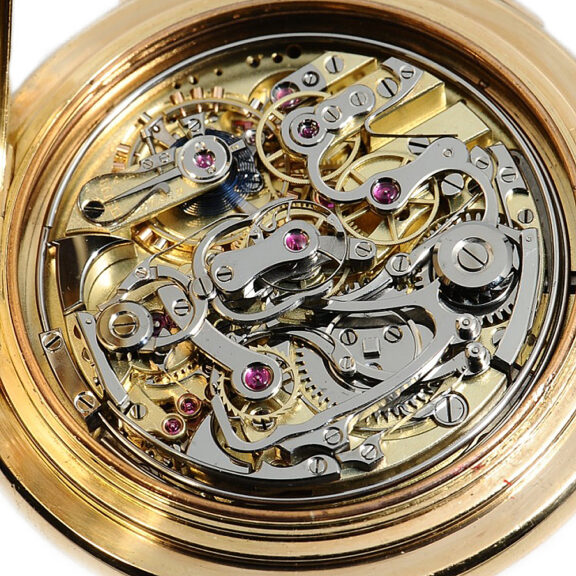
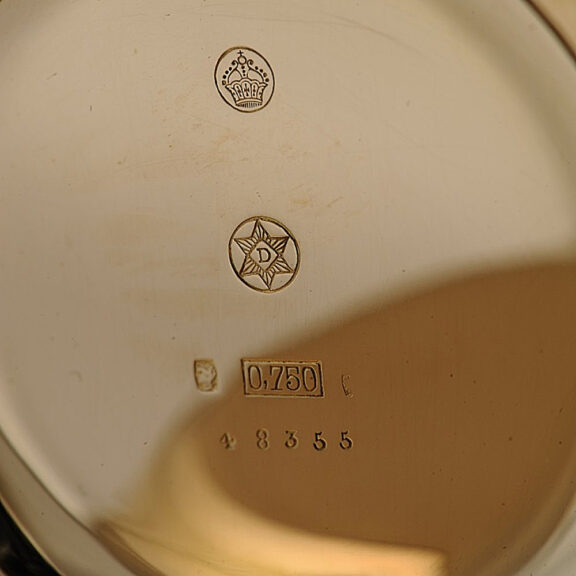
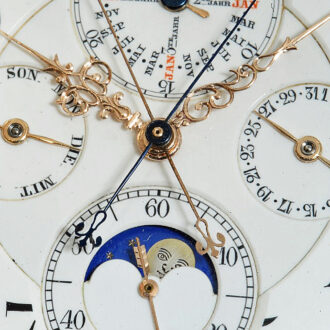
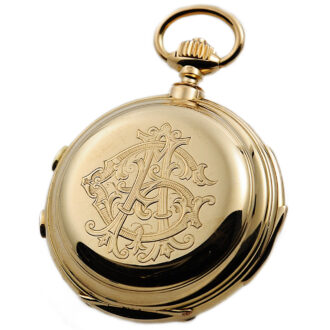
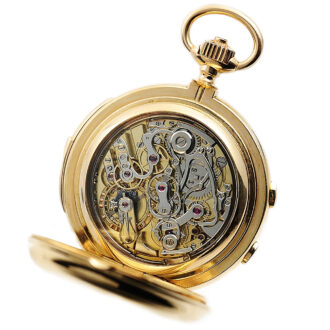
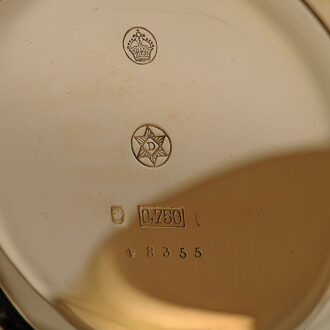
The 18 Carat rose gold Louis XV à goutte case shows a very finely engraved monogram GA; the inner lid is stamped with the Dürrstein hallmark, D in a star. Two pushers for the split seconds chronograph and a slide for the minute repeater are set in the case band at eleven and one o’clock. The white enamel dial has Arabic numerals, four subsidiary dials for day, the month with leap year and date, as well as auxiliary seconds with a cobalt blue enamel moon phase disc with inlaid golden stars and moon. The highly complicated movement has extremely finely mirror polished steel chronograph parts and a very finely polished, bevelled split seconds mechanism with a separate column wheel.
–
Diameter: 58 mm
–
Weight: 199 g
–
Signed: Johannes Dürrstein & Co., Glashütte/Dresden
–
Johannes Dürrstein
At the beginning of his career, Johannes Dürrstein worked with wholesaler Ludwig & Fries; in 1874, however, he established his own business together with his brother Friedrich. The company traded as Dürrstein & Co. of Glashütte and sold Swiss products as well as watches by A. Lange & Söhne. Nearly 20 years later, in 1893, Dürrstein founded the “Uhrenfabrik Union”. The watches produced in this manufactory were of outstanding quality and could be made to order with high value complications of all kinds. The range included pocket chronometers, tourbillons and perpetual calendars and usually came with a rating certificate from the Hamburg Observatory. Dürrstein always tried to satisfy the universally strong demand for high quality timepieces and mainly used premium Swiss movements which he bought and cased before selling them to his customers. Louis Audemars and Audemars Piguet are most likely to have been the main suppliers of ébauches to Dürrstein; between 1895 and 1912 Dürrstein purchased 35 of their movements, most of them with interesting complications.
Signed: Johannes Dürrstein & Co., Glashütte/Dresden
Share this page: