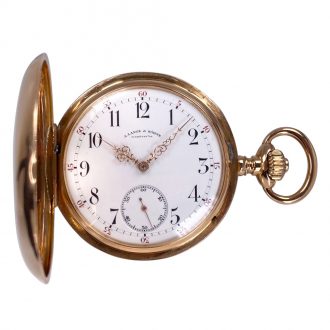
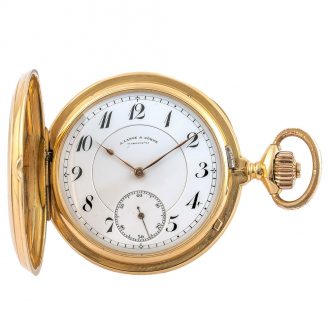
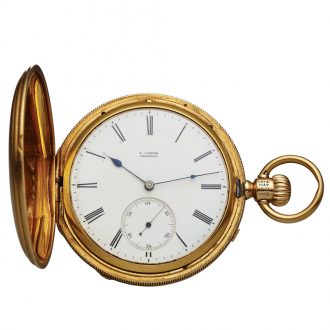
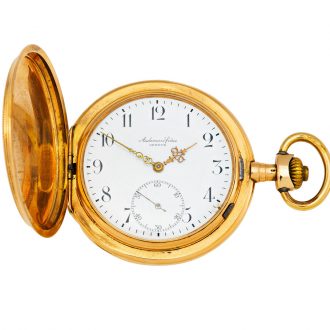
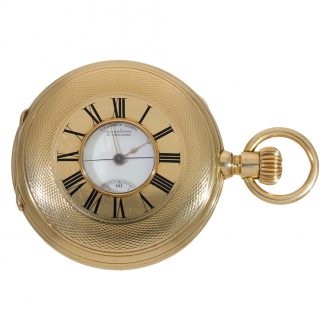
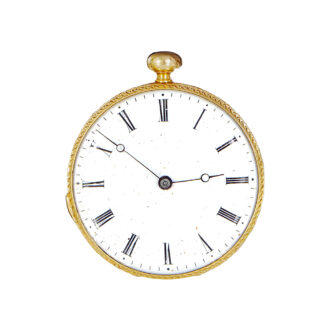
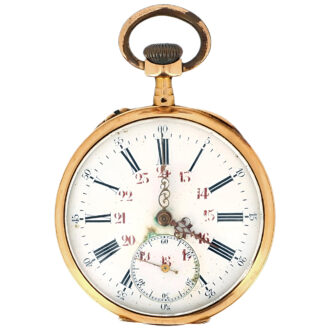
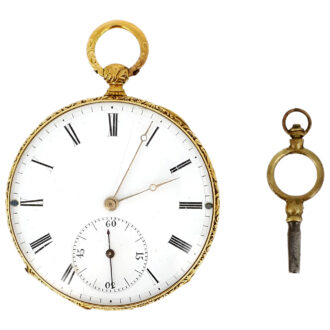
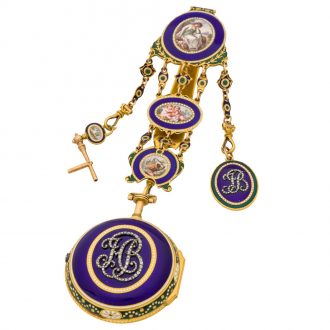
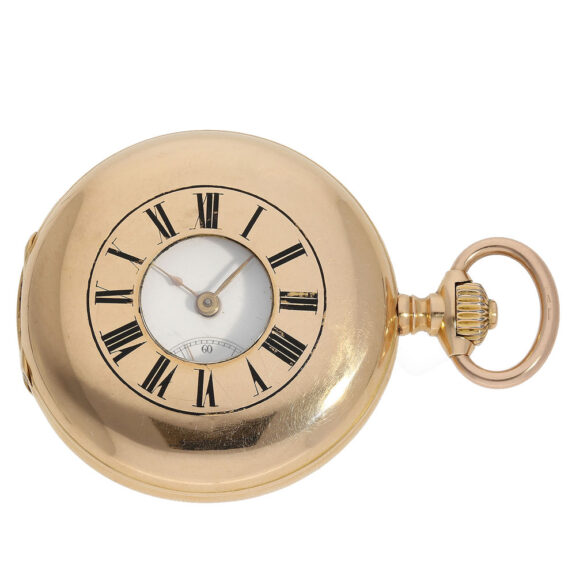
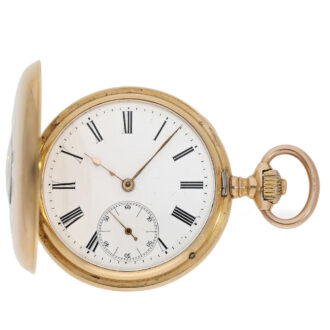
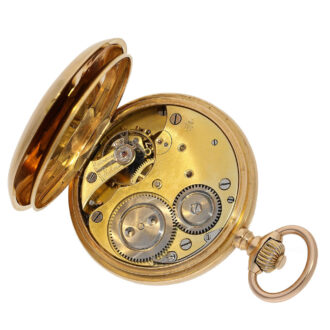
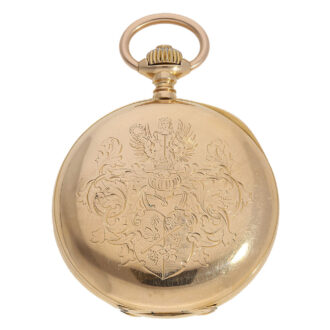
German half hunting case pocket watch with engraving Circa 1890
- Kenmerk
- HC0424
- Diameter
- 50 mm
- Estimate
- € 2.750 - 5.000
- Price sold
- € 1.600
Interesting gold precision anchor watch
–
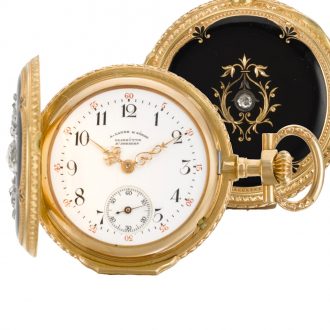
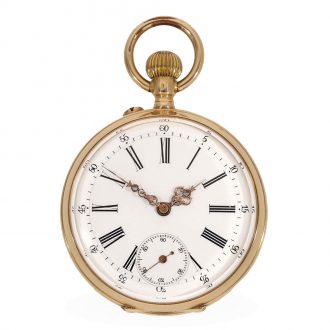
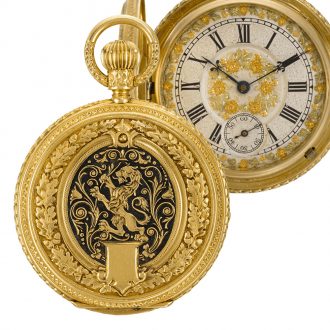
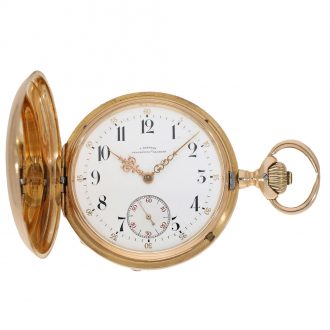
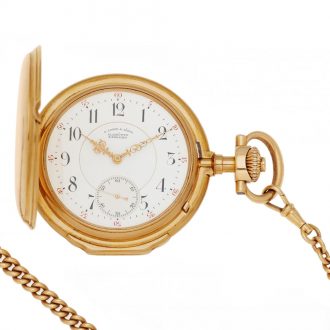
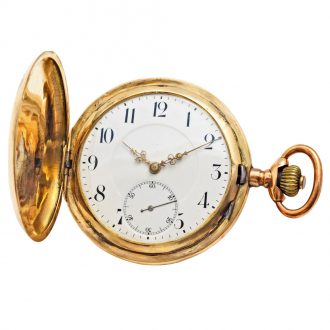
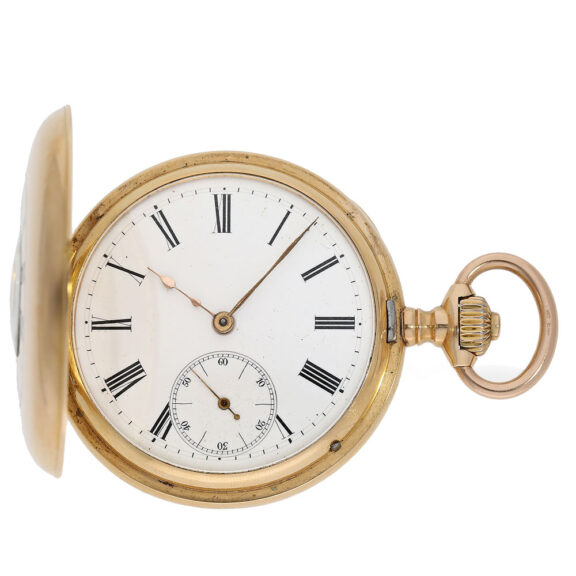
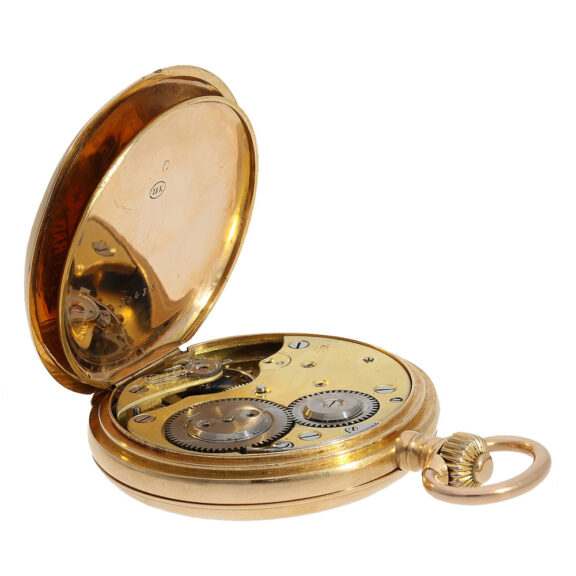
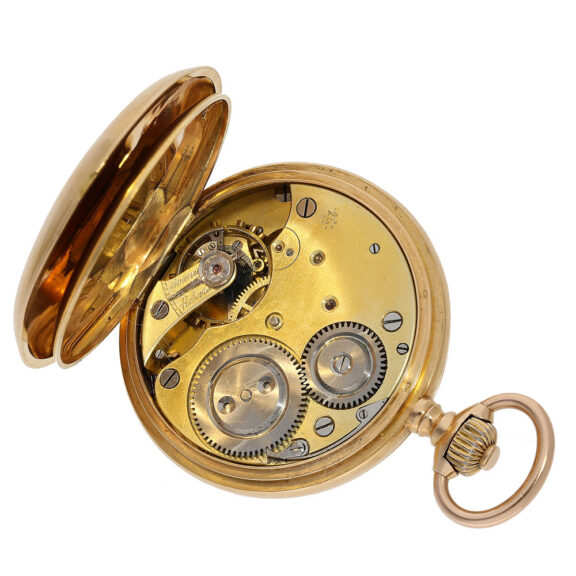
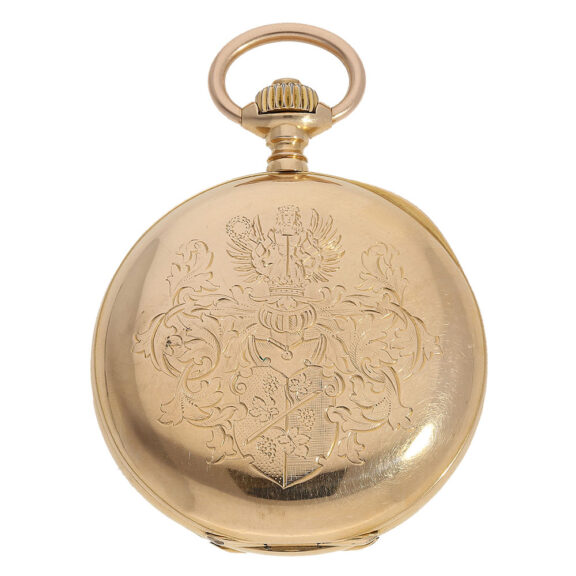
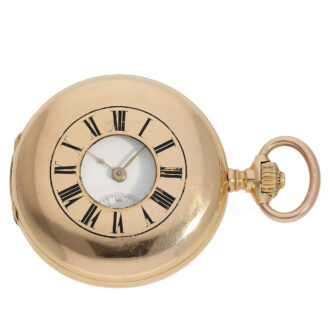
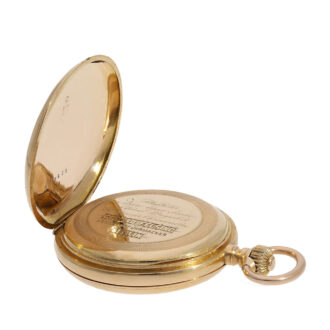
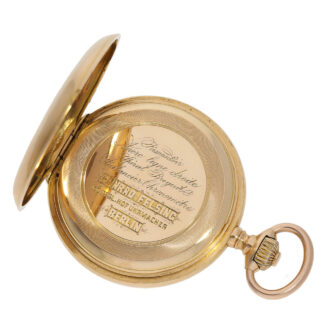
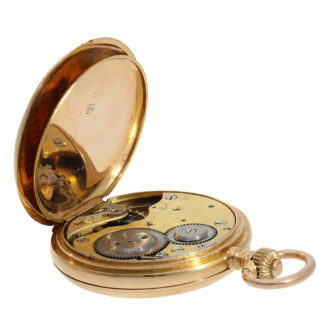
An interesting half hunting cased pocket watch with aristocratic engraving, made by Conrad Felsing, a royal watchmaker in Berlin, Germany, circa 1890. This watch, made of 18 Carat gold, has a half hunting case with an elaborate noble coat of arms on the back. The white enamel dial is another highlight and its classic design and hands are a testament to the timeless beauty of this watch. The early precision movement with 3/4 plate is a hallmark of this pocket watch’s superior design.
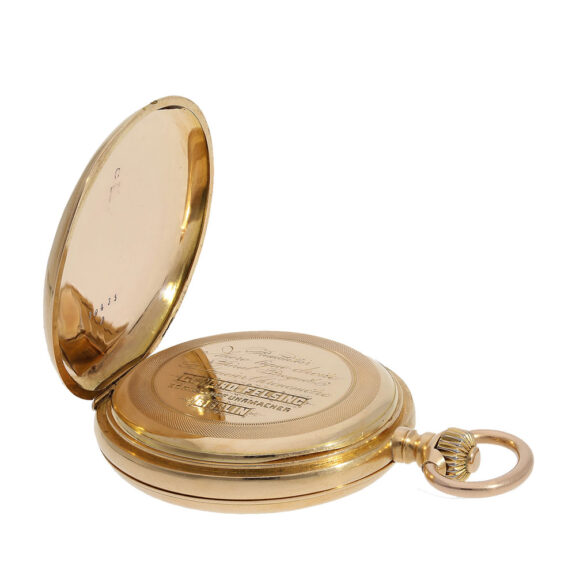
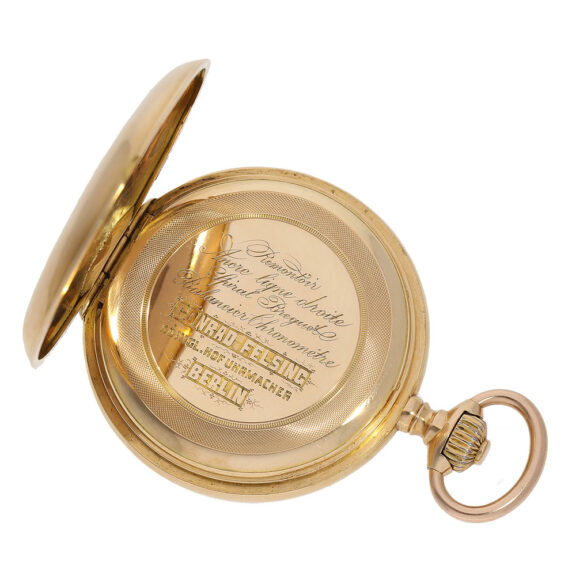
Dust cover signed.
–
Diameter: 50 mm
–
Weight: 96 g
–
Signed: Conrad Felsing, Berlin
–
The German watchmaker Johann Conrad Völtzing was born in the Black Forest, where the Völtzing family produced watches since 1733. His date of birth is unknown. He came from a family who had been clockmakers since 1733. It appears the family moved to Berlin in 1820 and changed their name from the original Voltzing to Felsing, probably because it was easier to inscribe on clocks (the original name having an umlaut). He founded the company Conrad Felsing, first at Schloßfreiheit No. 1, Berlin, later Unter den Linden 20 in Berlin. 1847 Conrad became a member of the guild and master in 1850.
Conrad Felsing was joined by his son Albert Karl Julius (who changed his name to Conrad) and they achieved great success. The company was named Hof-Uhrmacher (Court watchmaker). Of his three sons only Albert Karl Julius Felsing remained in Berlin and became a watchmaker, the other two sons moved to Hessen and became engravers. Johann Conrad Felsing died in 1870.
By 1877 they had a Royal Patent from the King of Prussia and this boosted their standing and was very good for business. When Conrad (the son) died, his own son, Willibald Albert Conrad took over the business and expanded it to include alarm clocks, mantel and pedestal clocks made in marble and bronze and finally jewelry. The firm was still trading in 1936, but as far as is known, didn’t survive the second world war.
Signed: Conrad Felsing, Berlin
Share this page: