German one minute tourbillon with power reserve Circa 1933
- Kenmerk
- AD8725
- Diameter
- 58 mm
- Estimate
- € 250.000 - 400.000
- Price sold
- € 311.250
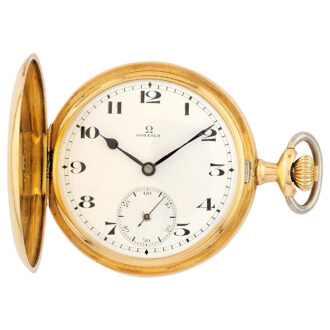
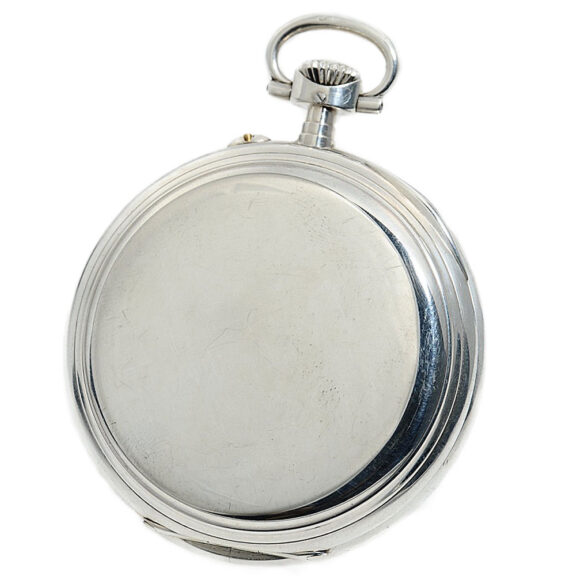
Silver pocket watch manufactured in quality 1A
–
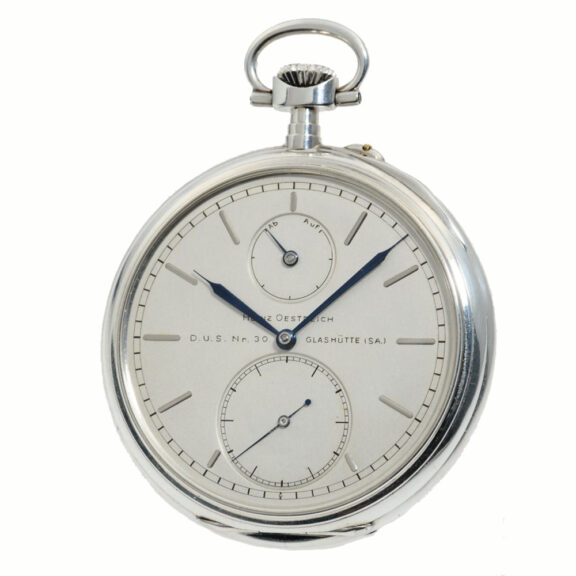
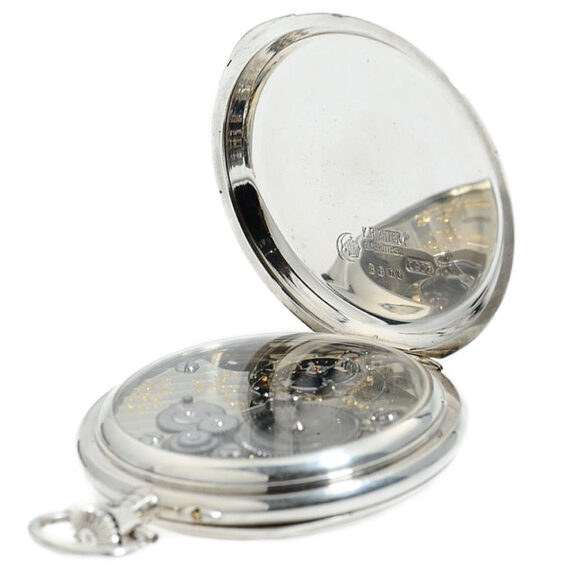
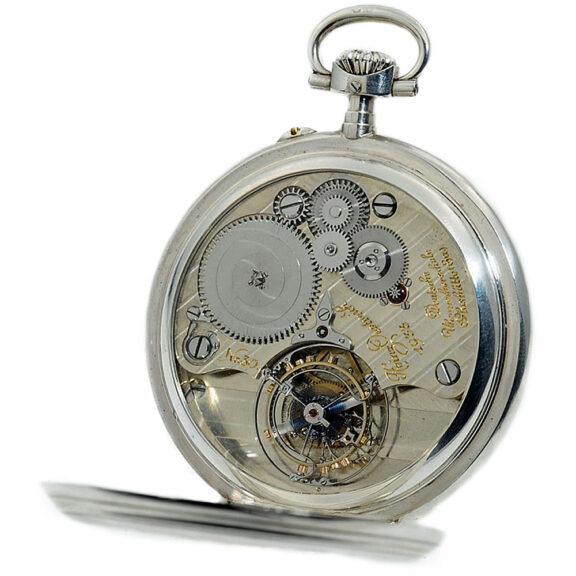
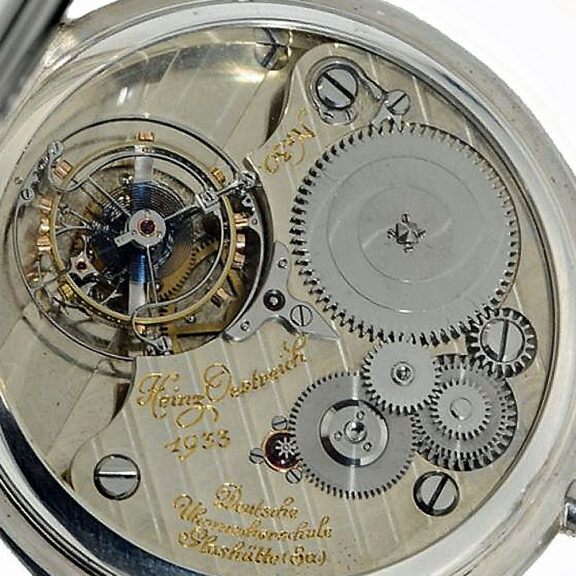
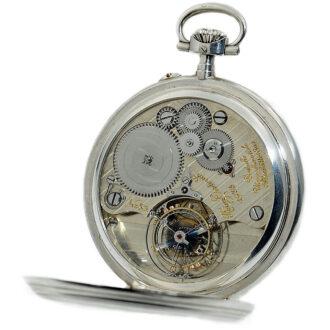
A German graduate’s piece of museum quality with flying one-minute tourbillon and power reserve indicator was created at the German Watchmaking School in Glashütte, circa 1933. A masterpiece inspired by Alfred Helwig’s technical specifications, only 13 watches of this type were ever produced. Tested at the German chronometer testing institute, with documentation, photos of the reports and of the rating certificate of the Deutsche Seewarte.
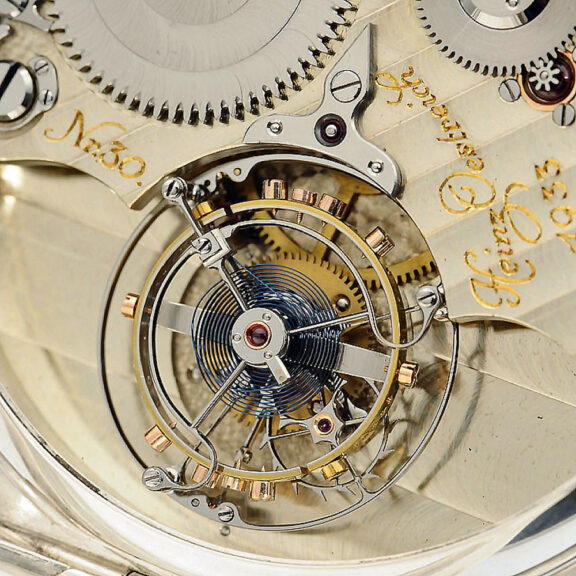
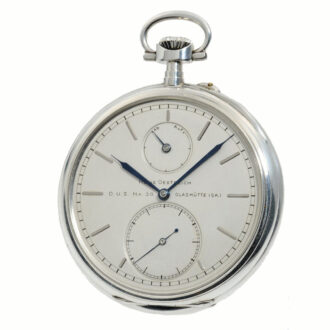
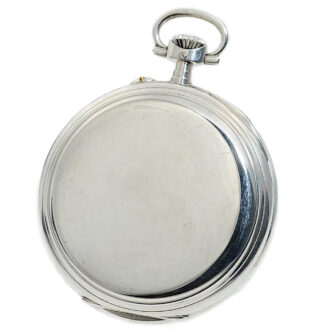
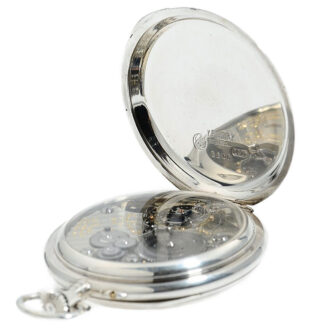
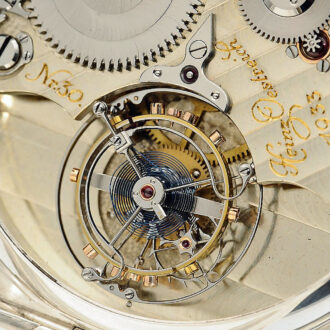
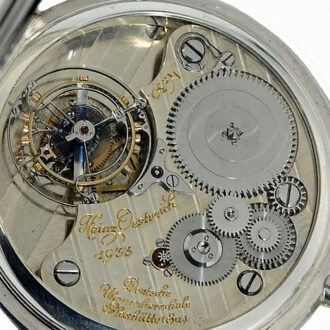
Silver case with Louis XVI glazed movement, and made by Karl Richter. Signed silvered dial with inlaid indexes, auxiliary seconds, and blued steel hands. Rhodium-plated 2/3 plate movement with Glashuette stripe decoration, Griessbach gold screw compensation balance, two barrels, spring detent escapement, finely polished steel tourbillon, and signed Heinz Oestreich 1933.
–
Diameter: 58 mm
–
Weight: 141 g
–
Signed: Heinz Oestreich Glashütte in Sachsen
–
Heinz Oestreich
Heinz Oestreich was born in Bad Wildungen in 1915. From 1931 to 1933 he trained at the German watchmaking school, where he produced his tourbillon in 1933.
After graduating – with a certificate for exceptional achievements from the Grossmann foundation – he worked in the development division of the German watchmaking school. Oestreich later returned to Bad Wildungen and opened a watch and clock shop. He died in 1991.
–
The group of tourbillon makers around Alfred Helwig From 1921 to 1937
Alfred Helwig (1886-1974) and his pupils at the German watchmaking school in Glashuette produced about 20 different tourbillons which were issued with special numbers between 7 and 36 because they were such outstanding pieces. The watches were created in four different versions: the 5-minute tourbillon with lever escapement, the 1-minute tourbillon with lever and with chronometer escapement (with chain/fusee as well as with parallel twin barrels); the most frequently used mechanism, however, was the 1-minute tourbillon with chronometer escapement and consecutive twin mainspring barrels – 13 of it were produced altogether. Number 30 by Heinz Oestreich – which we have here – is of this last type. Only 10 examples still exist, the other three are unaccounted for.
–
Oestreich’s tourbillon was regulated by Helwig himself and in 1936 won 3rd prize in a Naval Observatory competition in Hamburg. In a regular tourbillon watch, the carriage is fitted in a plate and secured by a bridge; when Alfred Helwig, however, developed the flying tourbillon and produced it during his time at the German watchmaking school in Glashuette, he fitted the lower carriage bearing in the plate and the upper bearing beneath the carriage. The top of the carriage has no pivot or bridge. Because the carriage was extremely light and fine, Helwig proved its strength by hanging a 200 g weight on the carriage – after eight days the carriage was fitted back in its movement, thus convincing every last nonbeliever. There is no doubt that the small number of flying tourbillons created as masterpieces by the most talented pupils of the German watchmaking school under Helwig’s tutelage mark a high point in the history of German horology and represent the ultimate achievement in the making of revolving escapements.
Signed: Heinz Oestreich Glashütte SA
Share this page: