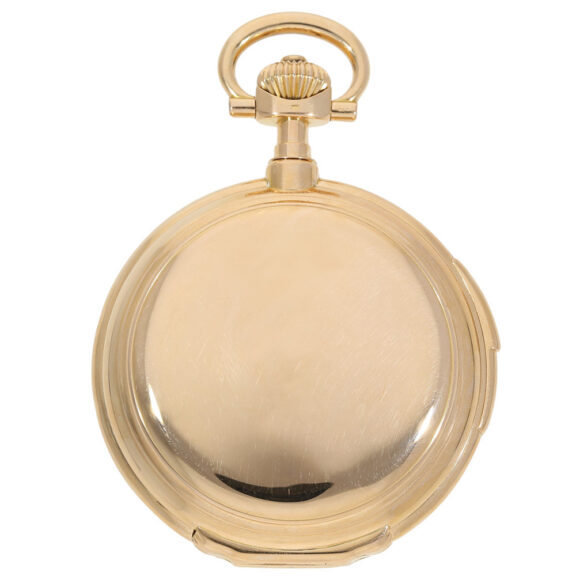
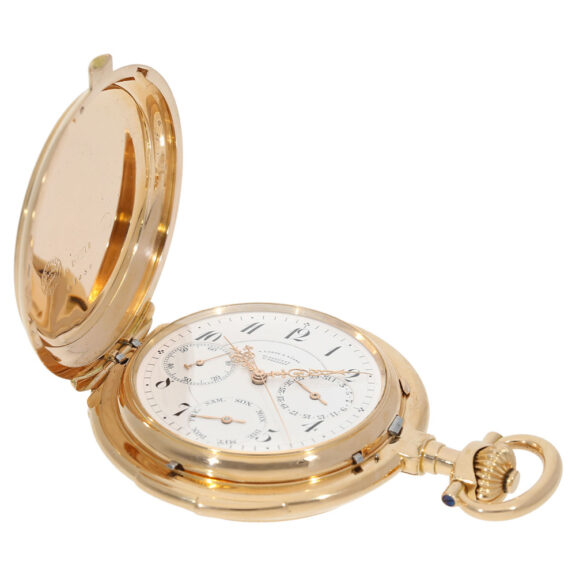
Rare German 18K gold complicated lever watch Circa 1910
- Kenmerk
- AC0168
- Diameter
- 60 mm
- Estimate
- € 30.000 - 100.000
- Price sold
- € 37.200
Gold precision pocket watch
–
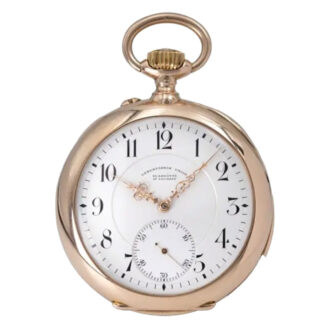
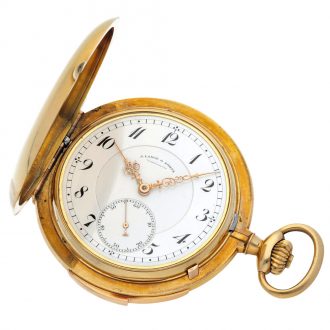
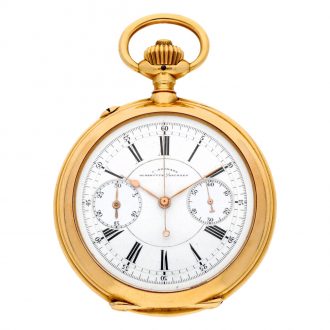
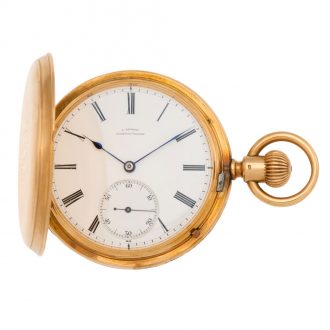
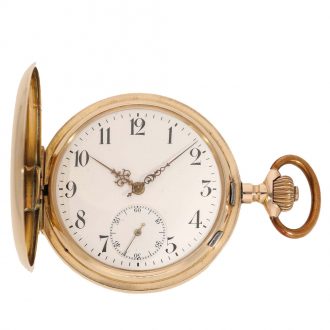
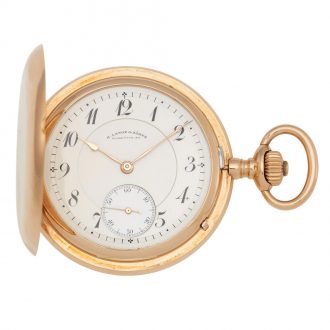
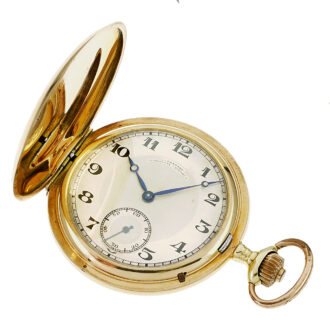
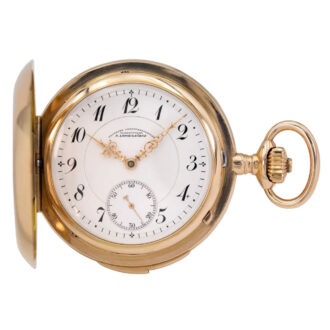
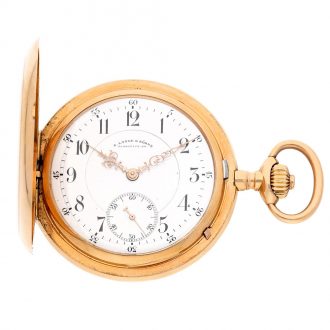
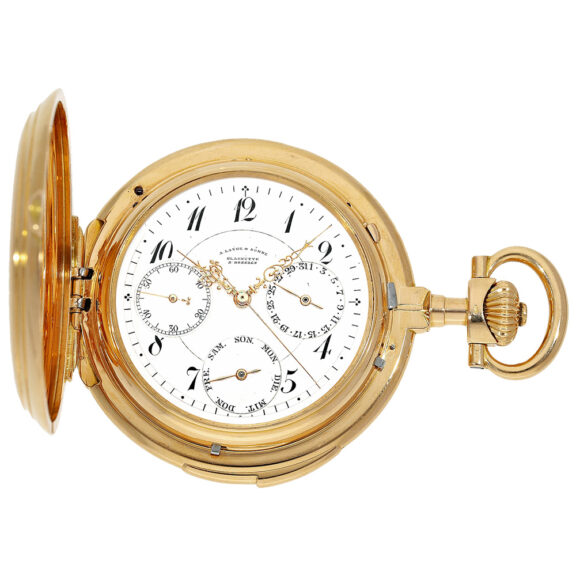
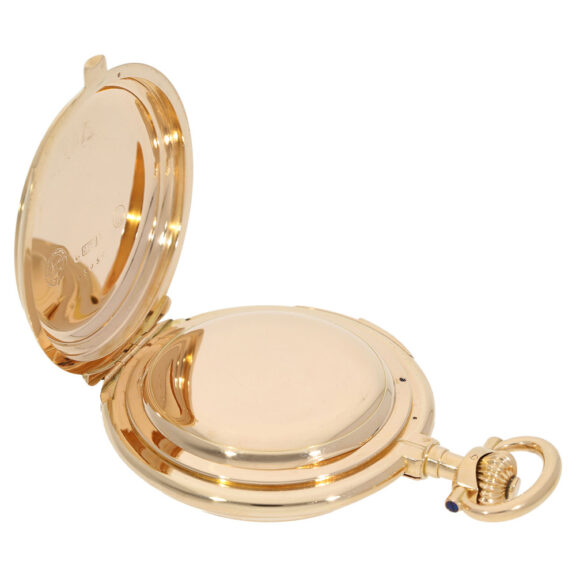
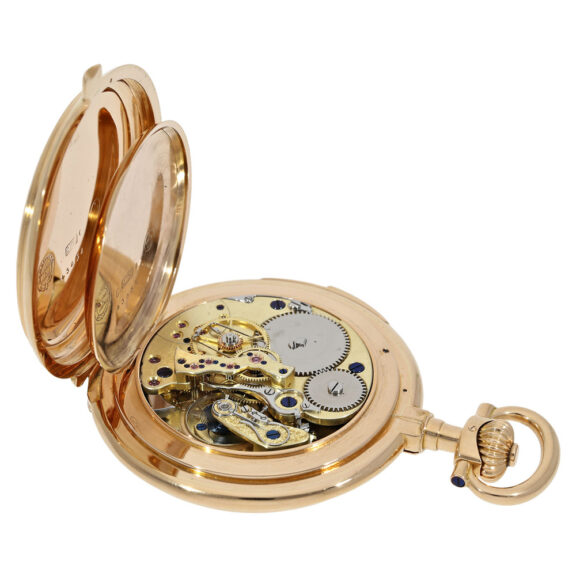
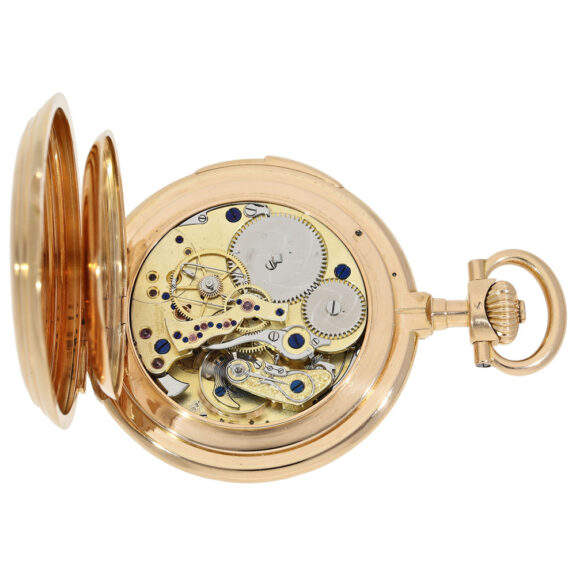
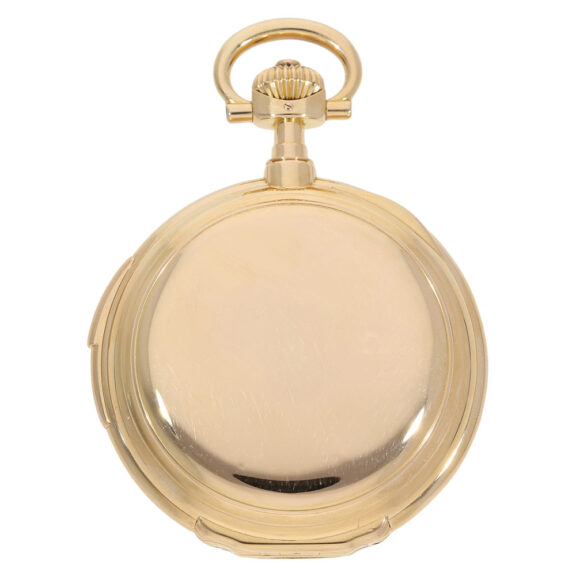
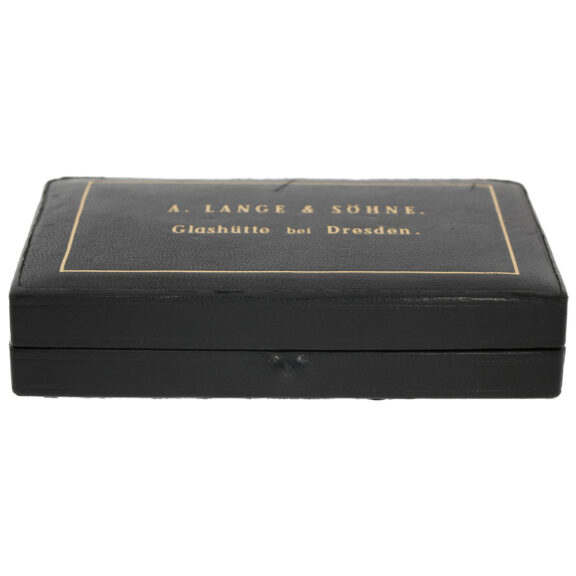
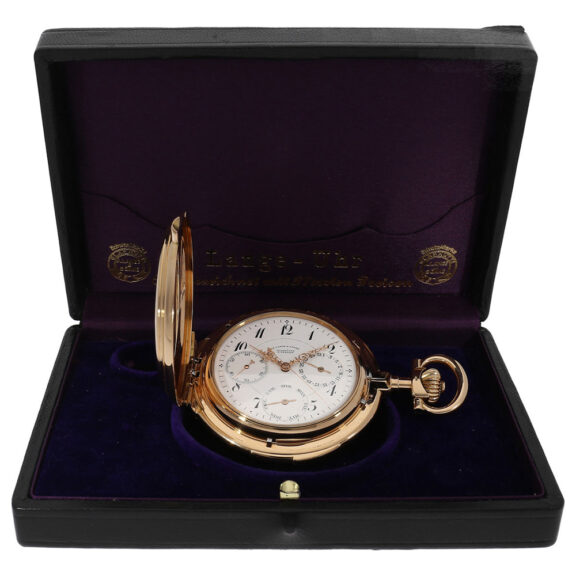
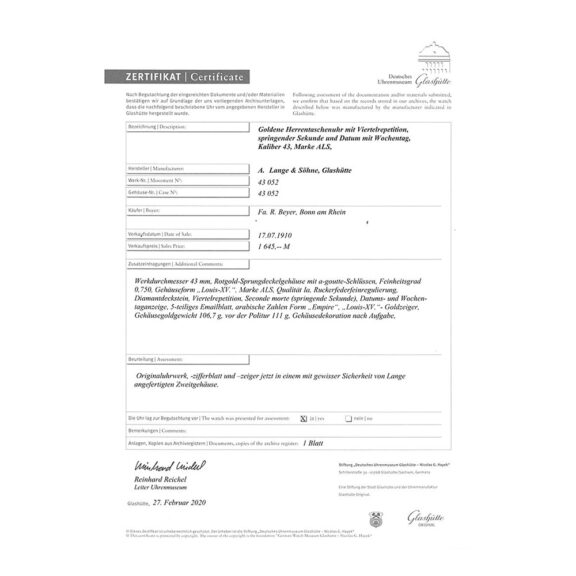
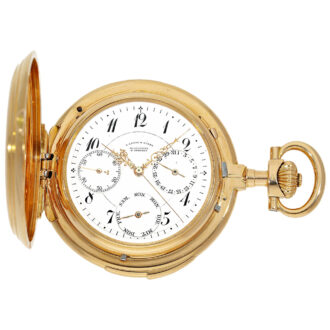
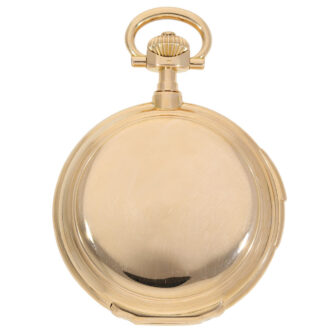
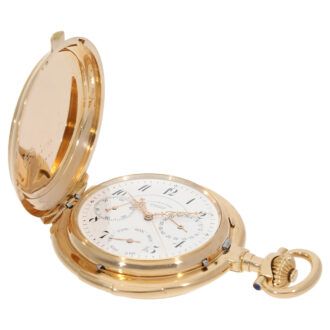
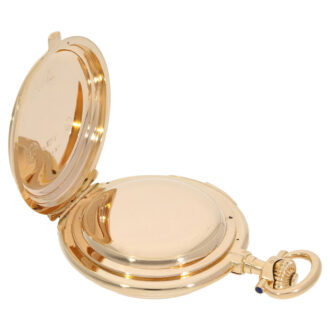
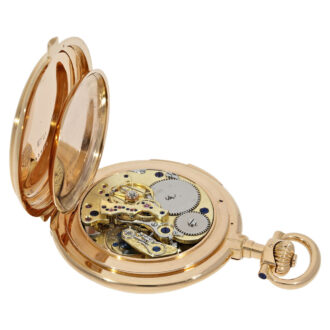
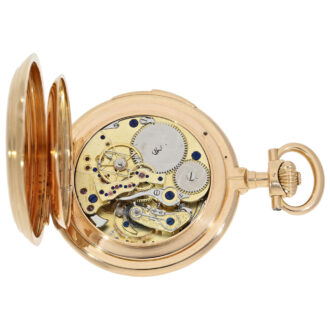
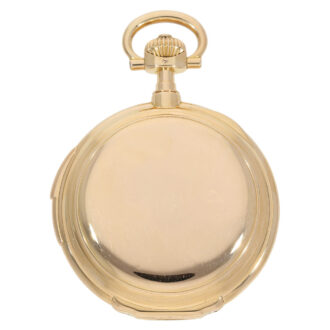
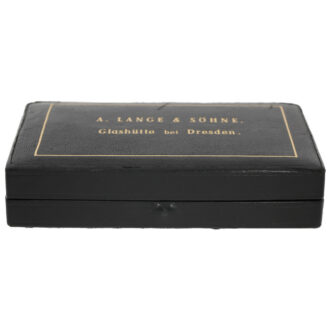
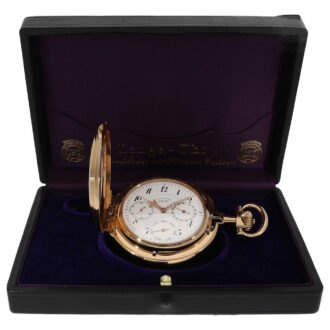
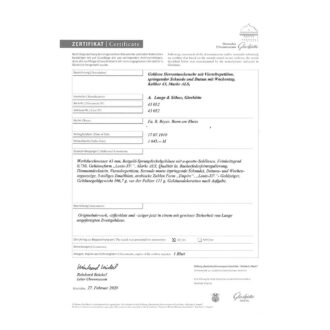
A rare and historically interesting German highly complicated 18 carat rose gold hunting cased quarter repeating Louis XV pocket watch with calendar and seconde morte chronograph made by A. Lange & Söhne in Glashütte, circa 1910-1913. Polished case with stepped bezels. Original signed white enamel dial with radial Breguet style hour numerals, an outer minute track, and rose gold Louis XV hands, three further subsidiary dials for the date at 3 o’clock, the days of the week at 6 and auxiliary seconds at 9. Precision lever movement in quality 1A with a rare combination of a quarter hour repeater, seconde morte Chronograph, weekday display and date, screwed gold chatons, a fine adjustment and diamond endstone. Case and movement with matching numbers. Accompanied by the original presentation box and an extract from the archives confirming the originality of the watch. Only 10 of these watches were made.
–
Diameter: 60 mm
–
Weight: 167 g
–
Signed: A. Lange & Söhne Glashütte B/Dresden
–
This watch has the rare design that the seconde morte can be started and stopped using the crown pusher and can therefore also be called a chronograph, patented as Lange’s “Dead-Seconds Chronograph”.
–
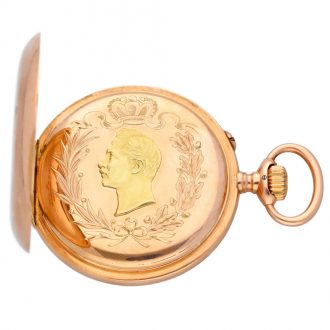
The present timepiece has a very interesting history. It got a second case with matching numbers at A. Lange & Söhne. Unfortunately, the reason has not been documented. It is obvious, however, that the dispatch documents from 1910 include the note “Decoration according to task”. It was not so rare that highly complicated watches were bought back by Lange and sold a second time, often with a new case.
–
But the story is even more exciting. Originally, the present watch with number 43052, according to Martin Huber’s “The Long List”, page 185 and the shipping documents, came only with repetition and seconde morte. So it is quite possible that this piece was bought back by Lange and then sold a second time in 1913 with an additional calendar function, a new dial and new, this time unengraved, case together with its two sister watches 43051 and 43053, The movements were made about ten years earlier. Still, they remained unsold for a long time due to the high price. One of these two watches with the same case is shown and described in Meis’s A. Lange & Söhne, page 257. As far as one knows, none of the other two watches has appeared in the last 20 years.
–
The seconde morte, also known as dead-beat seconds, is a complication of a mechanical movement in which the second hand moves every second. This is in contrast to the usual ‘running’ of the second hand. This complication is rare and was seen in the years before the quartz revolution, the 1970s and 1980s, but died a silent death because of the same quartz revolution. The reason for this was that the second hand moves per second in almost the same way as quartz watches, which ultimately also use a frequency of 1Hz. With that, the ‘running’ second hand became the distinction between mechanical and quartz watches. Incidentally, that external similarity only applies to the second hand jumping per second, the underlying mechanism of the dead seconds complication is of course of a completely different order.
Signed: A. Lange & Söhne Glashütte B/Dresden
Share this page: