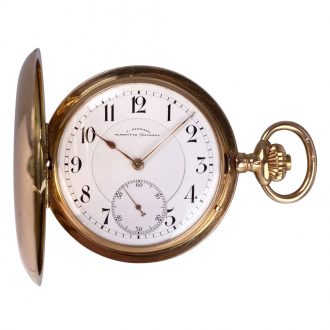
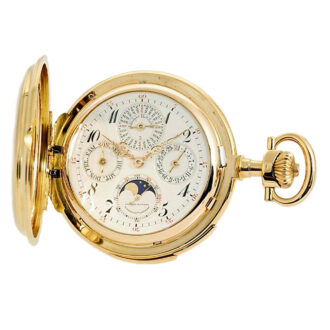
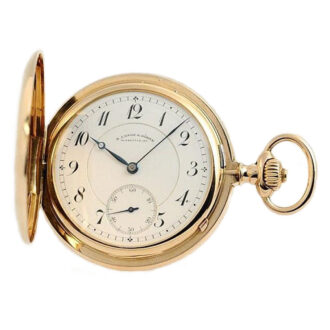
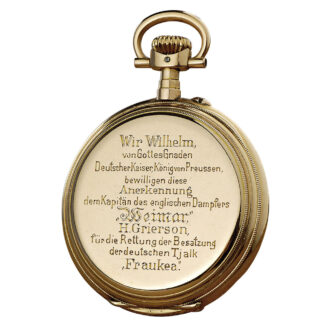
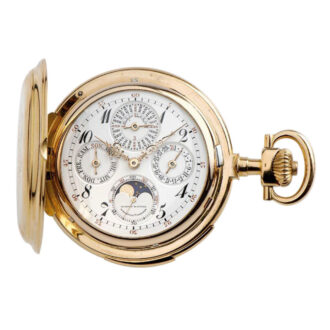
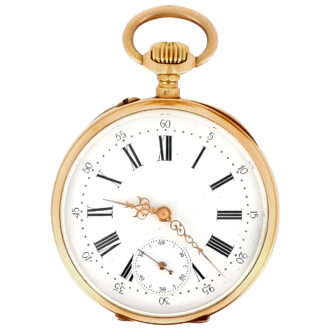
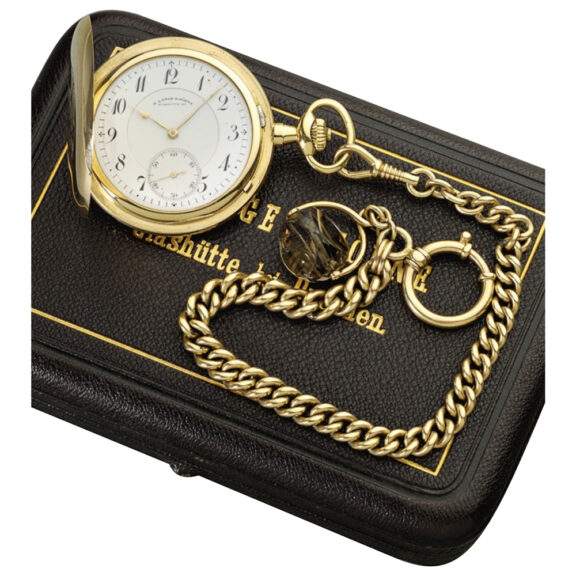
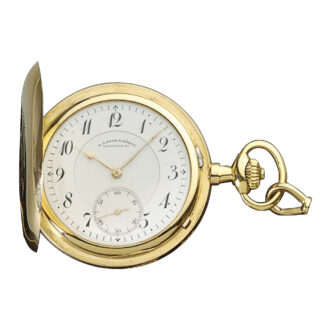
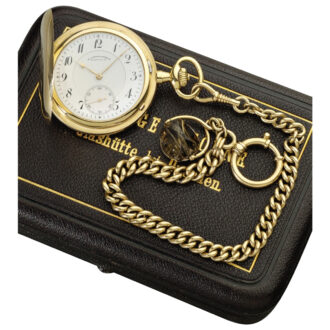
German thin gold Glashütte cased pocket watch Circa 1911
- Kenmerk
- AD0053
- Diameter
- 51 mm
- Estimate
- € 6.000 - 9.000
- Price sold
- € 7.500
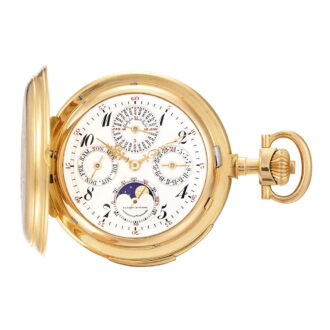
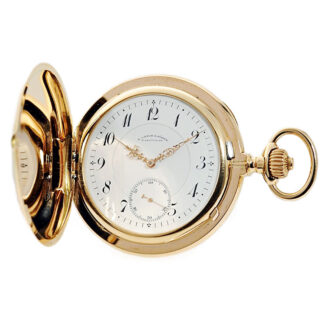
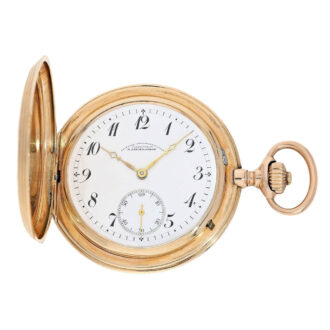
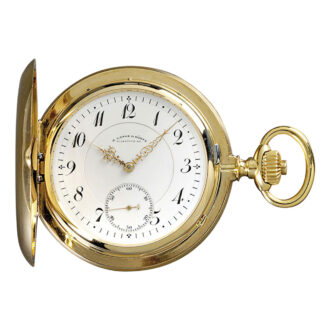
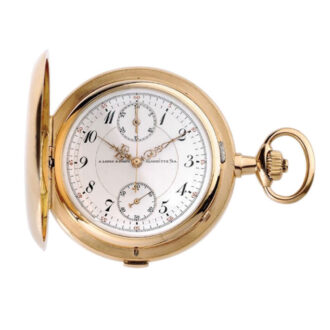
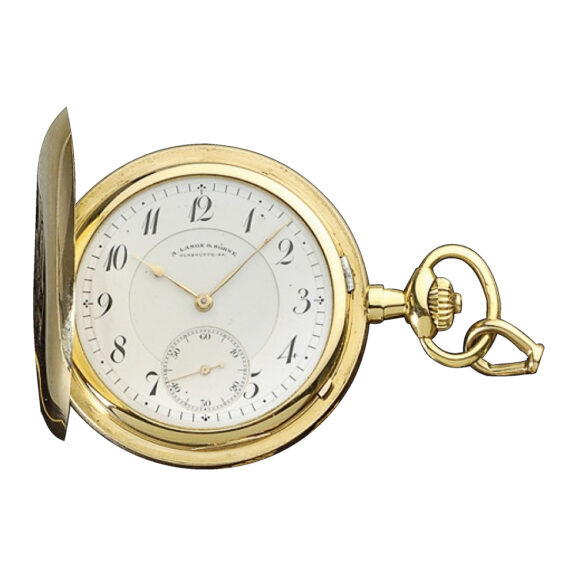
A.Lange und Söhne Glashütte hunting cased pocket watch
–
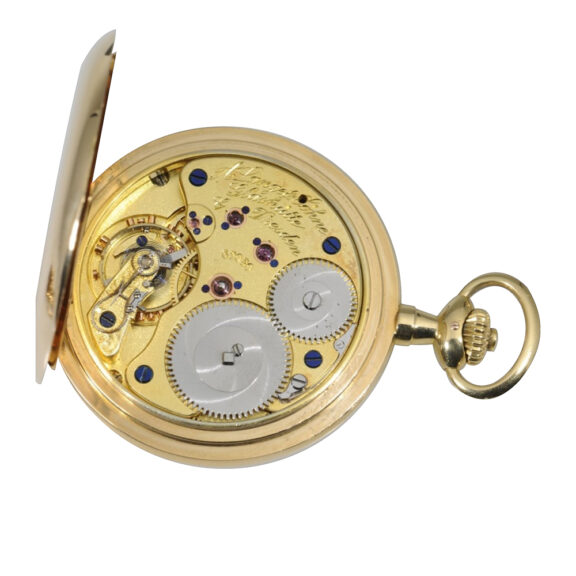
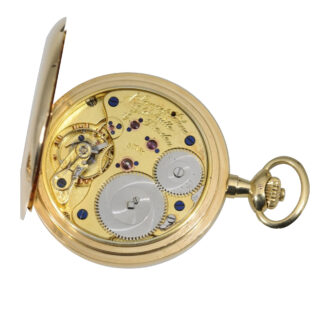
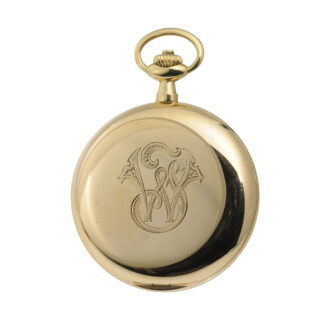
A thin German A.Lange und Söhne gold hunting cased pocket watch, circa 1911, sold on 9/25/1912 to C. A. Krall jewellery store, Elberfeld for 423 marks – manufactured in quality 1A – with original box, Lange extract from the archives, original certificate and 14k gold watch chain.
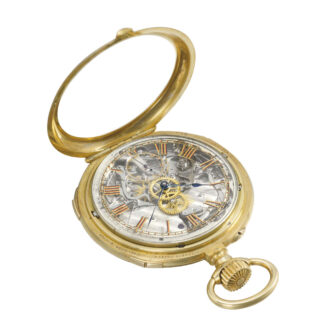
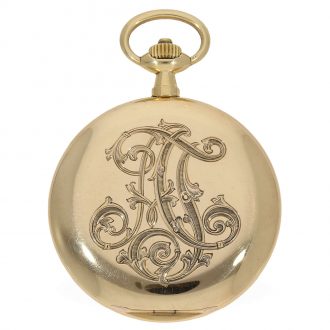
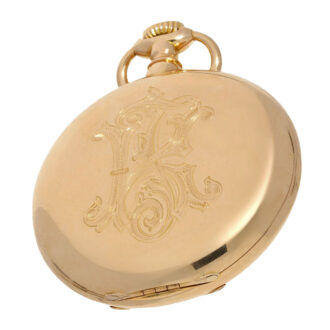
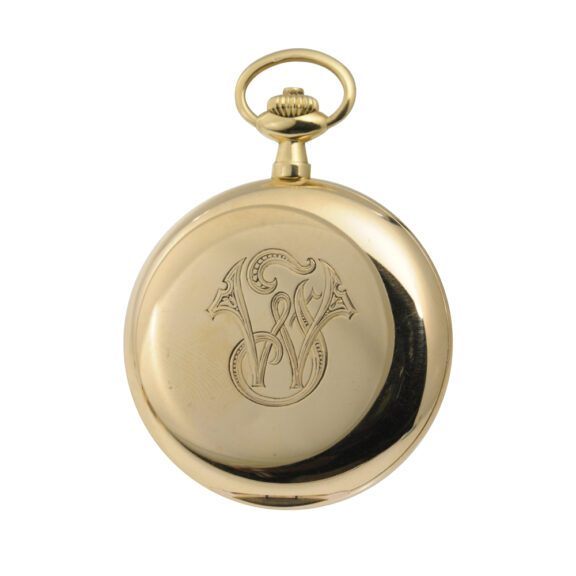
An 18k gold, engraved monogram, case design “Royal”, glazed movement, enamel dial, Arabic numerals, 3/4 plate movement, balance, gold screw compensation balance
–
Diameter: 51 mm
–
Weight: 97 g
–
Signed: A. Lange & Söhne Glashütte – SA
–
In 1794 C. A. Krall founded a jewellery business which was later taken over by his son Karl. Karl Krall was a gold and silver merchant, but was obsessed with the idea of teaching calculation, reading and writing to horses. As he was a wealthy man, Krall was able to afford his own “psychological horse laboratory” as well as a barn for “teaching purposes”. In 1912 he presented his studies on “thinking animals” to the sciences in Leipzig and claimed that animals had their own will and mood. His book met with a worldwide response, but scientists remained doubtful. Krall’s inspiration was Wilhelm von Osten, who also studied “intelligent horses”. The first of the famous Elberfeld horses were two Arabian stallions, Muhamed and Zarif; Muhamed showed a talent for calculations, Zarif was the better reader. Communication was always carried out by tapping. Later the pony Haenschen, the blind stallion Berto and other horses came along. Krall published a complete report on his teaching methods in 1912 in his book “Denkende Tiere” (thinking animals). However, his horses were requisitioned during World War I and never returned from battle.
Signed: A. Lange & Söhne Glashütte
Share this page: