Unique Swiss oversized six minute tourbillon chronometer Circa 1816
- Kenmerk
- AS2062
- Diameter
- 77 mm
- Estimate
- € 300.000 - 600.000
- Price sold
- € 526.100
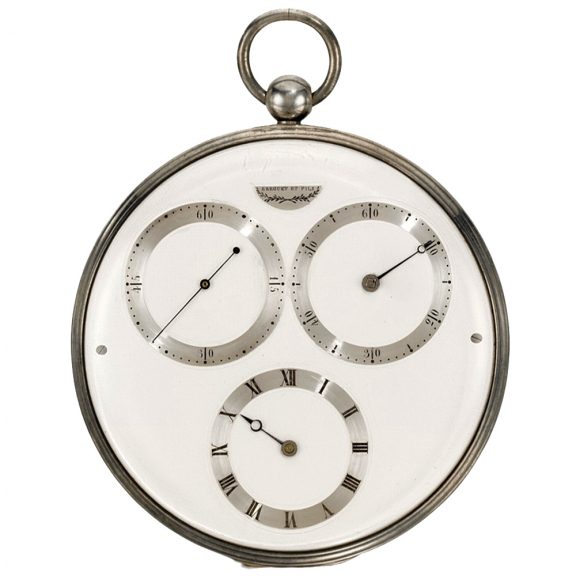
Silver open faced 6 minute tourbillon by Breguet et Fils
–
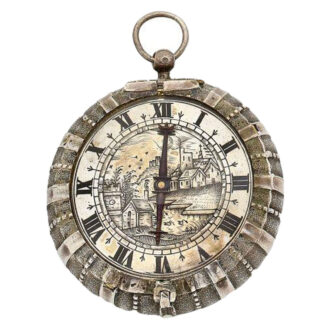
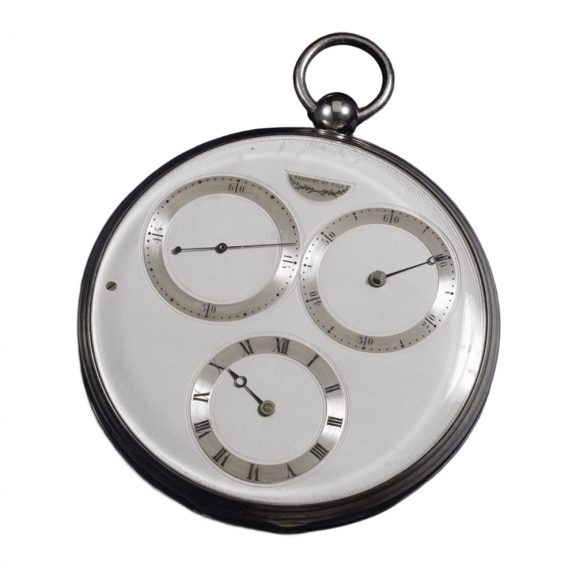
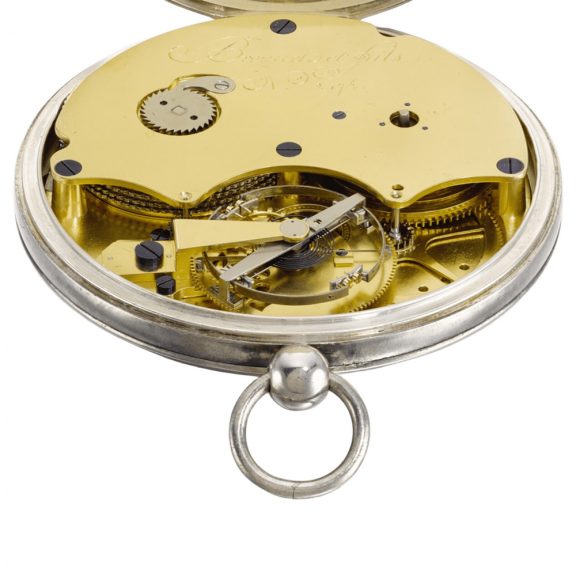
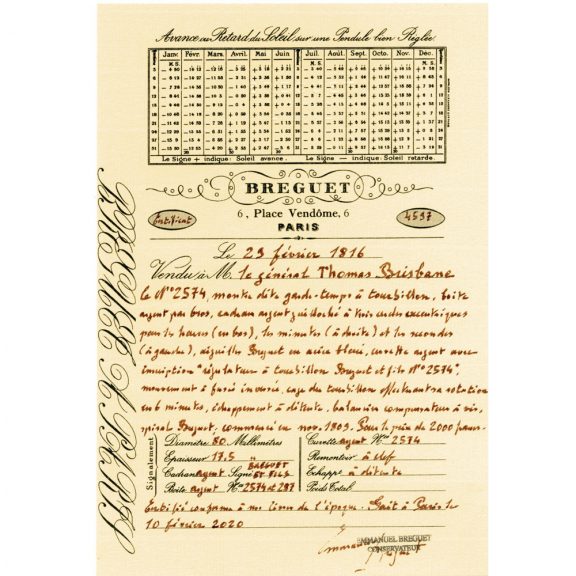
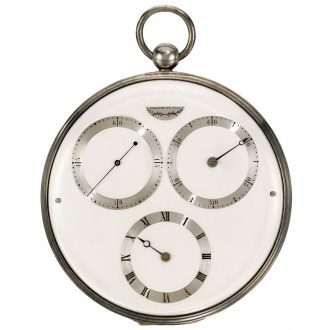
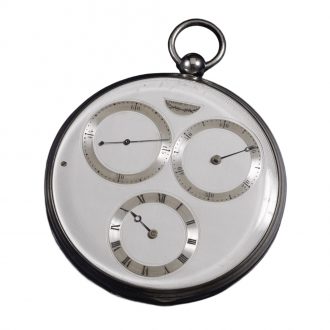
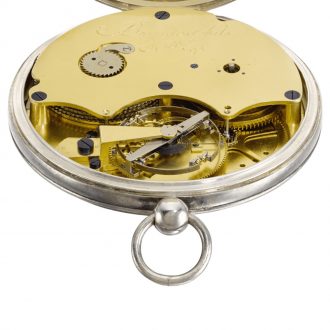
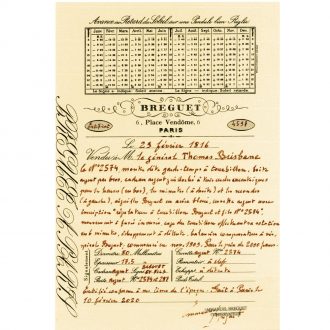
An important and rare Swiss oversized silver 6 minute tourbillon pocket watch with Peto’s cross detent chronometer escapement, regulator dial and presentation engraving, circa 1816. Sold to General Thomas Makdougall Brisbane on 23 February 1816 for 2,000 francs.
–
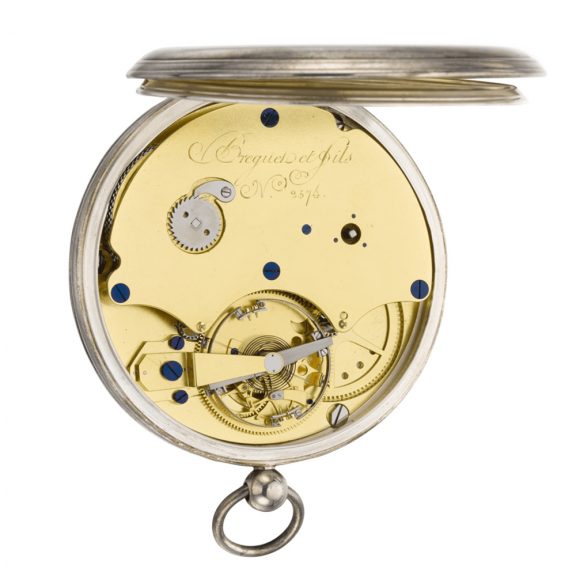
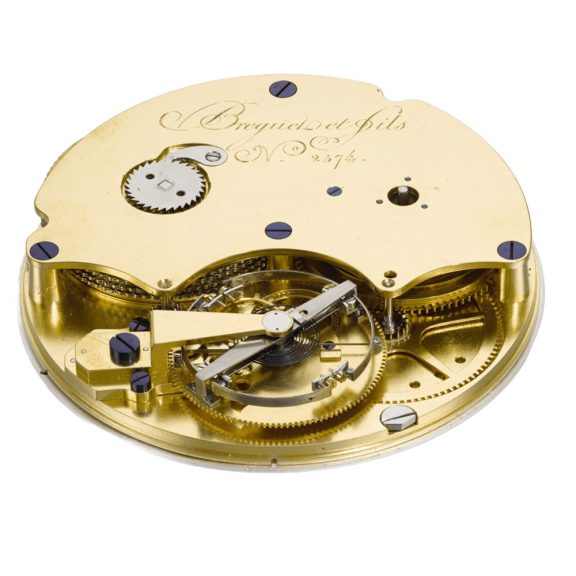
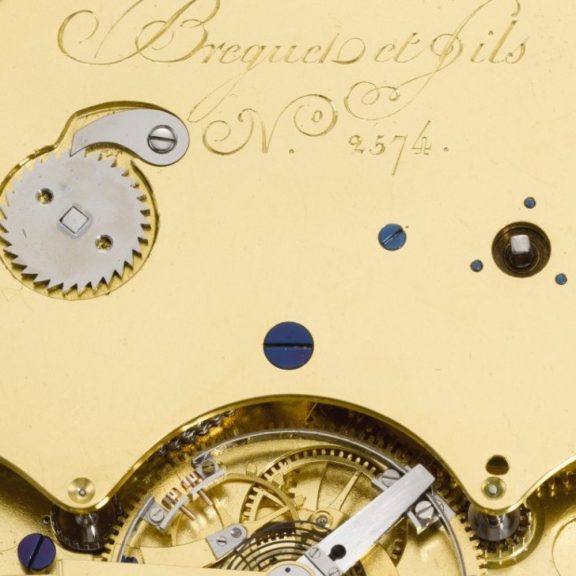
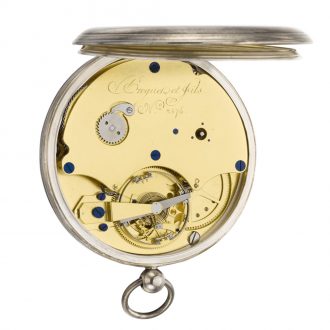
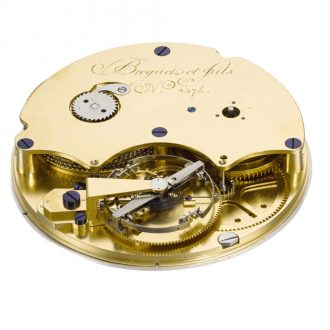
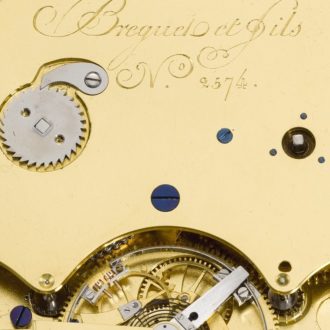
This watch features a gilded ½ plate movement, signed Breguet et Fils. It includes a reverse fusee and gilded tourbillon carriage along with a Peto cross detent chronometer escapement that has cycloidal impulse faces and pointed locking tips on the escape wheel teeth. The compensation balance is equipped with recessed rims and adjustable gold screws. Additionally, it has a blued steel spiral spring with a terminal curve, operating at 21,600 beats per hour.
The engine turned silver dial is in a regulator style and includes three subsidiary dials with satin finished chapter rings: seconds on the left, minutes on the right and hours below. The hands are made of blued steel with the hour and minute hands designed in a moon shape. Above laurel branches and a semicircular satin finished crescent signed Breguet et Fils above.
–
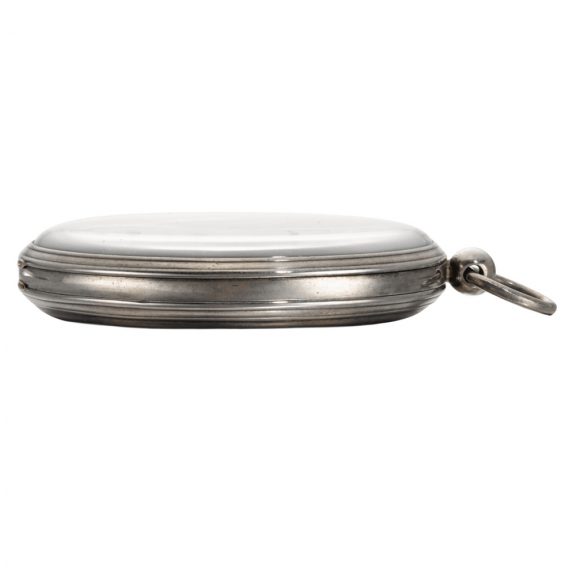
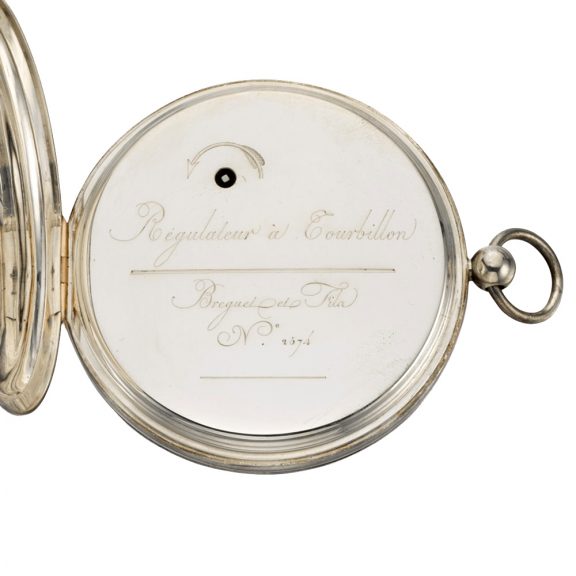
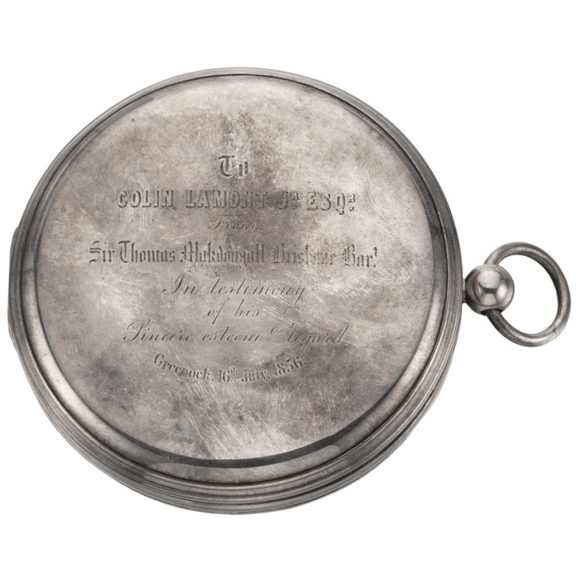
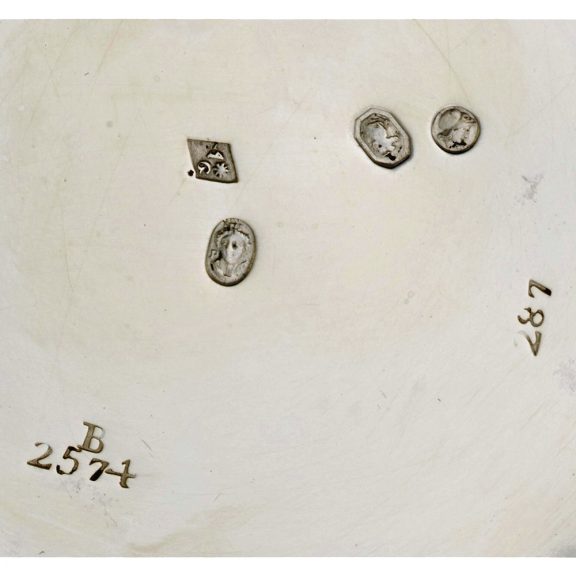
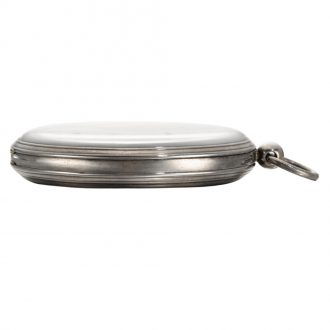
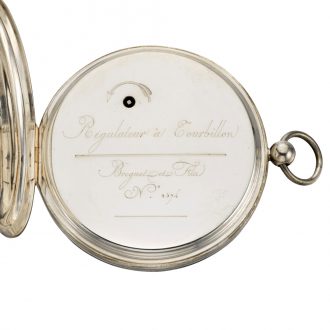
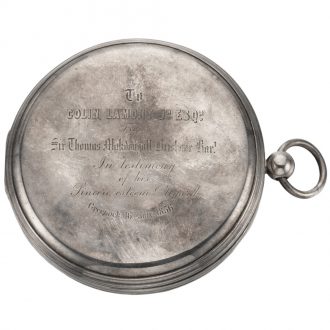
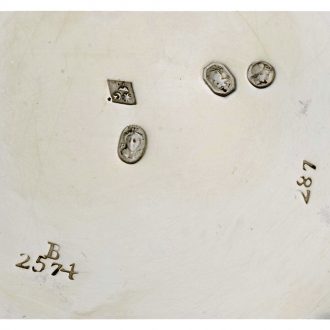
The open faced case is silver with gold hinges and the back features a later presentation inscription from the original owner that reads, To Colin Lamont Jr. Esqr. from Sir Thomas Makdougall Brisbane, Bart, in testimony of his sincere esteem and regard, Greenock, 16th July 1856. The back bears the maker’s mark AG beneath a star, indicating Ami Gros, along with Paris silver hallmarks from 1808-1819, stamped B2574 and numbered 287. It has a polished silver cuvette with an aperture for winding, engraved with Regulateur à Tourbillon, Breguet et Fils, No. 2574, and the Paris control mark for 1793 onwards. Accompanied by a Breguet certificate dated 10 February 2020.
–
Diameter: 77 mm
–
Signed: Breguet et Fils
–
The movement is functioning well and looks aesthetically pleasing, though a service might enhance its performance. The dial is in excellent, refreshed condition. The case and cuvette have been polished previously, yet all engravings remain clear and intact.
–
Abraham Louis Breguet’s contributions to horology are monumental. Known for refining the perpétuelle watch, Breguet invented several groundbreaking escapements, including the tourbillon. His ingenuity attracted a prestigious clientele, such as Marie Antoinette, Napoleon Bonaparte, Tsar Alexander I, and King George III and IV.
–
The tourbillon, patented in 1801, is one of Breguet’s most renowned inventions. It counteracts gravity by placing the escapement in a rotating carriage, enhancing accuracy. Breguet developed various tourbillons, like the one-minute, four-minute, and six-minute versions.
–
Breguet often used the Peto-cross escapement in his tourbillons. Named after English maker James Peto in 1784, this escapement differs from Thomas Earnshaw’s by positioning the impulse device and passing spring on opposite sides. This design maintains tension, improving durability in tourbillons.
–
The watch’s balance vibrates at 21,600 times per hour, surpassing the typical 14,000-18,000 vibrations of the era, which enhances accuracy. Breguet achieved this without a stronger mainspring by adjusting the tourbillon carriage’s rotation speed.
–
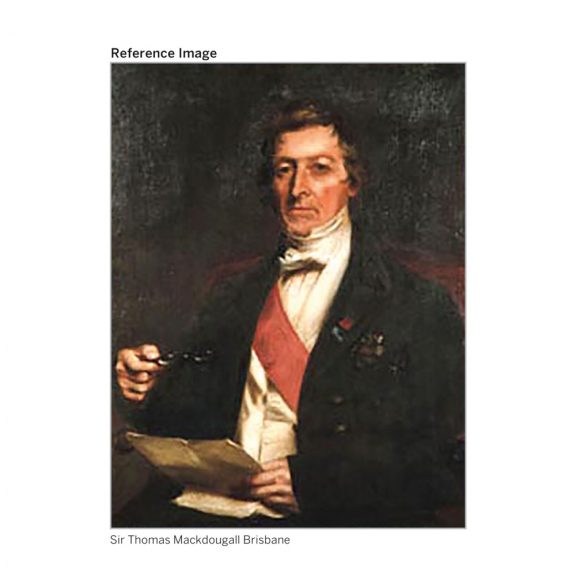
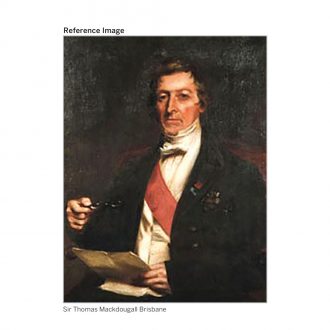
In 1816, Breguet sold this watch to Sir Thomas Makdougall Brisbane (1773–1860). Born in Ayrshire, Scotland, Brisbane served in the army and later became Governor of New South Wales, Australia, from 1821 to 1825. He reformed the currency and land grant systems and promoted press freedom. He also organised exploratory missions, one of which discovered the Brisbane River, leading to the founding of Brisbane, now a major Australian city.
–
A passionate astronomer, Brisbane established observatories in Scotland and Australia. After returning to Scotland in 1825, he founded the Makerstoun Observatory, which conducted significant magnetic observations, earning him the Keith Prize in 1848. He served as president of the Royal Society in 1833 and the British Association in 1834. In 1836, he became a baronet and established two gold medals to promote scientific research.
Signed: Breguet et Fils
Share this page: