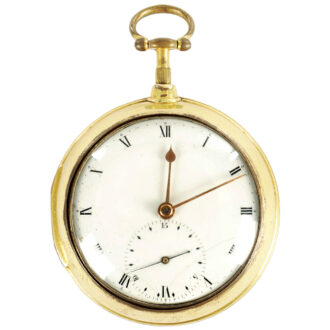
Rare Dutch silver pair cased sun and moon watch Circa 1720
- Kenmerk
- AS1762
- Diameter
- 59 mm
- Estimate
- € 4.500 - 8.000
- Price sold
- -
Silver single-handed verge pocket watch by N. Weylandt
–
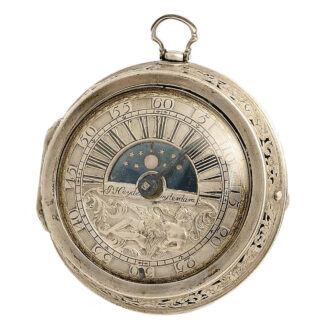
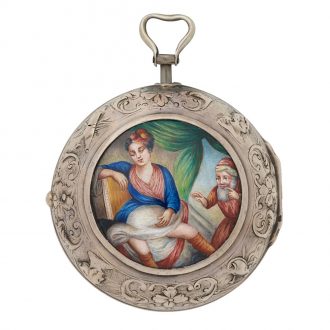
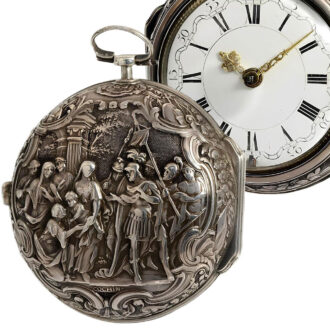
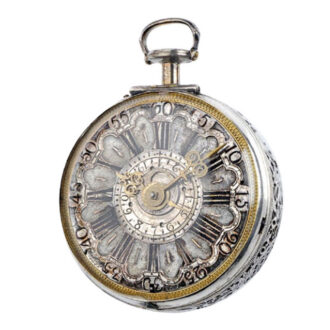
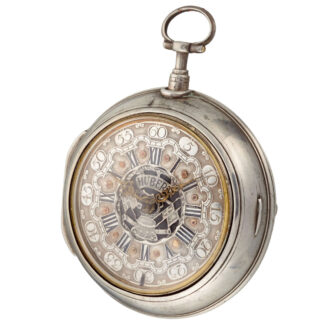
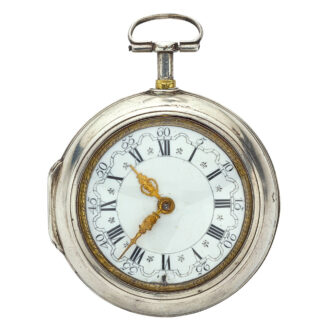
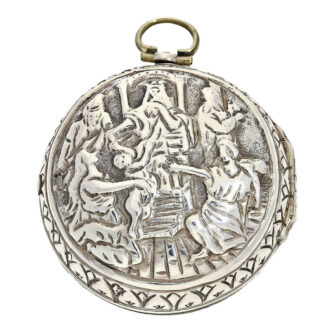
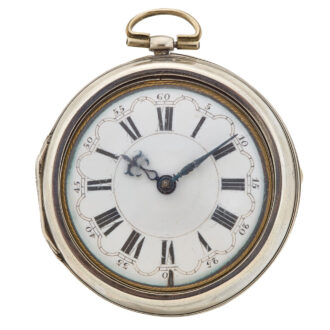
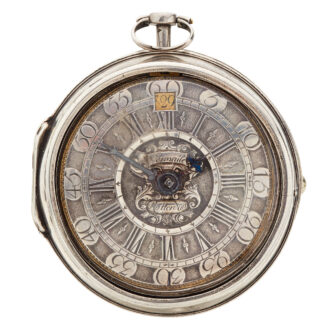
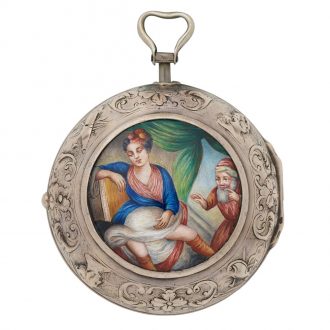
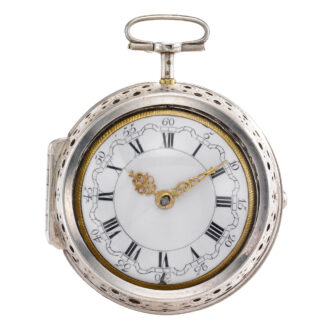
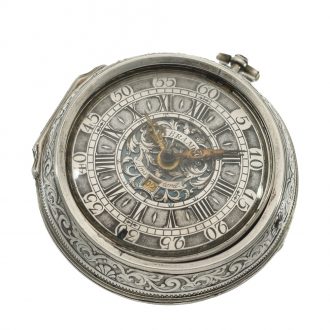
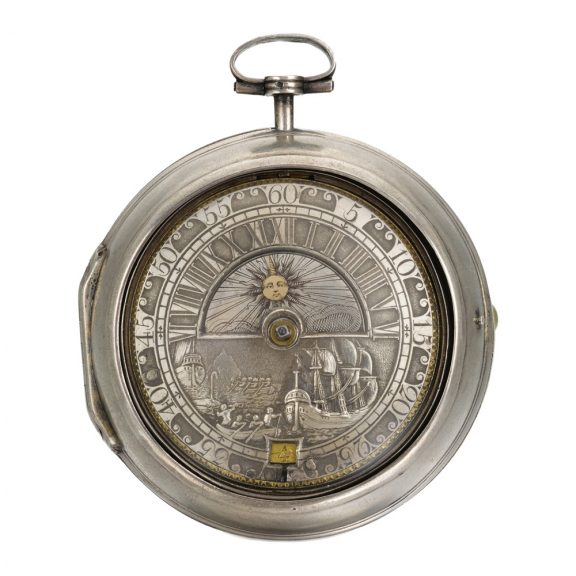
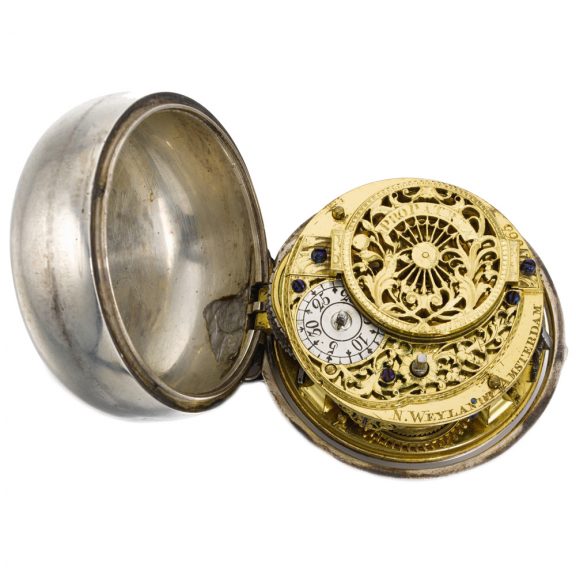
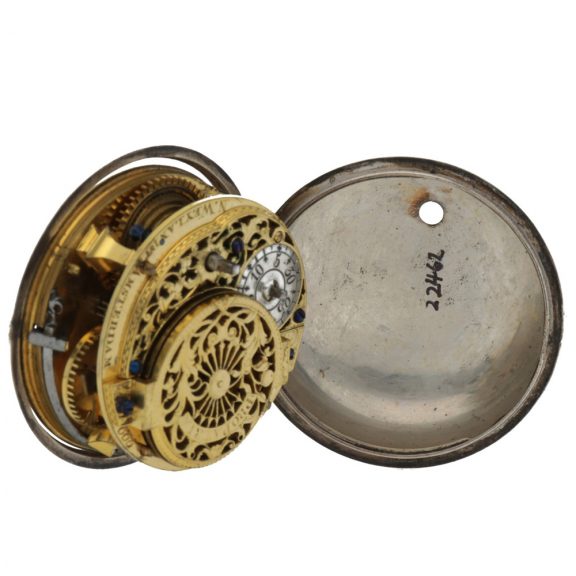
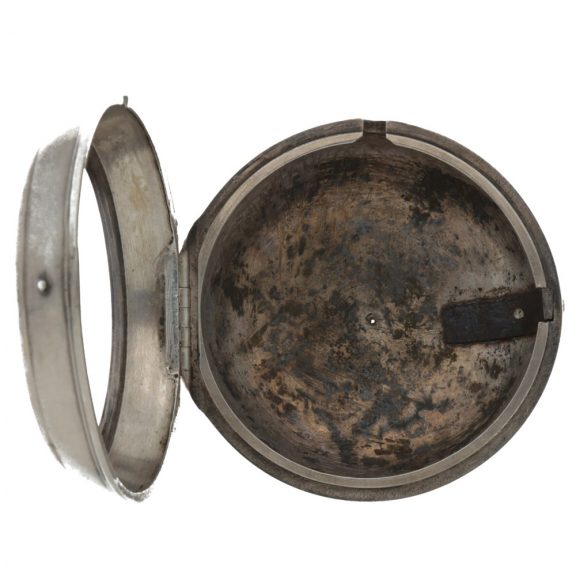
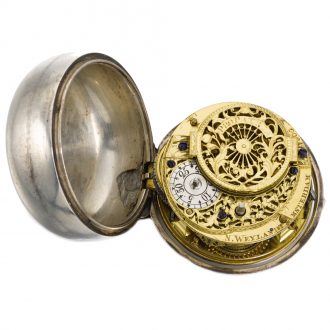
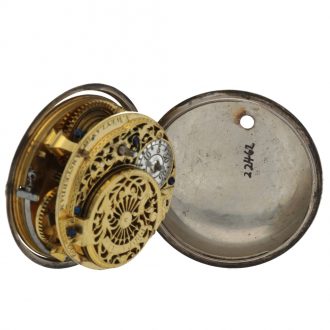
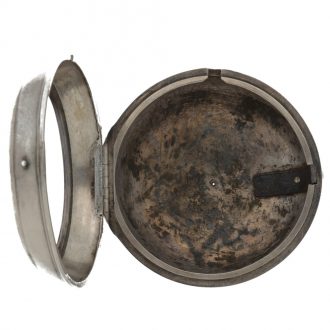
A Dutch silver pair-cased single-handed sun and moon watch circa 1720. The watch features a gilded full plate movement with verge escapement, a plain flat balance, a decoratively pierced and engraved balance bridge centred with a sheaf of arrows engraved Propatria, and is surrounded by flora, foliage, and fruit. It also includes a decoratively pierced and engraved asymmetrical foot surrounding the silver regulation plate, baluster pillars, fusee and chain, and is signed by N. Weylandt of Amsterdam. The case includes a plain silver inner, an aperture for winding to the back, and a plain silver outer case.
–
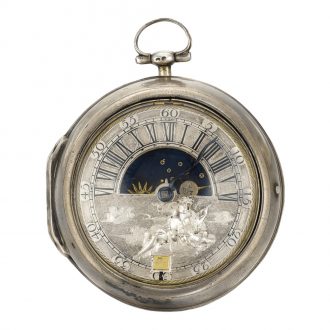
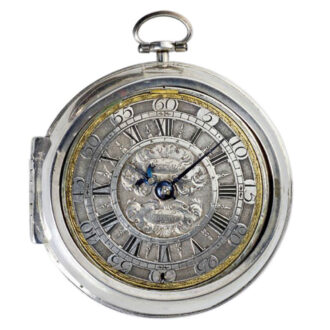
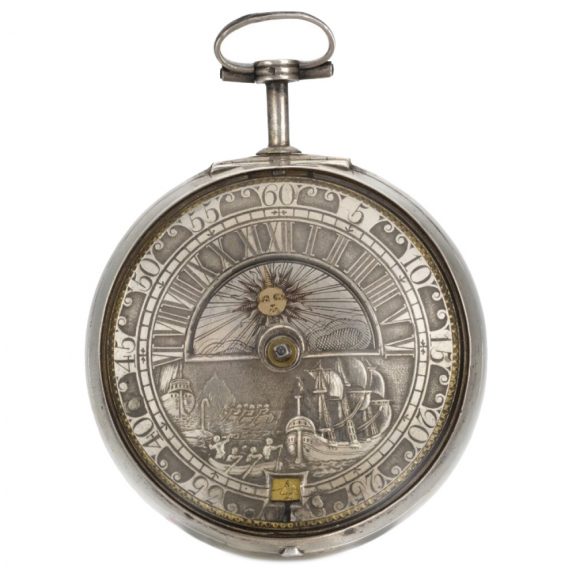
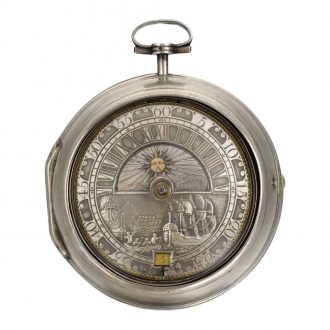
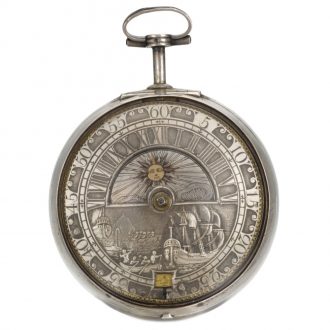
The silver champlevé dial has a large aperture with a rotating disc divided into day and night, with the hours indicated on an outer semi-circular chapter ring with Roman numerals. The daytime hours are indicated by a gilt sun with a pointer, while the nighttime hours are indicated by the moon with a pointer. The dial also features an outer Arabic minute track, an aperture for the date, and a lower half of the dial with a chased and engraved harbour scene depicting sailing ships and rowing boats.
–
Diameter outer case: 59 mm
–
Diameter inner case: 51.5 mm
–
Signed: N. Weylandt, Amsterdam
–
The movement is running smoothly, the hour disc is functioning well, and the date is advancing. There are some scratches on the plates, particularly around the dial feet. The dial has light scuffs and scratches, with wax infill missing from the numerals and minute ring. The inner case has light scuffs and a slight depression around the band. The outer case also has light scuffs and scratches, with some distortion to the top of the bezel around 4 to 6 o’clock. Additionally, there is a small pin-sized hole in the centre of the back with a recessed slot behind it.
–
Nicolaas Weylandt was active in Amsterdam around 1720 and passed away in 1756. In 1742, a register called “Kohier van the personal quota in Amsterdam” listed him as a watchmaker on the Nieuwendijk. He paid a rent of 470 florins, employed a maid, and had an income of 1200 florins. He was a significant watchmaker, but his business was dissolved in 1756. An advertisement from that time announced the sale of a variety of watches on May 31, 1756, in Amsterdam, all inherited from the late Nicolaas Weylandt, who had his business on Nieuwen Dijk at the Haarlemmersluis in Amsterdam from 1742 to May 8, 1756.
Signed: N. Weylandt, Amsterdam
Share this page: