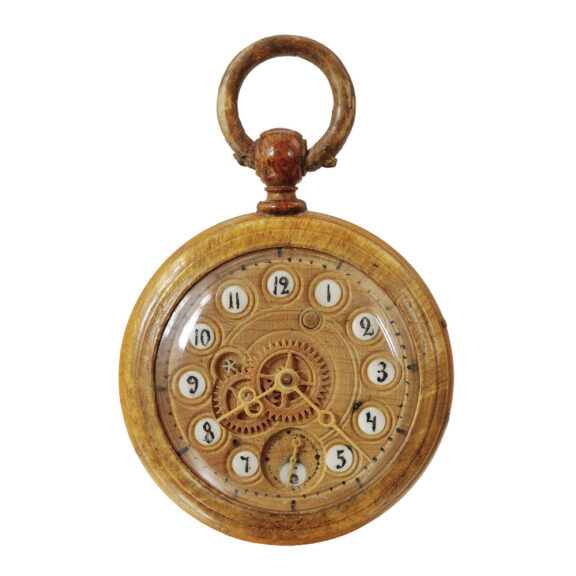
Russian boxwood open faced cylinder pocket watch Circa 1860
- Kenmerk
- AL3474
- Diameter
- 36 mm
- Estimate
- € 4.500 - 9.000
- Price sold
- € 7.000
Wooden open faced key winding cylinder watch
–
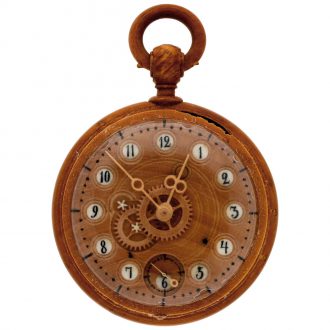
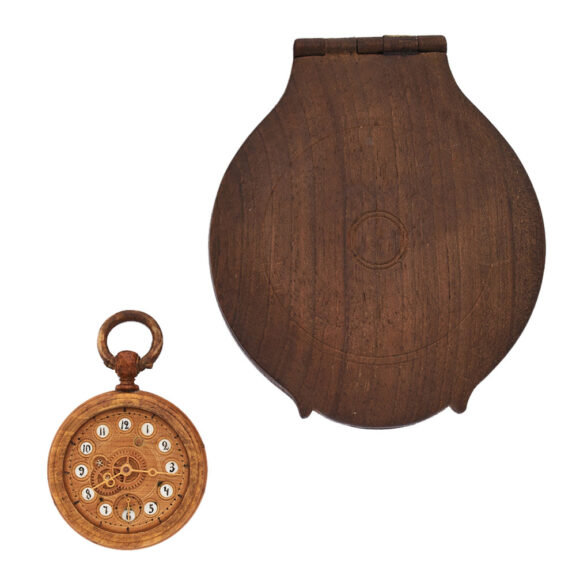
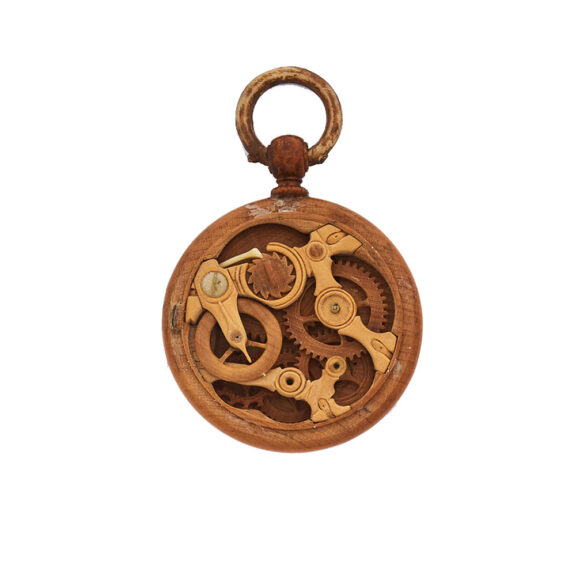
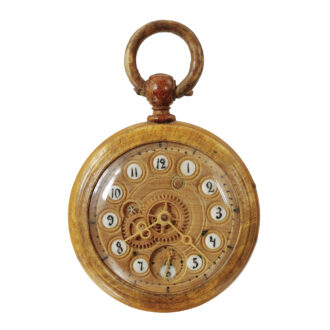
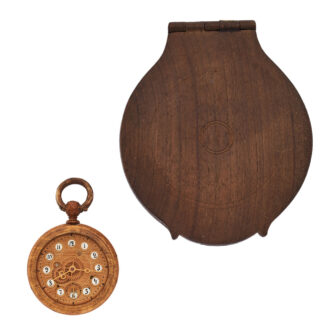
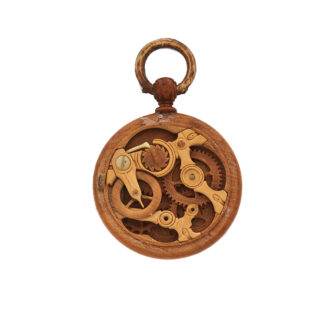
A fine Russian boxwood open faced pocket watch made by Mikhail Semyonovitch Bronnikov in Vjatka, circa 1860. This exceptionally rare timepiece features an all wood mechanical key wound movement with pinned wooden bridges, a going barrel with a steel mainspring, a cylinder escapement, and a plain wooden balance wheel fitted with a steel balance spring at the centre. The intricate skeleton mechanism is visible in the centre of the wooden dial, which features white bone cartouches with black Arabic numerals for the hours, a fine beaded outer minute track, and a small subsidiary seconds hand at 6 o’clock.
–
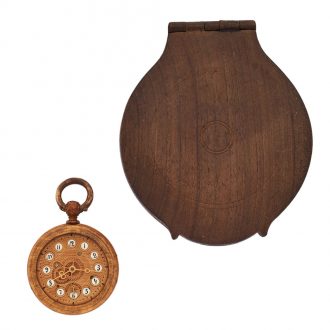
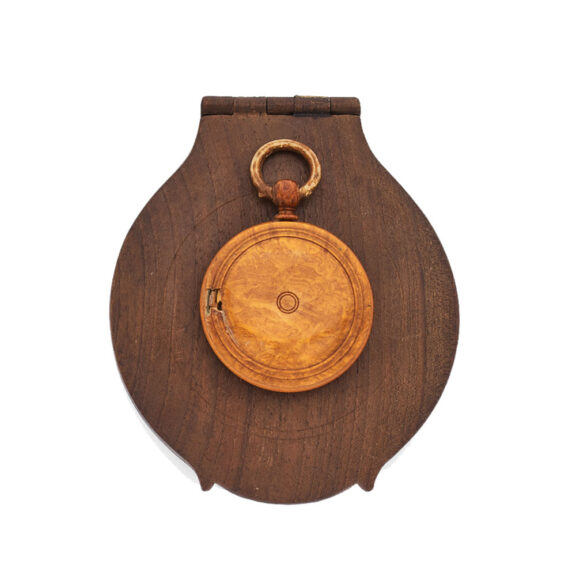
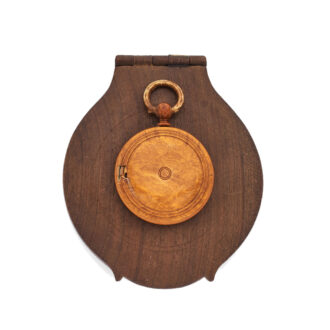
The watch is housed in a circular solid boxwood open faced case with a hinged reverse back cover signed inside in Cyrillic script, a bezel decorated with turned ribs, and a sturdy round suspension bow. The timepiece is accompanied by its original period wooden outer travel case.
–
Diameter: 35.5 mm
–
Weight: 34.30 g
–
Signed: Mikhail Semyonovitch Bronnikov, Vjatka, Russia (today the city of Kirov)
–
The Bronnikov family of Vjatka, Russia—beginning with Ivan and followed by Semyon, his sons Mikhail and Nicolai, and grandson Nicolai Mikhailovitch—specialized in crafting extraordinary all wood and all ivory pocket watches. Their inventive design integrated the movement directly into the case, using the dial as the pillar plate with the bridges and clock supported by brackets milled into the band, a pioneering construction concept later adopted by the celebrated watchmaker Albert Potter. These timepieces used a careful selection of materials, featuring birchwood or boxwood cases, complex clockwork components carved from walnut, honeysuckle, and hardened bamboo, and dials often enriched with bone, ivory, or mother of pearl cartouches.
–
Far from being common timekeepers due to a shortage of metal, these rare creations offered a practical advantage, as wood remained unaffected by Russia’s extreme temperature variations. They were produced as prestigious, expensive novelty souvenirs that commanded prices around 120 rubles—surpassing the cost of a contemporary gold watch. Their exceptional technical and artistic merit brought the family imperial patronage, notably from Future Czar Alexander II and the Russian Ministry of Internal Affairs, alongside widespread international acclaim and medal winning recognition at major exhibitions in St. Petersburg, Vienna, Nizhny Novgorod, and Paris throughout the 19th and early 20th centuries.
Signed: Mikhail Semyonovitch Bronnikov, Vjatka
Share this page: