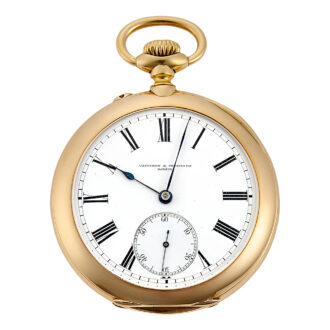
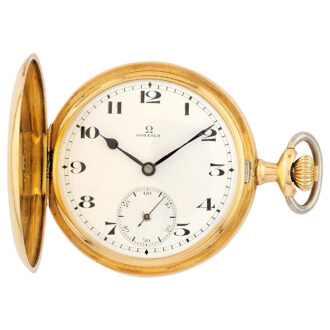
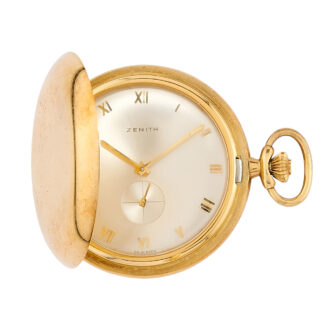
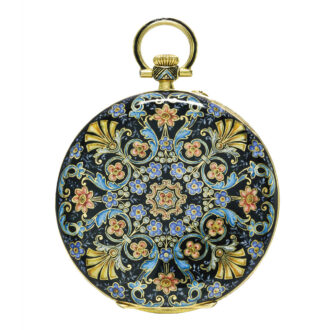
Slim Swiss yellow gold and enamel keyless lever Circa 1910
- Kenmerk
- SA0533
- Diameter
- 46 mm
- Estimate
- € 4.000 - 8.000
- Price sold
- € 9.300
Gold and enamel open faced lever watch
–
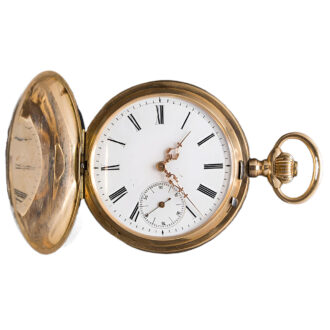
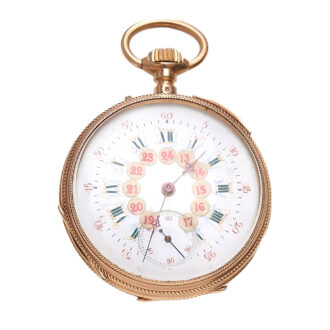
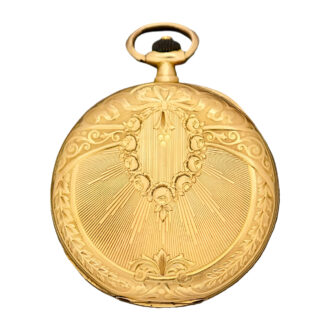
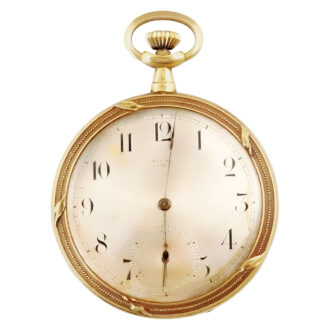
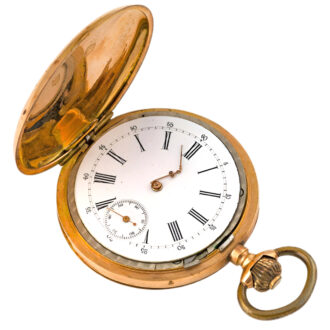
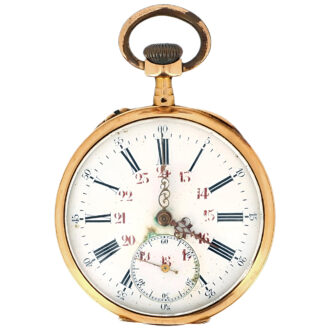
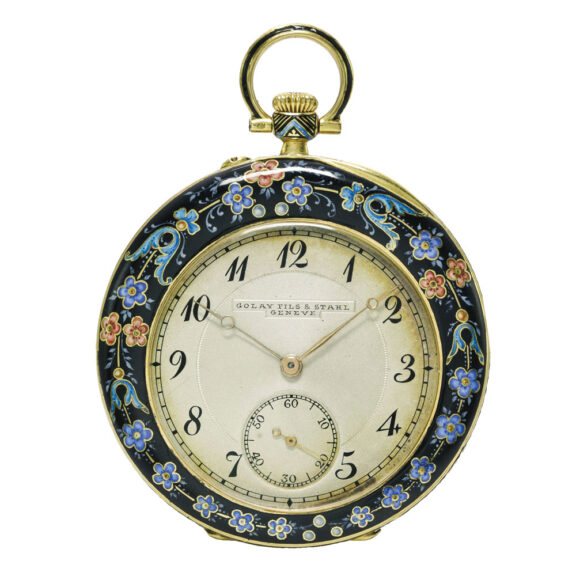
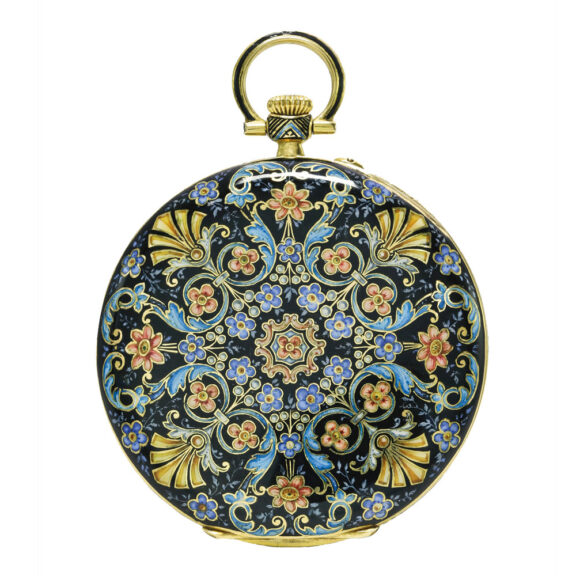
A slim Swiss yellow gold and enamel open faced keyless lever pocket watch, circa 1910.
Nickel lever movement, jewelled, manual winding, cut bimetallic compensation balance.
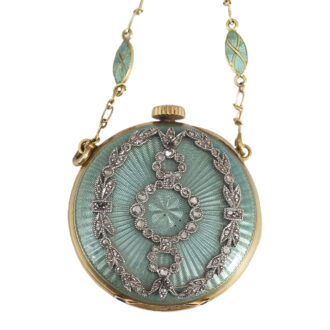
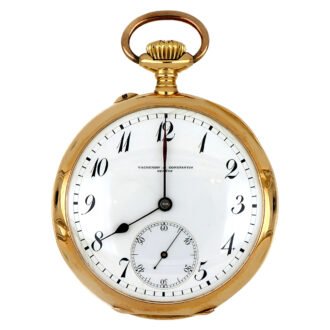
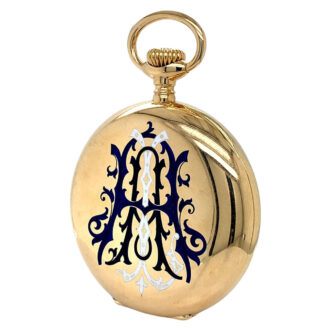
18 Carat yellow gold engraved cuvette. Silvered dial with Breguet hours and outer minute divisions, the centre engine turned, sunk subsidiary seconds at 6. Polychrome cloisonné enamel case with a geometric floral design, the bezel similarly decorated.
Case, dial and movement signed.
–
–
A slim Swiss yellow gold and enamel open faced keyless lever pocket watch, circa 1910.
Nickel lever movement, jewelled, manual winding, cut bimetallic compensation balance.
18 Carat yellow gold engraved cuvette. Silvered dial with Breguet hours and outer minute divisions, the centre engine turned, sunk subsidiary seconds at 6. Polychrome cloisonné enamel case with a geometric floral design, the bezel similarly decorated.
Case, dial and movement signed.
–
Diameter: 46 mm
–
Signed: Golay Fils & Stahl Genève
–
Golay Fils & Stahl was founded in 1837 by the clockmaker Golay-Leresche at 31, Quai des Bergues, Geneva, Switzerland. The company remained in family hands, specialising in watches, until the beginning of the 20th Century. It was then purchased by Stahl, at which time the current name came into existence. In 1962, the firm was purchased by Jacques Wolfgang who headed it until his death in 1976, at which point, his son Jesse took over. Retail operations ceased in December 1997 to concentrate on wholesale activities at the high end of the jewellery market, the core of the family business for five generations.
–
Cloisonné is an ancient technique for decorating metalwork objects with coloured material held in place or separated by metal strips or wire, normally of gold. In recent centuries, vitreous enamel has been used, but inlays of cut gemstones, glass and other materials were also used during older periods, indeed, cloisonné enamel very probably began as an easier imitation of cloisonné work using gems. The resulting objects can also be called cloisonné.
–
Cloisonné is an ancient technique for decorating metalwork objects with coloured material held in place or separated by metal strips or wire, normally of gold. In recent centuries, vitreous enamel has been used, but inlays of cut gemstones, glass and other materials were also used during older periods, indeed, cloisonné enamel very probably began as an easier imitation of cloisonné work using gems. The resulting objects can also be called cloisonné.
Signed: Golay Fils & Stahl Genève
Share this page: