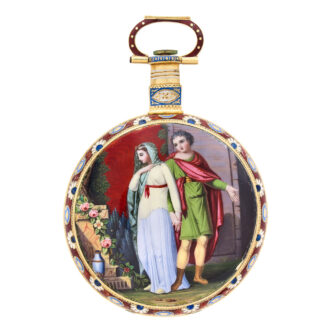
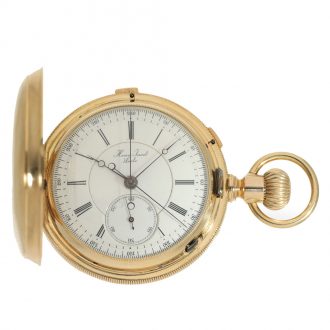
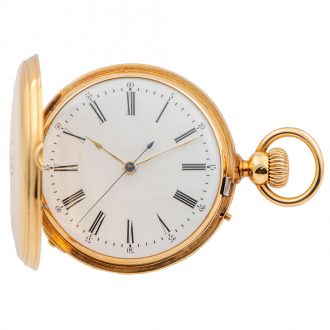
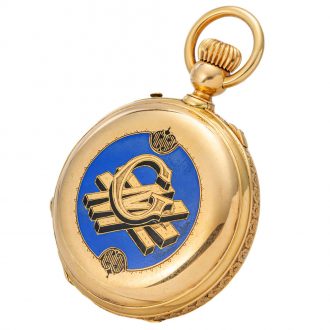
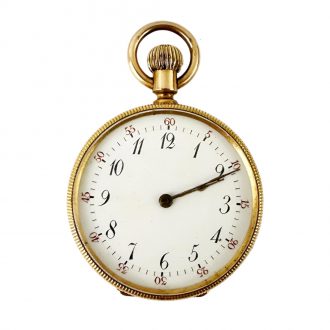
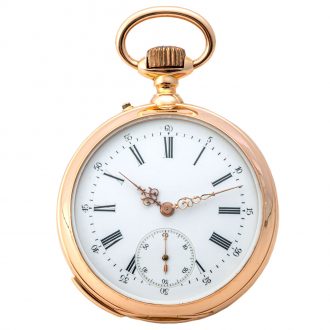
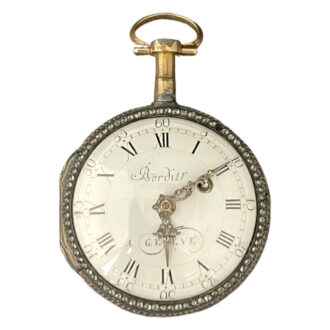
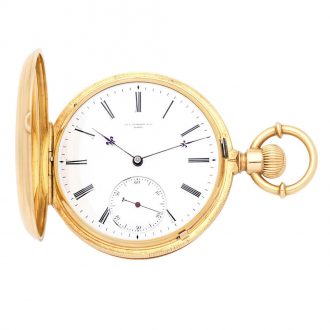
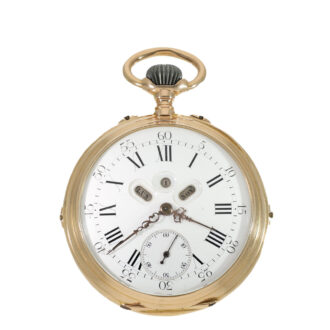
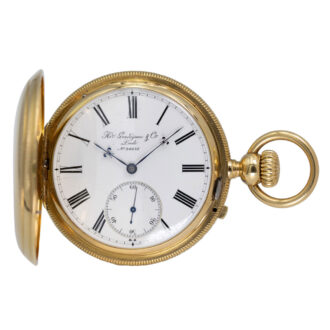
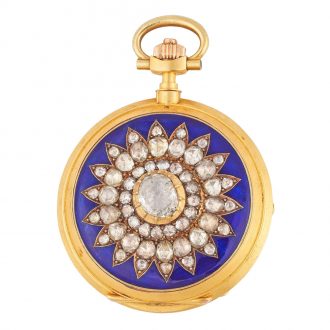
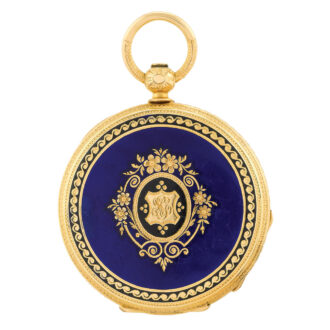
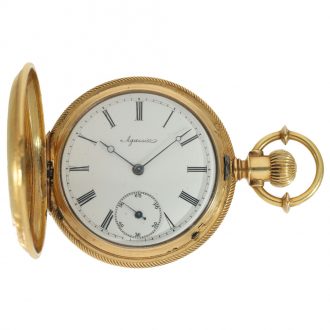
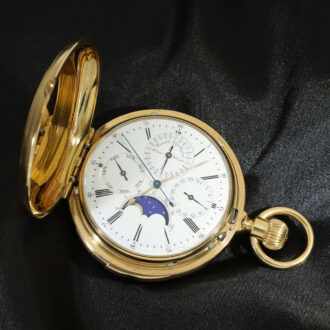
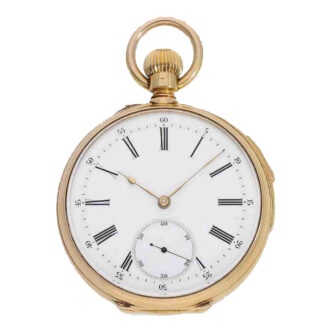
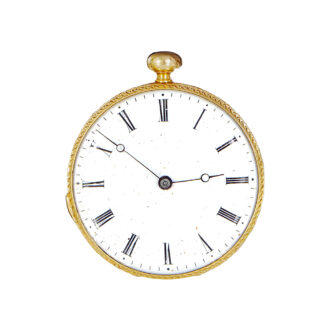
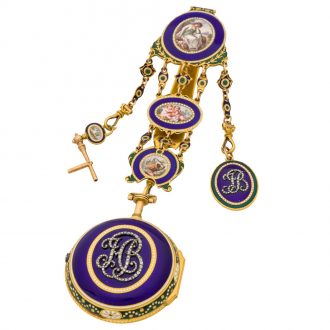
Swiss 14 carat gold and enamel full hunter cased watch Circa 1870
- Kenmerk
- HC1443
- Diameter
- 37 mm
- Estimate
- € 750 - 1.500
- Price sold
- € 600
Splendour pocket watch set with diamonds
–
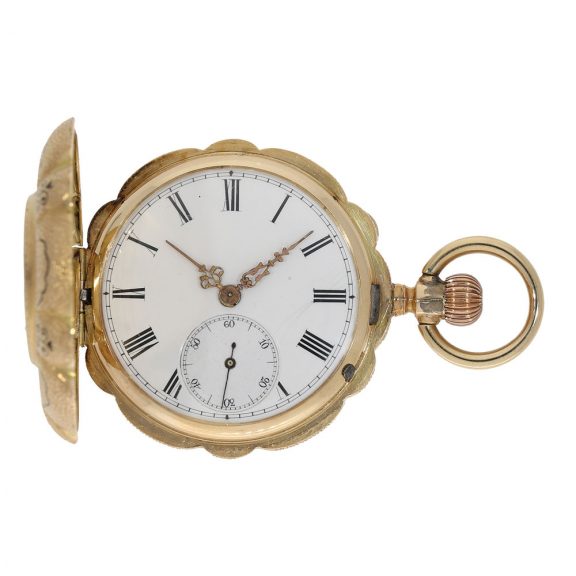
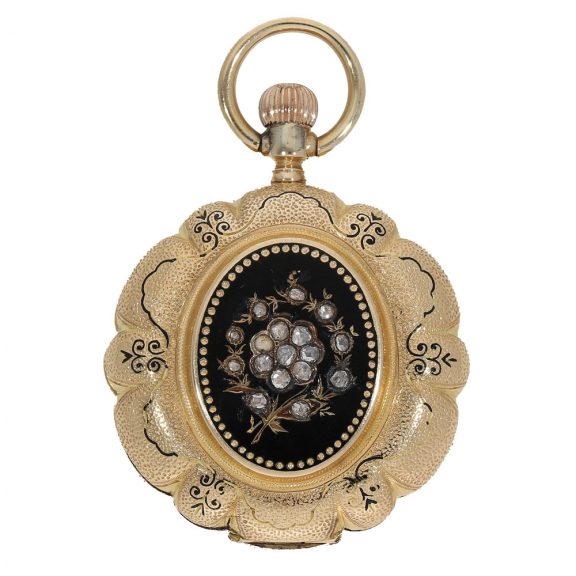
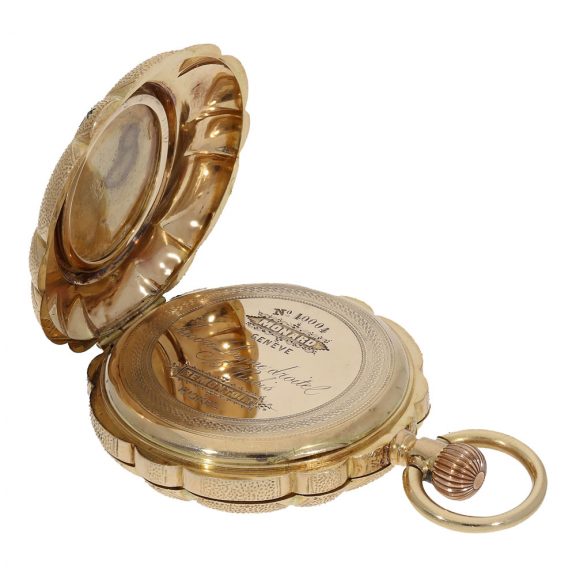
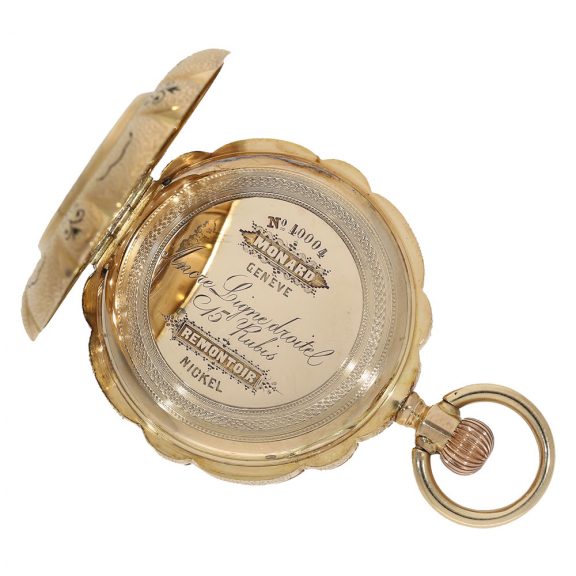
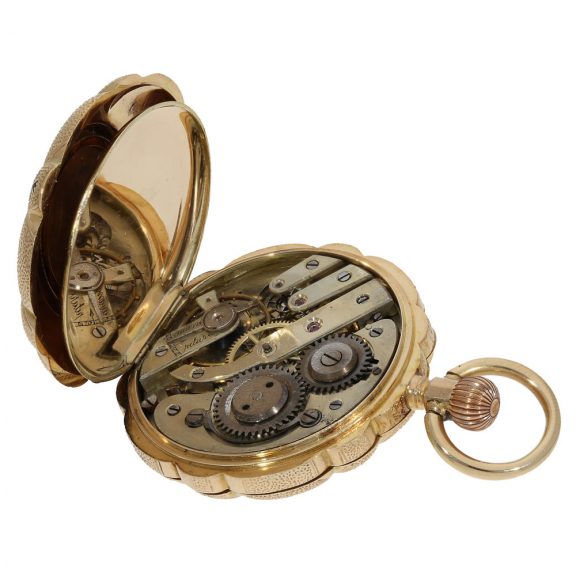
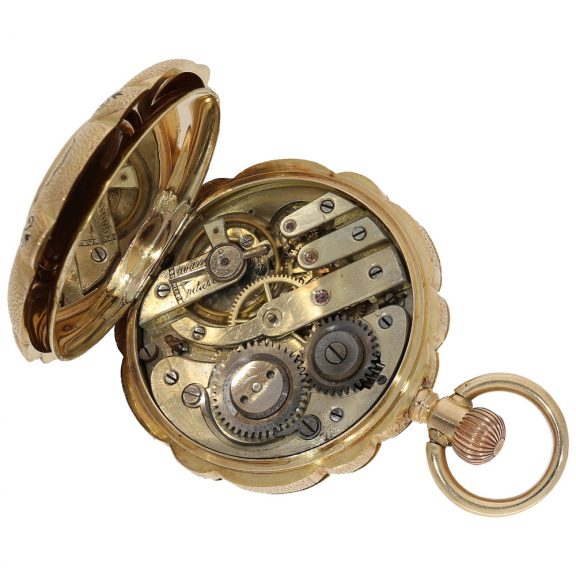
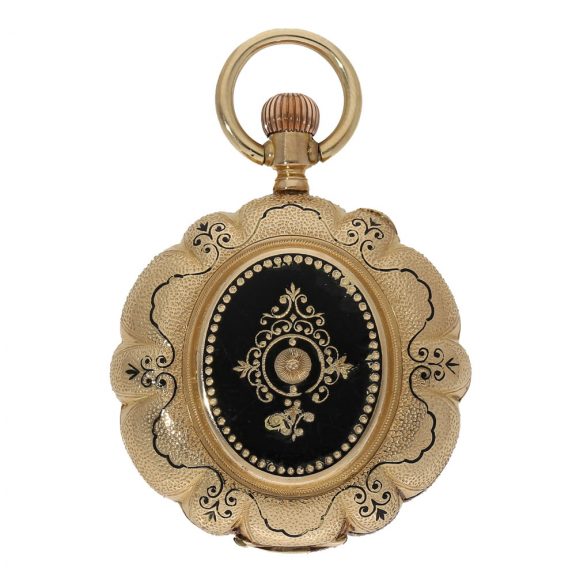
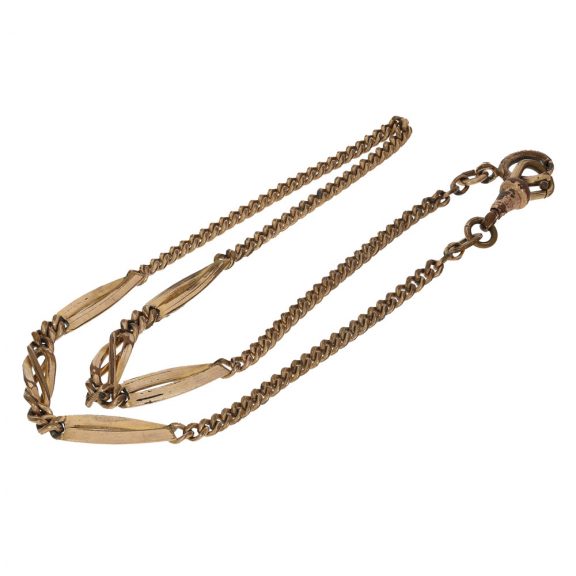
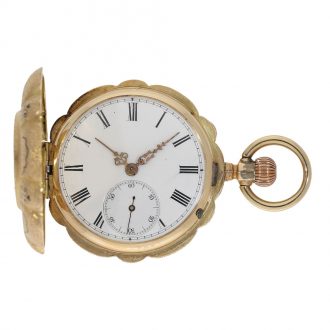
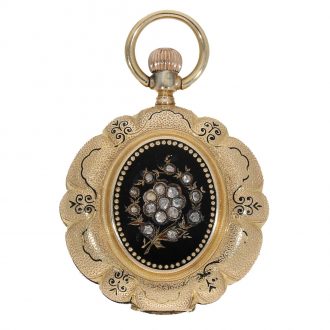
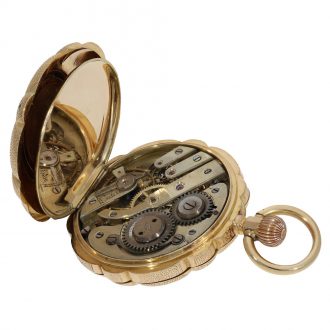
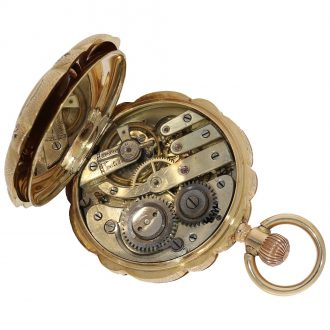
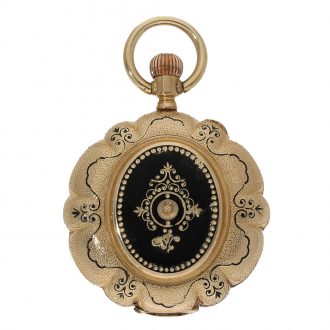
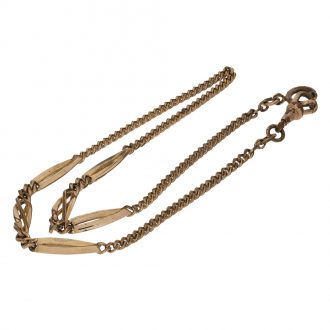
A gold and enamel splendour full hunter cased watch set with diamonds with a chatelaine, made by Jules Monard in Genève, Switzerland, circa 1870. This numbered full hunter cased watch which was crafted from 14 carat gold and enamel has a curved case which is elaborately chased, has central oval black enamel plaque on both sides set with rose cut diamonds. The white enamel dial has Roman hour numerals, a subsidiary seconds dial at 6 o’clock and gold hands. The movement has 15 rubies, an ‘ancre ligne droite’, a Swiss style lever escapement where the three key pivots (escape wheel, pallet lever and balance) are aligned in a straight line, escapement with a bishop’s crook lever.
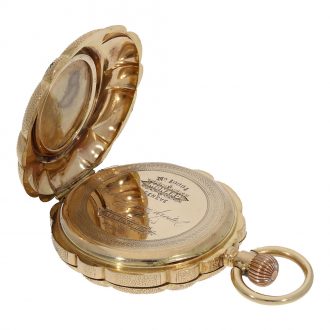
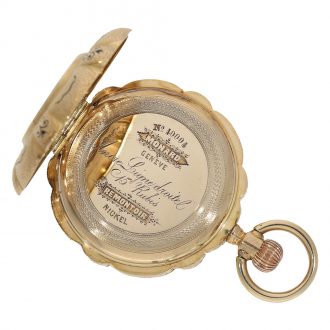
The cuvette is signed and numbered.
–
Diameter: 37 mm
–
Weight: 40 g
–
Signed: Monard, Genève
–
Monard
Jules Monard, a Swiss watchmaker from Genève, produced good quality pocket watches around the turn of the 20th century, specifically from 1885 to 1920. Many of his pieces were marketed through the Wittnauer Company. These watches often featured 18-21 jewelled movements and were noted for their “good” quality in horological references, with auction prices ranging from US$ 425 to 750. The term “remontoir” often found on these watches refers to the stem winding system, invented by Louis-Benjamin Audemars.
–
Bishop’s crook lever
The term “bishop’s crook” describes the distinctive shape of a lever arm found in certain lever movements. This design is a functional choice within the overall watch mechanism. While the primary role of the lever escapement is to regulate the release of energy from the mainspring to ensure accurate timekeeping, the “bishop’s crook” shape does not pertain to this core function. Instead, it typically relates to the mechanisms for winding the watch or setting the time. For example, in a lever set pocket watch, the setting mechanism may incorporate a lever with a “bishop’s crook” shape to engage or disengage the winding pinion during time setting.
Signed: Monard, Genève
Share this page: