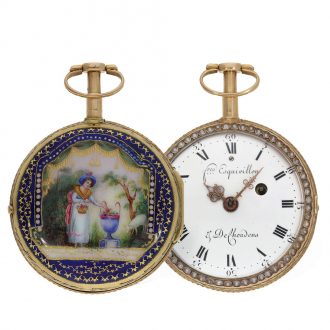
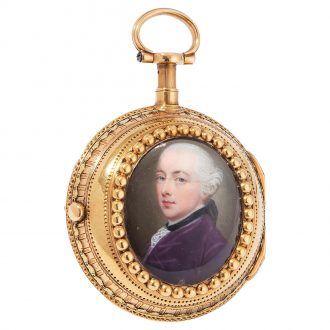
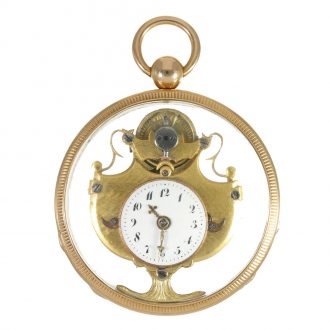
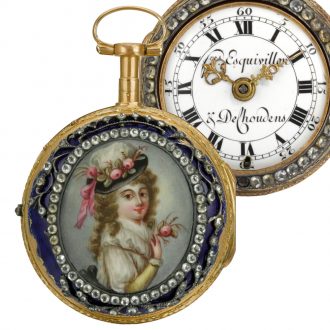
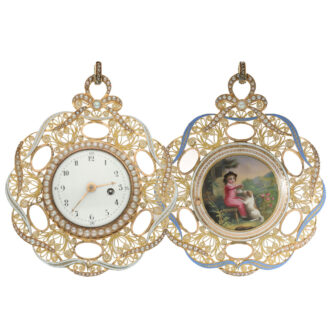
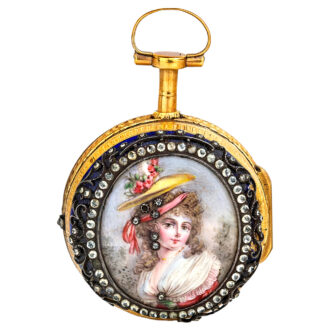
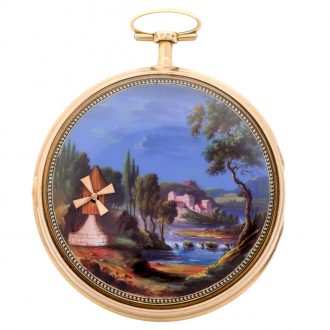
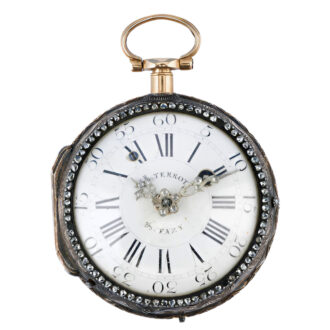
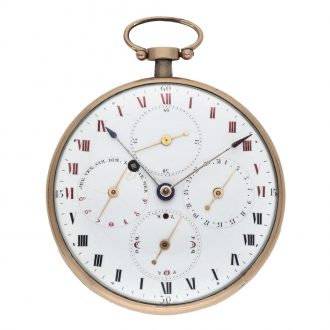
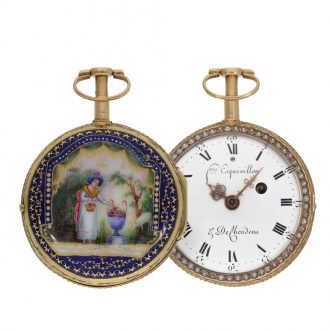
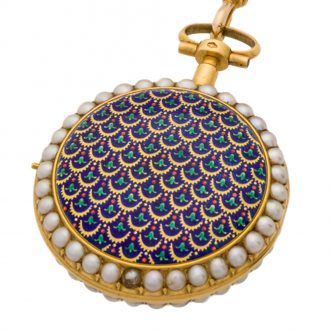
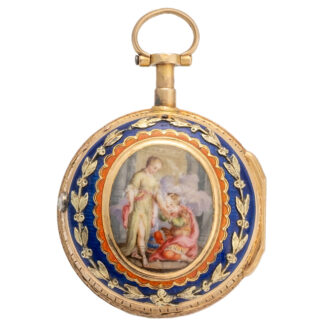
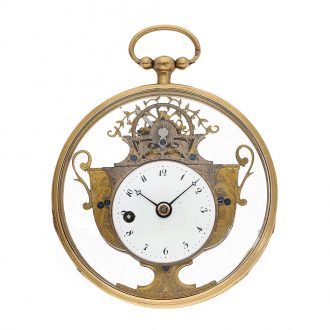
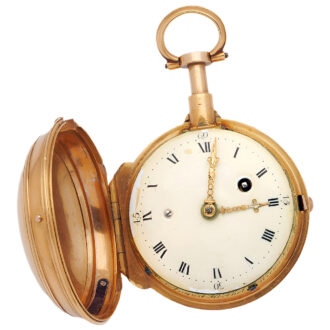
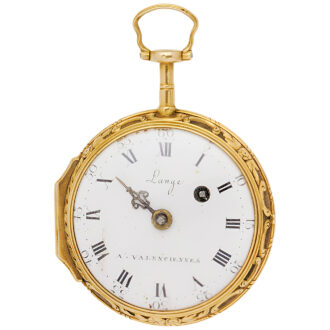
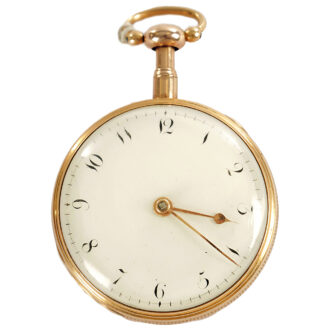
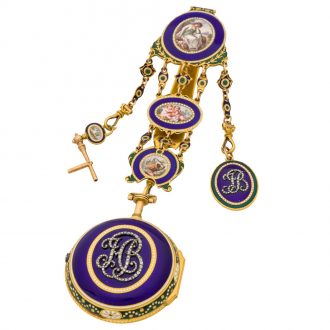
Swiss 18 carat gold and enamel verge pocket watch Circa 1780
- Kenmerk
- HC1774
- Diameter
- 45 mm
- Estimate
- € 4.000 - 7.500
- Price sold
- -
One of the earliest watches with an erotic scene
–
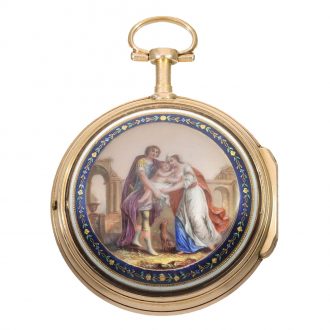
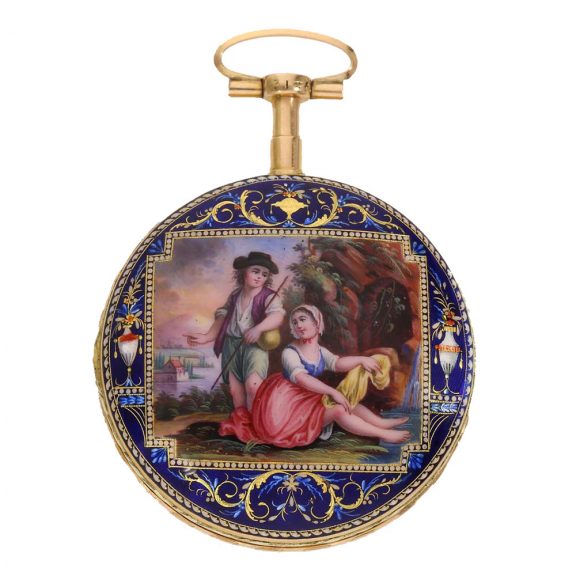
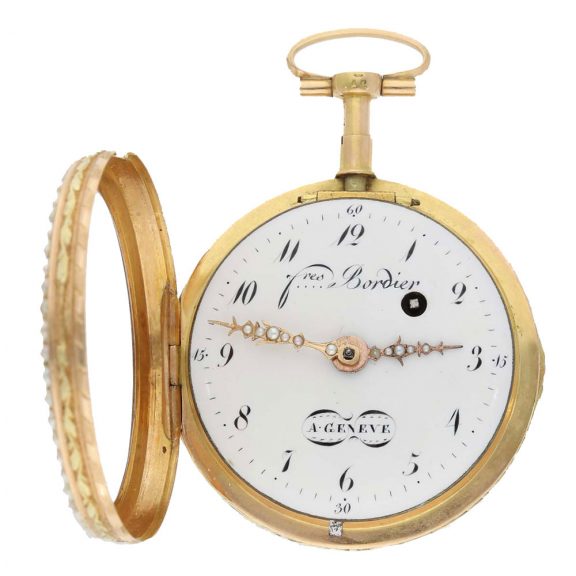
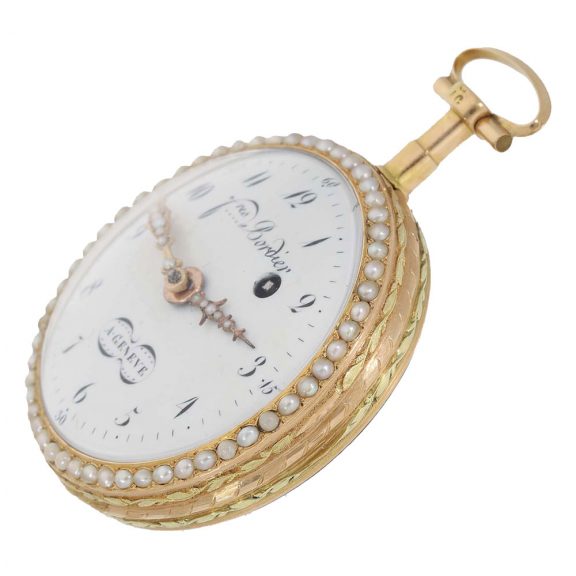
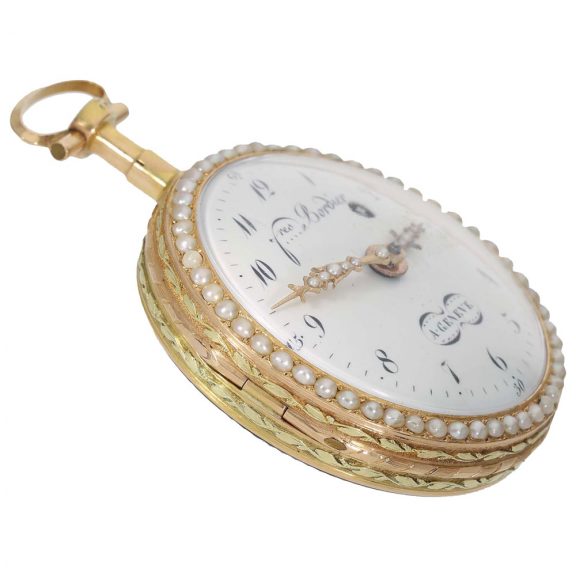
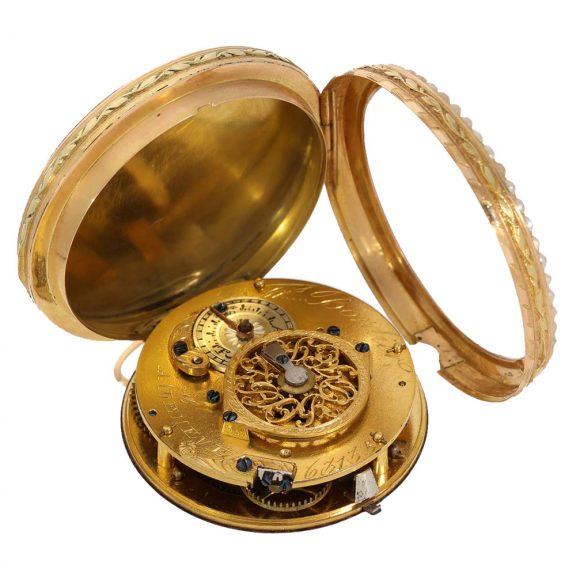
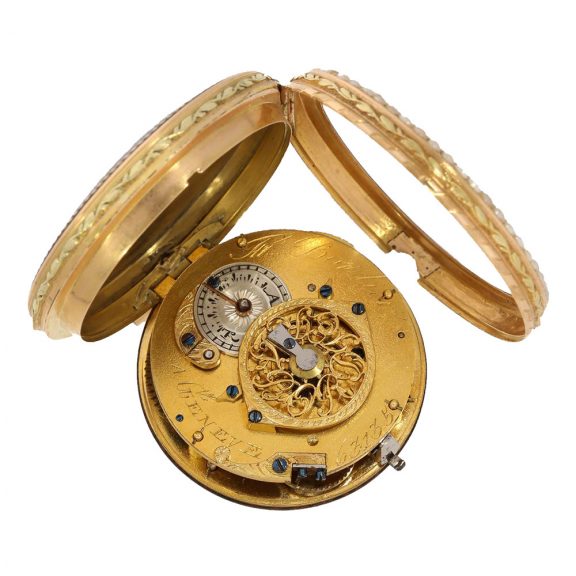
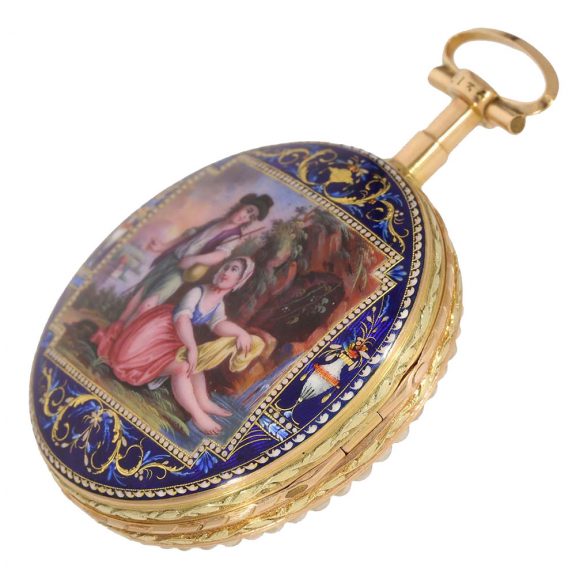
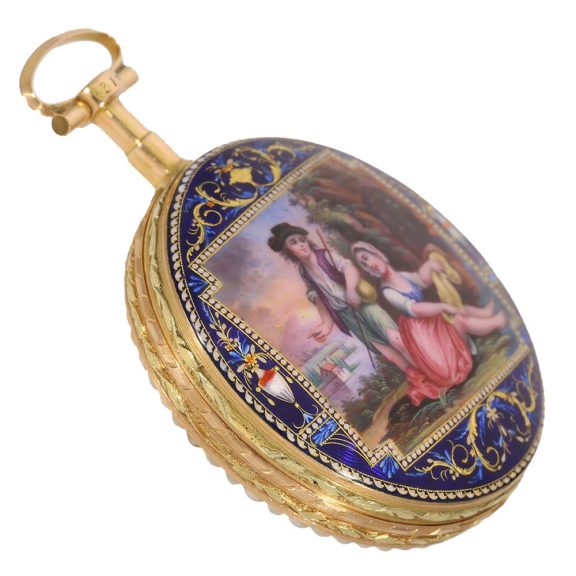
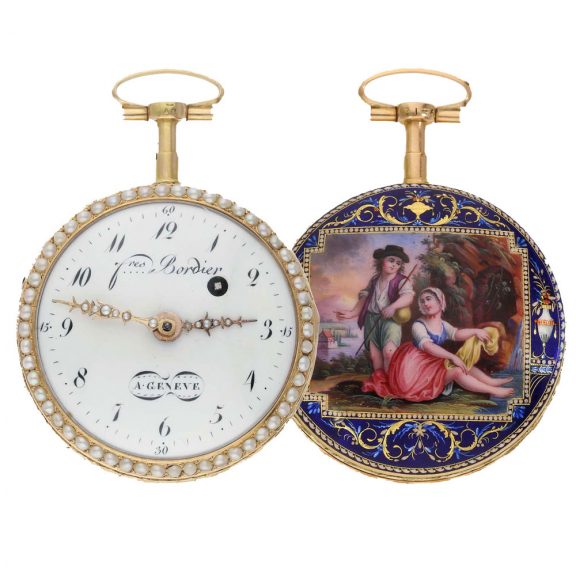
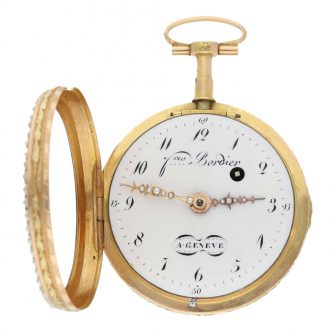
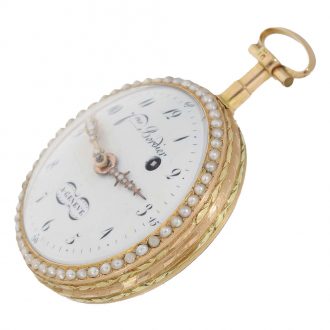
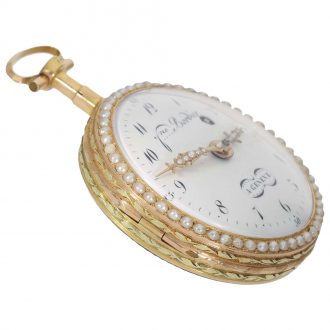
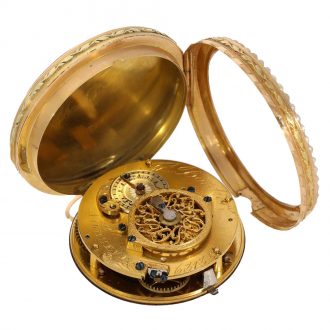
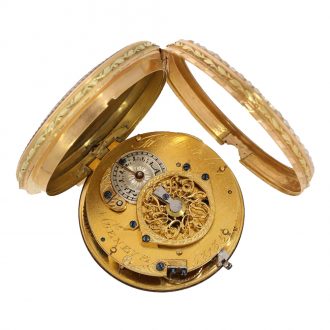
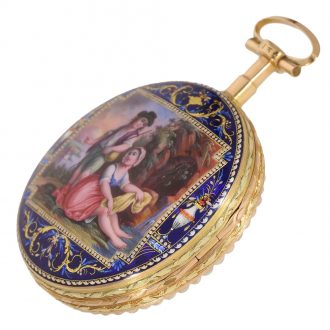
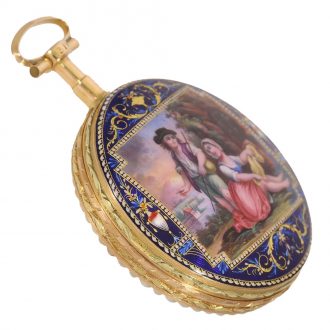
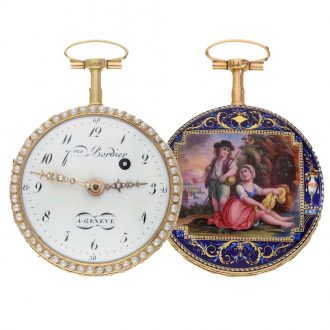
One of the earliest known pocket watches featuring an erotic scene made by Frères Bordier in Geneva, Switzerland, circa 1780. The open faced case of this watch was crafted from 18 carat gold and is adorned with half oriental pearls on the front. The back displays an elaborate polychrome enamel painting in the style of Jean-Louis Richter, set within a cartouche shaped like an ornamental picture frame. The scene represents one of the earliest examples of erotic imagery in enamel painting, surrounded by richly coloured paillonné enamel. The white enamel dial features Arabic hour numerals, outer minute divisions, outermost Arabic quarter hours and very unusual gold hands with oriental pearl setting. The numbered movement is fitted with a verge escapement.
The dial and movement are signed
–
Diameter: 45 mm
–
Weight: 62 g
–
Signed: Fres Bordier à Genève
–
The quality of the painting on the watch presented here alone makes this watch an outstanding collector’s item. However, its special nature only becomes clear at second glance. It is one of the earliest erotic representations on enamelled cases. Around 1780, baring the knees and thighs was considered very daring. The young man understands the hint and shows her the way with his hand.
–
Bordier
During the late 18th century, particularly around 1780, the prominent pocket watchmaking firm was Frères Bordier. It was active in Geneva from 1787 to 1810. The Bordier family has a long history in Geneva watchmaking, which started with Isaac and Jacob Bordier in the late 16th century. The legacy continued with the firm of Frères Bordier, by becoming well known for producing high quality and sometimes unusual pocket watches.
Frères Bordier watches were known for their refined craftsmanship. Around 1780, the firm made slim, open faced pocket watches featuring exquisite gold and enamel cases. Some of their timepiece incorporated concealed artistry. A further typical example from around 1790 features a gilded brass plate with a high quality verge escapement, including an engraved and pierced balance bridge.
Geneva was home to a large network of skilled artisans, known as cabinotiers, who specialized in different parts of the watchmaking process. The Bordier firm likely worked within this system, collaborating with other specialists for parts like the intricate enamel decoration and hand engraving. The foundation for this craft based system was laid in the 16th century, after John Calvin’s Protestant Reformation discouraged ostentatious jewellery. Goldsmiths and jewellers turned their skills to creating decorative and high quality watches, which helped establish Geneva’s reputation for luxury horology.
The late 18th century was a time of change for the Swiss watch industry, including the beginnings of mechanization, though many traditional artisans like the Bordiers remained committed to handcrafted production.
The watchmaking firm Frères Bordier appears to have ceased operations sometime in the early 19th century. Records indicate the firm was active at least until 1810 and possibly as late as 1830.
Signed: Fres Bordier à Genève
Share this page: