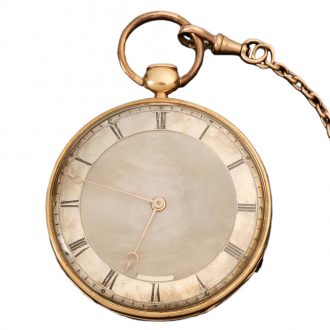
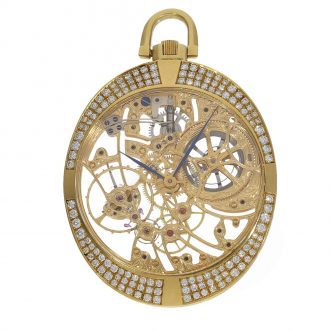
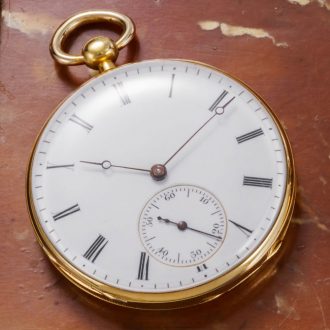
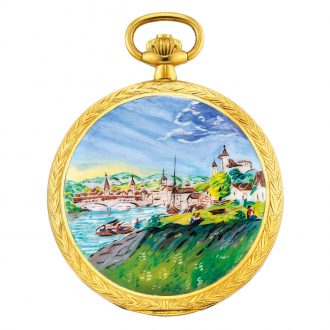
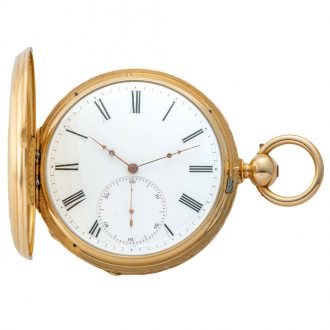
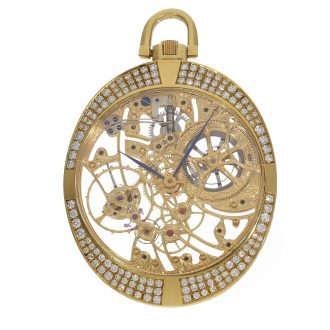
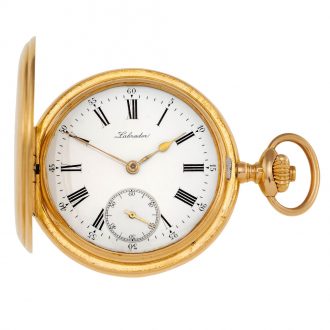
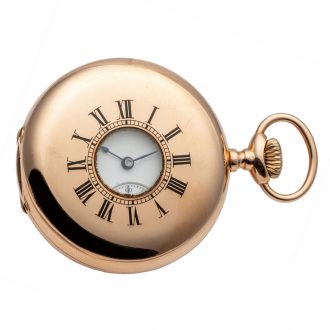
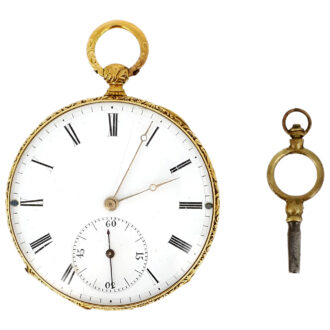
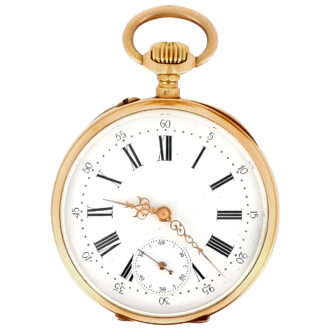
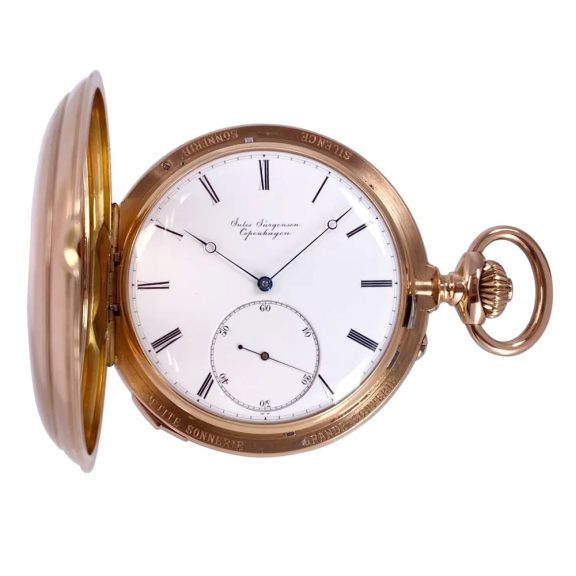
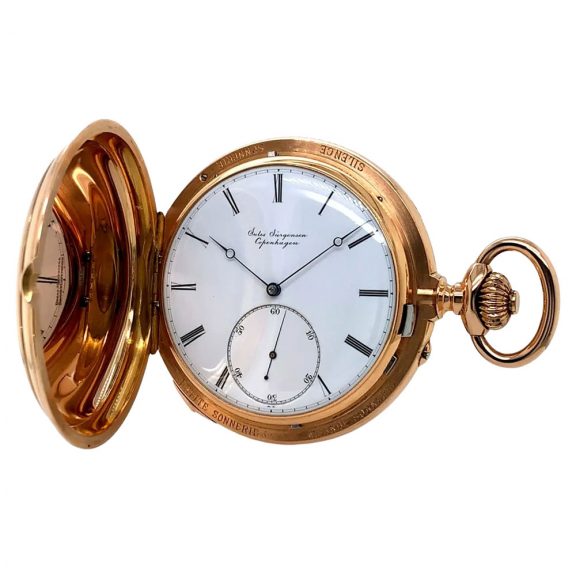
Swiss/Danish grande and petite sonnerie repeating watch Circa 1855
- Kenmerk
- DB0798
- Diameter
- 57 mm
- Estimate
- € 25.000 - 40.000
- Price sold
- -
Rose gold full hunter by Jules Jürgensen
–
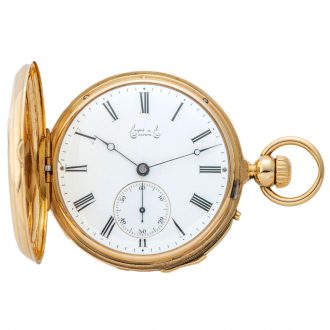
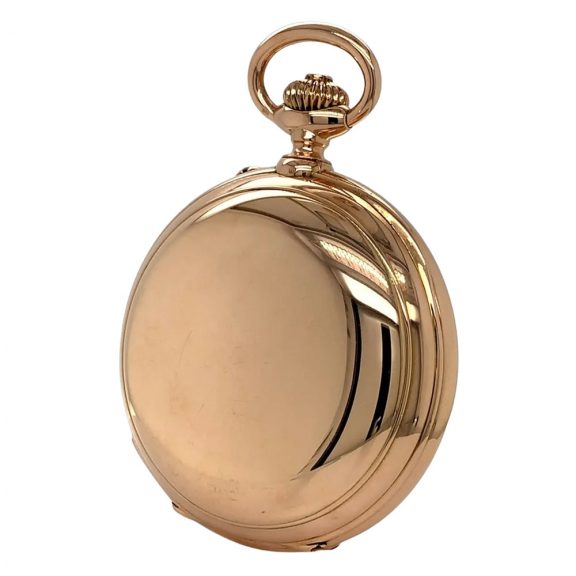
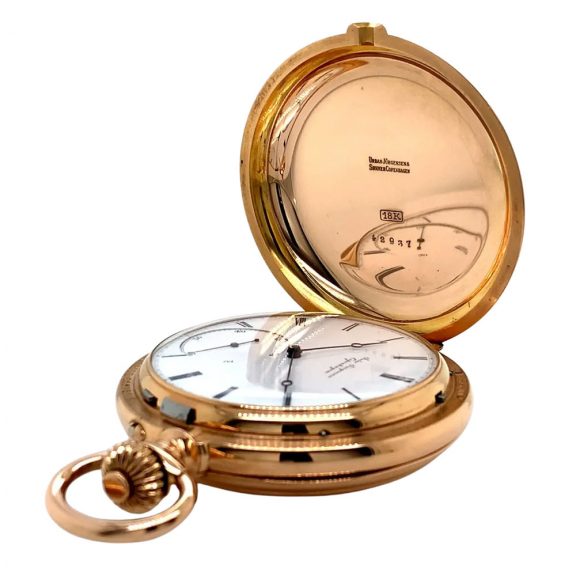
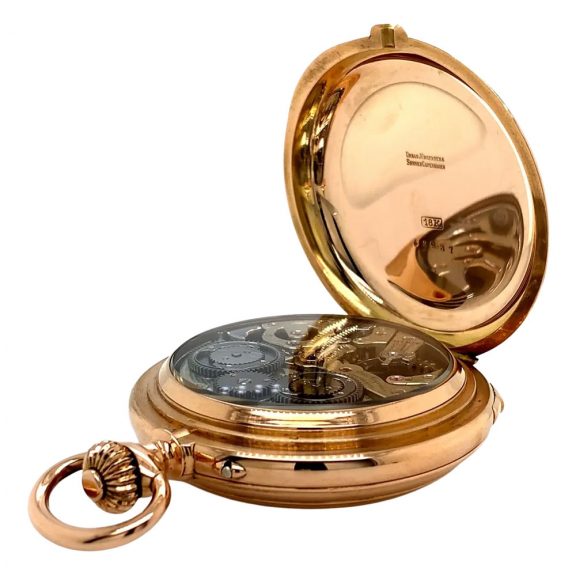
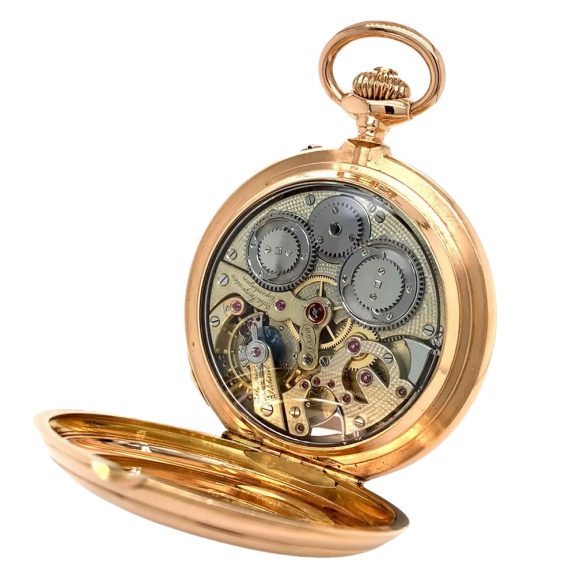
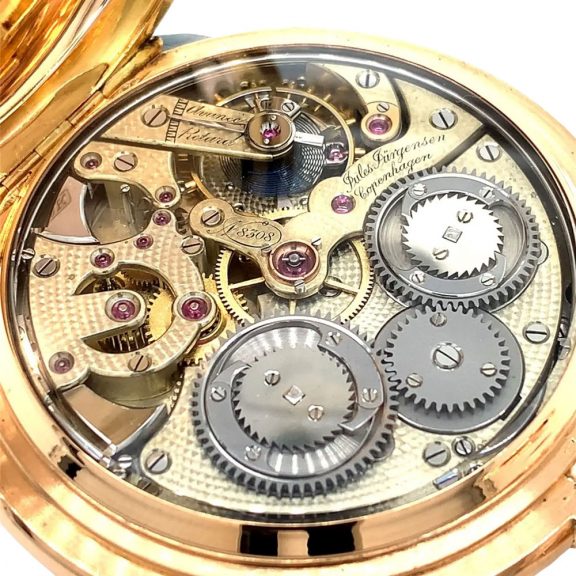
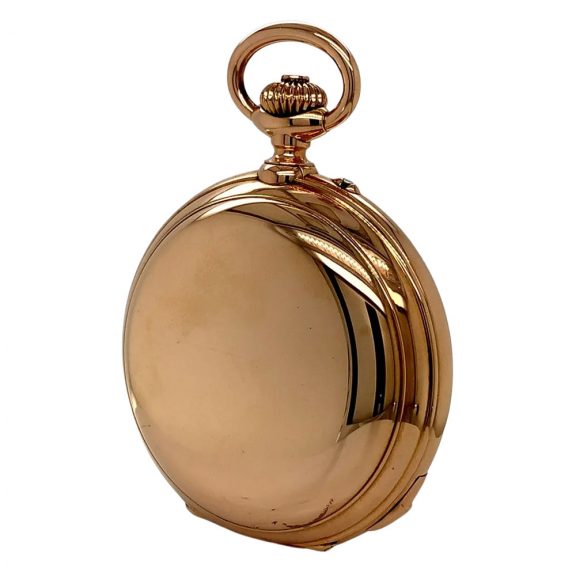
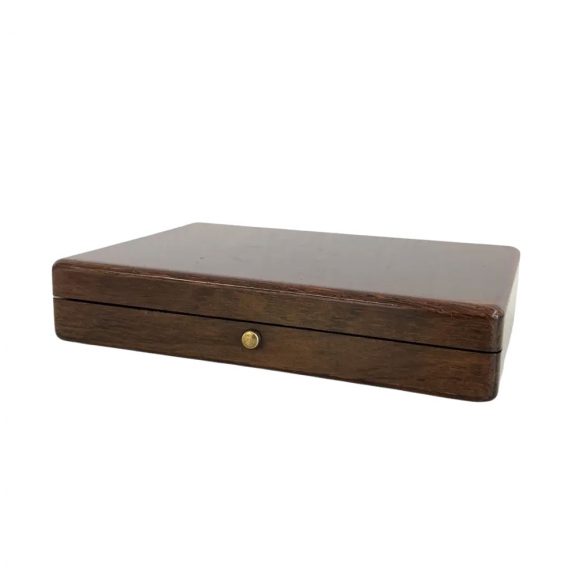
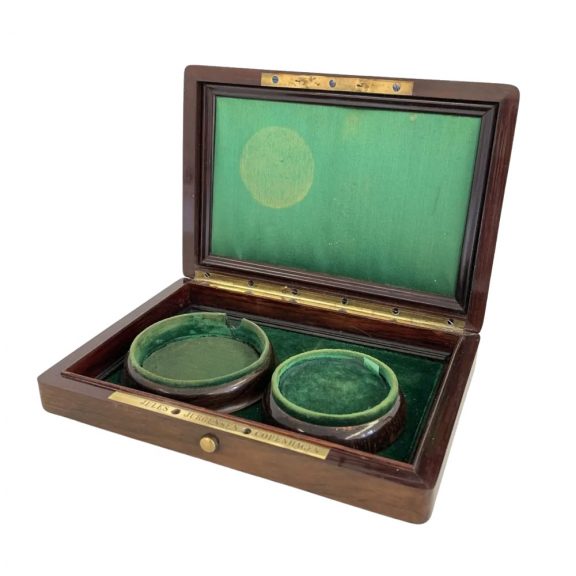
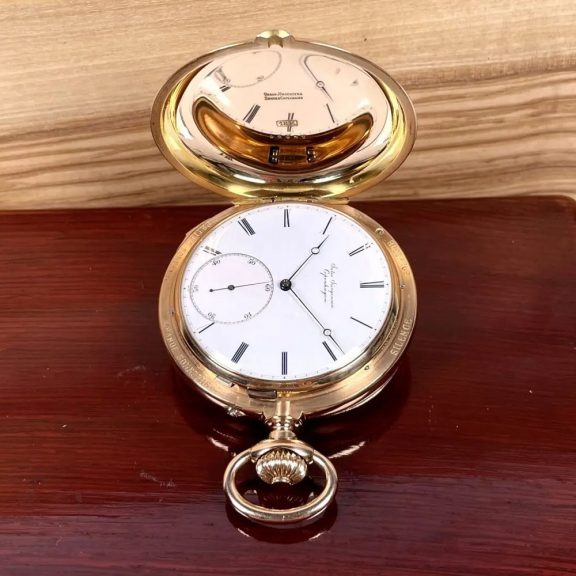
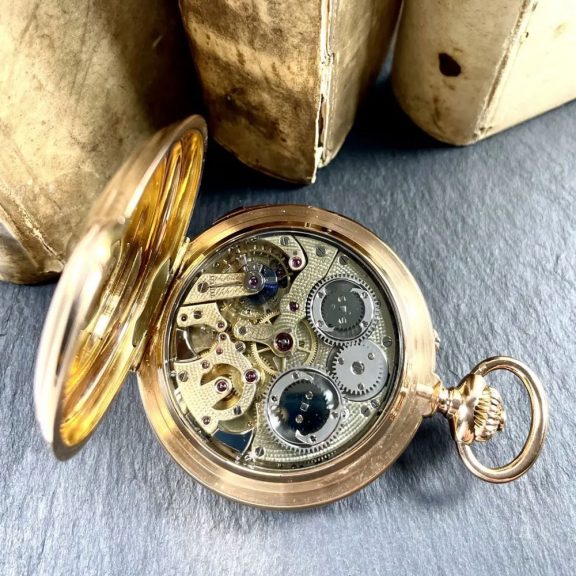
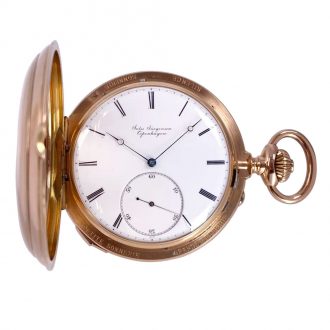
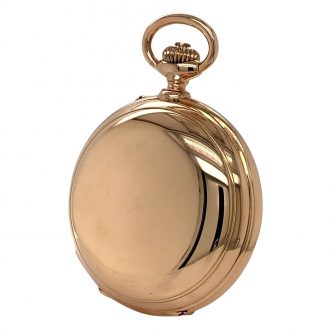
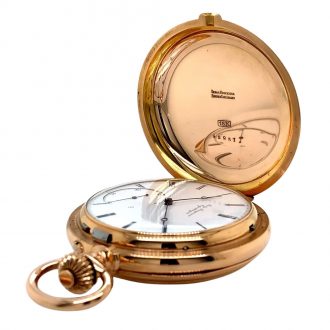
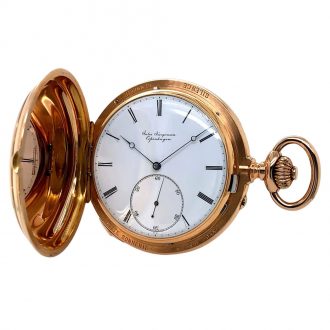
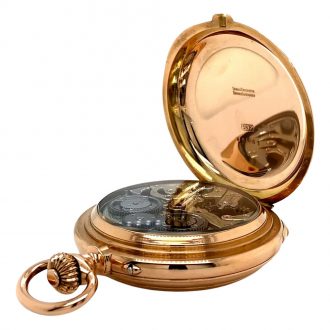
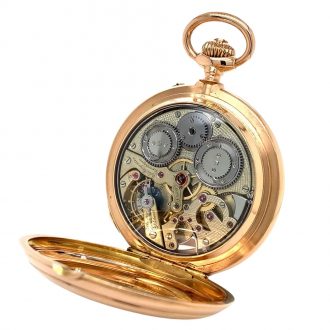
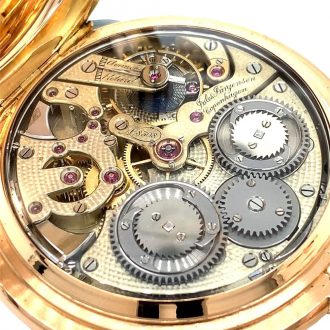
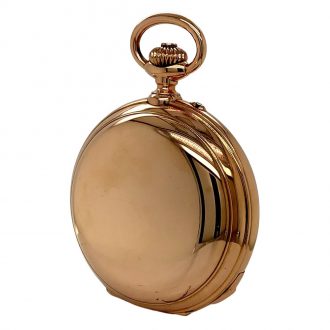
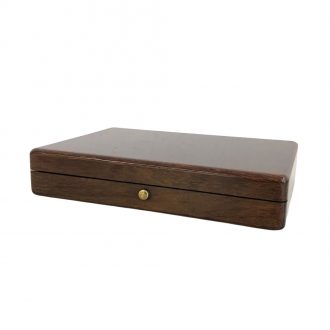
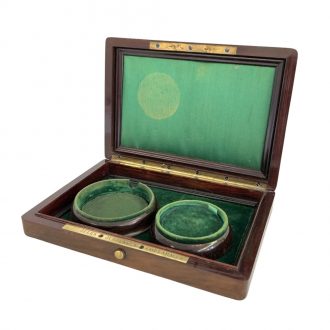
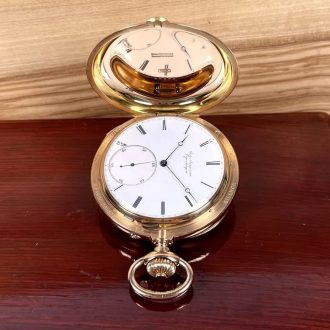
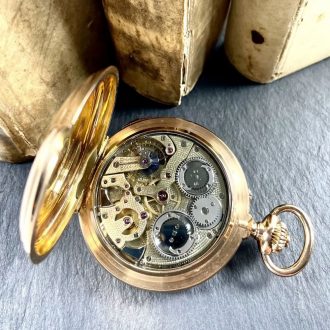
An exclusive and large Swiss/Danish 18 carat rose gold hunting cased grande and petite sonnerie minute repeating pocket watch with quarter hour self strike, circa 1855. Glazed bridge movement, two hammers, two gongs, two barrels with ratchets, a piston tooth lever escapement and gold screw compensation balance. White enamel dial with Roman hours, an outer minute track, sunk subsidiary seconds at 6 o’clock and moon hands. A later, plain case (1990). Dial signed, case and movement signed and numbered. Comes with the original mahogany presentation box.
–
Diameter: 57 mm
–
Weight: 156 g
–
Signed: Jules Jürgensen Copenhagen
–
Jules Frédéric Jürgensen was born in 1808 and died in 1877. He was the son of Urban Jürgensen and a very eminent watchmaker himself. Jules was born in Le Locle, Switzerland but as a child moved to Denmark with his parents. In 1830, Jules and his brother Louis Urban took over the company after their father’s death. In 1833, Jules returned to Le Locle and built a successful business. Jürgensen, who was watchmaker to the King of Denmark, was made a Knight of the Légion d’Honneur and Knight of the Royal Order of Dannebrog. Between 1870 and 1876 he was a member of the commission of surveillance of the Geneva School of Horology, along with Ekegren, Potter and others. He further was a member of many commissions in Switzerland judging horological contests. He stamped most of his watches on the pillar plate under the dial ‘Jules Jürgensen of Copenhagen’.
Jürgensen invented his bow-setting mechanism in 1867. He wanted to prevent any accidental changing of the watch setting. In his design, the cover had to be opened to turn the bow far enough to engage the setting pin. In some of his watches, he did not want the back cover, which was not spring-loaded, to be opened by the owner. Therefore, for his watches with an open face, he used a special case in which the front was designed with a bezel utilizing a lifting mechanism like that in a hunting case. The setting could be done safely, by first opening the front by pushing on the stem, turning the bow until it touched the crystal and then setting the watch. After his death, the business was continued by his brother and in 1886 it was sold to an employee, H. Kiens, whose sons Jules (1837-1894) and Jacques Alfred (1842-1912) continued the business, as did the House of Heuer afterwards.
Signed: Jules Jürgensen Copenhagen
Share this page: